• Wyszukiwanie zaawansowane
  • Kategorie
  • Kategorie BISAC
  • Książki na zamówienie
  • Promocje
  • Granty
  • Książka na prezent
  • Opinie
  • Pomoc
  • Załóż konto
  • Zaloguj się

Machine Learning Safety » książka


zaloguj się | załóż konto
Logo Krainaksiazek.pl

koszyk

konto

szukaj
topmenu
Księgarnia internetowa
Szukaj
Książki na zamówienie
Promocje
Granty
Książka na prezent
Moje konto
Pomoc
 
 
Wyszukiwanie zaawansowane
Pusty koszyk
Bezpłatna dostawa dla zamówień powyżej 20 złBezpłatna dostawa dla zamówień powyżej 20 zł

Kategorie główne

• Nauka
 [2946600]
• Literatura piękna
 [1856966]

  więcej...
• Turystyka
 [72221]
• Informatyka
 [151456]
• Komiksy
 [35826]
• Encyklopedie
 [23190]
• Dziecięca
 [619653]
• Hobby
 [140543]
• AudioBooki
 [1577]
• Literatura faktu
 [228355]
• Muzyka CD
 [410]
• Słowniki
 [2874]
• Inne
 [445822]
• Kalendarze
 [1744]
• Podręczniki
 [167141]
• Poradniki
 [482898]
• Religia
 [510455]
• Czasopisma
 [526]
• Sport
 [61590]
• Sztuka
 [243598]
• CD, DVD, Video
 [3423]
• Technologie
 [219201]
• Zdrowie
 [101638]
• Książkowe Klimaty
 [124]
• Zabawki
 [2473]
• Puzzle, gry
 [3898]
• Literatura w języku ukraińskim
 [254]
• Art. papiernicze i szkolne
 [8170]
Kategorie szczegółowe BISAC

Machine Learning Safety

ISBN-13: 9789811968136 / Angielski / Twarda / 2023 / 240 str.
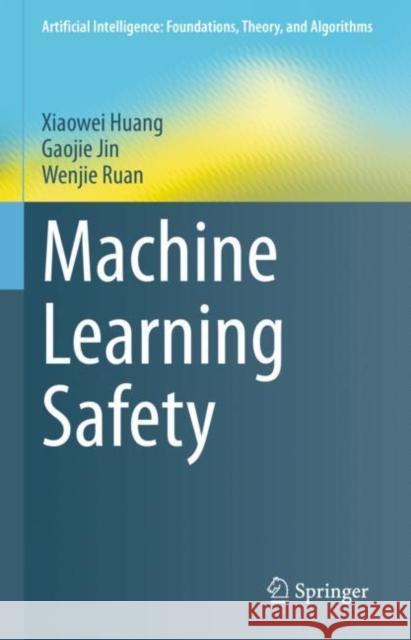
Xiaowei Huang; Gaojie Jin; Wenjie Ruan
Machine Learning Safety Xiaowei Huang Gaojie Jin Wenjie Ruan 9789811968136 Springer - książkaWidoczna okładka, to zdjęcie poglądowe, a rzeczywista szata graficzna może różnić się od prezentowanej.

Machine Learning Safety

ISBN-13: 9789811968136 / Angielski / Twarda / 2023 / 240 str.

Xiaowei Huang; Gaojie Jin; Wenjie Ruan
cena 282,42 zł
(netto: 268,97 VAT:  5%)

Najniższa cena z 30 dni: 269,85 zł
Termin realizacji zamówienia:
ok. 22 dni roboczych
Bez gwarancji dostawy przed świętami

Darmowa dostawa!
inne wydania

Machine learning algorithms allow computers to learn without being explicitly programmed. Their application is now spreading to highly sophisticated tasks across multiple domains, such as medical diagnostics or fully autonomous vehicles. While this development holds great potential, it also raises new safety concerns, as machine learning has many specificities that make its behaviour prediction and assessment very different from that for explicitly programmed software systems. This book addresses the main safety concerns with regard to machine learning, including its susceptibility to environmental noise and adversarial attacks. Such vulnerabilities have become a major roadblock to the deployment of machine learning in safety-critical applications. The book presents up-to-date techniques for adversarial attacks, which are used to assess the vulnerabilities of machine learning models; formal verification, which is used to determine if a trained machine learning model is free of vulnerabilities; and adversarial training, which is used to enhance the training process and reduce vulnerabilities.The book aims to improve readers’ awareness of the potential safety issues regarding machine learning models. In addition, it includes up-to-date techniques for dealing with these issues, equipping readers with not only technical knowledge but also hands-on practical skills.


Machine learning algorithms allow computers to learn without being explicitly programmed. Their application is now spreading to highly sophisticated tasks across multiple domains, such as medical diagnostics or fully autonomous vehicles. While this development holds great potential, it also raises new safety concerns, as machine learning has many specificities that make its behaviour prediction and assessment very different from that for explicitly programmed software systems. This book addresses the main safety concerns with regard to machine learning, including its susceptibility to environmental noise and adversarial attacks. Such vulnerabilities have become a major roadblock to the deployment of machine learning in safety-critical applications. The book presents up-to-date techniques for adversarial attacks, which are used to assess the vulnerabilities of machine learning models; formal verification, which is used to determine if a trained machine learning model is free of vulnerabilities; and adversarial training, which is used to enhance the training process and reduce vulnerabilities. The book aims to improve readers’ awareness of the potential safety issues regarding machine learning models. In addition, it includes up-to-date techniques for dealing with these issues, equipping readers with not only technical knowledge but also hands-on practical skills.

Kategorie:
Informatyka, Bazy danych
Kategorie BISAC:
Computers > Artificial Intelligence - General
Computers > Security - General
Mathematics > Prawdopodobieństwo i statystyka
Wydawca:
Springer
Seria wydawnicza:
Artificial Intelligence: Foundations, Theory, and Algorithms
Język:
Angielski
ISBN-13:
9789811968136
Rok wydania:
2023
Dostępne języki:
Numer serii:
000781778
Ilość stron:
240
Oprawa:
Twarda
Dodatkowe informacje:
Wydanie ilustrowane

1. Introduction.- 2. Safety of Simple Machine Learning Models.- 3. Safety of Deep Learning.- 4. Robustness Verification of Deep Learning.- 5. Enhancement to Robustness and Generalization.- 6. Probabilistic Graph Model.- A. Mathematical Foundations.- B. Competitions.-

Xiaowei Huang is currently a Reader of Computer Science and Director of the Autonomous Cyber-Physics Systems lab at the University of Liverpool (UoL). His research is concerned with the development of automated verification techniques that ensure the correctness and reliability of intelligent systems. He has published more than 80 papers, primarily in leading conference proceedings and journals in the fields of Artificial Intelligence (e.g. Artificial Intelligence Journal, ACM Transactions on Computational Logics, NeurIPS, AAAI, IJCAI, ECCV), Formal Verification (e.g. CAV, TACAS, and Theoretical Computer Science) and Software Engineering (e.g. IEEE Transactions on Reliability, ICSE and ASE). He has been invited to give talks at several leading conferences, discussing topics related to the safety and security of applying machine learning algorithms to critical applications. He has co-chaired the AAAI and IJCAI workshop series on Artificial Intelligence Safety and been the PI or co-PI of several Dstl (Ministry of Defence, UK), EPSRC and EU H2020 projects. He is the Director of the Autonomous Cyber Physical Systems Lab at Liverpool. 

Wenjie Ruan is a Senior Lecturer of Data Science at the University of Exeter, UK. His research interests lie in the adversarial robustness of deep neural networks, and in machine learning and its applications in safety-critical systems, including health data analytics and human-centered computing. His series of research works on Device-free Human Localization and Activity Recognition for Supporting the Independent Living of the Elderly garnered him a Doctoral Thesis Excellence Award from the University of Adelaide, Best Research Poster Award at the 9th ACM International Workshop on IoT and Cloud Computing, and Best Student Paper Award at the 14th International Conference on Advanced Data Mining and Applications. He was also the recipient of a prestigious DECRA fellowship from the Australian Research Council. Dr. Ruan has published more than 40 papers in international conference proceedings such as AAAI, IJCAI, SIGIR, WWW, ICDM, UbiComp, CIKM, and ASE. Dr. Ruan has served as a senior PC, PC member or invited reviewer for over 10 international conferences, including IJCAI, AAAI, ICML, NeurIPS, CVPR, ICCV, AAMAS, ECML-PKDD, etc. He is the Director of the Exeter Trustworthy AI Lab at the University of Exeter. 

Machine learning algorithms allow computers to learn without being explicitly programmed. Their application is now spreading to highly sophisticated tasks across multiple domains, such as medical diagnostics or fully autonomous vehicles. While this development holds great potential, it also raises new safety concerns, as machine learning has many specificities that make its behaviour prediction and assessment very different from that for explicitly programmed software systems. This book addresses the main safety concerns with regard to machine learning, including its susceptibility to environmental noise and adversarial attacks. Such vulnerabilities have become a major roadblock to the deployment of machine learning in safety-critical applications. The book presents up-to-date techniques for adversarial attacks, which are used to assess the vulnerabilities of machine learning models; formal verification, which is used to determine if a trained machine learning model is free of vulnerabilities; and adversarial training, which is used to enhance the training process and reduce vulnerabilities. 

The book aims to improve readers’ awareness of the potential safety issues regarding machine learning models. In addition, it includes up-to-date techniques for dealing with these issues, equipping readers with not only technical knowledge but also hands-on practical skills.




Udostępnij

Facebook - konto krainaksiazek.pl


Opinie o Krainaksiazek.pl na Opineo.pl

Partner Mybenefit

Krainaksiazek.pl w programie rzetelna firma Krainaksiaze.pl - płatności przez paypal

Czytaj nas na:

Facebook - krainaksiazek.pl
  • książki na zamówienie
  • granty
  • książka na prezent
  • kontakt
  • pomoc
  • opinie
  • regulamin
  • polityka prywatności

Zobacz:

  • Księgarnia czeska

  • Wydawnictwo Książkowe Klimaty

1997-2025 DolnySlask.com Agencja Internetowa

© 1997-2022 krainaksiazek.pl
     
KONTAKT | REGULAMIN | POLITYKA PRYWATNOŚCI | USTAWIENIA PRYWATNOŚCI
Zobacz: Księgarnia Czeska | Wydawnictwo Książkowe Klimaty | Mapa strony | Lista autorów
KrainaKsiazek.PL - Księgarnia Internetowa

Polityka prywatnosci - link
Krainaksiazek.pl - płatnośc Przelewy24
Przechowalnia Przechowalnia




