• Wyszukiwanie zaawansowane
  • Kategorie
  • Kategorie BISAC
  • Książki na zamówienie
  • Promocje
  • Granty
  • Książka na prezent
  • Opinie
  • Pomoc
  • Załóż konto
  • Zaloguj się

Legumes and Oilseed Crops I » książka


zaloguj się | załóż konto
Logo Krainaksiazek.pl

koszyk

konto

szukaj
topmenu
Księgarnia internetowa
Szukaj
Książki na zamówienie
Promocje
Granty
Książka na prezent
Moje konto
Pomoc
 
 
Wyszukiwanie zaawansowane
Pusty koszyk
Bezpłatna dostawa dla zamówień powyżej 20 złBezpłatna dostawa dla zamówień powyżej 20 zł

Kategorie główne

• Nauka
 [2946912]
• Literatura piękna
 [1852311]

  więcej...
• Turystyka
 [71421]
• Informatyka
 [150889]
• Komiksy
 [35717]
• Encyklopedie
 [23177]
• Dziecięca
 [617324]
• Hobby
 [138808]
• AudioBooki
 [1671]
• Literatura faktu
 [228371]
• Muzyka CD
 [400]
• Słowniki
 [2841]
• Inne
 [445428]
• Kalendarze
 [1545]
• Podręczniki
 [166819]
• Poradniki
 [480180]
• Religia
 [510412]
• Czasopisma
 [525]
• Sport
 [61271]
• Sztuka
 [242929]
• CD, DVD, Video
 [3371]
• Technologie
 [219258]
• Zdrowie
 [100961]
• Książkowe Klimaty
 [124]
• Zabawki
 [2341]
• Puzzle, gry
 [3766]
• Literatura w języku ukraińskim
 [255]
• Art. papiernicze i szkolne
 [7810]
Kategorie szczegółowe BISAC

Legumes and Oilseed Crops I

ISBN-13: 9783642744501 / Angielski / Miękka / 2011 / 682 str.
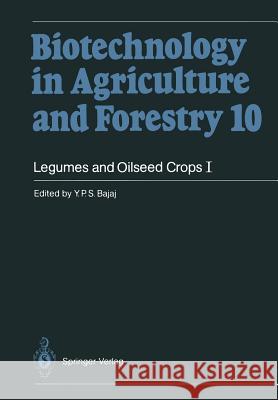
Y. P. S. Bajaj
Legumes and Oilseed Crops I Y. P. S. Bajaj 9783642744501 Springer-Verlag Berlin and Heidelberg GmbH &  - książkaWidoczna okładka, to zdjęcie poglądowe, a rzeczywista szata graficzna może różnić się od prezentowanej.

Legumes and Oilseed Crops I

ISBN-13: 9783642744501 / Angielski / Miękka / 2011 / 682 str.

Y. P. S. Bajaj
cena 605,23
(netto: 576,41 VAT:  5%)

Najniższa cena z 30 dni: 578,30
Termin realizacji zamówienia:
ok. 22 dni roboczych
Bez gwarancji dostawy przed świętami

Darmowa dostawa!

Legumes and oilseed crops are a rich source of protein and energy. The major objectives in grain-legume breeding are to increase grain yield, protein quantity and quality and digestibility, and to decrease toxic fac tors, seed hardness and cooking time. Similarly, oilseed crops such as brassicas and peanut share somewhat similar genetic improvement goals, but suffer from susceptibility to a number of pathogens and diseases. In spite of the best efforts through conventional breeding, their yield has been virtually static, with no significant breakthrough. The lack of genetic variability in the base population has been considered to be a major limiting factor for the slow progress made in the improvement of these crops. The desired goals can be achieved by incorporating addi tional genetic variability in the existing germplasm. The protein and oil contents which are genotypically oriented can be enhanced further by suitable crosses. In this regard, progress made during the last decade, in the area of in vitro manipulation and recombinant DNA technology, holds promise for the improvement of these crops. Among the oilseed crops, Brassica spp., soybean and sunflower have been well studied, wherein haploids, somaclones, somatic hybrids, cybrids and transformed plants have been produced. Oilpalm is one of the best examples where micropropagation is being commercially prac ticed. Regarding legumes, though there is extensive work on forages, such as Medicago and Trifolium, much needs to be done on food legumes."


Kategorie:
Nauka, Biologia i przyroda
Kategorie BISAC:
Technology & Engineering > Agriculture - General
Technology & Engineering > Agriculture - Forestry
Science > Botanika
Wydawca:
Springer-Verlag Berlin and Heidelberg GmbH &
Seria wydawnicza:
Biotechnology in Agriculture and Forestry
Język:
Angielski
ISBN-13:
9783642744501
Rok wydania:
2011
Dostępne języki:
Angielski
Wydanie:
Softcover Repri
Numer serii:
000053271
Ilość stron:
682
Waga:
1.19 kg
Wymiary:
24.224.2 x 17.0
Oprawa:
Miękka
Wolumenów:
01

Section I Wide Hybridization, Transformation, Cryopreservation.- I.1 Wide Hybridization in Legumes and Oilseed Crops Through Embryo, Ovule, and Ovary Culture.- 1 Introduction.- 2 Incompatibility Problems and in Vitro Culture.- 3 Wide Hybridization.- 4 Conclusions and Prospects.- References.- I.2 Transformation in Legumes.- 1 Introduction.- 2 Targets for Transformation.- 3 Approaches for Transformation.- 4 Concluding Comments.- References.- I.3 Cryopreservation of Germplasm of Legumes and Oilseed Crops.- 1 Introduction.- 2 Cryopreservation of Cultures.- 3 Germplasm Banks.- 4 Summary and Conclusions.- References.- Section II Food Legumes.- II. 1 Pea (Pisum sativum L.).- 1 Introduction.- 2 In Vitro Approach.- 3 Conclusions and Prospects.- 4 Protocols.- References.- II.2 Chickpea (Cicer arietinum L.).- 1 Introduction.- 2 In Vitro Culture.- 3 Conclusions.- References.- II.3 Soybean: Plant Regeneration and Somaclonal Variation.- 1 Introduction.- 2 History of Soybean Tissue Culture.- 3 Establishment of Cultures.- 4 Somaclonal Variation.- 5 Concluding Remarks.- 6 Protocol for Soybean Plant Regeneration Through Embryogenesis or Organogenesis.- References.- II.4 Soybean: Wide Hybridization Through Embryo Culture.- 1 Introduction.- 2 The Genus Glycine.- 3 Hybridization Between the Subgenera.- 4 Conclusions.- 5 Protocol.- References.- II.5 Soybean: Isolation, Culture, and Fusion of Protoplasts.- 1 Introduction.- 2 Isolation of Protoplasts.- 3 Methods of Culturing Glycine Protoplasts.- 4 Behaviour of Isolated Protoplasts in Culture.- 5 Regeneration of Plants from Protoplasts of Wild Glycine Species.- 6 Fusion of Protoplasts.- 7 Flow Cytometry.- 8 Conclusion and Prospects.- 9 Protocol for the Isolation, Culture, and Electrofusion of Glycine Protoplasts.- References.- II.6 Winged Bean [Psophocarpus tetragonolobus (L.) D.C.].- 1 Introduction.- 2 In Vitro Approaches.- 3 Conclusions and Prospects.- References.- Section III Forage Legumes.- III.1 Alfalfa, Lucerne (Medicago spp.).- 1 Introduction.- 2 In Vitro Approaches.- 3 Isolation and Culture of Protoplasts.- 4 Somatic Embryogenesis and Plant Regeneration.- 5 Genetic Stability and Somaclonal Variation.- 6 Anther Culture.- 7 Ovule-Embryo and Pod Culture.- 8 Transformation.- 9 Cryopreservation.- 10 Summary and Prospects.- References.- III.2 Clovers (Trifolium spp.).- 1 Introduction.- 2 Factors Important for Initiation of Cultures.- 3 Shoot Meristem Cultures.- 4 Embryo Culture and in Vitro Fertilization.- 5 Callus, Cell, and Protoplast Culture.- 6 Anther Culture and Haploid Production.- 7 Transformation.- 8 Conclusion.- References.- III.3 Lupins (Lupinus spp.).- 1 Introduction.- 2 In Vitro Approaches.- 3 Conclusions and Prospects.- References.- III.4 Cell and Tissue Culture of Stylosanthes spp..- 1 Introduction.- 2 Cell and Tissue Culture.- 3 Selected Methods for S. guianensis.- 4 Conclusions.- References.- III.5 Birdsfoot Trefoil (Lotus corniculatus L.).- 1 Introduction.- 2 In Vitro Approaches.- 3 Conclusions and Prospects.- References.- III.6 Crownvetch (Coronilla varia L.).- 1 Introduction.- 2 In Vitro Approaches.- 3 Conclusions and Prospects.- 4 Protocol.- References.- III.7 Goat’s Rue (Galega officinalis L.).- 1 Introduction.- 2 In Vitro Studies.- 3 Conclusions and Prospects.- References.- Section IV Oilseed Crops.- IV. 1 Interspecific Hybridization in Brassica Through Ovary Culture.- 1 Introduction.- 2 The Need for Ovary Culture.- 3 Method of Ovary Culture.- 4 Hybrid Plants and Their Progenies.- 5 Conclusion.- References.- IV.2 Regeneration of Plants from Protoplasts of Oilseed Brassica Crops.- 1 Introduction.- 2 Protoplast Isolation.- 3 Culture of Protoplasts.- 4 Regeneration of Plants.- 5 Protoplast Fusion and Selection of Hybrids.- 6 Miscellaneous Studies.- 7 Protocol for Isolation, Culture, Regeneration, and Fusion.- References.- IV.3 Cybrids in Oilseed Brassica Crops Through Protoplast Fusion.- 1 Introduction.- 2 Genetic Constitution of Cybrids Obtained Through Protoplast Fusion.- 3 Importance of Cytoplasm in Brassica and the Production of Male-Sterile Lines.- 4 Protoplast Isolation, Fusion, and Culture Until Plant Regeneration and Cybrid Selection.- 5 Molecular Characterization of Organelle Genomes of Cybrids.- 6 Agronomical Value of Cybrids.- 7 Conclusion.- References.- IV.4 Sunflower (Helianthus annuus L.): Establishment of Cultures, Transformation, and the Regeneration of Plants.- 1 Introduction.- 2 In Vitro Approaches.- 3 Transformation and Genetic Engineering.- 4 Conclusions and Prospects.- References.- IV.5 Sunflower (Helianthus annuus L.): In Vitro Interspecific Hybridization.- 1 Introduction.- 2 Interspecific Hybridization Between Cultivated Sunflower and Some Wild Species.- 3 Conclusions.- 4 Protocol for Embryo Culture.- References.- IV.6 In Vitro Production of Haploids in Helianthus.- 1 Introduction.- 2 Anther Culture.- 3 Ovary and Ovule Culture for the Induction of Haploids.- 4 Conclusions.- References.- IV.7 Sunflower (Helianthus spp.): Anther Culture and Field Studies on Haploids.- 1 Introduction.- 2 Androgenesis in Wild Species and Interspecific Hybrids of Helianthus.- 3 Androgenesis in the Cultivated Sunflower, Helianthus annuus L..- 4 Conclusions.- 5 Protocol.- 6 Conditions for Culture.- References.- IV.8 Flax (Linum usitatissimum L.): In Vitro Studies.- 1 Introduction.- 2 In Vitro Approaches.- 3 Conclusions and Prospects.- References.- IV.9 Flax (Linum usitatissimum L.): Embryo Culture Studies.- 1 Introduction.- 2 Growth of Flax Embryos Under in Vitro Conditions.- 3 Flax Embryo Cultures Serve to Proliferate Plant Material.- 4 Conclusions.- References.- IV. 10 Coconut (Cocos nucifera L.): Micropropagation.- 1 Coconut as an Oilseed Crop.- 2 Conventional Propagation.- 3 Micropropagation.- 4 Conclusions.- References.- IV. 11 Coconut (Cocos nucifera L.): Anther Culture.- 1 Introduction.- 2 Ontogeny of Coconut Pollen.- 3 Androgenesis in Coconut.- 4 Problems and Prospects.- References.- IV. 12 Oil Palm (Elaeis guineensis Jacq.): Tissue Culture and Micropropagation.- 1 Introduction.- 2 In Vitro Approaches.- 3 Conclusions and Prospects.- References.- IV. 13 Olive (Olea europaea L.) as an Oilseed Crop.- 1 Introduction.- 2 Chemical Composition of Olive Oil.- 3 In Vitro Approaches.- 4 Conclusions and Perspectives.- References.- Section V Miscellaneous.- V.1 Indigofera spp..- 1 Introduction.- 2 In Vitro Studies.- 3 Summary and Conclusions.- 4 Protocol.- References.- V.2 Carob (Ceratonia siliqua L.).- 1 Introduction.- 2 In Vitro Culture Studies.- 3 Protocols.- 4 Summary and Prospects.- References.


Udostępnij

Facebook - konto krainaksiazek.pl


Opinie o Krainaksiazek.pl na Opineo.pl

Partner Mybenefit

Krainaksiazek.pl w programie rzetelna firma Krainaksiaze.pl - płatności przez paypal

Czytaj nas na:

Facebook - krainaksiazek.pl
  • książki na zamówienie
  • granty
  • książka na prezent
  • kontakt
  • pomoc
  • opinie
  • regulamin
  • polityka prywatności

Zobacz:

  • Księgarnia czeska

  • Wydawnictwo Książkowe Klimaty

1997-2025 DolnySlask.com Agencja Internetowa

© 1997-2022 krainaksiazek.pl
     
KONTAKT | REGULAMIN | POLITYKA PRYWATNOŚCI | USTAWIENIA PRYWATNOŚCI
Zobacz: Księgarnia Czeska | Wydawnictwo Książkowe Klimaty | Mapa strony | Lista autorów
KrainaKsiazek.PL - Księgarnia Internetowa

Polityka prywatnosci - link
Krainaksiazek.pl - płatnośc Przelewy24
Przechowalnia Przechowalnia






