• Wyszukiwanie zaawansowane
  • Kategorie
  • Kategorie BISAC
  • Książki na zamówienie
  • Promocje
  • Granty
  • Książka na prezent
  • Opinie
  • Pomoc
  • Załóż konto
  • Zaloguj się

LNG Risk Based Safety: Modeling and Consequence Analysis » książka

zaloguj się | załóż konto
Logo Krainaksiazek.pl

koszyk

konto

szukaj
topmenu
Księgarnia internetowa
Szukaj
Książki na zamówienie
Promocje
Granty
Książka na prezent
Moje konto
Pomoc
 
 
Wyszukiwanie zaawansowane
Pusty koszyk
Bezpłatna dostawa dla zamówień powyżej 20 złBezpłatna dostawa dla zamówień powyżej 20 zł

Kategorie główne

• Nauka
 [2948695]
• Literatura piękna
 [1824038]

  więcej...
• Turystyka
 [70868]
• Informatyka
 [151073]
• Komiksy
 [35227]
• Encyklopedie
 [23181]
• Dziecięca
 [621575]
• Hobby
 [138961]
• AudioBooki
 [1642]
• Literatura faktu
 [228651]
• Muzyka CD
 [371]
• Słowniki
 [2933]
• Inne
 [445341]
• Kalendarze
 [1243]
• Podręczniki
 [164416]
• Poradniki
 [479493]
• Religia
 [510449]
• Czasopisma
 [502]
• Sport
 [61384]
• Sztuka
 [243086]
• CD, DVD, Video
 [3417]
• Technologie
 [219673]
• Zdrowie
 [100865]
• Książkowe Klimaty
 [124]
• Zabawki
 [2168]
• Puzzle, gry
 [3372]
• Literatura w języku ukraińskim
 [260]
• Art. papiernicze i szkolne
 [7838]
Kategorie szczegółowe BISAC

LNG Risk Based Safety: Modeling and Consequence Analysis

ISBN-13: 9780470317648 / Angielski / Twarda / 2010 / 392 str.
John L. Woodward; Robin Pitbaldo
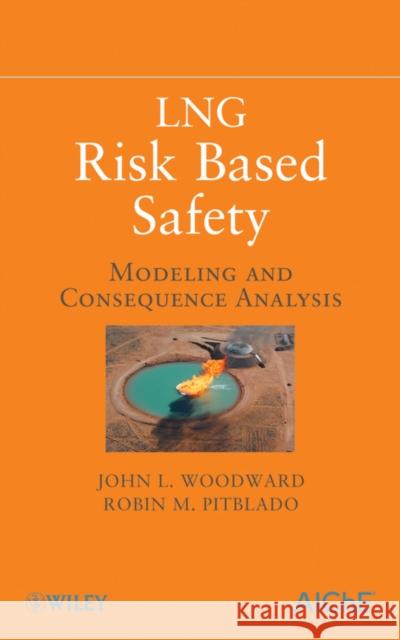
LNG Risk Based Safety: Modeling and Consequence Analysis Woodward, John L. 9780470317648 John Wiley & Sons - książkaWidoczna okładka, to zdjęcie poglądowe, a rzeczywista szata graficzna może różnić się od prezentowanej.

LNG Risk Based Safety: Modeling and Consequence Analysis

ISBN-13: 9780470317648 / Angielski / Twarda / 2010 / 392 str.

John L. Woodward; Robin Pitbaldo
cena 669,95
(netto: 638,05 VAT:  5%)

Najniższa cena z 30 dni: 660,41
Termin realizacji zamówienia:
ok. 30 dni roboczych.

Darmowa dostawa!

Liquefied Natural Gas (LNG) is the only viable way to extract and transport natural gas from areas not serviceable by a pipeline, but it also poses safety risks. This book examines the safety concerns regarding LNG, and examines the debate between its advocates and its opponents. The text considers risks on the extraction, transportation, and maintenance of LNG; includes discussion of case studies and LNG-related accidents over the past half-century; and summerizes the findings of the Governmental Accountability Office's (GAO) survey of nineteen LNG experts from across North America and Europe.


Kategorie:
Nauka, Chemia
Kategorie BISAC:
Technology & Engineering > Industrial Health & Safety
Technology & Engineering > Chemical & Biochemical
Technology & Engineering > Power Resources - Fossil Fuels
Wydawca:
John Wiley & Sons
Język:
Angielski
ISBN-13:
9780470317648
Rok wydania:
2010
Ilość stron:
392
Waga:
0.68 kg
Wymiary:
23.62 x 15.24 x 2.29
Oprawa:
Twarda
Wolumenów:
01
Dodatkowe informacje:
Bibliografia

Preface.

1 LNG Properties and Overview of Hazards.

1.1 LNG Properties.

1.2 Hazards of LNG with Respect to Public Risk.

1.3 Risk Analysis Requires Adequate Modeling.

1.4 Flammability.

1.5 Regulations in Siting Onshore LNG Import Terminals.

1.6 Regulation for Siting Offshore LNG Import Terminals.

1.7 Controversial Claims of LNG Opponents.

2 LNG Incidents and Marine History.

2.1 LNG Ship Design History.

2.2 Designs and Issues First Commercial LNG Ships.

2.3 LNG Trade History.

2.4 LNG Accident History.

2.5 Summary of LNG History and Relevant Technical Developments.

3 Current LNG Carriers.

3.1 Design Requirements.

3.2 Membrane Tanks.

3.3 Moss Spheres.

4 Risk Analysis and Risk Reduction.

4.1 Background.

4.2 Risk Analysis Process.

4.3 Frequency: Data Sources and Analysis.

4.4 Frequency: Predictive Methods.

4.5 Consequence Modeling.

4.6 Ignition Probability.

4.7 Risk Results.

4.8 Special Issues Terrorism.

4.9 Risk Reduction and Mitigation Measures for LNG.

5 LNG Discharge on Water.

5.1 Type 1 Above Water Breaches at Sea.

5.2 Type 2 At Waterline Breaches at Sea.

5.3 Type 3 Below Waterline Breaches at Sea.

5.4 Discharges from Ship′s Pipework.

5.5 Cascading Failures at Sea.

5.6 Initial Discharge Rate.

5.7 Time–Dependent Discharge (Blowdown).

5.8 Vacuum Breaking and Glug–Glug Effects.

6 Risk Analysis for Onshore Terminals and Transport.

6.1 Typical Basis for LNG Receiving Terminal.

6.2 Features of LNG Receiving Terminals.

6.3 Standards for Receiving Terminal Design.

6.4 U.S. Guidelines and Regulations for Receiving Terminals.

6.5 European Regulations for LNG Receiving Terminals.

6.6 Empirical Formula for Required Land Area of Terminal.

6.7 Leak in Loading Arm or in Storage Tank.

6.8 Rollover.

6.9 LNG Land Transport Risk.

6.10 Offshore LNG Terminals.

7 LNG Pool Modeling.

7.1 Flashing and Droplet Evaporation in Jet Flow.

7.2 Pool Spread and Evaporation Modeling.

7.3 Rapid Phase Transition Explosions.

7.4 Aerosol Drop Size.

7.5 Heat Balance Terms to LNG Pool.

7.6 Nomenclature.

8 Vapor Cloud Dispersion Modeling.

8.1 Atmospheric Transport Processes.

8.2 Model Types.

8.3 LNG Dispersion Test Series.

8.4 Factors Affecting Plume Length.

8.5 Effect of Wind, Currents, and Waves on LNG Plume.

8.6 Comparison of Dispersion Model Predictions.

8.7 Descriptions of Dispersion Test Series.

8.8 Vapor Intrusion Indoors.

8.9 Theoretical Basis for Suppression of Turbulence.

9 LNG Pool Fire Modeling.

9.1 Types of Fires from LNG Facilities.

9.2 The Challenge for Pool Fire Modeling.

9.3 Pool Fire Characteristics.

9.4 Summary of LNG Fire Experiments.

9.5 Burning Rate Data and Correlations From Fire Tests.

9.6 Point Source Fire Model.

9.7 Solid Flame Models: Flame Length Correlations.

9.8 Flame Tilt Correlations.

9.9 Flame Drag Near Pools.

9.10 Sep Correlations and Smoke Shielding.

9.11 Atmospheric Transmissivity.

9.12 Trench Fires.

9.13 View Factors.

9.14 CFD Modeling.

9.15 Comparison of Model Predictions.

9.16 Fire Engulfment of LNG Carrier.

10 Other LNG Hazards.

10.1 Fire and Explosion Scenarios.

10.2 Jet Fires.

10.3 Flash Fires.

10.4 BLEVEs, Fireballs.

10.5 LNG Vapor Cloud Explosions.

10.6 Asphyxiation and Cryogenic Hazard from LNG Spills.

11 Fire Effects.

11.1 Fire Radiation Effects on Individuals.

11.2 Effects of Thermal Radiation on Property.

12 Research Needs.

12.1 Uncertainties.

12.2 Recommendations of GAO Survey.

12.3 LNG Model Evaluation Protocols (MEPs).

12.4 Special Topics.

12.5 Conclusions.

References.

Index.

JOHN L. WOODWARD, PhD, is Senior Principal Consultant in the Process Safety Division of Baker Engineering and Risk Consultants, Inc. in San Antonio, Texas. He has been actively involved in consequence modeling for both the DNV PHAST and BakerRisk SafeSite codes for many years. He was invited by the GAO (Government Accountability Office) as part of a team of LNG experts to review LNG safety issues.

ROBIN M. PITBLADO, PhD, is Director for SHE Risk Management for Det Norske Veritas and is based in Houston, Texas. He has been active in consequence modeling, risk assessment and major accident investigation for over thirty years and was also a member of the GAO Panel of LNG Experts.

The expert, all–inclusive guide on LNG risk based safety

Liquefied Natural Gas (LNG) is the condensed form of natural gas achieved by cryogenic chilling. This process reduces gas to a liquid 600 times smaller in volume than it is in its original state, making it suitable for economical global transportation. LNG has been traded internationally and used with a good safety record since the 1960s. However, with some accidents occurring with the storage and liquefaction of LNG, a good understanding of its mechanisms, and its potential ramifications to facilities and to the nearby public, is becoming critically important. With an unbiased eye, this book leans on the expertise of its authors and LNG professionals worldwide to examine these serious safety issues, while addressing many false assumptions surrounding this volatile energy source.

LNG Risk Based Safety:

  • Summarizes the findings of the Governmental Accountability Office′s (GAO) survey of nineteen LNG experts from across North America and Europe

  • Reviews the history of LNG technology developments

  • Systematically reviews the various consequences from LNG releases discharge, evaporation, dispersion, fire, and other impacts, and identifies best current approaches to model possible consequence zones

  • Includes discussion of case studies and LNG–related accidents over the past fifty years

Covering every aspect of this controversial topic, LNG Risk Based Safety informs the reader with firm conclusions based on highly credible investigation, and offers practical recommendations that researchers and developers can apply to reduce hazards and extend LNG technology.


Udostępnij

Facebook - konto krainaksiazek.pl


Opinie o Krainaksiazek.pl na Opineo.pl

Partner Mybenefit

Krainaksiazek.pl w programie rzetelna firma Krainaksiaze.pl - płatności przez paypal

Czytaj nas na:

Facebook - krainaksiazek.pl
  • książki na zamówienie
  • granty
  • książka na prezent
  • kontakt
  • pomoc
  • opinie
  • regulamin
  • polityka prywatności

Zobacz:

  • Księgarnia czeska

  • Wydawnictwo Książkowe Klimaty

1997-2026 DolnySlask.com Agencja Internetowa

© 1997-2022 krainaksiazek.pl
     
KONTAKT | REGULAMIN | POLITYKA PRYWATNOŚCI | USTAWIENIA PRYWATNOŚCI
Zobacz: Księgarnia Czeska | Wydawnictwo Książkowe Klimaty | Mapa strony | Lista autorów
KrainaKsiazek.PL - Księgarnia Internetowa

Polityka prywatnosci - link
Krainaksiazek.pl - płatnośc Przelewy24
Przechowalnia Przechowalnia







