• Wyszukiwanie zaawansowane
  • Kategorie
  • Kategorie BISAC
  • Książki na zamówienie
  • Promocje
  • Granty
  • Książka na prezent
  • Opinie
  • Pomoc
  • Załóż konto
  • Zaloguj się

Isoquinoline Alkaloids Research 1972-1977 » książka


zaloguj się | załóż konto
Logo Krainaksiazek.pl

koszyk

konto

szukaj
topmenu
Księgarnia internetowa
Szukaj
Książki na zamówienie
Promocje
Granty
Książka na prezent
Moje konto
Pomoc
 
 
Wyszukiwanie zaawansowane
Pusty koszyk
Bezpłatna dostawa dla zamówień powyżej 20 złBezpłatna dostawa dla zamówień powyżej 20 zł

Kategorie główne

• Nauka
 [2952079]
• Literatura piękna
 [1850969]

  więcej...
• Turystyka
 [71058]
• Informatyka
 [151066]
• Komiksy
 [35579]
• Encyklopedie
 [23181]
• Dziecięca
 [620496]
• Hobby
 [139036]
• AudioBooki
 [1646]
• Literatura faktu
 [228729]
• Muzyka CD
 [379]
• Słowniki
 [2932]
• Inne
 [445708]
• Kalendarze
 [1409]
• Podręczniki
 [164793]
• Poradniki
 [480107]
• Religia
 [510956]
• Czasopisma
 [511]
• Sport
 [61267]
• Sztuka
 [243299]
• CD, DVD, Video
 [3411]
• Technologie
 [219640]
• Zdrowie
 [100984]
• Książkowe Klimaty
 [124]
• Zabawki
 [2281]
• Puzzle, gry
 [3363]
• Literatura w języku ukraińskim
 [258]
• Art. papiernicze i szkolne
 [8020]
Kategorie szczegółowe BISAC

Isoquinoline Alkaloids Research 1972-1977

ISBN-13: 9781461588214 / Angielski / Miękka / 2012 / 426 str.
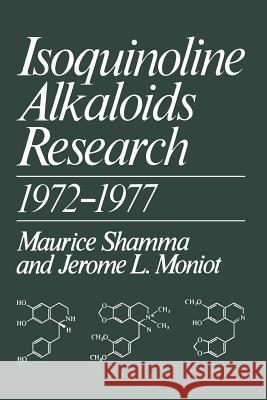
Maurice Shamma
Isoquinoline Alkaloids Research 1972-1977 Maurice Shamma 9781461588214 Springer - książkaWidoczna okładka, to zdjęcie poglądowe, a rzeczywista szata graficzna może różnić się od prezentowanej.

Isoquinoline Alkaloids Research 1972-1977

ISBN-13: 9781461588214 / Angielski / Miękka / 2012 / 426 str.

Maurice Shamma
cena 201,24
(netto: 191,66 VAT:  5%)

Najniższa cena z 30 dni: 192,74
Termin realizacji zamówienia:
ok. 22 dni roboczych.

Darmowa dostawa!

Substantial advances in the realm of isoquinoline alkaloids have occurred since The Isoquinoline Alkaloids, Chemistry and Pharmacology, was published in 1972. The present volume represents an effort to describe important developments since that time. The organization of the present book is essentially the same as in The Isoquinoline Alkaloids. Each chapter begins with a discussion of structural elucidation and synthesis, a description of typical reactions then follows, and the chapter ends with coverage of biogenesis, pharmacology, and spectroscopy. New chapters have had to be added to describe the completely new alkaloidal types discovered since 1972. These include baluchistanamine (an isoquinolone benzylisoquinoline dimer), the aporphine-pavine dimers, the 4,5-dioxoapor phines, the secoberbines, the 3-arylisoquinolines, eupolauridine, and very recently imerubrine. Another new chapter discusses the chemistry of the aristolo chic acids and aristolactams, a group of substituted phenanthrenes, obviously of isoquinoline derivation in spite of the fact that they do not incorporate a basic nitrogen function. The aristolochic acids and aristolactams were not in cluded in The Isoquinoline Alkaloids even though they were known at the time that book was written. On the other hand, one group of alkaloids which was included in The Isoquinoline Alkaloids and nevertheless was deemed not to belong properly in the present work is the naphthalenoisoquinolines, which include ancistro cladine and its relatives. These bases do not originate biogenetically. from tyrosine, and beside incorporating tetrahydroisoquinoline moieties show no clear structural relationship to the more orthodox isoquinoline alkaloids.


Kategorie:
Nauka, Chemia
Kategorie BISAC:
Science > Chemia - Organiczna
Gardening > General
Wydawca:
Springer
Język:
Angielski
ISBN-13:
9781461588214
Rok wydania:
2012
Wydanie:
Softcover Repri
Ilość stron:
426
Waga:
0.59 kg
Wymiary:
22.86 x 15.24 x 2.29
Oprawa:
Miękka
Wolumenów:
01
Dodatkowe informacje:
Wydanie ilustrowane

1. The Simple Isoquinolines.- 1.1. Introduction.- 1.2. Synthesis.- 1.2.1. Pictet-Spengler Cyclization.- 1.2.2. Bischler-Napieralski Cyclization.- 1.2.3. Pomeranz-Fritsch Cyclization.- 1.2.4. Photocyclization of N-Chloroacetylbenzylamines.- 1.2.5. Amination of Benzopyrylium Salts.- 1.2.6. A New Isoquinoline Synthesis via Ortho-Substituted Benzylamines.- 1.2.7. Cyclization of Aralkenyl-Substituted Quaternary Ammonium Salts.- 1.3. Some Reactions of Simple Isoquinolines.- 1.3.1. Oxidation.- 1.3.2. Alkylation and Acylation.- 1.3.3. Fluorophore-Forming Reactions.- 1.3.4. Electrolytic Oxidation.- 1.3.5. Rearrangements of 1,2-Dihydroisoquinolines.- 1.4. Biogenesis.- 1.5. Pharmacology.- 1.6. CMR Spectroscopy.- References and Notes.- 2. The Benzylisoquinolines.- 2.1. Introduction.- 2.2. Synthesis.- 2.2.1. The Use of Reissert Compounds.- 2.2.2. Friedel-Crafts Alkylation and Acylation.- 2.2.3. Pictet Spengler Condensation.- 2.2.4. The Pomeranz-Fritsch/Reissert Approach.- 2.2.5. Cyclization of N-Sulfonylphenethylamines.- 2.3. Reactions of Benzylisoquinolines.- 2.3.1. Oxidation.- 2.3.2. Reduction and the Chemistry of the Reduction Products.- 2.3.3. Photolysis.- 2.3.4. Acetonylation at C-6?.- 2.3.5. Fission of Ring B.- 2.3.6. Rearrangement of 1,2-Dihydroisoquinolines.- 2.3.7. Transformation of ?-Ketobenzylisoquinolines.- 2.3.8. Electrolytic Oxidation.- 2.3.9. Oxidative Dimerization.- 2.4. Conversion of Benzylisoquinolines to Morphine.- 2.5. Cryptopleurospermine, an Unusual Natural ?-Dione.- 2.6. Biogenesis.- 2.7. Pharmacology.- 2.8. NMR Spectroscopy.- 2.9. UV Spectroscopy.- References and Notes.- 3. The Isoquinolones.- 3.1. Introduction.- 3.2. Siamine.- 3.3. Synthesis and Reactions of Isoquinolones 58 References.- 4. The Pavines and Isopavines.- 4.1. Synthesis.- 4.1.1. Pavines.- 4.1.2. Isopavines.- 4.2. Biogenesis.- 4.3. Pharmacology.- 4.4. Spectroscopy and Crystallography.- References and Notes.- 5. The Bisbenzylisoquinolines.- 5.1. Introduction.- 5.2. Stepinonine, an Unusual Bisbenzylisoquinoline.- 5.3. Synthesis.- 5.3.1. The Cava Modification of the Ullmann Reaction.- 5.3.2. The Inubushi Synthesis of Obaberine and Trilobine.- 5.3.3. The Use of Reissert Compounds.- 5.4. Controlled Oxidation.- 5.5. Some General Methods for Functional Group Modification of Isoquinoline Alkaloids.- 5.5.1. Selective Removal of an Aromatic Methylenedioxy Group.- 5.5.2. Deoxygenation of a Phenol.- 5.5.3. N-Demethylation of Tertiary Amines.- 5.5.4. N-Demethylation and N-Debenzylation of Quaternary Ammonium Salts.- 5.5.5. O-Demethylation and O-Debenzylation of Aromatic Ethers.- 5.5.6. Methylenation of Catechols.- 5.5.7. O-Methylation and Protection of Phenols.- 5.5.8. Aromatic Hydroxylation or Methoxylation.- 5.6. Biogenesis.- 5.7. Pharmacology.- 5.8. Spectral Measurements and CD Curves.- 5.9. X-Ray Diffraction.- References and Notes.- 6. Baluchistanamine: An Isoquinolone-Benzylisoquinoline Dimer.- 6.1. Structure Elucidation and Synthesis.- 6.2. PMR Spectroscopy.- 6.3. UV Spectroscopy and Circular Dichroism.- References.- 7. The Cularines.- 7.1. Synthesis.- 7.2. Absolute Configuration.- 7.3. An Approach to the Synthesis of Cancentrine.- 7.4. CMR Spectroscopy.- References.- 8. The Dibenzopyrrocolines.- 8.1. Synthesis.- 8.1.1. Benzyne Intermediates.- 8.1.2. Enzymic Processes.- References.- 9. The Proaporphines.- 9.1. Introduction.- 9.2. Revision of Stereochemistry of the Reduced Proaporphines.- 9.3. Synthesis.- 9.4. Pharmacology.- 9.5. Spectral Studies.- References and Notes.- 10. The Aporphines.- 10.1. Introduction.- 10.2. Synthesis.- 10.2.1. Photolysis.- 10.2.2. The Use of VOCl3.- 10.2.3. The Use of VOF3-TFA.- 10.2.4. Electrolytic Oxidation.- 10.2.5. Oxidation with Cuprous Chloride and Oxygen.- 10.2.6. The Use of Lead Tetraacetate; Hydroxylation at C-4.- 10.2.7. Benzyne Intermediates.- 10.2.8. Enzymic Oxidative Coupling.- 10.2.9. Reissert Intermediates.- 10.2.10. Improved Pschorr Cyclizations.- 10.2.11. Coupling with Thallium Tristrifluoroacetate.- 10.3. Reactions of Aporphines.- 10.3.1. Oxidation and Formation of Dehydroaporphines and Oxoaporphines.- 10.3.2. Selective Cleavage of the Methylenedioxy Substituent.- 10.3.3. Dimerization.- 10.3.4. Hofmann and Emde Degradations.- 10.3.5. O-AcetyIation.- 10.3.6. Hydroxylation.- 10.3.7. Selective O-Demethylation and N-Demethylation.- 10.3.8. Protonation and Formylation of Dehydroaporphines.- 10.4. Absolute Configuration.- 10.5. Biogenesis.- 10.6. Pharmacology.- 10.7. NMR Spectroscopy.- References and Notes.- 11. Pakistanamine: A Proaporphine-Benzylisoquinoline Dimer.- 11.1. Synthesis.- References and Notes.- 12. The Aporphine-Benzylisoquinoline Dimers.- 12.1. Introduction.- 12.2. Structural Elucidation.- 12.3. Synthesis.- 12.4. Reactions.- 12.5. Biogenesis.- 12.6. Pharmacology.- 12.7. PMR Spectroscopy.- References and Notes.- 13. The Aporphine-Pavine Dimers.- 13.1. Introduction.- 13.2. Structural Elucidation.- 13.3. UV and IR Spectroscopy.- References.- 14. The Oxoaporphines.- 14.1. Introduction.- 14.2. Synthesis.- 14.3. Pharmacology.- 14.4. Spectral Characteristics.- References and Notes.- 15. The Phenanthrenes.- 15.1. Structural Elucidation and Synthesis.- 15.2. Pharmacology.- 15.3. Mass Spectroscopy.- 15.4. PMR Spectroscopy.- 15.5. UV Spectroscopy.- References and Notes.- 16. The 4,5-Dioxoaporphines.- 16.1. Introduction.- 16.2. A Revised Structure for Pontevedrine.- 16.3. Cepharadione-A and-B.- 16.4. Synthesis.- References.- 17. The Aristolochic Acids and Aristolactams.- 17.1. Introduction.- 17.2. Structural Elucidation.- 17.3. Synthesis.- 17.4. Biogenesis.- 17.5. Pharmacology.- 17.6. PMR Spectroscopy.- 17.7. UV and IR Spectroscopy.- References and Notes.- 18. The Dibenzazonines.- 18.1. Introduction.- 18.2. Structural Elucidation.- 18.3. Synthesis.- 18.3.1. Through a Benzyne Intermediate.- 18.3.2. By Photolysis.- 18.3.3. Through Rearrangements.- 18.4. Biogenesis.- 18.5. PMR Spectroscopy.- 18.6. UV Spectroscopy.- References.- 19. The Protoberberines and Retroprotoberberines.- 19.1. Introduction.- 19.2. Synthesis.- 19.2.1. Mannich Condensation.- 19.2.2. Variants of the Bischler-Napieralski Cyclization.- 19.2.3. Enamide Photocyclization.- 19.2.4. Thermolysis of Benzocyclobutenes.- 19.2.5. Pomeranz-Fritsch Cyclization.- 19.2.6. From Immonium Salts.- 19.2.7. From Protopines.- 19.2.8. From Spirobenzylisoquinolines.- 19.2.9. From Norphthalideisoquinolines.- 19.2.10. From Homophthalic Anhydrides.- 19.3. Reactions.- 19.3.1. Carbon-Nitrogen Bond Cleavage.- 19.3.2. Rearrangements.- 19.3.3. O-Demethylation of Berberinium Salts.- 19.3.4. Oxidation.- 19.3.5. The Chemistry of Oxybisberberine.- 19.3.6. Reactions with Alkylating and Acylating Agents.- 19.3.7. Transformations of Dehydroprotoberberines.- 19.3.8. Smiles Rearrangement.- 19.3.9. C-Acylation, a New Reaction of Benzylic N-Oxides.- 19.4. Biogenesis.- 19.5. Pharmacology.- 19.6. Mass Spectroscopy.- 19.7. NMR Spectroscopy.- 19.8. IR, UV, and Fluorescence Spectroscopy.- 19.9. Solidaline, a Modified Protoberberine Alkaloid.- References and Notes.- 20. The Secoberbines.- 20.1. Structural Elucidation and Synthesis.- 20.1.1. Canadaline, Aobamine, and Corydalisol.- 20.1.2. Hypecorine.- 20.1.3. Hypecorinine.- 20.1.4. Peshawarine.- 20.2. Absolute Configuration.- 20.3. Biogenesis.- 20.4. Mass Spectroscopy.- 20.5. PMR Spectroscopy.- 20.6. UV Spectroscopy.- References.- 21. The Benzophenanthridines.- 21.1. Introduction.- 21.2. Arnottianamide and Isoarnottianamide.- 21.3. Synthesis.- 21.3.1. Photocyclization.- 21.3.2. Benzyne Intermediates.- 21.3.3. From Protopines and Protoberberines.- 21.3.4. Mannich Cyclization.- 21.3.5. Friedel-Crafts Alkylation Using an Immonium Salt.- 21.3.6. Condensation of an Imine with a Homophthalic Ester.- 21.4. Conversion of Isoquinolinium Salts into Pseudobases.- 21.5. Biogenesis.- 21.6. Pharmacology.- 21.7. Spectral Characteristics.- 21.8. X-Ray Crystallography.- References and Notes.- 22. The 3-Arylisoquinolines.- 22.1. Introduction.- 22.2. Structural Elucidation and Synthesis.- 22.2.1. Corydalic Acid Methyl Ester.- 22.2.2. Corydamine and N-Formylcorydamine.- 22.3. Biogenesis.- 22.4. Pharmacology.- 22.5. Mass Spectroscopy.- 22.6. PMR Spectroscopy.- 22.7. UV Spectroscopy.- References and Note.- 23. The Protopines.- 23.1. Syntheses and Interconversions.- 23.1.1. The Transformation of a 13-Oxoprotoberberinium N-Metho Salt to a Protopine Analog.- 23.1.2. The Conversion of an Aporhoeadane to Allocryptopine.- 23.2. Reactions.- 23.3. Biogenesis.- 23.4. Pharmacology.- 23.5. Spectral Studies.- References and Notes.- 24. The Phthalideisoquinolines.- 24.1. Introduction.- 24.2. Synthesis.- 24.2.1. From a Substituted 2-Phenyl-1,3-indandione.- 24.2.2. By Condensation of an Immonium Salt with an ?-Diazotoluene.- 24.2.3. From Papaverine.- 24.2.4. From a Benzindenoazepine.- 24.2.5. An Improvement of the Haworth-Pinder Synthesis.- 24.2.6. From Protoberberinium Salts.- 24.3. Chemistry of (-)-?-Narcotine and Related Compounds.- 24.4. Interconversions Among Lactonic Phthalideisoquinolines.- 24.5. Pharmacology.- 24 6 PMR and CMR Spectra of Phthalideisoquinolines; Conformational Analysis.- References and Notes.- 25. The Spirobenzylisoquinolines.- 25.1. Introduction.- 25.2. Synthesis.- 25.2.1. Modified 1,2-Indandione and 1,2,3-Indantrione Approaches.- 25.2.2. From Substituted 2-Phenyl-1,3-indandiones.- 25.2.3. By Conversion of a 1-Indanone to a 1,3-Indandione.- 25.2.4. By Thermolysis of Benzoeyclobutenes.- 25.2.5. Photolytic Protoberberine ? Spirobenzylisoquinoline Rearrangements.- 25.2.6. From Phthalideisoquinolines.- 25.2.7. From Tetrahydroprotoberberinium Salts.- 25.3. Reductive Rearrangement of Spirobenzylisoquinolines to Dibenzocyclopentazepines.- 25.4. Biogenesis.- 25.5. Mass Spectroscopy.- References and Notes.- 26. The Rhoeadines.- 26.1. Introduction.- 26.2. Synthesis.- 26.2.1. From Phthalideisoquinolines.- 26.2.2. From Spirobenzylisoquinolines and Dibenzocyclopentazepines.- 26.2.3. By Ring Expansion of a Pseudobase.- 26.2.4. From a Tetrahydroprotoberberine.- 26.3. Benzazepine Preparations of Potential Use in Rhoeadine Synthesis.- 26.4. Reactions.- 26.5. Stereochemistry and Absolute Configuration.- 26.6. Biogenesis.- 26.7. CMR Spectroscopy.- References and Notes.- 27. Emetine and Related Bases.- 27.1. Introduction.- 27.2. Structural Elucidation and Synthesis.- 27.2.1. Ankorine.- 27.2.2. Alangiside.- 27.2.3. Emetine.- 27.3. Pharmacology.- 27.4. CMR Spectroscopy.- References and Notes.- 28. The Phenethylisoquinolines.- 28.1. Synthesis and Chemistry.- 28.2. Pharmacology.- 28.3. Yolantinine, a New Dimeric Phenethylisoquinoline Alkaloid.- References and Note.- 29. The Homoaporphines and Homoproaporphines.- 29.1. Introduction.- 29.1.1. The Structural Elucidation of Kesselringine.- 29.2. Synthesis.- 29.2.1. Direct Cyclization of a Tetrahydrophenethylisoquinoline.- 29.2.2. Through the Intermediacy of Dienones.- 29.2.3. Phenolic Oxidative Coupling.- 29.3. Racemization of Homoproaporphines.- References and Notes.- 30. The 1-Phenylisoquinolines.- 30.1. Introduction.- 30.2. Synthesis.- 30.3. Stereochemistry.- 30.4. Biogenesis.- 30.5. Pharmacology.- References and Note.- 31. The N-Benzyltetrahydroisoquinolines.- References.- 32. Cherylline, a 4-Arylisoquinoline.- References.- 33. The Azafluoranthenes and Tropoloisoquinolines.- References.- 34. Eupolauridine: A 1,6-Diazafluoranthene.- References.- Author Index.


Udostępnij

Facebook - konto krainaksiazek.pl


Opinie o Krainaksiazek.pl na Opineo.pl

Partner Mybenefit

Krainaksiazek.pl w programie rzetelna firma Krainaksiaze.pl - płatności przez paypal

Czytaj nas na:

Facebook - krainaksiazek.pl
  • książki na zamówienie
  • granty
  • książka na prezent
  • kontakt
  • pomoc
  • opinie
  • regulamin
  • polityka prywatności

Zobacz:

  • Księgarnia czeska

  • Wydawnictwo Książkowe Klimaty

1997-2026 DolnySlask.com Agencja Internetowa

© 1997-2022 krainaksiazek.pl
     
KONTAKT | REGULAMIN | POLITYKA PRYWATNOŚCI | USTAWIENIA PRYWATNOŚCI
Zobacz: Księgarnia Czeska | Wydawnictwo Książkowe Klimaty | Mapa strony | Lista autorów
KrainaKsiazek.PL - Księgarnia Internetowa

Polityka prywatnosci - link
Krainaksiazek.pl - płatnośc Przelewy24
Przechowalnia Przechowalnia






