• Wyszukiwanie zaawansowane
  • Kategorie
  • Kategorie BISAC
  • Książki na zamówienie
  • Promocje
  • Granty
  • Książka na prezent
  • Opinie
  • Pomoc
  • Załóż konto
  • Zaloguj się

Introductory Bioelectronics: For Engineers and Physical Scientists » książka


zaloguj się | załóż konto
Logo Krainaksiazek.pl

koszyk

konto

szukaj
topmenu
Księgarnia internetowa
Szukaj
Książki na zamówienie
Promocje
Granty
Książka na prezent
Moje konto
Pomoc
 
 
Wyszukiwanie zaawansowane
Pusty koszyk
Bezpłatna dostawa dla zamówień powyżej 20 złBezpłatna dostawa dla zamówień powyżej 20 zł

Kategorie główne

• Nauka
 [2948695]
• Literatura piękna
 [1824038]

  więcej...
• Turystyka
 [70868]
• Informatyka
 [151073]
• Komiksy
 [35227]
• Encyklopedie
 [23181]
• Dziecięca
 [621575]
• Hobby
 [138961]
• AudioBooki
 [1642]
• Literatura faktu
 [228651]
• Muzyka CD
 [371]
• Słowniki
 [2933]
• Inne
 [445341]
• Kalendarze
 [1243]
• Podręczniki
 [164416]
• Poradniki
 [479493]
• Religia
 [510449]
• Czasopisma
 [502]
• Sport
 [61384]
• Sztuka
 [243086]
• CD, DVD, Video
 [3417]
• Technologie
 [219673]
• Zdrowie
 [100865]
• Książkowe Klimaty
 [124]
• Zabawki
 [2168]
• Puzzle, gry
 [3372]
• Literatura w języku ukraińskim
 [260]
• Art. papiernicze i szkolne
 [7838]
Kategorie szczegółowe BISAC

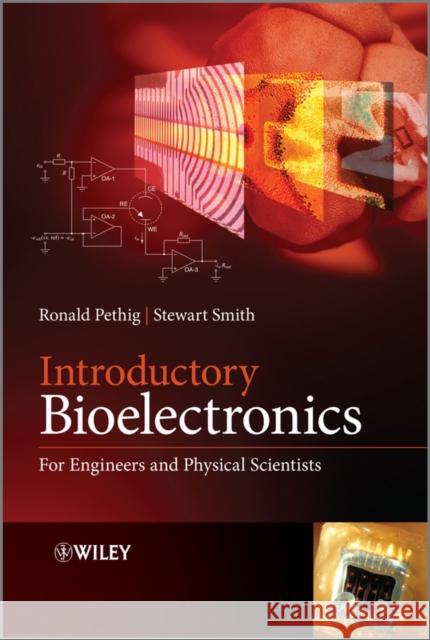
Introductory Bioelectronics: For Engineers and Physical Scientists

ISBN-13: 9781119970873 / Angielski / Twarda / 2012 / 462 str.
Ronald R. Pethig; Stewart Smith
Introductory Bioelectronics: For Engineers and Physical Scientists Pethig, Ronald R. 9781119970873 John Wiley & Sons - książkaWidoczna okładka, to zdjęcie poglądowe, a rzeczywista szata graficzna może różnić się od prezentowanej.

Introductory Bioelectronics: For Engineers and Physical Scientists

ISBN-13: 9781119970873 / Angielski / Twarda / 2012 / 462 str.

Ronald R. Pethig; Stewart Smith
cena 349,61
(netto: 332,96 VAT:  5%)

Najniższa cena z 30 dni: 345,32
Termin realizacji zamówienia:
ok. 30 dni roboczych.

Darmowa dostawa!

Bioelectronics is a rich field of research involving the application of electronics engineering principles to biology, medicine, and the health sciences. With its interdisciplinary nature, bioelectronics spans state-of-the-art research at the interface between the life sciences, engineering and physical sciences. Introductory Bioelectronics offers a concise overview of the field and teaches the fundamentals of biochemical, biophysical, electrical, and physiological concepts relevant to bioelectronics. It is the first book to bring together these various topics, and to explain the basic theory and practical applications at an introductory level. The authors describe and contextualise the science by examining recent research and commercial applications. They also cover the design methods and forms of instrumentation that are required in the application of bioelectronics technology. The result is a unique book with the following key features:

  • an interdisciplinary approach, which develops theory through practical examples and clinical applications, and delivers the necessary biological knowledge from an electronic engineer's perspective
  • a problem section in each chapter that readers can use for self-assessment, with model answers given at the end of the book along with references to key scientific publications
  • discussions of new developments in the bioelectronics and biosensors fields, such as microfluidic devices and nanotechnology
Supplying the tools to succeed, this text is the best resource for engineering and physical sciences students in bioelectronics, biomedical engineering and micro/nano-engineering. Not only that, it is also a resource for researchers without formal training in biology, who are entering PhD programmes or working on industrial projects in these areas.

Kategorie:
Nauka, Medycyna
Kategorie BISAC:
Science > Biotechnology
Science > Biochemia
Wydawca:
John Wiley & Sons
Język:
Angielski
ISBN-13:
9781119970873
Rok wydania:
2012
Ilość stron:
462
Waga:
0.81 kg
Wymiary:
25.15 x 17.53 x 2.54
Oprawa:
Twarda
Wolumenów:
01
Dodatkowe informacje:
Bibliografia
Wydanie ilustrowane

About the Authors xiii

Foreword xv

Preface xvii

Acknowledgements xix

1 Basic Chemical and Biochemical Concepts 1

1.1 Chapter Overview 1

1.2 Energy and Chemical Reactions 1

1.3 Water and Hydrogen Bonds 15

1.4 Acids, Bases and pH 18

1.5 Summary of Key Concepts 25

2 Cells and their Basic Building Blocks 29

2.1 Chapter Overview 29

2.2 Lipids and Biomembranes 29

2.3 Carbohydrates and Sugars 32

2.4 Amino Acids, Polypeptides and Proteins 34

2.5 Nucleotides, Nucleic Acids, DNA, RNA and Genes 43

2.6 Cells and Pathogenic Bioparticles 51

2.7 Summary of Key Concepts 70

3 Basic Biophysical Concepts and Methods 73

3.1 Chapter Overview 73

3.2 Electrostatic Interactions 74

3.3 Hydrophobic and Hydration Forces 90

3.4 Osmolarity, Tonicity and Osmotic Pressure 91

3.5 Transport of Ions and Molecules across Cell Membranes 94

3.6 Electrochemical Gradients and Ion Distributions Across Membranes 99

3.7 Osmotic Properties of Cells 103

3.8 Probing the Electrical Properties of Cells 105

3.9 Membrane Equilibrium Potentials 111

3.10 Nernst Potential and Nernst Equation 112

3.11 The Equilibrium (Resting) Membrane Potential 114

3.12 Membrane Action Potential 116

3.13 Channel Conductance 120

3.14 The Voltage Clamp 121

3.15 Patch–Clamp Recording 122

3.16 Electrokinetic Effects 124

4 Spectroscopic Techniques 147

4.1 Chapter Overview 147

4.2 Introduction 148

4.3 Classes of Spectroscopy 151

4.4 The Beer–Lambert Law 165

4.5 Impedance Spectroscopy 170

5 Electrochemical Principles and Electrode Reactions 177

5.1 Chapter Overview 177

5.2 Introduction 178

5.3 Electrochemical Cells and Electrode Reactions 180

5.4 Electrical Control of Electron Transfer Reactions 194

5.5 Reference Electrodes 203

5.6 Electrochemical Impedance Spectroscopy (EIS) 208

6 Biosensors 215

6.1 Chapter Overview 215

6.2 Introduction 215

6.3 Immobilisation of the Biosensing Agent 217

6.4 Biosensor Parameters 218

6.5 Amperometric Biosensors 228

6.6 Potentiometric Biosensors 233

6.7 Conductometric and Impedimetric Biosensors 237

6.8 Sensors Based on Antibody Antigen Interaction 240

6.9 Photometric Biosensors 242

6.10 Biomimetic Sensors 245

6.11 Glucose Sensors 247

6.12 Biocompatibility of Implantable Sensors 252

7 Basic Sensor Instrumentation and Electrochemical Sensor Interfaces 259

7.1 Chapter Overview 259

7.2 Transducer Basics 260

7.3 Sensor Amplification 262

7.4 The Operational Amplifier 264

7.5 Limitations of Operational Amplifiers 269

7.6 Instrumentation for Electrochemical Sensors 271

7.7 Impedance Based Biosensors 278

7.8 FET Based Biosensors 284

8 Instrumentation for Other Sensor Technologies 297

8.1 Chapter Overview 297

8.2 Temperature Sensors and Instrumentation 298

8.3 Mechanical Sensor Interfaces 304

8.4 Optical Biosensor Technology 325

8.5 Transducer Technology for Neuroscience and Medicine 335

9 Microfluidics: Basic Physics and Concepts 343

9.1 Chapter Overview 343

9.2 Liquids and Gases 343

9.3 Fluids Treated as a Continuum 346

9.4 Basic Fluidics 354

9.5 Fluid Dynamics 356

9.6 Navier–Stokes Equations 365

9.7 Continuum versus Molecular Model 369

9.8 Diffusion 378

9.9 Surface Tension 383

10 Microfluidics: Dimensional Analysis and Scaling 391

10.1 Chapter Overview 391

10.2 Dimensional Analysis 391

10.3 Dimensionless Parameters 400

10.4 Applying Nondimensional Parameters to Practical Flow Problems 411

10.5 Characteristic Time Scales 412

10.6 Applying Micro– and Nano–Physics to the Design of Microdevices 413

Problems 415

References 416

Appendix A: SI Prefixes 417

Appendix B: Values of Fundamental Physical Constants 419

Appendix C: Model Answers for Self–study Problems 421

Index 435

Professor Ronald Pethig, Bioelectronics, School of Engineering, University of Edinburgh He has PhD degrees in electrical engineering and physical chemistry, and a D.Sc degree for work in the field of biomolecular electronics. He is author of one book ( Dielectric and Electronic Properties of Biological Materials, Wiley) and more than 200 scientific papers in the field of biomolecular electronics and dielectrophoresis. He has received several awards, including in 2001 being the first recipient of the Herman P Schwan Award for work in biodielectrics. He serves on the editorial boards of several scientific journals, including acting as editor–in–chief of the IET journal Nanobiotechnology.

Stewart Smith, RCUK Academic Fellow, School of Engineering, University of Edinburgh He has a PhD in microelectronics and has authored over 60 scientific papers on subjects ranging from implantable drug delivery systems to test structures for the characterisation of MEMS processes. He is based at the Scottish Microelectronics Centre in Edinburgh where he works on the development of biomedical microsystems. He is a member of the technical committee for the IEEE International Conference on Microelectronic Test Structures.

Bioelectronics is a rich field of research involving the application of electronics engineering principles to biology, medicine, and the health sciences. With its interdisciplinary nature, bioelectronics spans state–of–the–art research at the interface between the life sciences, engineering and physical sciences. 

Introductory Bioelectronics offers a concise overview of the field and teaches the fundamentals of biochemical, biophysical, electrical, and physiological concepts relevant to bioelectronics. It is the first book to bring together these various topics, and to explain the basic theory and practical applications at an introductory level. 

The authors describe and contextualise the science by examining recent research and commercial applications. They also cover the design methods and forms of instrumentation that are required in the application of bioelectronics technology. The result is a unique book with the following key features: 

  • an interdisciplinary approach, which develops theory through practical examples and clinical applications, and delivers the necessary biological knowledge from an electronic engineer s perspective
  • a problem section in each chapter that readers can use for self–assessment, with model answers given at the end of the book along with references to key scientific publications
  • discussions of new developments in the bioelectronics and biosensors fields, such as microfluidic devices and nanotechnology


Supplying the tools to succeed, this text is the best resource for engineering and physical sciences students in bioelectronics, biomedical engineering and micro/nano–engineering.  Not only that, it is also a resource for researchers without formal training in biology, who are entering PhD programmes or working on industrial projects in these areas.

Smith, Stewart Stewart Smith is an Australian and a software engi... więcej >


Udostępnij

Facebook - konto krainaksiazek.pl


Opinie o Krainaksiazek.pl na Opineo.pl

Partner Mybenefit

Krainaksiazek.pl w programie rzetelna firma Krainaksiaze.pl - płatności przez paypal

Czytaj nas na:

Facebook - krainaksiazek.pl
  • książki na zamówienie
  • granty
  • książka na prezent
  • kontakt
  • pomoc
  • opinie
  • regulamin
  • polityka prywatności

Zobacz:

  • Księgarnia czeska

  • Wydawnictwo Książkowe Klimaty

1997-2026 DolnySlask.com Agencja Internetowa

© 1997-2022 krainaksiazek.pl
     
KONTAKT | REGULAMIN | POLITYKA PRYWATNOŚCI | USTAWIENIA PRYWATNOŚCI
Zobacz: Księgarnia Czeska | Wydawnictwo Książkowe Klimaty | Mapa strony | Lista autorów
KrainaKsiazek.PL - Księgarnia Internetowa

Polityka prywatnosci - link
Krainaksiazek.pl - płatnośc Przelewy24
Przechowalnia Przechowalnia






