• Wyszukiwanie zaawansowane
  • Kategorie
  • Kategorie BISAC
  • Książki na zamówienie
  • Promocje
  • Granty
  • Książka na prezent
  • Opinie
  • Pomoc
  • Załóż konto
  • Zaloguj się

Introduction to Statistical Analysis of Laboratory Data » książka

zaloguj się | załóż konto
Logo Krainaksiazek.pl

koszyk

konto

szukaj
topmenu
Księgarnia internetowa
Szukaj
Książki na zamówienie
Promocje
Granty
Książka na prezent
Moje konto
Pomoc
 
 
Wyszukiwanie zaawansowane
Pusty koszyk
Bezpłatna dostawa dla zamówień powyżej 20 złBezpłatna dostawa dla zamówień powyżej 20 zł

Kategorie główne

• Nauka
 [2944077]
• Literatura piękna
 [1814251]

  więcej...
• Turystyka
 [70679]
• Informatyka
 [151074]
• Komiksy
 [35590]
• Encyklopedie
 [23169]
• Dziecięca
 [611005]
• Hobby
 [136031]
• AudioBooki
 [1718]
• Literatura faktu
 [225599]
• Muzyka CD
 [379]
• Słowniki
 [2916]
• Inne
 [443741]
• Kalendarze
 [1187]
• Podręczniki
 [166463]
• Poradniki
 [469211]
• Religia
 [506887]
• Czasopisma
 [481]
• Sport
 [61343]
• Sztuka
 [242115]
• CD, DVD, Video
 [3348]
• Technologie
 [219293]
• Zdrowie
 [98602]
• Książkowe Klimaty
 [124]
• Zabawki
 [2385]
• Puzzle, gry
 [3504]
• Literatura w języku ukraińskim
 [260]
• Art. papiernicze i szkolne
 [7151]
Kategorie szczegółowe BISAC

Introduction to Statistical Analysis of Laboratory Data

ISBN-13: 9781118736869 / Angielski / Twarda / 2015 / 256 str.
Bartolucci, Alfred; Singh, Karan P.; Bae, Sejong
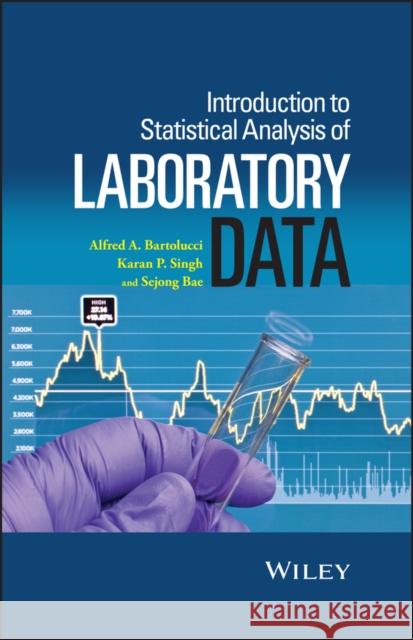
Introduction to Statistical Analysis of Laboratory Data Bartolucci, Alfred; Singh, Karan P.; Bae, Sejong 9781118736869 John Wiley & Sons - książkaWidoczna okładka, to zdjęcie poglądowe, a rzeczywista szata graficzna może różnić się od prezentowanej.

Introduction to Statistical Analysis of Laboratory Data

ISBN-13: 9781118736869 / Angielski / Twarda / 2015 / 256 str.

Bartolucci, Alfred; Singh, Karan P.; Bae, Sejong
cena 535,91
(netto: 510,39 VAT:  5%)

Najniższa cena z 30 dni: 529,37
Termin realizacji zamówienia:
ok. 30 dni roboczych.

Darmowa dostawa!

Introduction to Statistical Analysis of Laboratory Data presents a detailed discussion of important statistical concepts and methods of data presentation and analysis

  • Provides detailed discussions on statistical applications including a comprehensive package of statistical tools that are specific to the laboratory experiment process
  • Introduces terminology used in many applications such as the interpretation of assay design and validation as well as -fit for purpose- procedures including real world examples
  • Includes a rigorous review of statistical quality control procedures in laboratory methodologies and influences on capabilities
  • Presents methodologies used in the areas such as method comparison procedures, limit and bias detection, outlier analysis and detecting sources of variation
  • Analysis of robustness and ruggedness including multivariate influences on response are introduced to account for controllable/uncontrollable laboratory conditions


Kategorie:
Nauka, Chemia
Kategorie BISAC:
Mathematics > Prawdopodobieństwo i statystyka
Medical > Diagnostyka medyczna
Wydawca:
John Wiley & Sons
Język:
Angielski
ISBN-13:
9781118736869
Rok wydania:
2015
Ilość stron:
256
Waga:
0.54 kg
Wymiary:
23.62 x 15.24 x 2.03
Oprawa:
Twarda
Wolumenów:
01
Dodatkowe informacje:
Bibliografia

"The book presents a detailed discussion of important statistical concepts and methods of data presentation and analysis.
–Provides detailed discussions on statistical applications including a comprehensive package of statistical tools that are specific to the laboratory experiment process.
– Introduces terminology used in many applications such as the interpretation of assay design and validation as well as fit for purpose" procedures including real world examples." (Zentralblatt MATH 2016)

Preface xi

Acknowledgments xv

1 DESCRIPTIVE STATISTICS 1

1.1 Measures of Central Tendency 1

1.2 Measures of Variation 4

1.3 Laboratory Example 7

1.4 Putting it All Together 8

1.5 Summary 10

References 10

2 DISTRIBUTIONS AND HYPOTHESIS TESTING IN FORMAL STATISTICAL LABORATORY PROCEDURES 11

2.1 Introduction 11

2.2 Confidence Intervals 19

2.2.1 Confidence Interval (CI) for the Population Mean The t–Distribution 20

2.2.2 Confidence Interval for the Variance and Standard Deviation 21

2.3 Inferential Statistics Hypothesis Testing 23

2.3.1 t–Test for Means 25

2.3.2 Test for Variation: Coefficient of Variation (CV) 28

2.3.3 Two–Sample Test of the Population Means 29

2.3.4 One–Way Analysis of Variance (ANOVA) 34

2.3.5 Nonparametric Tests for Skewed Data 40

References 41

3 METHOD VALIDATION 43

3.1 Introduction 43

3.2 Accuracy 45

3.2.1 Method 1 45

3.2.2 Method 2 56

3.3 Brief Introduction to Bioassay 59

3.3.1 Direct Assay 59

3.3.2 Indirect Assay 61

3.4 Sensitivity, Specificity (Selectivity) 69

3.5 Method Validation and Method Agreement Bland–Altman 73

References 76

4 METHODOLOGIES IN OUTLIER ANALYSIS 79

4.1 Introduction 79

4.2 Some Outlier Determination Techniques 80

4.2.1 Grubb Statistic 82

4.2.2 Other Forms of the Grubb Statistic 84

4.2.3 Studentized Range Statistic 85

4.2.4 Sequential Test of Many Outliers 86

4.2.5 Mahalanobis Distance Measure 88

4.2.6 Dixon Q–Test for a Single Outlier 91

4.2.7 The Box Plot 94

4.2.8 Median Absolute Deviation 95

4.3 Combined Method Comparison Outlier Analysis 96

4.3.1 Further Outlier Considerations 96

4.3.2 Combined Method Comparison Outlier Analysis Refined Method Comparisons Using Bland Altman 98

4.4 Some Consequences of Outlier Removal 103

4.5 Considering Outlier Variance 104

4.5.1 The Cochran C test 104

4.5.2 Cochran G Test 107

References 110

5 STATISTICAL PROCESS CONTROL 113

5.1 Introduction 113

5.2 Control Charts 115

5.2.1 Means (X–bar) Control Charts 117

5.2.2 Range Control Charts 122

5.2.3 The S–Chart 124

5.2.4 The Median Chart 126

5.2.5 Mean (X–bar) and S–Charts Based on the Median Absolute Deviation (MAD) 128

5.3 Capability Analysis 131

5.4 Capability Analysis An Alternative Consideration 137

References 139

6 LIMITS OF CALIBRATION 141

6.1 Calibration: Limit Strategies for Laboratory Assay Data 141

6.1.1 Definition Calibration 141

6.2 Limit Strategies 142

6.2.1 Example Estimation of LoB and LoD for Drug Assay 142

6.2.2 LoQ Results 144

6.2.3 A Comparison of Empirical and Statistical Approaches to the LoD and LoQ 145

6.2.4 Example LoD/LoQ, GC MS Approach 145

6.2.5 LoD/LoQ, GC MS Approach 146

6.2.6 Explanation of the Difficulty of the Statistical Methodology for the LoD and LoQ 147

6.2.7 Another LoQ Method 151

6.3 Method Detection Limits (EPA) 151

6.3.1 Method Detection Limits 151

6.3.2 Example Atrazine by Gas Chromatography (GC) 152

6.3.3 LoD and LoQ Summary 153

6.4 Data Near the Detection Limits 154

6.4.1 Biased Estimators 154

6.4.2 Computing Some Statistics with the LoD in the Data 154

6.5 More on Statistical Management of Nondetects 156

6.5.1 Model–Based Examples of Measuring Nondetects 157

6.5.2 An Alternative Regression Approach with Improvements (Refer to the Box Cox Transformation in Chapter 5) 160

6.5.3 Extension of the ROS Method for Multiple NDs in Various Positions 163

6.5.4 Cohen s Adjustment 165

6.6 The Kaplan Meier Method (Nonparametric Approach) for Analysis of Laboratory Data with Nondetects 170

References 174

7 CALIBRATION BIAS 177

7.1 Error 177

7.1.1 Types of Error 179

7.2 Uncertainty 180

7.3 Sources of Uncertainty 180

7.4 Estimation Methods of Uncertainty 181

7.4.1 Statistical Estimation Methods of Type A Uncertainty 181

7.4.2 Estimation Methods of Type B Uncertainty 183

7.4.3 Estimation Methods of Combined and Expanded Uncertainties (Normal Data) 187

7.4.4 Estimation Methods of Combined and Expanded Uncertainties (Nonnormal Data) 190

7.4.5 Another Method of Estimating Uncertainties for Nonnormal Data (Nonparametric) 192

7.5 Calibration Bias 194

7.5.1 Gas Chromatographic/Mass Spectrometric (GC MS) Calibration Bias 197

7.5.2 Discussion 205

7.6 Multiple Instruments 205

7.7 Crude Versus Precise Methodologies 208

References 210

8 ROBUSTNESS AND RUGGEDNESS 213

8.1 Introduction 213

8.2 Robustness 214

8.3 Ruggedness 216

8.4 An Alternative Procedure for Ruggedness Determination 224

8.5 Ruggedness and System Suitability Tests 227

8.5.1 Determining the SST Limits from Replicated

Experimentation 228

8.5.2 Determining the SST Limits from Statistical Prediction 231

References 233

Index 235

Alfred A. Bartolucci is Professor Emeritus in the Department of Biostatistics, School of Public Health, University of Alabama at Birmingham. He has over 300 peer reviewed publications (manuscripts and book chapters) in the areas of original statistical methodologic research and clinical and laboratory statistical applications. An endowed scholarship in Biostatistics was established at UAB in his honor.

Karan P. Singh is currently Professor of Medicine and serves as Director of the Biostatistics and Bioinformatics Shared Facility at the University of Alabama at Birmingham Comprehensive Cancer Center. He has authored or co–authored over 250 peer–reviewed articles, book chapters and peer–reviewed congress or conference proceedings. He is a Fellow of the American Statistical Association.

Sejong Bae is Professor of Medicine and serves as Co– Director of the Biostatistics and Bioinformatics Shared Facility, Deputy Director of the Coronary Artery Risk Development in Young Adults Coordination Center, and Director of Data, Information, and Statistics Core in the Division of Preventive Medicine In 2009 he was elected to the International Statistical Institute.

Presents a detailed discussion of important statistical concepts and methods of data presentation and analysis

There is an unmet need to have the necessary statistical tools in a comprehensive package with a focus on laboratory experimentation. The study of the statistical handling of laboratory data from the design, analysis and graphical perspective is essential for understanding pharmaceutical research and development of results involving practical quantitative interpretation and communication of the experimental process.

Introduction to Statistical Analysis of Laboratory Data presents a detailed discussion of important basic statistical concepts and methods of data presentation and analysis in aspects of biological experimentation requiring a fundamental knowledge of probability and the foundations of statistical inference, including basic statistical terminology such as simple geometric statistics and transformations needed to effectively communicate and understand ones data results.

Advanced topics of the book go beyond the basics and cover more complex issues in laboratory investigations with examples, including association studies including correlation and regression analysis with laboratory applications including dose response and non–linear dose response considerations. Where relevant, the procedures provided follow the CLSI (Clinical and Laboratory Standards Institute) guidelines for data handling and presentation.

Introduction to Statistical Analysis of Laboratory Data Presents:

  • A comprehensive package of statistical tools (simple, cross sectional, longitudinal) required in laboratory experimentation
  • A solid introduction to the terminology used in many applications such as the interpretation of assay design and validation as well as fit for purpose procedures
  • A rigorous review of statistical quality control procedures in laboratory methodologies and influences on capabilities
  • A thorough presentation of methodologies used in the areas such as method comparison procedures, limit and bias detection, outlier analysis and detecting sources of variation

Introduction to Statistical Analysis of Laboratory Data
is suitable for graduate students in biology, chemistry, physical pharmacy, pharmaceutics, environmental health sciences and engineering and biopharmaceutics.

Alfred A. Bartolucci is Professor Emeritus in the Department of Biostatistics, School of Public Health, University of Alabama at Birmingham. He has over 300 peer reviewed publications (manuscripts and book chapters) in the areas of original statistical methodologic research and clinical and laboratory statistical applications. An endowed scholarship in Biostatistics at UAB was established in his honor.

Karan P. Singh is currently Professor of Medicine and serves as Director of the Biostatistics and Bioinformatics Shared Facility at the University of Alabama at Birmingham Comprehensive Cancer Center. He has authored or co–authored over 250 peer–reviewed articles, book chapters and peer–reviewed congress or conference proceedings. He is a Fellow of the American Statistical association.

Sejong Bae is Professor of Medicine and serves as Co– Director of the Biostatistics and Bioinformatics Shared Facility, Deputy Director of the Coronary Artery Risk Development in Young Adults Coordination Center, and Director of Data, Information, and Statistics Core in the Division of Preventive Medicine. In 2009 he was elected to International Statistical Institute.


Udostępnij

Facebook - konto krainaksiazek.pl


Opinie o Krainaksiazek.pl na Opineo.pl

Partner Mybenefit

Krainaksiazek.pl w programie rzetelna firma Krainaksiaze.pl - płatności przez paypal

Czytaj nas na:

Facebook - krainaksiazek.pl
  • książki na zamówienie
  • granty
  • książka na prezent
  • kontakt
  • pomoc
  • opinie
  • regulamin
  • polityka prywatności

Zobacz:

  • Księgarnia czeska

  • Wydawnictwo Książkowe Klimaty

1997-2026 DolnySlask.com Agencja Internetowa

© 1997-2022 krainaksiazek.pl
     
KONTAKT | REGULAMIN | POLITYKA PRYWATNOŚCI | USTAWIENIA PRYWATNOŚCI
Zobacz: Księgarnia Czeska | Wydawnictwo Książkowe Klimaty | Mapa strony | Lista autorów
KrainaKsiazek.PL - Księgarnia Internetowa

Polityka prywatnosci - link
Krainaksiazek.pl - płatnośc Przelewy24
Przechowalnia Przechowalnia







