• Wyszukiwanie zaawansowane
  • Kategorie
  • Kategorie BISAC
  • Książki na zamówienie
  • Promocje
  • Granty
  • Książka na prezent
  • Opinie
  • Pomoc
  • Załóż konto
  • Zaloguj się

Introduction to Protein Structure Prediction: Methods and Algorithms » książka


zaloguj się | załóż konto
Logo Krainaksiazek.pl

koszyk

konto

szukaj
topmenu
Księgarnia internetowa
Szukaj
Książki na zamówienie
Promocje
Granty
Książka na prezent
Moje konto
Pomoc
 
 
Wyszukiwanie zaawansowane
Pusty koszyk
Bezpłatna dostawa dla zamówień powyżej 20 złBezpłatna dostawa dla zamówień powyżej 20 zł

Kategorie główne

• Nauka
 [2946600]
• Literatura piękna
 [1856966]

  więcej...
• Turystyka
 [72221]
• Informatyka
 [151456]
• Komiksy
 [35826]
• Encyklopedie
 [23190]
• Dziecięca
 [619653]
• Hobby
 [140543]
• AudioBooki
 [1577]
• Literatura faktu
 [228355]
• Muzyka CD
 [410]
• Słowniki
 [2874]
• Inne
 [445822]
• Kalendarze
 [1744]
• Podręczniki
 [167141]
• Poradniki
 [482898]
• Religia
 [510455]
• Czasopisma
 [526]
• Sport
 [61590]
• Sztuka
 [243598]
• CD, DVD, Video
 [3423]
• Technologie
 [219201]
• Zdrowie
 [101638]
• Książkowe Klimaty
 [124]
• Zabawki
 [2473]
• Puzzle, gry
 [3898]
• Literatura w języku ukraińskim
 [254]
• Art. papiernicze i szkolne
 [8170]
Kategorie szczegółowe BISAC

Introduction to Protein Structure Prediction: Methods and Algorithms

ISBN-13: 9780470470596 / Angielski / Twarda / 2010 / 520 str.
¬Abar;¬Abar
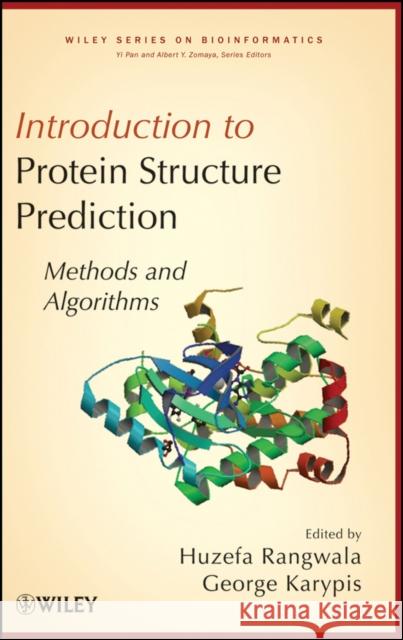
Introduction to Protein Structure Prediction: Methods and Algorithms Rangwala, Huzefa 9780470470596 JOHN WILEY AND SONS LTD - książkaWidoczna okładka, to zdjęcie poglądowe, a rzeczywista szata graficzna może różnić się od prezentowanej.

Introduction to Protein Structure Prediction: Methods and Algorithms

ISBN-13: 9780470470596 / Angielski / Twarda / 2010 / 520 str.

¬Abar;¬Abar
cena 740,10 zł
(netto: 704,86 VAT:  5%)

Najniższa cena z 30 dni: 736,06 zł
Termin realizacji zamówienia:
ok. 16-18 dni roboczych
Bez gwarancji dostawy przed świętami

Darmowa dostawa!

A look at the methods and algorithms used to predict protein structure A thorough knowledge of the function and structure of proteins is critical for the advancement of biology and the life sciences as well as the development of better drugs, higher-yield crops, and even synthetic bio-fuels. To that end, this reference sheds light on the methods used for protein structure prediction and reveals the key applications of modeled structures. This indispensable book covers the applications of modeled protein structures and unravels the relationship between pure sequence information and three-dimensional structure, which continues to be one of the greatest challenges in molecular biology. With this resource, readers will find an all-encompassing examination of the problems, methods, tools, servers, databases, and applications of protein structure prediction and they will acquire unique insight into the future applications of the modeled protein structures. The book begins with a thorough introduction to the protein structure prediction problem and is divided into four themes: a background on structure prediction, the prediction of structural elements, tertiary structure prediction, and functional insights. Within those four sections, the following topics are covered:

  • Databases and resources that are commonly used for protein structure prediction
  • The structure prediction flagship assessment (CASP) and the protein structure initiative (PSI)
  • Definitions of recurring substructures and the computational approaches used for solving sequence problems
  • Difficulties with contact map prediction and how sophisticated machine learning methods can solve those problems
  • Structure prediction methods that rely on homology modeling, threading, and fragment assembly
  • Hybrid methods that achieve high-resolution protein structures
  • Parts of the protein structure that may be conserved and used to interact with other biomolecules
  • How the loop prediction problem can be used for refinement of the modeled structures
  • The computational model that detects the differences between protein structure and its modeled mutant
Whether working in the field of bioinformatics or molecular biology research or taking courses in protein modeling, readers will find the content in this book invaluable.

Kategorie:
Nauka, Biologia i przyroda
Kategorie BISAC:
Science > Bioinformatics
Science > Biochemia
Science > Biologia molekularna
Wydawca:
JOHN WILEY AND SONS LTD
Seria wydawnicza:
Wiley Series in Bioinformatics: Computational Techniques and
Język:
Angielski
ISBN-13:
9780470470596
Rok wydania:
2010
Numer serii:
000343789
Ilość stron:
520
Waga:
0.93 kg
Wymiary:
23.62 x 15.49 x 3.56
Oprawa:
Twarda
Wolumenów:
01
Dodatkowe informacje:
Bibliografia


Preface.

Contributors.

1 Introduction to Protein Structure Prediction (Huzefa Rangwala and George Karypis).

2 CASP: A Driving Force in Protein Structure Modeling (Andriy Kryshtafovych, Krzysztof Fidelis, and John Moult).

3 The Protein Structure Initiative (Andras Fiser, Adam Godzik, Christine Orengo, and Burkhard Rost).

4 Prediction of One–Dimensional Structural Properties of Proteins by Integrated Neural Networks (Yaoqi Zhou and Eshel Faraggi).

5 Local Structure Alphabets (Agnel Praveen Joseph, Aurélie Bornot, and Alexandre G. de Brevern).

6 Shedding Light on Transmembrane Topology (Gábor E. Tusnády and István Simon).

7 Contact Map Prediction by Machine Learning (Alberto J.M. Martin, Catherine Mooney, Ian Walsh, and Gianluca Pollastri).

8 A Survey of Remote Homology Detection and Fold Recognition Methods (Huzefa Rangwala).

9 Interactive Protein Fold Recognition by Alignments and Machine Learning (Allison N. Tegge, Zheng Wang, and Jianlin Cheng).

10 Tasser–Based Protein Structure Prediction (Shashi Bhushan Pandit, Hongyi Zhou, and Jeffrey Skolnick).

11 Composite Approaches to Protein Tertiary Structure Prediction: A Case–Study by I–Tasser (Ambrish Roy, Sitao Wu, and Yang Zhang).

12 Hybrid Methods for Protein Structure Prediction (Dmitri Mourado, Bostjan Kobe, Nicholas E. Dixon, and Thomas Huber).

13 Modeling Loops in Protein Structures (Narcis Fernandez–Fuentes, Andras Fiser).

14 Model Quality Assessment Using A Statistical Program that Adopts A Side Chain Environment Viewpoint (Genki Terashi, Mayuko Takeda–Shitaka, Kazuhiko Kanou and Hideaki Umeyama).

15 Model Quality Prediction (Liam J. McGuffin).

16 Ligand–Binding Residue Prediction (Chris Kauffman and George Karypis).

17 Modeling and Validation of Transmembrane Protein Structures (Maya Schushan and Nir Ben–Tal).

18 Structure–Based Machine Learning Models for Computational Mutagenesis (Majid Masso and Iosif I. Vaisman).

19 Conformational Search for the Protein Native State (Amarda Shehu).

20 Modeling Mutations in Proteins Using MEDUSA and Discrete Molecule Dynamics (Shuangye Yin, Feng Ding, and Nikolay V. Dokholyan).

Index.

DR. HUZEFA RANGWALA is an assistant professor in computer science and bioengineering at George Mason University. He has published in various conferences and journals on the topic of bioinformatics.

DR. GEORGE KARYPIS is a professor in computer science and engineering at the University of Minnesota. He has authored more than one hundred journal and conference papers and also serves on the editorial board of the International Journal of Data Mining and Bioinformatics.

A look at the methods and algorithms used to predict protein structure

A thorough knowledge of the function and structure of proteins is critical for the advancement of biology and the life sciences as well as the development of better drugs, higher–yield crops, and even synthetic bio–fuels. To that end, this reference sheds light on the methods used for protein structure prediction and reveals the key applications of modeled structures. This indispensable book covers the applications of modeled protein structures and unravels the relationship between pure sequence information and three–dimensional structure, which continues to be one of the greatest challenges in molecular biology.

With this resource, readers will find an all–encompassing examination of the problems, methods, tools, servers, databases, and applications of protein structure prediction and they will acquire unique insight into the future applications of the modeled protein structures. The book begins with a thorough introduction to the protein structure prediction problem and is divided into four themes: a background on structure prediction, the prediction of structural elements, tertiary structure prediction, and functional insights. Within those four sections, the following topics are covered:

  • Databases and resources that are commonly used for protein structure prediction
  • The structure prediction flagship assessment (CASP) and the protein structure initiative (PSI)
  • Definitions of recurring substructures and the computational approaches used for solving sequence problems
  • Difficulties with contact map prediction and how sophisticated machine learning methods can solve those problems
  • Structure prediction methods that rely on homology modeling, threading, and fragment assembly
  • Hybrid methods that achieve high–resolution protein structures
  • Parts of the protein structure that may be conserved and used to interact with other biomolecules
  • How the loop prediction problem can be used for refinement of the modeled structures
  • The computational model that detects the differences between protein structure and its modeled mutant


Whether working in the field of bioinformatics or molecular biology research or taking courses in protein modeling, readers will find the content in this book invaluable.


Udostępnij

Facebook - konto krainaksiazek.pl


Opinie o Krainaksiazek.pl na Opineo.pl

Partner Mybenefit

Krainaksiazek.pl w programie rzetelna firma Krainaksiaze.pl - płatności przez paypal

Czytaj nas na:

Facebook - krainaksiazek.pl
  • książki na zamówienie
  • granty
  • książka na prezent
  • kontakt
  • pomoc
  • opinie
  • regulamin
  • polityka prywatności

Zobacz:

  • Księgarnia czeska

  • Wydawnictwo Książkowe Klimaty

1997-2025 DolnySlask.com Agencja Internetowa

© 1997-2022 krainaksiazek.pl
     
KONTAKT | REGULAMIN | POLITYKA PRYWATNOŚCI | USTAWIENIA PRYWATNOŚCI
Zobacz: Księgarnia Czeska | Wydawnictwo Książkowe Klimaty | Mapa strony | Lista autorów
KrainaKsiazek.PL - Księgarnia Internetowa

Polityka prywatnosci - link
Krainaksiazek.pl - płatnośc Przelewy24
Przechowalnia Przechowalnia





