• Wyszukiwanie zaawansowane
  • Kategorie
  • Kategorie BISAC
  • Książki na zamówienie
  • Promocje
  • Granty
  • Książka na prezent
  • Opinie
  • Pomoc
  • Załóż konto
  • Zaloguj się

Introduction to Global Energy Issues » książka


zaloguj się | załóż konto
Logo Krainaksiazek.pl

koszyk

konto

szukaj
topmenu
Księgarnia internetowa
Szukaj
Książki na zamówienie
Promocje
Granty
Książka na prezent
Moje konto
Pomoc
 
 
Wyszukiwanie zaawansowane
Pusty koszyk
Bezpłatna dostawa dla zamówień powyżej 20 złBezpłatna dostawa dla zamówień powyżej 20 zł

Kategorie główne

• Nauka
 [2944077]
• Literatura piękna
 [1814251]

  więcej...
• Turystyka
 [70679]
• Informatyka
 [151074]
• Komiksy
 [35590]
• Encyklopedie
 [23169]
• Dziecięca
 [611005]
• Hobby
 [136031]
• AudioBooki
 [1718]
• Literatura faktu
 [225599]
• Muzyka CD
 [379]
• Słowniki
 [2916]
• Inne
 [443741]
• Kalendarze
 [1187]
• Podręczniki
 [166463]
• Poradniki
 [469211]
• Religia
 [506887]
• Czasopisma
 [481]
• Sport
 [61343]
• Sztuka
 [242115]
• CD, DVD, Video
 [3348]
• Technologie
 [219293]
• Zdrowie
 [98602]
• Książkowe Klimaty
 [124]
• Zabawki
 [2385]
• Puzzle, gry
 [3504]
• Literatura w języku ukraińskim
 [260]
• Art. papiernicze i szkolne
 [7151]
Kategorie szczegółowe BISAC

Introduction to Global Energy Issues

ISBN-13: 9781138000148 / Angielski / Twarda / 2013 / 252 str.
May Gicquel
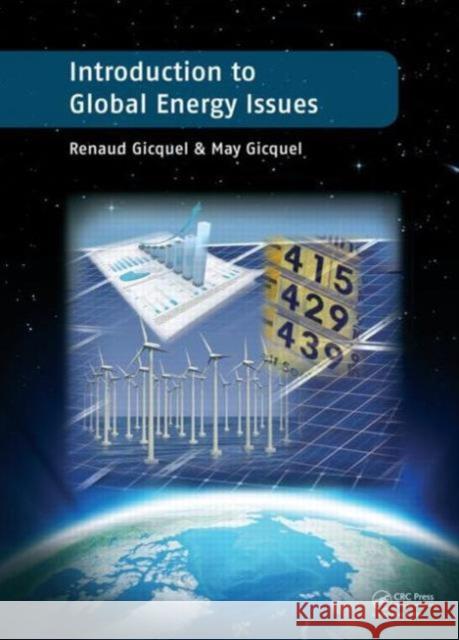
Introduction to Global Energy Issues May Gicquel 9781138000148  - książkaWidoczna okładka, to zdjęcie poglądowe, a rzeczywista szata graficzna może różnić się od prezentowanej.

Introduction to Global Energy Issues

ISBN-13: 9781138000148 / Angielski / Twarda / 2013 / 252 str.

May Gicquel
cena 563,24
(netto: 536,42 VAT:  5%)

Najniższa cena z 30 dni: 503,69
Termin realizacji zamówienia:
ok. 22 dni roboczych.

Darmowa dostawa!

From the discovery of fire to that of the atom, the development of human societies has largely been based on the conquest of energy. In all countries, energy has gradually become one of the key factors of social and economic development, as well as capital, labor and natural resources, and now no one can do without it. After decades of cheap energy flowing without any problem, over the last forty years crises have become the rule. This disruption of the energy landscape is of particular concern as the impact of energy crises on human societies became considerable. This book seeks to provide a basis for reflection on all global energy problems, offering an analysis of the main aspects to consider: energy supply, resource-dependent industries and technology available, macroeconomic implications of energy demand, geopolitical issues, and specifics of the situation in developing countries. It does not thoroughly address environmental issues, which would require further study beyond the limits we set. This book is the second edition of a book published in 1992, at a time when obtaining energy and economic data was much more difficult than today, when many databases are freely accessible on the Internet. In this new context, we hope it will assist the reader in finding his/her way in the considerable amount of information available. Energy is a vast field that can be approached from multiple angles. The approach proposed here is to start by providing the reader with technical bases on energy, and thus energy supply, before considering the demand, that is to say, the socio- and macro-economic dimensions, then addressing global issues relating to energy, and finally complete the study of the main issues that arise in this area today. This book summarizes the main issues related to energy and requires no special knowledge beforehand, whether in economics, engineering or international relations. It consists of nine chapters, the first being the introduction. Chapter 2 introduces the main energy sectors (oil, natural gas, coal, synthetic hydrocarbons, nuclear power, renewable energy, thermal or pneumatic storage), i.e. how the main sources of energy can be exploited. Chapter 3 presents the main macroeconomic and energy indicators that are commonly used to assess the energy situation in a country. Concepts that are introduced being then used consistently in other chapters, it is essential to understand well their definitions and limitations. The fourth chapter analyzes the impacts of energy at the macro level, including the links between economic activity and energy consumption. The fifth chapter introduces the main principles generally accepted in the development of energy policy and planning, and then discusses the institutional aspects. The sixth chapter is devoted to geopolitics: current consumption of energy, energy reserves and resources worldwide, international energy trade, and specific problems faced by developing countries. The seventh chapter is devoted to the study of the energy situation in eleven different countries, showing the contrast between them, depending on their level of economic development, demography, natural resource endowments, etc. The list of countries includes high-income developed countries (France, United States, United Kingdom), the emerging group called the BRICS (Brazil, Russia, India, China, South Africa), a North African oil exporting country (Algeria), a west African country (Cote d'Ivoire), and an Asian exporter of coal and natural gas (Indonesia). The eighth chapter discusses emerging issues related to energy, in particular its relationship to the environment and the success of policies aiming at controlling demand. The ninth and final chapter begins with a prospective study of various scenarios for the medium and long term. The analyses presented in the book are then summarized by outlining the main pending issues. The book includes 22 tables, 150 figures and 3 mind maps, as well as links to databases available online (World Bank, United Nations, BP). Also available: an online course covering the main topics dealt with in this book. Please visit: http: //www.thermoptim.org/sections/enseignement/cours-en-ligne/modules-d-auto-formation/energy-issues-course"


Kategorie:
Nauka, Chemia
Kategorie BISAC:
Science > Chemistry - Industrial & Technical
Technology & Engineering > Power Resources - Alternative & Renewable
Business & Economics > Green Business
Język:
Angielski
ISBN-13:
9781138000148
Rok wydania:
2013
Ilość stron:
252
Waga:
0.63 kg
Wymiary:
24.89 x 17.27 x 2.03
Oprawa:
Twarda
Wolumenów:
01
Dodatkowe informacje:
Bibliografia
Wydanie ilustrowane

This authoritative and highly pedagogical book provides a very complete and thorough analysis of global energy issues. By combining technological, economic, environmental and policy aspects of energy, which are all intrinsically interlinked, the authors provide the tools which allow the reader to fully understand the complexities of global energy issues. A must for any energy course.

Manfred Hafner, Professor, Johns Hopkins University (Bologna Center) / PSAIS (Sciences Po Paris), Skolkovo Moscow School of Management, Fondazione Eni Enrico Mattei

Preface (by Jean-Arnold Vinois, Honorary Director at the European Commission, Former Director of the internal energy market within the Directorate General for Energy)AcronymsAbout the authors 1 Introduction 1.1 Overall presentation 1.2 Structure of the book 1.3 Educational use of this book 1.3.1 Recommended pedagogy 1.3.2 Available Diapason sessions 1.4 Energy and economic statistics 2 Energy sectors 2.1 Presentation 2.2 Forms of energy 2.3 Conversion of energy 2.4 Main sources of energy 2.4.1 Oil 2.4.2 Natural gas 2.4.3 Coal 2.4.4 Non-conventional fuels 2.4.5 Nuclear energy 2.4.6 Renewable energies 2.5 Electricity production 2.5.1 Thermal power plants 2.5.2 Production management 2.5.3 Transport and distribution 2.5.4 Cost structure 2.5.5 Conclusion 2.6 Thermal or pneumatic energy storage 2.7 Common characteristics and comparisons 2.7.1 Implementation time 2.7.2 Diversity and rigidity 2.7.3 Social acceptance 2.7.4 Comparisons between sectors 2.8 Conclusion References Further reading 3 Macroeconomic indicators and accounting of energy 3.1 Presentation 3.2 Evolution of the world population 3.3 Basics 3.3.1 Gross Domestic Product 3.3.2 Gross National Product, Gross National Income 3.3.3 International comparisons 3.3.4 Economic growth and development 3.3.5 Human Development Index 3.4 Structure of GDP 3.5 Energy accounting, energy chain 3.5.1 Accounting problems 3.5.2 Flow graphs 3.6 Energy intensity 3.6.1 Definition of the energy intensity 3.6.2 World energy intensities 3.6.3 Income elasticity 3.6.4 Relationship between growth rates 3.6.5 GDP and energy in France 3.6.6 Energy intensity changes of OECD countries 3.6.7 Convergence of world energy intensity 3.6.8 Changes in the electricity content of GDP3.7 Indicators for CO2 emissions 3.8 Energy markets 3.8.1 International trade 3.8.2 Oil market 3.8.3 Natural gas market 3.8.4 Coal market 3.8.5 Conclusion on the energy markets References Further reading 4 The impact of energy on economic development 4.1 Presentation 4.2 Energy consumption and income level 4.2.1 Factors of development 4.2.2 Evolution of energy consumption 4.3 Coal and industrial revolution 4.4 Work/energy substitution 4.5 Reduction of transportation cost 4.6 An anecdotal illustration 4.7 Energy uses 4.8 Mechanisms of formation of energy demand 4.8.1 Breaking down demand 4.8.2 Determinants of aggregate demand 4.9 Macro-economic impacts of energy 4.9.1 Energy sector 4.9.2 Non-energy productive sector 4.9.3 Impact on investment 4.9.4 Impact on the balance of payments 4.9.5 Impact on consumers 4.9.6 Impact on state revenue References Further reading 5 Energy policy 5.1 Presentation 5.2 Limitations of the energy policy 5.3 Main objectives of the energy policy 5.4 Energy policy 5.4.1 Planning process 5.4.2 Energy models 5.5 Pricing elements 5.5.1 Economist pricing approach 5.5.2 Political approach to pricing 5.5.3 Practical difficulties of pricing 5.6 Institutional aspects 5.6.1 Need for joint action levels on supply and demand 5.6.2 Organization of national energy systems 5.6.3 Relationship between the central administration and operators 5.7 Conclusion References Further reading 6 World energy situation 6.1 Presentation 6.2 Consumption and production 6.2.1 Primary energy consumption in the world 6.2.2 Historical trends 6.2.3 Distribution of per capita consumption 6.2.4 Regional distribution 6.2.5 Production and consumption by region 6.2.6 Production and consumption by country groups 6.3 Energy reserves and resources 6.3.1 Definitions 6.3.2 Reserves of oil and natural gas 6.3.3 McKelvey diagram 6.3.4 Proved reserves 6.3.5 Resources 6.4 Energy problems in developing countries 6.4.1 Definition 6.4.2 Dual societies 6.4.3 Oil importers DCs 6.4.4 Energy problems of the poorest 6.4.5 The firewood crisis 6.4.6 Commercial energy needs 6.4.7 Energy characteristics of developing countries References Further reading 7 Case studies: The energy situation in certain countries 7.1 Algeria 7.2 Brazil 7.3 China 7.4 Côte d’Ivoire 7.5 France 7.6 India 7.7 Indonesia 7.8 Russia 7.9 South Africa 7.10 United Kingdom 7.11 United States 7.12 Energy in Europe 7.12.1 Evolution through the years 7.12.2 Outline of the European energy policy 7.13 Conclusion References 8 Recent developments: New dimensions of the energy problem 8.1 Presentation 8.2 Environmental issues 8.2.1 Impact of energy on the atmosphere 8.2.2 General remarks on additional environmental impacts of energy 8.2.3 Possible solutions 8.3 Changing technology 8.3.1 Introduction 8.3.2 Exploration and production in the oil sector 8.3.3 Improved combustion 8.3.4 Production of electricity from natural gas 8.3.5 Reduction of specific energy consumption 8.3.6 Carbon capture and storage 8.4 A chronically unstable oil market 8.4.1 Consequences on the demand to OPEC 8.4.2 The peak oil debate 8.4.3 Interaction between oil demand and price References Further reading 9 Outlook 9.1 Presentation 9.2 Energy scenarios 9.2.1 Long-term scenarios (2100) 9.2.2 Medium term scenarios (2030–2050) 9.3 Major trends 9.3.1 A sharp increase in energy consumption 9.3.2 A growing levy on world wealth 9.3.3 Adequate resources at the scale of the planet 9.3.4 Concern over the environmental impact 9.3.5 Reducing the energy content of GDP 9.3.6 A continued leading role for oil 9.3.7 Persistence of geopolitical constraints 9.3.8 Continuation of a sustained technological development effort References Further reading Annex 1: Pedagogical remarks A1.1 Innovative pedagogy A1.2 Learning objectives A1.2.1 Memory A1.2.2 Understanding A1.2.3 Know-how A1.2.4 Capacity for analysis and synthesis Annex 2: Energy units and conversion factors A2.1 Basic units A2.1.1 Joule A2.1.2 Calorie A2.1.3 British Thermal Unit A2.1.4 kWh A2.2 Derived units A2.3 Conversion factors A2.3.1 Oil A2.3.2 Natural gas A2.3.3 Coal A2.3.4 Electricity Subject index


Udostępnij

Facebook - konto krainaksiazek.pl


Opinie o Krainaksiazek.pl na Opineo.pl

Partner Mybenefit

Krainaksiazek.pl w programie rzetelna firma Krainaksiaze.pl - płatności przez paypal

Czytaj nas na:

Facebook - krainaksiazek.pl
  • książki na zamówienie
  • granty
  • książka na prezent
  • kontakt
  • pomoc
  • opinie
  • regulamin
  • polityka prywatności

Zobacz:

  • Księgarnia czeska

  • Wydawnictwo Książkowe Klimaty

1997-2026 DolnySlask.com Agencja Internetowa

© 1997-2022 krainaksiazek.pl
     
KONTAKT | REGULAMIN | POLITYKA PRYWATNOŚCI | USTAWIENIA PRYWATNOŚCI
Zobacz: Księgarnia Czeska | Wydawnictwo Książkowe Klimaty | Mapa strony | Lista autorów
KrainaKsiazek.PL - Księgarnia Internetowa

Polityka prywatnosci - link
Krainaksiazek.pl - płatnośc Przelewy24
Przechowalnia Przechowalnia






