• Wyszukiwanie zaawansowane
  • Kategorie
  • Kategorie BISAC
  • Książki na zamówienie
  • Promocje
  • Granty
  • Książka na prezent
  • Opinie
  • Pomoc
  • Załóż konto
  • Zaloguj się

Intracellular Protein Degradation: Volume 27 » książka


zaloguj się | załóż konto
Logo Krainaksiazek.pl

koszyk

konto

szukaj
topmenu
Księgarnia internetowa
Szukaj
Książki na zamówienie
Promocje
Granty
Książka na prezent
Moje konto
Pomoc
 
 
Wyszukiwanie zaawansowane
Pusty koszyk
Bezpłatna dostawa dla zamówień powyżej 20 złBezpłatna dostawa dla zamówień powyżej 20 zł

Kategorie główne

• Nauka
 [2950560]
• Literatura piękna
 [1849509]

  więcej...
• Turystyka
 [71097]
• Informatyka
 [151150]
• Komiksy
 [35848]
• Encyklopedie
 [23178]
• Dziecięca
 [617388]
• Hobby
 [139064]
• AudioBooki
 [1657]
• Literatura faktu
 [228597]
• Muzyka CD
 [383]
• Słowniki
 [2855]
• Inne
 [445295]
• Kalendarze
 [1464]
• Podręczniki
 [167547]
• Poradniki
 [480102]
• Religia
 [510749]
• Czasopisma
 [516]
• Sport
 [61293]
• Sztuka
 [243352]
• CD, DVD, Video
 [3414]
• Technologie
 [219456]
• Zdrowie
 [101002]
• Książkowe Klimaty
 [124]
• Zabawki
 [2311]
• Puzzle, gry
 [3459]
• Literatura w języku ukraińskim
 [254]
• Art. papiernicze i szkolne
 [8079]
Kategorie szczegółowe BISAC

Intracellular Protein Degradation: Volume 27

ISBN-13: 9780762303878 / Angielski / Twarda / 1998 / 312 str.
A. J. Rivett; E. Edward Bittar
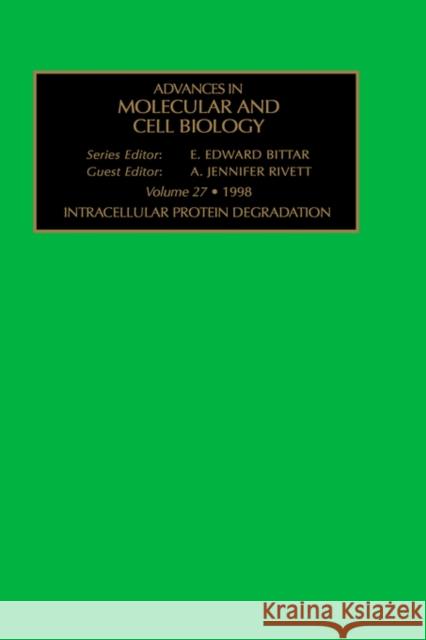
Intracellular Protein Degradation: Volume 27 Rivett, A. J. 9780762303878 Elsevier Science - książkaWidoczna okładka, to zdjęcie poglądowe, a rzeczywista szata graficzna może różnić się od prezentowanej.

Intracellular Protein Degradation: Volume 27

ISBN-13: 9780762303878 / Angielski / Twarda / 1998 / 312 str.

A. J. Rivett; E. Edward Bittar
cena 910,68
(netto: 867,31 VAT:  5%)

Najniższa cena z 30 dni: 908,18
Termin realizacji zamówienia:
ok. 16-18 dni roboczych
Dostawa w 2026 r.

Darmowa dostawa!

This volume brings together a set of reviews that provide a summary of our current knowledge of the proteolytic machinery and of the pathways of protein breakdown of prokaryotic and eukaryotic cells. Intracellular protein degradation is much more than just a mechanism for the removal of incorrectly folded or damaged proteins. Since many short-lived proteins have important regulatory functions, proteolysis makes a significant contribution to many cellular processes including cell cycle regulation and transciptional control. In addition, limited proteolytic cleavage can provide a rapid and efficient mechanism of enzyme activation or inactivation in eukaryotic cells.
In the first chapter, Maurizi provides an introduction to intracellular protein degradation, describes the structure and functions of bacterial ATP-dependent proteases, and explores the relationship between chaperone functions and protein degradation. Many of the principles also apply to eukaryotic cells, although the proteases involved are often not the same. Interestingly, homologues of one of the bacterial proteases, Ion protease, have been found in mitochondria in yeast and mammals, and homologues of proteasomes, which are found in all eukaryotic cells (see below), have been discovered in some eubacteria.
Studies of proteolysis in yeast have contributed greatly to the elucidation of both lysosomal (vacuolar) and nonlysosomal proteolytic pathways in eukaryotic cells. Thumm and Wolf (chapter 2) describe studies that have elucidated the functions of proteasomes in nonlysosomal proteolysis and the contributions of lysosomal proteases to intracellular protein breakdown. Proteins can be selected for degradation by a variety of differen mechanisms. The ubiquitin system is one complex and highly regulated mechanism by which eukaryotic proteins are targetted for degradation by proteosomes. In chapter 3, Wilkinson reviews the components and functions of the ubiquitin system and considers some of the known substrates for this pathway which include cell cycle and transcriptional regulators.
The structure and functions of proteosomes and their regulatory components are described in the two subsequent chapters by Tanaka and Tanahashi and by Dubiel and Rechsteiner. Proteasomes were the first known example of threonine proteases. They are multisubunit complexes that, in addition to being responsible for the turnover of most short-lived nuclear and cytoplasmic protein, are also involved in antigen processing for presentation by the MHC class I pathway. Recent studies reviewed by McCracken and colleagues (chapter 6) lead to the exciting conclusion that some ER-associated proteins are degraded by cytosolic proteasomes.
Lysosomes are responsible for the degradation of long-lived proteins and for the enhanced protein degradation observed under starvation conditions. In chapter 7 Knecht and colleagues review the lysosomal proteases and describe studies of the roles of lysosomes and the mechanisms for protein uptake into lysosomes. Methods of measuring the relative contribution of different proteolytic systems (e.g., ubiquitin-proteasome pathway, calcium-dependent proteases, lysosomes) to muscle protein degradation, and the conclusions from such studies, are reviewed by Attai and Taillinder in the following chapter.
Finally, proteases play an important role in signaling apoptosis by catalyzing the limited cleavage of enzymes. Mason and Beyette review the role of the major players, caspases, which are both activated by and catalyze limite proteolysis, and also consider the involvement of other protoelytic enzymes in this pathway leading cell death.


Kategorie:
Nauka, Biologia i przyroda
Kategorie BISAC:
Science > Biochemia
Science > Biologia rozwoju
Science > Biologia molekularna
Wydawca:
Elsevier Science
Seria wydawnicza:
Advances in Molecular & Cell Biology Vol. 27
Język:
Angielski
ISBN-13:
9780762303878
Rok wydania:
1998
Numer serii:
000114676
Ilość stron:
312
Waga:
0.61 kg
Wymiary:
23.39 x 15.6 x 1.91
Oprawa:
Twarda
Wolumenów:
01

Contents. List of Contributors. Preface (A.J. Rivett). Biochemical Properties and Biological Functions of ATP-Dependent Proteases in Bacterial Cells (M.R. Maurizi). From Proteasome to Lysosome: Studies on Yeast Demonstrate the Principles of Protein Degradation in the Eukaryote Cell (M. Thumm and D.H. Wolf). Cellular Regulation by Ubiquitin-Dependent Processes (K.D. Wilkinson). The 20s Proteasome: Subunits and Functions (K. Tanaka and N. Tanahashi). The 19s Regulatory Complex of the 26s Proteasome (W. Dubiel and M. Rechsteiner). Endoplasmic Reticulum0Associated Protein Degradation: an Unconventional Route to a Familiar Fate (A.A. McCracke, E.D. Werner, and J.L. Brodsky). Pathways for the Degradation of Intracellular Proteins within Lysosomes in Higher Eukaryotes (E. Knecht, J.J.M. de Llano, E.J. Andreu, and I.M. Miralles). The Critical Role of the Ubiquitin-proteasome Pathway in Muscle Wasting in Comparison to Lysosomal and Ca2+-dependent Systems (D. Attaix and D. Taillandier). Proteolysis in Apoptosis: Enzymes and Substrates (G.G.F. Mason, and J. Beyette). Index.


Udostępnij

Facebook - konto krainaksiazek.pl


Opinie o Krainaksiazek.pl na Opineo.pl

Partner Mybenefit

Krainaksiazek.pl w programie rzetelna firma Krainaksiaze.pl - płatności przez paypal

Czytaj nas na:

Facebook - krainaksiazek.pl
  • książki na zamówienie
  • granty
  • książka na prezent
  • kontakt
  • pomoc
  • opinie
  • regulamin
  • polityka prywatności

Zobacz:

  • Księgarnia czeska

  • Wydawnictwo Książkowe Klimaty

1997-2025 DolnySlask.com Agencja Internetowa

© 1997-2022 krainaksiazek.pl
     
KONTAKT | REGULAMIN | POLITYKA PRYWATNOŚCI | USTAWIENIA PRYWATNOŚCI
Zobacz: Księgarnia Czeska | Wydawnictwo Książkowe Klimaty | Mapa strony | Lista autorów
KrainaKsiazek.PL - Księgarnia Internetowa

Polityka prywatnosci - link
Krainaksiazek.pl - płatnośc Przelewy24
Przechowalnia Przechowalnia






