• Wyszukiwanie zaawansowane
  • Kategorie
  • Kategorie BISAC
  • Książki na zamówienie
  • Promocje
  • Granty
  • Książka na prezent
  • Opinie
  • Pomoc
  • Załóż konto
  • Zaloguj się

Internet, Phone, Mail, and Mixed-Mode Surveys: The Tailored Design Method » książka


zaloguj się | załóż konto
Logo Krainaksiazek.pl

koszyk

konto

szukaj
topmenu
Księgarnia internetowa
Szukaj
Książki na zamówienie
Promocje
Granty
Książka na prezent
Moje konto
Pomoc
 
 
Wyszukiwanie zaawansowane
Pusty koszyk
Bezpłatna dostawa dla zamówień powyżej 20 złBezpłatna dostawa dla zamówień powyżej 20 zł

Kategorie główne

• Nauka
 [2952079]
• Literatura piękna
 [1850969]

  więcej...
• Turystyka
 [71058]
• Informatyka
 [151066]
• Komiksy
 [35579]
• Encyklopedie
 [23181]
• Dziecięca
 [620496]
• Hobby
 [139036]
• AudioBooki
 [1646]
• Literatura faktu
 [228729]
• Muzyka CD
 [379]
• Słowniki
 [2932]
• Inne
 [445708]
• Kalendarze
 [1409]
• Podręczniki
 [164793]
• Poradniki
 [480107]
• Religia
 [510956]
• Czasopisma
 [511]
• Sport
 [61267]
• Sztuka
 [243299]
• CD, DVD, Video
 [3411]
• Technologie
 [219640]
• Zdrowie
 [100984]
• Książkowe Klimaty
 [124]
• Zabawki
 [2281]
• Puzzle, gry
 [3363]
• Literatura w języku ukraińskim
 [258]
• Art. papiernicze i szkolne
 [8020]
Kategorie szczegółowe BISAC

Internet, Phone, Mail, and Mixed-Mode Surveys: The Tailored Design Method

ISBN-13: 9781118456149 / Angielski / Twarda / 2014 / 528 str.
Don A. Dillman
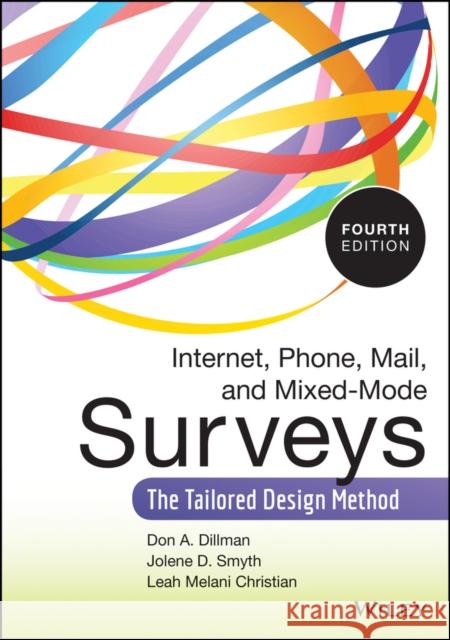
Internet, Phone, Mail, and Mixed-Mode Surveys: The Tailored Design Method Dillman, Don A. 9781118456149 John Wiley & Sons - książkaWidoczna okładka, to zdjęcie poglądowe, a rzeczywista szata graficzna może różnić się od prezentowanej.

Internet, Phone, Mail, and Mixed-Mode Surveys: The Tailored Design Method

ISBN-13: 9781118456149 / Angielski / Twarda / 2014 / 528 str.

Don A. Dillman
cena 449,74
(netto: 428,32 VAT:  5%)

Najniższa cena z 30 dni: 446,96
Termin realizacji zamówienia:
ok. 30 dni roboczych
Dostawa w 2026 r.

Darmowa dostawa!

The classic survey design reference, updated for the digital age For over two decades, Dillman's classic text on survey design has aided both students and professionals in effectively planning and conducting mail, telephone, and, more recently, Internet surveys. The new edition is thoroughly updated and revised, and covers all aspects of survey research. It features expanded coverage of mobile phones, tablets, and the use of do-it-yourself surveys, and Dillman's unique Tailored Design Method is also thoroughly explained. This invaluable resource is crucial for any researcher seeking to increase response rates and obtain high-quality feedback from survey questions. Consistent with current emphasis on the visual and aural, the new edition is complemented by copious examples within the text and accompanying website. This heavily revised Fourth Edition includes:

  • Strategies and tactics for determining the needs of a given survey, how to design it, and how to effectively administer it
  • How and when to use mail, telephone, and Internet surveys to maximum advantage
  • Proven techniques to increase response rates
  • Guidance on how to obtain high-quality feedback from mail, electronic, and other self-administered surveys
  • Direction on how to construct effective questionnaires, including considerations of layout
  • The effects of sponsorship on the response rates of surveys
  • Use of capabilities provided by newly mass-used media: interactivity, presentation of aural and visual stimuli.
  • The Fourth Edition reintroduces the telephone--including coordinating land and mobile.
Grounded in the best research, the book offers practical how-to guidelines and detailed examples for practitioners and students alike.

Kategorie:
Nauka, Pedagogika i oświata
Kategorie BISAC:
Social Science > Badania społeczne i statystyki
Education > Evaluation & Assessment
Wydawca:
John Wiley & Sons
Język:
Angielski
ISBN-13:
9781118456149
Rok wydania:
2014
Wydanie:
Revised
Ilość stron:
528
Waga:
1.10 kg
Wymiary:
25.65 x 18.29 x 4.06
Oprawa:
Twarda
Wolumenów:
01

Additional Resources xi

Preface xiii

Chapter 1 Sample Surveys in Our Electronic World 1

Four Cornerstones of Quality Surveys 3

What Is Different About Surveying in the 2010s? 10

Why Emphasize Mixed–Mode Data Collection? 12

What Is Tailored Design and Why Is It Needed? 15

Conclusion 17

Chapter 2 Reducing People s Reluctance to Respond to Surveys 19

Example of a Survey With a High Response Rate 21

Using Social Exchange Concepts to Motivate

Potential Respondents 23

Putting the Parts Together: Some Guidelines for Applying Social Exchange 42

Mixed–Mode Designs Provide New Opportunities for Applying Social Exchange 47

Returning to the WSU Doctoral Student Experience Survey: Why It Obtained Such a High Response Rate 50

Conclusion 55

List of Guidelines 55

Chapter 3 Covering the Population and Selecting Who to Survey 56

Essential Definitions and Their Use 57

Current Coverage and Access Considerations 58

Common Sampling Frames and Assessing How Well They Cover the Population 62

Probability Sampling 75

Postsurvey Adjustments and Calculating Sampling Error 87

Nonprobability Sampling 91

Conclusion 92

Chapter 4 The Fundamentals of Writing Questions 94

Issues to Consider When Starting to Craft Survey Questions 95

The Anatomy of a Survey Question and Types of Question Formats 109

Guidelines for Choosing Words and Forming Questions 113

Conclusion 125

List of Guidelines 126

Chapter 5 How to Write Open– and Closed–Ended Questions 127

Guidelines for Writing Open–Ended Questions 128

General Guidelines for Writing All Types of Closed–Ended Questions 134

Guidelines for Nominal Closed–Ended Questions 142

Guidelines for Ordinal Closed–Ended Questions 150

Conclusion 164

List of Guidelines 167

Chapter 6 Aural Versus Visual Design of Questions and Questionnaires 169

The Importance of Visual Design in Self–Administered Surveys 172

Visual Design Concepts and Their Application to Surveys 173

General Guidelines for the Visual Presentation of Survey Questions 183

Guidelines for the Visual Presentation of Open–Ended Questions 192

Guidelines for the Visual Presentation of Closed–Ended Questions 197

Guidelines for the Visual Presentation of Questionnaire Pages or Screens 204

A Case Study: The Use of Visual Design Principles to Improve Data Quality in the American
Community Survey 218

Conclusion 224

List of Guidelines 225

Chapter 7 Ordering Questions and Testing for Question Order Effects 228

Question Order 229

Testing Questions and Questionnaires 241

Conclusion 256

List of Guidelines 257

Chapter 8 Telephone Questionnaires and Implementation 258

Types of Telephone–Only Surveys Today 262

Guidelines for Designing Telephone Questionnaires 262

Guidelines for Administering Telephone Questionnaires 277

Guidelines for Establishing Calling Rules and Procedures 284

Quality Control and Testing Guidelines for Telephone Surveys 293

Conclusion 298

List of Guidelines 298

Chapter 9 Web Questionnaires and Implementation 301

Guidelines for Designing Web and Mobile Questionnaires 303

Guidelines for Web and Mobile Survey Implementation 328

Quality Control and Testing Guidelines for Web and Mobile Surveys 342

Conclusion 348

List of Guidelines 349

Chapter 10 Mail Questionnaires and Implementation 351

Guidelines for Designing Paper Questionnaires 352

Guidelines for Implementing Mail Questionnaires 366

Quality Control and Testing Guidelines for Mail Surveys 389

Conclusion 396

List of Guidelines 396

Chapter 11 Mixed–Mode Questionnaires and Survey Implementation 398

When Single–Mode Surveys Are Not Acceptable 398

Why Consider a Mixed–Mode Survey Design 400

Guidelines for Designing Questionnaires That Will Minimize Measurement Differences Across Survey Modes 404

Expanding the Research Base for Designing Mixed–Mode Surveys 416

Guidelines for Using Multiple Contact Modes to Achieve More Effective Communication With Potential Respondents 417

Guidelines for Providing Alternative Response Modes 424

From Individual Guidelines to Practical Study Designs 434

Guidelines for Testing Mixed–Mode Surveys 445

Conclusion 447

List of Guidelines 448

Chapter 12 Responding to Societal Change and Preparing for What Lies Ahead 450

Panels and Longitudinal Surveys 452

Nonprobability Sampling 455

New Mobile Devices and Technology 456

Supplementing Questionnaires With Measurement Using Electronic Devices 458

Big Data and Administrative Records 459

Data Security 461

Specialized Purpose Surveys 461

International and Cross–Cultural Surveys 463

The Challenge of Connecting With Empowered but Diverse Respondents 464

References 469

Author Index 491

Subject Index 497

Don A. Dillman, PHD, is Regents Professor in the Department of Sociology and the Social and Economic Sciences Research Center at Washington State University. He received the Roger Herriot Award for Innovation in Federal Statistics from the American Statistical Association and the Washington Statistical Society in 2000.

Jolene D. Smyth, PHD, is an associate professor in the Survey Research and Methodology Program and the Department of Sociology and is the Director of the Bureau of Social Research at the University of Nebraska–Lincoln.

Leah Melani Christian, PHD, is a Director in Research Methods at Nielsen where her work focuses on panel recruitment and maintenance.

[This] is a great book. It is authoritative, engaging, easy to read, well integrated, and yet is specific enough to serve as a how–to manual for beginning researchers. Moreover, it is grounded in current literature, based on original and integrative theory, and is very up–to–date.
Thomas M. Guterbock, University of Virginia

Invaluable to any researcher seeking quality feedback from survey questions

This update of the classic text on survey design enables researchers to apply tried–and–true methodologies across multiple channels for the best possible response rates and most insightful feedback. At the center of this resource is the concept of tailored design, which strives to make surveys attractive and relevant while minimizing the burden on respondents. For students and professionals alike, This book offers the guidance necessary for conducting surveys via traditional paper and mail, but also includes information for the digital age with mobile devices, tablets, and online tools.

With detailed case studies that take the content from theory to practice, this Fourth Edition provides detailed instruction on the latest survey design concepts. Learn:

  • Strategies and tactics for determining the needs of a given survey, how to design it, and how to effectively administer it
  • How and when to use mail, telephone, and Internet surveys to your maximum advantage
  • Proven techniques to increase response rates
  • The best way to obtain high–quality feedback from mail, electronic, and other self–administered surveys
  • From a companion website with additional examples of questionnaires and contact materials from multiple surveys as well as other tools to help researchers design quality surveys

For more than two decades, the previous editions of this book have defined excellence in terms of designing and administering research. This Fourth Edition builds upon that reputation with updated tools and strategies to help researchers generate useful.

Dillman, Don A. ROBERT M. GROVES, PhD, is a professor and a senior... więcej >


Udostępnij

Facebook - konto krainaksiazek.pl


Opinie o Krainaksiazek.pl na Opineo.pl

Partner Mybenefit

Krainaksiazek.pl w programie rzetelna firma Krainaksiaze.pl - płatności przez paypal

Czytaj nas na:

Facebook - krainaksiazek.pl
  • książki na zamówienie
  • granty
  • książka na prezent
  • kontakt
  • pomoc
  • opinie
  • regulamin
  • polityka prywatności

Zobacz:

  • Księgarnia czeska

  • Wydawnictwo Książkowe Klimaty

1997-2025 DolnySlask.com Agencja Internetowa

© 1997-2022 krainaksiazek.pl
     
KONTAKT | REGULAMIN | POLITYKA PRYWATNOŚCI | USTAWIENIA PRYWATNOŚCI
Zobacz: Księgarnia Czeska | Wydawnictwo Książkowe Klimaty | Mapa strony | Lista autorów
KrainaKsiazek.PL - Księgarnia Internetowa

Polityka prywatnosci - link
Krainaksiazek.pl - płatnośc Przelewy24
Przechowalnia Przechowalnia







