• Wyszukiwanie zaawansowane
  • Kategorie
  • Kategorie BISAC
  • Książki na zamówienie
  • Promocje
  • Granty
  • Książka na prezent
  • Opinie
  • Pomoc
  • Załóż konto
  • Zaloguj się

International Handbook of Science Education » książka


zaloguj się | załóż konto
Logo Krainaksiazek.pl

koszyk

konto

szukaj
topmenu
Księgarnia internetowa
Szukaj
Książki na zamówienie
Promocje
Granty
Książka na prezent
Moje konto
Pomoc
 
 
Wyszukiwanie zaawansowane
Pusty koszyk
Bezpłatna dostawa dla zamówień powyżej 20 złBezpłatna dostawa dla zamówień powyżej 20 zł

Kategorie główne

• Nauka
 [2946600]
• Literatura piękna
 [1856966]

  więcej...
• Turystyka
 [72221]
• Informatyka
 [151456]
• Komiksy
 [35826]
• Encyklopedie
 [23190]
• Dziecięca
 [619653]
• Hobby
 [140543]
• AudioBooki
 [1577]
• Literatura faktu
 [228355]
• Muzyka CD
 [410]
• Słowniki
 [2874]
• Inne
 [445822]
• Kalendarze
 [1744]
• Podręczniki
 [167141]
• Poradniki
 [482898]
• Religia
 [510455]
• Czasopisma
 [526]
• Sport
 [61590]
• Sztuka
 [243598]
• CD, DVD, Video
 [3423]
• Technologie
 [219201]
• Zdrowie
 [101638]
• Książkowe Klimaty
 [124]
• Zabawki
 [2473]
• Puzzle, gry
 [3898]
• Literatura w języku ukraińskim
 [254]
• Art. papiernicze i szkolne
 [8170]
Kategorie szczegółowe BISAC

International Handbook of Science Education

ISBN-13: 9780792335313 / Angielski / Twarda / 1998 / 1271 str.
Barry J. Fraser; Kenneth G. Tobin; B. Fraser
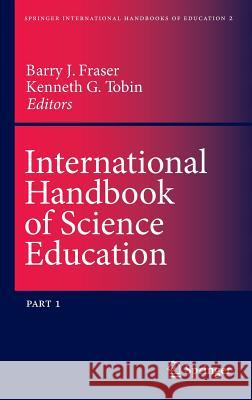
International Handbook of Science Education Barry J. Fraser Kenneth G. Tobin B. Fraser 9780792335313 Kluwer Academic Publishers - książkaWidoczna okładka, to zdjęcie poglądowe, a rzeczywista szata graficzna może różnić się od prezentowanej.

International Handbook of Science Education

ISBN-13: 9780792335313 / Angielski / Twarda / 1998 / 1271 str.

Barry J. Fraser; Kenneth G. Tobin; B. Fraser
cena 2017,53 zł
(netto: 1921,46 VAT:  5%)

Najniższa cena z 30 dni: 1927,76 zł
Termin realizacji zamówienia:
ok. 22 dni roboczych
Bez gwarancji dostawy przed świętami

Darmowa dostawa!

The field of science education has been developing for over half a century and has flourished especially during the previous few decades. It is timely and fitting now that the International Handbook of Science Education should be assembled to synthesise and reconceptualise past research and theorising in science education, provide practical implications for improving science education, and suggest desir- able ways to advance the field in the future. This Handbook provides a detailed and up-to-date overview of advanced international scholarship in science education. This two-volume, 72-chapter, 1,200+-page work is the largest and most comprehensive resource ever produced in science education for use by researchers, teacher educators, policy-makers, advis- ers, teachers and graduate students. In structuring the Handbook, we divided the field of science education into the following ten significant areas: - Learning - Teaching - Educational Technology - Curriculum - Learning Environments - Teacher Education - Assessment and Evaluation - Equity - History and Philosophy of Science - Research Methods To each section, we appointed a 'section coordinator', who is a leading international scholar in that particular area and who assisted us in identifying authors and top- ics for a section and in evaluating drafts of chapters and suggesting improve- ments.


Kategorie:
Podręczniki
Kategorie BISAC:
Science > Study & Teaching
Education > Computers & Technology
Education > Philosophy, Theory & Social Aspects
Wydawca:
Kluwer Academic Publishers
Seria wydawnicza:
Kluwer International Handbooks of Education
Język:
Angielski
ISBN-13:
9780792335313
Rok wydania:
1998
Wydanie:
1998
Numer serii:
000056371
Ilość stron:
1271
Waga:
2.25 kg
Wymiary:
24.64 x 16.92 x 7.54
Oprawa:
Twarda
Wolumenów:
02
Dodatkowe informacje:
Bibliografia
Wydanie ilustrowane

Section 1: Learning. Editors: R. Duit, D.F. Treagust. 1.1. Learning in Science: From Behaviourism Towards Social Constructivism and Beyond; R. Duit, D.F. Treagust. 1.2. New Perspectives on Language in Science; C. Sutton. 1.3. Cultural Aspects of Learning Science; W.W. Cobern, G.S. Aikenhead. 1.4. Learning Science Through Models and Modelling; J.K. Gilbert, C.J. Boulter. 1.5. Learning About Science Teaching: Perspectives From an Action Research Project; P.H. Scott, R.H. Driver. 1.6. Scientific Inquiry Within Reach of Young Children; K.E. Metz. 1.7. Theories of Knowledge Acquisition; C.A. Chinn, W.F. Brewer. 1.8. The Epistemology of Students: The 'Thingified' Nature of Scientific Knowledge; J. Désautels, M. Larochelle. Section 2: Teaching. Editor: K. Tobin. 2.1. Issues and Trends in the Teaching of Science; K. Tobin. 2.2. A View of Quality in Teaching; J.R. Baird. 2.3. Teaching and Learning as Everyday Activity; W.-M. Roth. 2.4. Teaching for Understanding in Pre-Secondary Science; W. Harlen. 2.5. Teaching for Conceptual Change; P.W. Hewson, et al. 2.6. The Role of Routine Problem Tasks in Science Teaching; P. Hobden. 2.7. The Complexity of Chemistry and Implications for Teaching; D. Gabel. 2.8. The School Science Laboratory: Historical Perspectives and Contexts for Contemporary Teaching; V.N. Lunetta. Section 3: Educational Technology. Editor: M.C. Linn. 3.1. The Impact of Technology on Science Instruction: HistoricalTrends and Current Opportunities; M.C. Linn. 3.2. Computer Microworlds and Scientific Inquiry: An Alternative Approach to Science Education; B.Y. White. 3.3. Realising Authentic Science Learning through the Adaptation of Scientific Practice; D.C. Edelson. 3.4. Can Technology Bring Students Closer to Science? N. Butler Songer. 3.5. Problem-Based Macro Contexts in Science Instruction: Design Issues and Applications; R.D. Sherwood, et al. 3.6. Using Technology to Support Students' Artefact Construction in Science; M. Wisnudel Spitulnik, et al. 3.7. Integration of Experimenting and Modelling by Advanced Educational Technology: Examples from Nuclear Physics; H.P. Schecker. 3.8. Where You Want IT, When You Want IT: The Role of Portable Computers in Science Education; A.E. McFarlane, Y. Friedler. Section 4: Curriculum. Editor: J. van den Akker. 4.1. The Science Curriculum: Between Ideals and Outcomes; J. van den Akker. 4.2. Cooperative Learning in the Science Curriculum; R. Lazarowitz, R. Hertz-Lazarowitz. 4.3. Curriculum Change in Science: Riding the Waves of Reform; J. Wallace, W. Louden. 4.4. Science Curriculum: Transforming Goals to Practices; R.W. Bybee, N. Ben-Zvi. 4.5. Integrated Science and Mathematics Education: Evolution and Implications of a Theoretical Model; D.F. Berlin, A.L. White. 4.6. The Learning Cycle Approach as a Strategy for Instruction in Science; M.R. Abraham. Section 5: Learning Environments. Editor: B. Fraser. 5.1. Science Learning Environments: Assessment, Effects and D


Udostępnij

Facebook - konto krainaksiazek.pl


Opinie o Krainaksiazek.pl na Opineo.pl

Partner Mybenefit

Krainaksiazek.pl w programie rzetelna firma Krainaksiaze.pl - płatności przez paypal

Czytaj nas na:

Facebook - krainaksiazek.pl
  • książki na zamówienie
  • granty
  • książka na prezent
  • kontakt
  • pomoc
  • opinie
  • regulamin
  • polityka prywatności

Zobacz:

  • Księgarnia czeska

  • Wydawnictwo Książkowe Klimaty

1997-2025 DolnySlask.com Agencja Internetowa

© 1997-2022 krainaksiazek.pl
     
KONTAKT | REGULAMIN | POLITYKA PRYWATNOŚCI | USTAWIENIA PRYWATNOŚCI
Zobacz: Księgarnia Czeska | Wydawnictwo Książkowe Klimaty | Mapa strony | Lista autorów
KrainaKsiazek.PL - Księgarnia Internetowa

Polityka prywatnosci - link
Krainaksiazek.pl - płatnośc Przelewy24
Przechowalnia Przechowalnia






