• Wyszukiwanie zaawansowane
  • Kategorie
  • Kategorie BISAC
  • Książki na zamówienie
  • Promocje
  • Granty
  • Książka na prezent
  • Opinie
  • Pomoc
  • Załóż konto
  • Zaloguj się

Integrated Solid Waste Management: A Lifecycle Inventory » książka


zaloguj się | załóż konto
Logo Krainaksiazek.pl

koszyk

konto

szukaj
topmenu
Księgarnia internetowa
Szukaj
Książki na zamówienie
Promocje
Granty
Książka na prezent
Moje konto
Pomoc
 
 
Wyszukiwanie zaawansowane
Pusty koszyk
Bezpłatna dostawa dla zamówień powyżej 20 złBezpłatna dostawa dla zamówień powyżej 20 zł

Kategorie główne

• Nauka
 [2944077]
• Literatura piękna
 [1814251]

  więcej...
• Turystyka
 [70679]
• Informatyka
 [151074]
• Komiksy
 [35590]
• Encyklopedie
 [23169]
• Dziecięca
 [611005]
• Hobby
 [136031]
• AudioBooki
 [1718]
• Literatura faktu
 [225599]
• Muzyka CD
 [379]
• Słowniki
 [2916]
• Inne
 [443741]
• Kalendarze
 [1187]
• Podręczniki
 [166463]
• Poradniki
 [469211]
• Religia
 [506887]
• Czasopisma
 [481]
• Sport
 [61343]
• Sztuka
 [242115]
• CD, DVD, Video
 [3348]
• Technologie
 [219293]
• Zdrowie
 [98602]
• Książkowe Klimaty
 [124]
• Zabawki
 [2385]
• Puzzle, gry
 [3504]
• Literatura w języku ukraińskim
 [260]
• Art. papiernicze i szkolne
 [7151]
Kategorie szczegółowe BISAC

Integrated Solid Waste Management: A Lifecycle Inventory

ISBN-13: 9781468467079 / Angielski / Miękka / 2012 / 404 str.
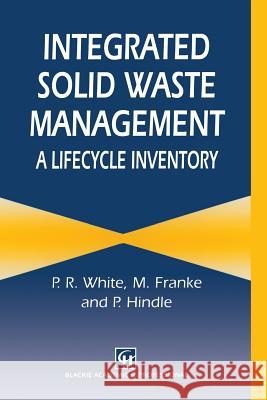
P. White; M. Dranke;P. Hindle
Integrated Solid Waste Management: A Lifecycle Inventory P. White M. Dranke P. Hindle 9781468467079 Springer - książkaWidoczna okładka, to zdjęcie poglądowe, a rzeczywista szata graficzna może różnić się od prezentowanej.

Integrated Solid Waste Management: A Lifecycle Inventory

ISBN-13: 9781468467079 / Angielski / Miękka / 2012 / 404 str.

P. White; M. Dranke;P. Hindle
cena 362,27
(netto: 345,02 VAT:  5%)

Najniższa cena z 30 dni: 346,96
Termin realizacji zamówienia:
ok. 22 dni roboczych.

Darmowa dostawa!

Life is often considered to be a journey. The lifecycle of waste can similarly to be a journey from the cradle (when an item becomes be considered is placed in the dustbin) to the grave (when value valueless and, usually, is restored by creating usable material or energy; or the waste is transformed into emissions to water or air, or into inert material placed in a landfill). of this book This preface provides a route map for the journey the reader will undertake. Who? Who are the intended readers of this book? Waste managers (whether in public service or private companies) will find a holistic approach for improving the environmental quality and the of managing waste. The book contains general principles economic cost based on cutting edge experience being developed across Europe. Detailed data and a computer model will enable operations managers to develop data-based improvements to their systems. oj waste will be better able to understand how their actions can Producers influence the operation of environmentally improved waste management systems. oj products and packages will be better able to understand how Designers their design criteria can improve the compatibility of their product or package with developing, environmentally improved waste management systems. Waste data specialists (whether in laboratories, consultancies or environ mental managers of waste facilities) will see how the scope, quantity and quality of their data can be improved to help their colleagues design more effective waste management systems."


Kategorie:
Technologie
Kategorie BISAC:
Science > Life Sciences - Ecology
Science > Environmental Science (see also Chemistry - Environmental)
Technology & Engineering > Food Science - General
Wydawca:
Springer
Język:
Angielski
ISBN-13:
9781468467079
Rok wydania:
2012
Wydanie:
Softcover Repri
Ilość stron:
404
Waga:
0.59 kg
Wymiary:
23.5 x 15.5
Oprawa:
Miękka
Wolumenów:
01
Dodatkowe informacje:
Wydanie ilustrowane

1 Introduction.- Summary.- 1.1 What is waste?.- 1.2 Environmental concerns.- 1.2.1 Conservation of resources.- 1.2.2 Pollution.- 1.3 Environmental objectives.- 1.4 Current approaches: legislation.- 1.4.1 End-of-pipe regulations.- 1.4.2 Strategic targets.- 1.5 Economic costs of environmental improvements.- 1.6 An integrated approach to solid waste management.- References.- 2 Integrated waste management.- Summary.- 2.1 Basic requirements.- 2.1.1 Less waste.- 2.1.2 Effective solid waste management.- 2.2 Waste management systems.- 2.2.1 Characteristics of an effective system.- 2.2.2 The importance of an holistic approach.- 2.2.3 A total quality system.- 2.3 A hierarchy of waste management options?.- 2.4 Modelling waste management.- 2.4.1 Why model?.- 2.4.2 Previous modelling of waste management.- 2.4.3 Using lifecycle assessment for waste.- References.- 3 Lifecycle inventory: a part of lifecycle assessment.- Summary.- 3.1 What is lifecycle assessment?.- 3.2 Benefits of the lifecycle approach.- 3.3 Structure of a lifecycle assessment.- 3.3.1 Goal definition.- 3.3.2 Inventory.- 3.3.3 Impact analysis.- 3.3.4 Valuation.- 3.4 Current state of development.- 3.5 Environmental and economic lifecycle assessments.- 3.6 Lifecycle inventory in reverse.- References.- 4 A lifecycle inventory of solid waste.- Summary.- 4.1 Integrated waste management and lifecycle inventory.- 4.2 A lifecycle inventory of waste.- 4.2.1 Goal definition.- 4.2.2 The inventory stage.- 4.2.3 Results of the model: system inputs and outputs.- 4.2.4 Fuel and electricity consumption in the lifecycle of solid waste.- 4.3 The economic LCI.- 4.4 The computer spreadsheet.- 4.5 The relationship between a lifecycle inventory for waste and product or packaging lifecycle inventories.- References.- 5 Solid waste generation.- Summary.- 5.1 Introduction.- 5.2 Solid waste generation in Europe.- 5.3 Solid wastes dealt with in this study.- 5.4 Quantities of municipal solid waste (MSW) generated.- 5.5 Composition of MSW.- 5.5.1 By source.- 5.5.2 By materials.- 5.5.3 By chemical composition.- 5.6 Variability in MSW generation.- 5.7 Effects of source reduction.- 5.8 MSW classification: need for standardisation.- 5.9 MSW analysis methods.- 5.10 Defining the waste input for the LCI computer spreadsheet.- 5.10.1 Data sources.- 5.10.2 Classification of solid waste used in the lifecycle inventory.- 5.10.3 Operation of the waste input module of the LCI spreadsheet.- References.- 6 Pre-sorting and waste collection.- Summary.- 6.1 Introduction.- 6.2 Home sorting.- 6.3 Bring versus kerbside collection systems.- 6.4 Collection systems.- 6.4.1 Dry recyclable materials.- 6.4.2 Biowaste and garden waste.- 6.4.3 Hazardous materials in household waste.- 6.4.4 Bulky waste.- 6.4.5 Restwaste.- 6.5 Integrated collection schemes.- 6.6 Environmental impacts.- 6.6.1 Transport impacts.- 6.6.2 Other impacts.- 6.7 Economic costs.- 6.7.1 Material bank systems.- 6.7.2 Kerbside collection systems.- 6.8 Operation of the collection module of the LCI spreadsheet.- References.- 7 Central sorting.- Summary.- 7.1 Introduction.- 7.2 Central sorting of recyclables at a materials recovery facility (MRF).- 7.3 Sorting of mixed waste for refuse-derived fuel (RDF).- 7.4 Environmental impacts: input-output analysis.- 7.4.1 MRF sorting.- 7.4.2 RDF sorting.- 7.5 Economic costs.- 7.5.1 MRF sorting.- 7.5.2 RDF sorting.- 7.6 Operation of the central sorting module of the LCI spreadsheet.- References.- 8 Materials recycling.- Summary.- 8.1 Introduction.- 8.2 Materials recycling processes.- 8.2.1 Transportation.- 8.2.2 Paper and board.- 8.2.3 Glass.- 8.2.4 Ferrous metal.- 8.2.5 Non-ferrous metal.- 8.2.6 Plastic.- 8.2.7 Textiles.- 8.3 Environmental impacts: input-output analysis.- 8.3.1 Transport.- 8.3.2 Paper.- 8.3.3 Glass.- 8.3.4 Ferrous metal.- 8.3.5 Aluminium.- 8.3.6 Plastics.- 8.3.7 Textiles.- 8.4 Economic costs.- 8.5 Operation of the materials recycling module of the LCI spreadsheet.- References.- 9 Biological treatment.- Summary.- 9.1 Introduction.- 9.2 Biological treatment objectives.- 9.2.1 Pre-treatment for disposal.- 9.2.2 Valorisation.- 9.3 Overview of biological treatment in Europe.- 9.4 Biological treatment processes.- 9.4.1 Pre-treatment.- 9.4.2 Aerobic processing: composting.- 9.4.3 Anaerobic processing: biogasification.- 9.5 Compost markets.- 9.6 Compost standards.- 9.7 Environmental impacts: input-output analysis.- 9.7.1 Defining the system boundaries.- 9.7.2 Inputs.- 9.7.3 Outputs.- 9.7.4 Other considerations.- 9.8 Economic costs.- 9.9 Operation of the biological treatment module of the LCI spreadsheet.- References.- 10 Thermal treatment.- Summary.- 10.1 Introduction.- 10.2 Thermal treatment objectives.- 10.3 Current state of thermal treatment in Europe.- 10.4 Mass burn incineration of MSW.- 10.4.1 The incineration process.- 10.4.2 Energy recovery.- 10.4.3 Emission control.- 10.4.4 Treatment of solid residues.- 10.5 Burning of refuse-derived fuel.- 10.6 Burning of source-separated paper and plastic.- 10.7 Emission limits.- 10.8 Public acceptability.- 10.9 Environmental impacts: input-output analysis.- 10.9.1 Defining the system boundaries.- 10.9.2 Data availability.- 10.9.3 Inputs.- 10.9.4 Outputs.- 10.10 Economic costs of thermal treatment.- 10.11 Operation of the thermal treatment module of the LCI spreadsheet.- References.- 11 Landfilling.- Summary.- 11.1 Introduction.- 11.2 Landfilling objectives.- 11.3 Current landfilling activity in Europe.- 11.4 Landfilling methods.- 11.5 Environmental impacts: input-output analysis.- 11.5.1 Landfill inputs.- 11.5.2 Landfill outputs.- 11.6 Economic costs.- 11.7 Operation of the landfilling module of the LCI spreadsheet.- References.- 12 The overall picture.- 12.1 Introduction.- 12.2 From lifecycle inventory results to sustainability.- 12.3 Making comparisons.- 12.4 A case study.- 12.5 Identifying improvement opportunities.- 12.5.1 The importance of operations in the home.- 12.5.2 System improvements.- 12.6 Future directions.- 12.7 Operating the IWM-1 LCI spreadsheet.- References.- Postscript.- Appendix 1 — Secondary materials nomenclature.- Appendix 2 — Waste analysis procedure.- Appendix 3 — Programme ratios.- Appendix 4 — Terms and definitions.- Appendix 5 — Currency conversion values.- Appendix 6 — How to use IWM-LCI spreadsheet.- Indexes.- Figures.- Tables.- Boxes.- LCI Boxes.- LCI Data Boxes.- Subjects.- Authors cited.


Udostępnij

Facebook - konto krainaksiazek.pl


Opinie o Krainaksiazek.pl na Opineo.pl

Partner Mybenefit

Krainaksiazek.pl w programie rzetelna firma Krainaksiaze.pl - płatności przez paypal

Czytaj nas na:

Facebook - krainaksiazek.pl
  • książki na zamówienie
  • granty
  • książka na prezent
  • kontakt
  • pomoc
  • opinie
  • regulamin
  • polityka prywatności

Zobacz:

  • Księgarnia czeska

  • Wydawnictwo Książkowe Klimaty

1997-2026 DolnySlask.com Agencja Internetowa

© 1997-2022 krainaksiazek.pl
     
KONTAKT | REGULAMIN | POLITYKA PRYWATNOŚCI | USTAWIENIA PRYWATNOŚCI
Zobacz: Księgarnia Czeska | Wydawnictwo Książkowe Klimaty | Mapa strony | Lista autorów
KrainaKsiazek.PL - Księgarnia Internetowa

Polityka prywatnosci - link
Krainaksiazek.pl - płatnośc Przelewy24
Przechowalnia Przechowalnia





