• Wyszukiwanie zaawansowane
  • Kategorie
  • Kategorie BISAC
  • Książki na zamówienie
  • Promocje
  • Granty
  • Książka na prezent
  • Opinie
  • Pomoc
  • Załóż konto
  • Zaloguj się

Integrated Renewable Energy for Rural Communities: Planning Guidelines, Technologies and Applications » książka


zaloguj się | załóż konto
Logo Krainaksiazek.pl

koszyk

konto

szukaj
topmenu
Księgarnia internetowa
Szukaj
Książki na zamówienie
Promocje
Granty
Książka na prezent
Moje konto
Pomoc
 
 
Wyszukiwanie zaawansowane
Pusty koszyk
Bezpłatna dostawa dla zamówień powyżej 20 złBezpłatna dostawa dla zamówień powyżej 20 zł

Kategorie główne

• Nauka
 [2946600]
• Literatura piękna
 [1856966]

  więcej...
• Turystyka
 [72221]
• Informatyka
 [151456]
• Komiksy
 [35826]
• Encyklopedie
 [23190]
• Dziecięca
 [619653]
• Hobby
 [140543]
• AudioBooki
 [1577]
• Literatura faktu
 [228355]
• Muzyka CD
 [410]
• Słowniki
 [2874]
• Inne
 [445822]
• Kalendarze
 [1744]
• Podręczniki
 [167141]
• Poradniki
 [482898]
• Religia
 [510455]
• Czasopisma
 [526]
• Sport
 [61590]
• Sztuka
 [243598]
• CD, DVD, Video
 [3423]
• Technologie
 [219201]
• Zdrowie
 [101638]
• Książkowe Klimaty
 [124]
• Zabawki
 [2473]
• Puzzle, gry
 [3898]
• Literatura w języku ukraińskim
 [254]
• Art. papiernicze i szkolne
 [8170]
Kategorie szczegółowe BISAC

Integrated Renewable Energy for Rural Communities: Planning Guidelines, Technologies and Applications

ISBN-13: 9780444510143 / Angielski / Twarda / 2004 / 342 str.
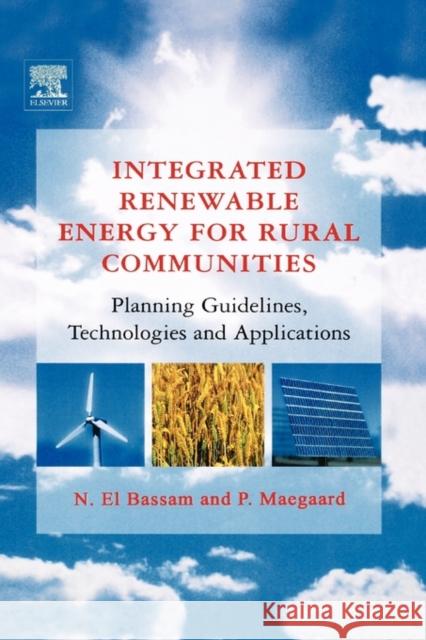
N. El Bassam; Nasir El Bassam; P. Maegaard
Integrated Renewable Energy for Rural Communities: Planning Guidelines, Technologies and Applications El Bassam, Nasir 9780444510143 Elsevier Science - książkaWidoczna okładka, to zdjęcie poglądowe, a rzeczywista szata graficzna może różnić się od prezentowanej.

Integrated Renewable Energy for Rural Communities: Planning Guidelines, Technologies and Applications

ISBN-13: 9780444510143 / Angielski / Twarda / 2004 / 342 str.

N. El Bassam; Nasir El Bassam; P. Maegaard
cena 658,50 zł
(netto: 627,14 VAT:  5%)

Najniższa cena z 30 dni: 651,77 zł
Termin realizacji zamówienia:
ok. 30 dni roboczych
Bez gwarancji dostawy przed świętami

Darmowa dostawa!

More than two billion people worldwide have currently no access to grid electricity or other efficient energy supply. This is one third of humanity and the majority live in rural areas. The productivity and health of these people are diminished by reliance on traditional fuels and technologies, with women and children suffering most. Energy is the key element to empower people and ensure water, food and fodder supply as well as rural development. Therefore access to energy should be treated as the fundamental right to everybody. Renewable energy has the potential to bring power, not only in the literal sense, to communities by transforming their prospects.

This book offers options that meet the needs of people and communities for energy and engage them in identifying and planning their own provision. It describes updated renewable energy technologies and offers strategies and guidelines for the planning and implementation of sustainable energy supply for individuals and communities.


Kategorie:
Technologie
Kategorie BISAC:
Science > Energia
Technology & Engineering > Power Resources - Alternative & Renewable
Business & Economics > Industries - Energy
Wydawca:
Elsevier Science
Język:
Angielski
ISBN-13:
9780444510143
Rok wydania:
2004
Ilość stron:
342
Waga:
0.77 kg
Wymiary:
24.49 x 17.02 x 1.85
Oprawa:
Twarda
Wolumenów:
01
Dodatkowe informacje:
Bibliografia
Glosariusz/słownik
Wydanie ilustrowane

"This book offers options that meet the needs of people and communities for energy and engage them in identifying and planning their own provision. It describes updated renewable energy technologies and offers strategies and guidelines for the planning and implementation of sustainable energy supply for individuals and communities." --Energy, 2004

Preface. Index of figures. Index of tables. Foreword. 1. Introduction.2. Overview of energy requirements for rural communities.2.1 Heat. 2.2 Electric power. 2.3 Water. 2.4 Lighting. 2.5 Cooking. 2.6 Health and sanitation. 2.7 Communications. 2.8 Transportation. 2.9 Agriculture. 2.10 Basic and extended needs. 3. Calculating energy and food production potential and requirements.3.1 Modelling approaches. 3.2 Data acquisition. 3.3 Determination of energy and food requirements. 3.4 Energy potential analysis. 3.5 Data collection and processing for energy utilization. 3.6 Wind energy. 3.7 Biomass. 3.8 Energetic use of biomass. 4. Planning of integrated energy systems for rural communities.4.1 Scenario 1. 4.2 Scenario 2. 4.3 Case study I: Implementation of IEF under climatic conditions of Central Europe. 4.4 Case study II: Arid and semi arid regions. 5. Renewable energy resources and technologies.5.1 Biomass and bioenergy. 5.2 Regional availability. 5.3 Deployment of biogas: Denmark as a case study. 5.4 Plant oils. 5.5 Ethanol. 5.6 Combustion. 5.7 Gasification. 5.8 Pyrolysis. 5.9 Cogeneration. 5.10 Wind energy. 5.11 Solar energy. 5.12 Hydropower. 5.13 Geothermal energy. 5.14 Marine energy (general). 5.15 Ocean thermal energy. 5.16 Tidal energy. 5.17 Wave energy. 5.18 Hydrogen. 5.19 Fuel cells. 5.20 Stirling engines for power and heat generation. 5.21 Tractors as power generator (dual uses). 5.22 Batteries. 5.23 Alternative transportation fuels. 6. Applications of renewable energy technologies. 6.1 Cookers and stoves. 6.2 Air conditioning, cooling, refrigeration and ice making. 6.3 Solar powered village scale potable water system. 6.4 Telecommunication. 6.5 Mobility and alternative fuel vehicles. 7. System integration.7.1 The integrated energy farm. 7.2 New achievement in the utilization of biomass for energy in China. 8. Buildings and energy saving.9. Environmental assessment. 10. Economic dimensions.10.1 Economic aspects. 10.2 Recent and future market. 10.3 Financing and investment. 10.4 Development. 10.5 Marketing strategy. 11. Legislative structures.Appendices.1. Glossary. 2. Abbreviations and acronyms. 3. Conversion factors. 4. Inventory of PV systems for sustainable agriculture and rural development. 5. Solar restaurant in Chile. 6. Biomass turbo stove BAFOB 5KW. 7. Illuminating the path. 8. Renewables and tourism. Sources of figures and tables. Subject index. References.

Prof. Dr. N. El Bassam is the founder and director of the International Research Centre for Renewable Energy (IFEED), Germany, India and USA; Chairperson at World Council of Renewable Energy (WCRE) Scientific Advisory Board, Federal Association of Regenerative Mobility, and Vice President of the Climate Protection Agency North Germany; Chairman of the Working Group Sustainable Rural Energy Network (SREN), FAO, United Nations, Rome; ); Program Head of the Projects wind energy and Concentrating Solar Power for Power (CSP) Supply and Seawater Desalination Middle East and North Africa (DESERTEC).

He coordinates the Centre activities, technology transfer of and the co-operation in national and international organizations (UN, EU, and Club of Rome), the integration and application of renewable energy resources available in various regions for electricity, water and food supply with aims of empowering the countryside.

El Bassam is well-known as Poverty Researcher, in this context he initiated the strategy and project "Empowering Urban Cities and Rural Habitats in Africa” which considered as a Marshal Plan for sustainable economic development and combating Poverty, migration, and Depopulation of urban cities and Rural Communities worldwide.

He contributes as an editor in the journals: International Journal "Sustainability Science, Springer Scientific Publishing Services; Jordan Journal of Mechanical and Industrial Engineering and the American Journal of Engineering and Applied Sciences (AJEAS).

El Bassam published 12 books, authored numerous publications, and received several awards Dr. Maegaard is Director of the Nordic Folkecenter for Renewable Energy, an institute for the development and implementation of renewable energies located in Denmark. The center has, under his leadership, provided transfer of renewable energy technology to many countries. Dr. Maegaard was appointed the first president of the World Wind Energy Institute, first president of the World Wind Energy Association, and has served as a Renewable Energy Adviser to the President of Mali. For over three decades, Dr. Maegaard has been a director, organizer, and speaker at numerous international seminars, workshops and conferences. He has authored numerous reports, books, and articles in Danish, English, German and Japanese on renewables and sustainable development.

El Bassam, N. N. El Bassam is the Director of International Rese... więcej >


Udostępnij

Facebook - konto krainaksiazek.pl


Opinie o Krainaksiazek.pl na Opineo.pl

Partner Mybenefit

Krainaksiazek.pl w programie rzetelna firma Krainaksiaze.pl - płatności przez paypal

Czytaj nas na:

Facebook - krainaksiazek.pl
  • książki na zamówienie
  • granty
  • książka na prezent
  • kontakt
  • pomoc
  • opinie
  • regulamin
  • polityka prywatności

Zobacz:

  • Księgarnia czeska

  • Wydawnictwo Książkowe Klimaty

1997-2025 DolnySlask.com Agencja Internetowa

© 1997-2022 krainaksiazek.pl
     
KONTAKT | REGULAMIN | POLITYKA PRYWATNOŚCI | USTAWIENIA PRYWATNOŚCI
Zobacz: Księgarnia Czeska | Wydawnictwo Książkowe Klimaty | Mapa strony | Lista autorów
KrainaKsiazek.PL - Księgarnia Internetowa

Polityka prywatnosci - link
Krainaksiazek.pl - płatnośc Przelewy24
Przechowalnia Przechowalnia





