• Wyszukiwanie zaawansowane
  • Kategorie
  • Kategorie BISAC
  • Książki na zamówienie
  • Promocje
  • Granty
  • Książka na prezent
  • Opinie
  • Pomoc
  • Załóż konto
  • Zaloguj się

Insect Chronobiology » książka


zaloguj się | załóż konto
Logo Krainaksiazek.pl

koszyk

konto

szukaj
topmenu
Księgarnia internetowa
Szukaj
Książki na zamówienie
Promocje
Granty
Książka na prezent
Moje konto
Pomoc
 
 
Wyszukiwanie zaawansowane
Pusty koszyk
Bezpłatna dostawa dla zamówień powyżej 20 złBezpłatna dostawa dla zamówień powyżej 20 zł

Kategorie główne

• Nauka
 [2949965]
• Literatura piękna
 [1857847]

  więcej...
• Turystyka
 [70818]
• Informatyka
 [151303]
• Komiksy
 [35733]
• Encyklopedie
 [23180]
• Dziecięca
 [617748]
• Hobby
 [139972]
• AudioBooki
 [1650]
• Literatura faktu
 [228361]
• Muzyka CD
 [398]
• Słowniki
 [2862]
• Inne
 [444732]
• Kalendarze
 [1620]
• Podręczniki
 [167233]
• Poradniki
 [482388]
• Religia
 [509867]
• Czasopisma
 [533]
• Sport
 [61361]
• Sztuka
 [243125]
• CD, DVD, Video
 [3451]
• Technologie
 [219309]
• Zdrowie
 [101347]
• Książkowe Klimaty
 [123]
• Zabawki
 [2362]
• Puzzle, gry
 [3791]
• Literatura w języku ukraińskim
 [253]
• Art. papiernicze i szkolne
 [7933]
Kategorie szczegółowe BISAC

Insect Chronobiology

ISBN-13: 9789819907250 / Angielski
Hideharu Numata; Kenji Tomioka
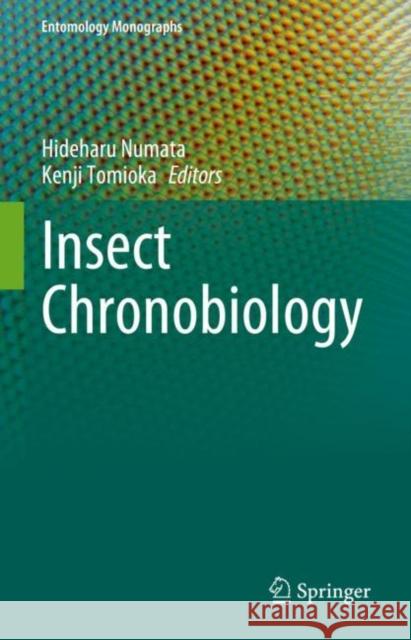
Insect Chronobiology Hideharu Numata Kenji Tomioka 9789819907250 Springer - książkaWidoczna okładka, to zdjęcie poglądowe, a rzeczywista szata graficzna może różnić się od prezentowanej.

Insect Chronobiology

ISBN-13: 9789819907250 / Angielski

Hideharu Numata; Kenji Tomioka
cena 685,93
(netto: 653,27 VAT:  5%)

Najniższa cena z 30 dni: 655,41
Termin realizacji zamówienia:
ok. 22 dni roboczych
Bez gwarancji dostawy przed świętami

Darmowa dostawa!
inne wydania

This book reviews the physiological mechanisms of diverse insect clocks, including circadian clock, lunar clock, tidal clock, photoperiodism, circannual rhythms and others. It explains the commonality and diversity of insect clocks, focusing on the recent advances in their molecular and neural mechanisms.In the history of chronobiology, insects provided important examples of diverse clocks. The first report of animal photoperiodism was in an aphid, and the time-compensated celestial navigation was first shown in the honeybee. The circadian clock was first localized in the brain of a cockroach. These diverse insect clocks also have some common features which deserve to be reviewed in a single book. The central molecular mechanism of the circadian clock, i.e., the negative feedback loop of clock genes, was proposed in Drosophila melanogaster in the 1990s and later became the subject of the Nobel Prize in Physiology or Medicine in 2017. Thereafter, researches on the molecular and neural mechanisms in diverse insect clocks other than the Drosophila circadian clock also advanced appreciably. Various new methods including RNAi, NGS, and genome editing with CRISPR-Cas9 have become applicable in these researches.This book comprehensively reviews the physiological mechanisms in diverse insect clocks in the last two decades, which have received less attention than the Drosophila circadian clock. The book is intended for researchers, graduate students, and highly motivated undergraduate students in biological sciences, especially in entomology and chronobiology.

This book reviews the physiological mechanisms of diverse insect clocks, including circadian clock, lunar clock, tidal clock, photoperiodism, circannual rhythms and others. It explains the commonality and diversity of insect clocks, focusing on the recent advances in their molecular and neural mechanisms. 
 
In the history of chronobiology, insects provided important examples of diverse clocks. The first report of animal photoperiodism was in an aphid, and the time-compensated celestial navigation was first shown in the honeybee. The circadian clock was first localized in the brain of a cockroach. These diverse insect clocks also have some common features which deserve to be reviewed in a single book. The central molecular mechanism of the circadian clock, i.e., the negative feedback loop of clock genes, was proposed in Drosophila melanogaster in the 1990s and later became the subject of the Nobel Prize in Physiology or Medicine in 2017. Thereafter, researches on the molecular and neural mechanisms in diverse insect clocks other than the Drosophila circadian clock also advanced appreciably. Various new methods including RNAi, NGS, and genome editing with CRISPR-Cas9 have become applicable in these researches.  
This book comprehensively reviews the physiological mechanisms in diverse insect clocks in the last two decades, which have received less attention than the Drosophila circadian clock. The book is intended for researchers, graduate students, and highly motivated undergraduate students in biological sciences, especially in entomology and chronobiology. 

Kategorie:
Nauka, Biologia i przyroda
Kategorie BISAC:
Science > Bezkręgowce
Wydawca:
Springer
Seria wydawnicza:
Entomology Monographs
Język:
Angielski
ISBN-13:
9789819907250

​

Chapter 1. Historical survey of chronobiology with reference to studies in insects.- Part I. Circadian rhythms.- Chapter 2. General features of circadian rhythms.- Chapter 3. Photic entrainment of circadian rhythms.- Chapter 4. Molecular mechanism of the circadian clock.- Chapter 5. Neural mechanism of the circadian clock.- Chapter 6. Peripheral circadian clock.- Chapter 7. Circa-bidian rhythm.- Chapter 8. Circadian rhythms in social insects.- Chapter 9. Environmental adaptation and evolution of circadian rhythms.- Part II. Other types of insect rhythms and photoperiodism.- Chapter 10. Lunar and tidal rhythms.- Chapter 11. Circannual rhythms.- Chapter 12. General features of photoperiodism.- Chapter 13. Molecular mechanism of photoperiodism.- Chapter 14. Neural mechanism of photoperiodism.- Chapter 15. Seasonal timer in aphids.- Chapter 16. Time-compensated celestial navigation.

Hideharu Numata is an Emeritus Professor and a Program-Specific Professor at Kyoto University, Japan. He was a Professor at the Graduate School of Science, Osaka City University, Japan, in 1998-2009, and the Graduate School of Science, Kyoto University, in 2009-2021. His research interests include physiological mechanisms for seasonal adaptations in insects, e.g., photoperiodism and circannual rhythm. He was the President of the Entomological Society of Japan in 2013-2014, and a Councilor of International Congress of Entomology in 2008-2016. He was the Editor-in-Chief of Entomological Science in 2010-2011 and Zoological Science in 2020-2021. 


Kenji Tomioka is an Emeritus Professor and a Program-Specific Professor of Okayama University, Japan. He was a Professor at Department of Biology, Faculty of Science, Yamaguchi University, Japan in 1995-2003, and the Graduate School of Natural Science and Technology, Okayama University, in 2003-2021. His research interests include molecular and neural basis of insect circadian rhythms and photoperiodism. He has been a member of the editorial board of Journal of Insect Physiology since 1992, Zoological Science since 2003, Zoological Letters since 2014, and Physiological Entomology since 2015. 

This book reviews the physiological mechanisms of diverse insect clocks, including circadian clock, lunar clock, tidal clock, photoperiodism, circannual rhythms and others. It explains the commonality and diversity of insect clocks, focusing on the recent advances in their molecular and neural mechanisms. 

 
In the history of chronobiology, insects provided important examples of diverse clocks. The first report of animal photoperiodism was in an aphid, and the time-compensated celestial navigation was first shown in the honeybee. The circadian clock was first localized in the brain of a cockroach. These diverse insect clocks also have some common features which deserve to be reviewed in a single book. The central molecular mechanism of the circadian clock, i.e., the negative feedback loop of clock genes, was proposed in Drosophila melanogaster in the 1990s and later became the subject of the Nobel Prize in Physiology or Medicine in 2017. Thereafter, researches on the molecular and neural mechanisms in diverse insect clocks other than the Drosophila circadian clock also advanced appreciably. Various new methods including RNAi, NGS, and genome editing with CRISPR-Cas9 have become applicable in these researches.  

This book comprehensively reviews the physiological mechanisms in diverse insect clocks in the last two decades, which have received less attention than the Drosophila circadian clock. The book is intended for researchers, graduate students, and highly motivated undergraduate students in biological sciences, especially in entomology and chronobiology. 


Udostępnij

Facebook - konto krainaksiazek.pl


Opinie o Krainaksiazek.pl na Opineo.pl

Partner Mybenefit

Krainaksiazek.pl w programie rzetelna firma Krainaksiaze.pl - płatności przez paypal

Czytaj nas na:

Facebook - krainaksiazek.pl
  • książki na zamówienie
  • granty
  • książka na prezent
  • kontakt
  • pomoc
  • opinie
  • regulamin
  • polityka prywatności

Zobacz:

  • Księgarnia czeska

  • Wydawnictwo Książkowe Klimaty

1997-2025 DolnySlask.com Agencja Internetowa

© 1997-2022 krainaksiazek.pl
     
KONTAKT | REGULAMIN | POLITYKA PRYWATNOŚCI | USTAWIENIA PRYWATNOŚCI
Zobacz: Księgarnia Czeska | Wydawnictwo Książkowe Klimaty | Mapa strony | Lista autorów
KrainaKsiazek.PL - Księgarnia Internetowa

Polityka prywatnosci - link
Krainaksiazek.pl - płatnośc Przelewy24
Przechowalnia Przechowalnia






