• Wyszukiwanie zaawansowane
  • Kategorie
  • Kategorie BISAC
  • Książki na zamówienie
  • Promocje
  • Granty
  • Książka na prezent
  • Opinie
  • Pomoc
  • Załóż konto
  • Zaloguj się

Inorganic Particle Synthesis Via Macro and Microemulsions: A Micrometer to Nanometer Landscape » książka


zaloguj się | załóż konto
Logo Krainaksiazek.pl

koszyk

konto

szukaj
topmenu
Księgarnia internetowa
Szukaj
Książki na zamówienie
Promocje
Granty
Książka na prezent
Moje konto
Pomoc
 
 
Wyszukiwanie zaawansowane
Pusty koszyk
Bezpłatna dostawa dla zamówień powyżej 20 złBezpłatna dostawa dla zamówień powyżej 20 zł

Kategorie główne

• Nauka
 [2946600]
• Literatura piękna
 [1856966]

  więcej...
• Turystyka
 [72221]
• Informatyka
 [151456]
• Komiksy
 [35826]
• Encyklopedie
 [23190]
• Dziecięca
 [619653]
• Hobby
 [140543]
• AudioBooki
 [1577]
• Literatura faktu
 [228355]
• Muzyka CD
 [410]
• Słowniki
 [2874]
• Inne
 [445822]
• Kalendarze
 [1744]
• Podręczniki
 [167141]
• Poradniki
 [482898]
• Religia
 [510455]
• Czasopisma
 [526]
• Sport
 [61590]
• Sztuka
 [243598]
• CD, DVD, Video
 [3423]
• Technologie
 [219201]
• Zdrowie
 [101638]
• Książkowe Klimaty
 [124]
• Zabawki
 [2473]
• Puzzle, gry
 [3898]
• Literatura w języku ukraińskim
 [254]
• Art. papiernicze i szkolne
 [8170]
Kategorie szczegółowe BISAC

Inorganic Particle Synthesis Via Macro and Microemulsions: A Micrometer to Nanometer Landscape

ISBN-13: 9780306478772 / Angielski / Twarda / 2003 / 207 str.
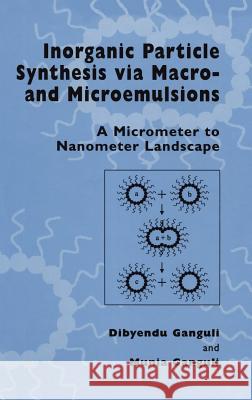
D. Ganguli; Dibyendu Ganguli; Munia Ganguli
Inorganic Particle Synthesis Via Macro and Microemulsions: A Micrometer to Nanometer Landscape Ganguli, Dibyendu 9780306478772 Plenum Publishing Corporation - książkaWidoczna okładka, to zdjęcie poglądowe, a rzeczywista szata graficzna może różnić się od prezentowanej.

Inorganic Particle Synthesis Via Macro and Microemulsions: A Micrometer to Nanometer Landscape

ISBN-13: 9780306478772 / Angielski / Twarda / 2003 / 207 str.

D. Ganguli; Dibyendu Ganguli; Munia Ganguli
cena 403,47 zł
(netto: 384,26 VAT:  5%)

Najniższa cena z 30 dni: 385,52 zł
Termin realizacji zamówienia:
ok. 22 dni roboczych
Bez gwarancji dostawy przed świętami

Darmowa dostawa!

"Nanotechnology" is now very well known as one of the most important key technologies in science and industry. In the field of material science and engineering, nanoparticles should be unit materials, as well as atoms and molecules, to build ceramics, devices, catalysts, and machines, and the "nanoparticle technology" is thus attracting. This novel technology includes various methodologies for nanoparticles: preparation, surface-modification via chemical and/or physical treatments, immobilization and arrangement on supports or substrates, to achieve high performance for luminescence properties in light emitting devices, and high efficiency for catalytic and photocatalytic reactions in chemical synthesis, chemical decomposition, and artificial photosynthesis, etc. It should be needless to say that the preparation of nanoparticles, having precisely controlled particle size, size distribution, chemical composition, and surface properties, is essentially important to realize "true nanoparticle technology." This book, written by Dr. Dibyendu Ganguli and Dr. Munia Ganguli, deals with the preparation methodologies for inorganic nanoparticles using macro- and microemulsions as "microreactor." There are several differences between these two emulsions, in addition to water droplet size: thermodynamic stability, and fusion-redispersion dynamics of the droplets. The properties of the nanoparticles prepared in these emulsion systems are seriously influenced and controlled by the selection of dynamic and static conditions.


Kategorie:
Nauka, Chemia
Kategorie BISAC:
Gardening > General
Technology & Engineering > Chemical & Biochemical
Science > Chemia - Nieorganiczna
Wydawca:
Plenum Publishing Corporation
Język:
Angielski
ISBN-13:
9780306478772
Rok wydania:
2003
Wydanie:
2003
Ilość stron:
207
Waga:
0.54 kg
Wymiary:
23.5 x 15.5
Oprawa:
Twarda
Wolumenów:
01
Dodatkowe informacje:
Bibliografia
Wydanie ilustrowane

1. Emulsions: A General Introduction.- 1.1. Introduction.- 1.2. The Interface.- 1.3. Stability of an Emulsion.- 1.3.1. Breaking of an Emulsion.- 1.3.2. Inversion in an Emulsion.- 1.4. The Oil Phase.- 1.5. The Water Phase.- 1.6. The Surfactant Phase.- 1.7. The Process of Emulsification.- 2. Surfactants and Micelle Formation.- 2.1. Introduction.- 2.2. Surfactants: A Broad Classification and General Features.- 2.3. The Critical Micelle Concentration.- 2.4. Factors Involved in Micelle Formation.- 2.4.1. Normal Micelles.- 2.4.2. Reverse Micelles.- 2.5. The Nature of Equilibrium in Micellar Aggregates.- 2.6. Geometrical Factors Determining the Micellar Shape.- 2.7. Conversion of Spherical Micelles to other Forms: Chemical Factors.- 3. Microemulsions: Some Basic Concepts.- 3.1. Introduction.- 3.2. Phase Behavior in Surfactant-Oil-Water Systems.- 3.3. Preparation of Microemulsions.- 3.4. Factors Affecting Water Solubilization in Reverse Micelles.- 3.5. Nature of Water in Reverse Microemulsions.- 3.6. Control of the Water Pool Size in Reverse Microemulsions.- 3.7. Interactions Among Water Pools in Reverse Microemulsions.- 4. Particle Formation From Macroemulsions: A Survey.- 4.1. Introduction.- 4.2. A Summary of Synthetic Methods.- 4.3. Particles from Emulsions.- 4.3.1. Single Oxides.- Aluminum Oxide.- Zirconium Dioxide: Pure and Doped Forms and Derivatives.- Titanium Dioxide.- Silicon Dioxide.- Chromium Oxide.- Yttrium Oxide.- Zinc Oxide.- Tungsten Oxide.- 4.3.2. Multiple Oxides.- Barium Titanate.- Lead Titanate.- Zirconium Titanate.- Magnesium-Aluminum Spinel.- Mullite.- Indium Tin Oxide.- Mixed Iron Oxide.- Chromium Titanate.- Yttrium Aluminum Garnet.- Lithium Nickel Manganate.- Strontium Bismuth Tantalate.- Yttrium Barium Cuprate.- Lead Magnesium Niobate.- Hydroxyapatite.- 4.3.3. Carbonate.- Calcium Carbonate.- 4.4. Controls in Synthesis.- 5. Particle Formation From Microemulsions: A Survey.- 5.1. Introduction.- 5.2. A Summary of Synthetic Methods.- 5.3. Tailoring of Particle Size and Shape.- 5.3.1. Particle Size.- 5.3.2. Particle Shape.- 5.4. Particles from Microemulsions.- 5.4.1. Single and Multiple Oxides.- Zirconium Dioxide.- Titanium Dioxide.- Silicon Dioxide.- Aluminum Oxide.- Zinc Oxide.- Iron Oxides.- Tin Oxide.- Cerium Oxide.- Yttrium Oxide.- Erbium Oxide.- Neodymium Oxide.- Vanadium Pentoxide.- Cobalt Oxide.- Barium Titanate.- Lead Titanate.- Lead Magnesium Niobate.- Barium Ferrite.- Strontium Ferrite.- Manganese Ferrite.- Cobalt Ferrite.- Zinc Ferrite.- Other Ferrites.- Oxide Superconductors.- Titanium Iron Oxide.- Aluminates.- Indium Tin Oxide.- Lanthanum Nickel Oxide.- Lanthanum Copper Oxide.- Barium Lead Oxide.- Lead Chromium Oxide.- Zirconium Silicate.- Yttrium Iron Garnet.- Barium Tungstate.- Calcium Phosphates.- Aluminum Phosphate.- Zincophosphates.- 5.4.2. Miscellaneous Oxy-Compounds.- Aluminum Hydroxide.- Calcium Hydroxide.- Calcium Carbonate.- Barium Carbonate.- Calcium Sulfate.- Barium Sulfate.- 5.4.3. Chalcogenides.- Cadmium Sulfide.- Zinc Sulfide.- Silver Sulfide.- Copper Sulfide.- Lead Sulfide.- Molybdenum Sulfide.- Sodium Sulfide.- Cadmium Selenide.- Silver Selenide.- 5.4.4. Metals.- Gold.- Silver.- Copper.- Platinum.- Palladium.- Rhodium.- Iridium.- Nickel.- Cobalt.- Iron.- Bismuth.- 5.4.5. Borides.- 5.4.6. Halides.- 5.5. Factors Controlling Particle Polydispersity.- 6. Applicabilities of the Processes and the Products: A Summary.- 6.1. Introduction.- 6.2. Macroemulsion-Mediated Synthesis.- 6.2.1. Advantages of the General Process.- 6.2.2. Disadvantages of the General Process.- 6.2.3. New Developments and their Advantages.- 6.3. Applications of Macroemulsion-Generated Particles.- 6.3.1. Nanoparticles.- 6.3.2. Micrometer-Sized Particles.- 6.4. Microemulsion-Mediated Synthesis.- 6.4.1. Advantages of the General Process.- 6.4.2. Disadvantages of the General Process.- 6.4.3. New Developments and their Advantages.- 6.5. Applications of Microemulsion-Generated Particles.- 6.5.1. Materials with Catalytic Properties.- 6.5.2. Optical Materials.- 6.5.3. Magnetic Materials.- References.


Udostępnij

Facebook - konto krainaksiazek.pl


Opinie o Krainaksiazek.pl na Opineo.pl

Partner Mybenefit

Krainaksiazek.pl w programie rzetelna firma Krainaksiaze.pl - płatności przez paypal

Czytaj nas na:

Facebook - krainaksiazek.pl
  • książki na zamówienie
  • granty
  • książka na prezent
  • kontakt
  • pomoc
  • opinie
  • regulamin
  • polityka prywatności

Zobacz:

  • Księgarnia czeska

  • Wydawnictwo Książkowe Klimaty

1997-2025 DolnySlask.com Agencja Internetowa

© 1997-2022 krainaksiazek.pl
     
KONTAKT | REGULAMIN | POLITYKA PRYWATNOŚCI | USTAWIENIA PRYWATNOŚCI
Zobacz: Księgarnia Czeska | Wydawnictwo Książkowe Klimaty | Mapa strony | Lista autorów
KrainaKsiazek.PL - Księgarnia Internetowa

Polityka prywatnosci - link
Krainaksiazek.pl - płatnośc Przelewy24
Przechowalnia Przechowalnia





