Increase of Joint Area by Gap-bridging Laser Beam Welding on Metalized Substrates » książka





Increase of Joint Area by Gap-bridging Laser Beam Welding on Metalized Substrates
ISBN-13: 9783985553129 / Angielski / Miękka / 164 str.
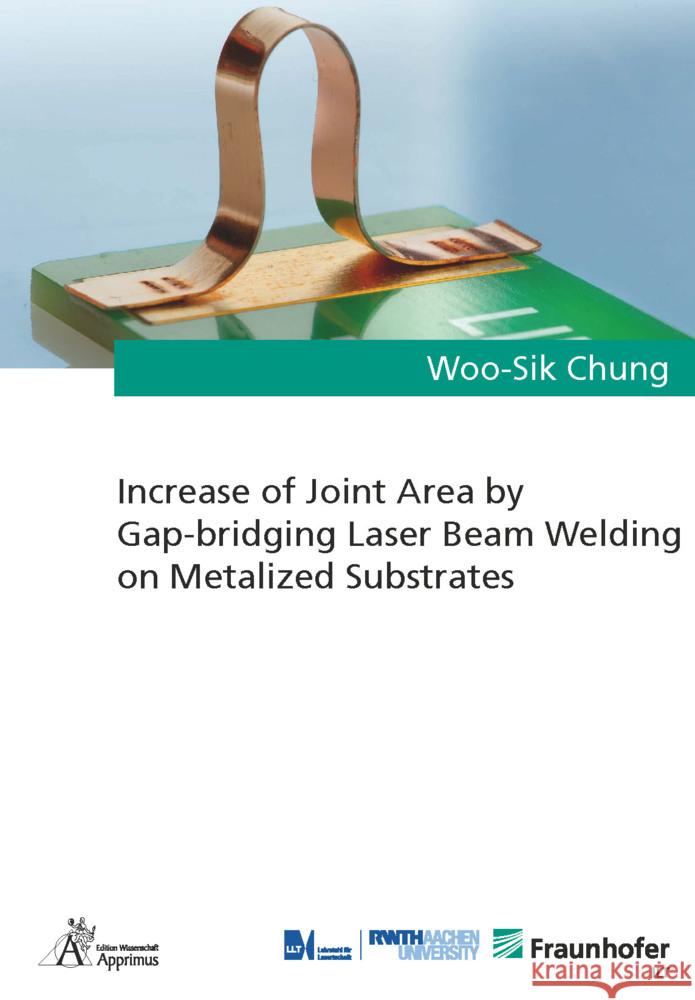
Increasing performance and the associated junction temperature in the field of power electronics require new packaging and connection technology. Besides conventional soldering and ultrasonic welding, the novel "Laser Impulse Metal Bonding" (LIMBO) process opens up possibilities to meet these requirements in electronic packaging. The gap-bridging LIMBO process enables a weld joint on thermally sensitive substrates by thermal separation of the joining partners. The gap bridging is realized by melt pool deflection due to a sudden expansion of the vapor capillary in the melt using temporal laser beam modulation. However, to avoid a thermal overload, a certain distance is required between each LIMBO weld joint. Therefore, the number of welds that can be applied to a limited surface area is yet restricted for the LIMBO process. This affects the resulting weld joint cross-section. In this thesis, an overlap welding approach is investigated to extend the limited weld joint area with the LIMBO process. In addition to the process fundamentals, this thesis describes an analytical model for melt pool deflection, thermal simulations, and experimental studies on heat transfer. This enables a continuous weld joint cross-section of more than 0.2 mm² despite the thermal bridge between the two joining partners caused by the previous welding process. The resulting weld joint generated with the extended LIMBO process has a larger weld joint cross-section, which improves the mechanical and electrical properties. The material specifications are considered for the process development to avoid exceeding the thermal destruction threshold during the welding process. This work thus provides a basic understanding of function-oriented contacting solutions for different printed circuit boards and metal-ceramic substrates.
This dissertation provides insights into the factors influencing heat transfer during the gap-bridging spot welding process, known as Laser Impulse Metal Bonding (LIMBO). By applying pulse seam welding to extend LIMBO into a continuous process, the bonding cross-section of the weld can be significantly increased while maintaining a constant joining area. As a result, the mechanical and electrical properties of the joint are considerably improved.




Czytaj nas na:
KrainaKsiazek.PL - Księgarnia Internetowa


