• Wyszukiwanie zaawansowane
  • Kategorie
  • Kategorie BISAC
  • Książki na zamówienie
  • Promocje
  • Granty
  • Książka na prezent
  • Opinie
  • Pomoc
  • Załóż konto
  • Zaloguj się

In Vivo NMR Spectroscopy: Principles and Techniques » książka


zaloguj się | załóż konto
Logo Krainaksiazek.pl

koszyk

konto

szukaj
topmenu
Księgarnia internetowa
Szukaj
Książki na zamówienie
Promocje
Granty
Książka na prezent
Moje konto
Pomoc
 
 
Wyszukiwanie zaawansowane
Pusty koszyk
Bezpłatna dostawa dla zamówień powyżej 20 złBezpłatna dostawa dla zamówień powyżej 20 zł

Kategorie główne

• Nauka
 [2944077]
• Literatura piękna
 [1814251]

  więcej...
• Turystyka
 [70679]
• Informatyka
 [151074]
• Komiksy
 [35590]
• Encyklopedie
 [23169]
• Dziecięca
 [611005]
• Hobby
 [136031]
• AudioBooki
 [1718]
• Literatura faktu
 [225599]
• Muzyka CD
 [379]
• Słowniki
 [2916]
• Inne
 [443741]
• Kalendarze
 [1187]
• Podręczniki
 [166463]
• Poradniki
 [469211]
• Religia
 [506887]
• Czasopisma
 [481]
• Sport
 [61343]
• Sztuka
 [242115]
• CD, DVD, Video
 [3348]
• Technologie
 [219293]
• Zdrowie
 [98602]
• Książkowe Klimaty
 [124]
• Zabawki
 [2385]
• Puzzle, gry
 [3504]
• Literatura w języku ukraińskim
 [260]
• Art. papiernicze i szkolne
 [7151]
Kategorie szczegółowe BISAC

In Vivo NMR Spectroscopy: Principles and Techniques

ISBN-13: 9781119382546 / Angielski / Twarda / 2019 / 584 str.
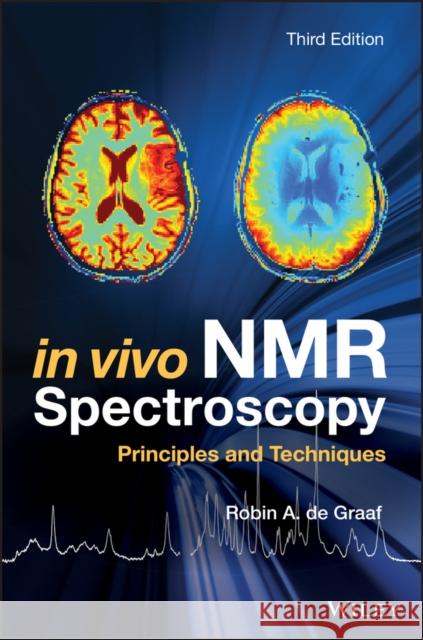
Robin A. de Graaf
In Vivo NMR Spectroscopy: Principles and Techniques de Graaf, Robin A. 9781119382546 John Wiley & Sons Inc - książkaWidoczna okładka, to zdjęcie poglądowe, a rzeczywista szata graficzna może różnić się od prezentowanej.

In Vivo NMR Spectroscopy: Principles and Techniques

ISBN-13: 9781119382546 / Angielski / Twarda / 2019 / 584 str.

Robin A. de Graaf
cena 572,00
(netto: 544,76 VAT:  5%)

Najniższa cena z 30 dni: 565,02
Termin realizacji zamówienia:
ok. 30 dni roboczych.

Darmowa dostawa!

Presents basic concepts, experimental methodology and data acquisition, and processing standards of in vivo NMR spectroscopy This book covers, in detail, the technical and biophysical aspects of in vivo NMR techniques and includes novel developments in the field such as hyperpolarized NMR, dynamic 13C NMR, automated shimming, and parallel acquisitions. Most of the techniques are described from an educational point of view, yet it still retains the practical aspects appreciated by experimental NMR spectroscopists. In addition, each chapter concludes with a number of exercises designed to review, and often extend, the presented NMR principles and techniques. The third edition of In Vivo NMR Spectroscopy: Principles and Techniques has been updated to include experimental detail on the developing area of hyperpolarization; a description of the semi-LASER sequence, which is now a method of choice; updated chemical shift data, including the addition of 31P data; a troubleshooting section on common problems related to shimming, water suppression, and quantification; recent developments in data acquisition and processing standards; and MatLab scripts on the accompanying website for helping readers calculate radiofrequency pulses. Provide an educational explanation and overview of in vivo NMR, while maintaining the practical aspects appreciated by experimental NMR spectroscopists Features more experimental methodology than the previous edition End-of-chapter exercises that help drive home the principles and techniques and offer a more in-depth exploration of quantitative MR equations Designed to be used in conjunction with a teaching course on the subject In Vivo NMR Spectroscopy: Principles and Techniques, 3rd Edition is aimed at all those involved in fundamental and/or diagnostic in vivo NMR, ranging from people working in dedicated in vivo NMR institutes, to radiologists in hospitals, researchers in high-resolution NMR and MRI, and in areas such as neurology, physiology, chemistry, and medical biology.


Kategorie:
Nauka, Chemia
Kategorie BISAC:
Science > Spectroscopy & Spectrum Analysis
Technology & Engineering > Imaging Systems
Wydawca:
John Wiley & Sons Inc
Język:
Angielski
ISBN-13:
9781119382546
Rok wydania:
2019
Dostępne języki:
Ilość stron:
584
Waga:
1.37 kg
Wymiary:
25.65 x 17.02 x 3.3
Oprawa:
Twarda
Dodatkowe informacje:
Bibliografia

Preface xvAbbreviations xviiSupplementary Material xxiv1 Basic Principles 11.1 Introduction 11.2 Classical Magnetic Moments 31.3 Nuclear Magnetization 51.4 Nuclear Induction 91.5 Rotating Frame of Reference 111.6 Transverse T2 and T2 * Relaxation 121.7 Bloch Equations 161.8 Fourier Transform NMR 171.9 Chemical Shift 201.10 Digital NMR 231.10.1 Analog-to-digital Conversion 231.10.2 Signal Averaging 251.10.3 Digital Fourier Transformation 251.10.4 Zero Filling 251.10.5 Apodization 261.11 Quantum Description of NMR 281.12 Scalar Coupling 301.13 Chemical and Magnetic Equivalence 33Exercises 37References 402 In Vivo NMR Spectroscopy - Static Aspects 432.1 Introduction 432.2 Proton NMR Spectroscopy 432.2.1 Acetate (Ace) 512.2.2 N-Acetyl Aspartate (NAA) 522.2.3 N-Acetyl Aspartyl Glutamate (NAAG) 532.2.4 Adenosine Triphosphate (ATP) 542.2.5 Alanine (Ala) 552.2.6 gamma-Aminobutyric Acid (GABA) 562.2.7 Ascorbic Acid (Asc) 572.2.8 Aspartic Acid (Asp) 582.2.9 Branched-chain Amino Acids (Isoleucine, Leucine, and Valine) 582.2.10 Choline-containing Compounds (tCho) 592.2.11 Creatine (Cr) and Phosphocreatine (PCr) 612.2.12 Ethanol 622.2.13 Ethanolamine (EA) and Phosphorylethanolamine (PE) 632.2.14 Glucose (Glc) 632.2.15 Glutamate (Glu) 642.2.16 Glutamine (Gln) 652.2.17 Glutathione (GSH) 662.2.18 Glycerol 672.2.19 Glycine 682.2.20 Glycogen 682.2.21 Histidine 692.2.22 Homocarnosine 702.2.23 ß-Hydoxybutyrate (BHB) 702.2.24 2-Hydroxyglutarate (2HG) 712.2.25 myo-Inositol (mI) and scyllo-Inositol (sI) 722.2.26 Lactate (Lac) 732.2.27 Macromolecules 742.2.28 Nicotinamide Adenine Dinucleotide (NAD+) 762.2.29 Phenylalanine 762.2.30 Pyruvate 772.2.31 Serine 782.2.32 Succinate 792.2.33 Taurine (Tau) 792.2.34 Threonine (Thr) 802.2.35 Tryptophan (Trp) 802.2.36 Tyrosine (Tyr) 802.2.37 Water 812.2.38 Non-cerebral Metabolites 822.2.39 Carnitine and Acetyl-carnitine 822.2.40 Carnosine 842.2.41 Citric Acid 862.2.42 Deoxymyoglobin (DMb) 872.2.43 Lipids 872.2.44 Spermine and Polyamines 892.3 Phosphorus-31 NMR Spectroscopy 902.3.1 Chemical Shifts 902.3.2 Intracellular pH 922.4 Carbon-13 NMR Spectroscopy 932.4.1 Chemical Shifts 932.5 Sodium-23 NMR Spectroscopy 962.6 Fluorine-19 NMR Spectroscopy 1022.7 In vivo NMR on Other Non-proton Nuclei 104Exercises 106References 1083 In Vivo NMR Spectroscopy - Dynamic Aspects 1293.1 Introduction 1293.2 Relaxation 1293.2.1 General Principles of Dipolar Relaxation 1293.2.2 Nuclear Overhauser Effect 1333.2.3 Alternative Relaxation Mechanisms 1343.2.4 Effects of T1 Relaxation 1373.2.5 Effects of T2 Relaxation 1383.2.6 Measurement of T1 and T2 Relaxation 1413.2.6.1 T1 Relaxation 1413.2.6.2 Inversion Recovery 1413.2.6.3 Saturation Recovery 1423.2.6.4 Variable Nutation Angle 1423.2.6.5 MR Fingerprinting 1433.2.6.6 T2 Relaxation 1433.2.7 In Vivo Relaxation 1443.3 Magnetization Transfer 1473.3.1 Principles of MT 1493.3.2 MT Methods 1503.3.3 Multiple Exchange Reactions 1523.3.4 MT Contrast 1523.3.5 Chemical Exchange Saturation Transfer (CEST) 1563.4 Diffusion 1603.4.1 Principles of Diffusion 1603.4.2 Diffusion and NMR 1603.4.3 Anisotropic Diffusion 1693.4.4 Restricted Diffusion 1733.5 Dynamic NMR of Isotopically-Enriched Substrates 1753.5.1 General Principles and Setup 1773.5.2 Metabolic Modeling 1773.5.3 Thermally Polarized Dynamic 13C NMR Spectroscopy 1843.5.3.1 [1-13C]-Glucose and [1,6-13C2]-Glucose 1843.5.3.2 [2-13C]-Glucose 1853.5.3.3 [U-13C6]-Glucose 1873.5.3.4 [2-13C]-Acetate 1873.5.4 Hyperpolarized Dynamic 13C NMR Spectroscopy 1893.5.4.1 Brute Force Hyperpolarization 1893.5.4.2 Optical Pumping of Noble Gases 1903.5.4.3 Parahydrogen-induced Polarization (PHIP) 1913.5.4.4 Signal Amplification by Reversible Exchange (SABRE) 1933.5.4.5 Dynamic Nuclear Polarization (DNP) 1933.5.5 Deuterium Metabolic Imaging (DMI) 196Exercises 197References1994 Magnetic Resonance Imaging 2114.1 Introduction 2114.2 Magnetic Field Gradients 2114.3 Slice Selection 2124.4 Frequency Encoding 2154.4.1 Principle 2154.4.2 Echo Formation 2164.5 Phase Encoding 2194.6 Spatial Frequency Space 2214.7 Fast MRI Sequences 2254.7.1 Reduced TR Methods 2254.7.2 Rapid k-Space Traversal 2264.7.3 Parallel MRI 2294.7.3.1 SENSE 2304.7.3.2 GRAPPA 2334.8 Contrast in MRI 2344.8.1 T1 and T2 Relaxation Mapping 2364.8.2 Magnetic Field B0 Mapping 2394.8.3 Magnetic Field B1 Mapping 2414.8.4 Alternative Image Contrast Mechanisms 2424.8.5 Functional MRI 243Exercises 245References 2495 Radiofrequency Pulses 2535.1 Introduction 2535.2 Square RF Pulses 2535.3 Selective RF Pulses 2595.3.1 Fourier-transform-based RF Pulses 2605.3.2 RF Pulse Characteristics 2625.3.3 Optimized RF Pulses 2665.3.4 Multifrequency RF Pulses 2695.4 Composite RF Pulses 2715.5 Adiabatic RF Pulses 2735.5.1 Rotating Frame of Reference 2755.5.2 Adiabatic Condition 2765.5.3 Modulation Functions 2785.5.4 AFP Refocusing 2805.5.5 Adiabatic Plane Rotation of Arbitrary Nutation Angle 2825.6 Multidimensional RF Pulses 2845.7 Spectral-Spatial RF Pulses 284Exercises 286References 2886 Single Volume Localization and Water Suppression 2936.1 Introduction 2936.2 Single-volume Localization 2946.2.1 Image Selected In Vivo Spectroscopy (ISIS) 2956.2.2 Chemical Shift Displacement 2976.2.3 Coherence Selection 3016.2.3.1 Phase Cycling 3026.2.3.2 Magnetic Field Gradients 3026.2.4 STimulated Echo Acquisition Mode (STEAM) 3046.2.5 Point Resolved Spectroscopy (PRESS) 3076.2.6 Signal Dephasing with Magnetic Field Gradients 3096.2.7 Localization by Adiabatic Selective Refocusing (LASER) 3146.3 Water Suppression 3176.3.1 Binomial and Related Pulse Sequences 3186.3.2 Frequency-Selective Excitation 3216.3.3 Frequency-Selective Refocusing 3236.3.4 Relaxation-Based Methods 3236.3.5 Non-water-suppressed NMR Spectroscopy 326Exercises 327References 3307 Spectroscopic Imaging and Multivolume Localization 3357.1 Introduction 3357.2 Principles of MRSI 3357.3 k-Space Description of MRSI 3387.4 Spatial Resolution in MRSI 3397.5 Temporal Resolution in MRSI 3417.5.1 Conventional Methods 3437.5.1.1 Circular and Spherical k-Space Sampling 3437.5.1.2 k-Space Apodization During Acquisition 3437.5.1.3 Zoom MRSI 3457.5.2 Methods Based on Fast MRI 3467.5.2.1 Echo-planar Spectroscopic Imaging (EPSI) 3467.5.2.2 Spiral MRSI 3497.5.2.3 Parallel MRSI 3507.5.3 Methods Based on Prior Knowledge 3517.6 Lipid Suppression 3537.6.1 Relaxation-based Methods 3537.6.2 Inner Volume Selection and Volume Prelocalization 3557.6.3 Outer Volume Suppression (OVS) 3577.7 MR Spectroscopic Image Processing and Display 3607.8 Multivolume Localization 3647.8.1 Hadamard Localization 3657.8.2 Sequential Multivolume Localization 366Exercises 368References3708 Spectral Editing and 2D NMR 3758.1 Introduction 3758.2 Quantitative Descriptions of NMR 3758.2.1 Density Matrix Formalism 3768.2.2 Classical Vector Model 3778.2.3 Correlated Vector Model 3788.2.4 Product Operator Formalism 3798.3 Scalar Evolution 3808.4 J-Difference Editing 3848.4.1 Principle 3848.4.2 Practical Considerations 3858.4.3 GABA, 2HG, and Lactate 3898.5 Multiple Quantum Coherence Editing 3958.6 Spectral Editing Alternatives 4008.7 Heteronuclear Spectral Editing 4028.7.1 Proton-observed, Carbon-edited (POCE) MRS 4028.7.2 Polarization Transfer - INEPT and DEPT 4078.8 Broadband Decoupling 4108.9 Sensitivity 4148.10 Two-dimensional NMR Spectroscopy 4158.10.1 Correlation Spectroscopy (COSY) 4168.10.2 J-resolved Spectroscopy (JRES) 4228.10.3 In vivo 2D NMR Methods 424Exercises 429References 4329 Spectral Quantification 4399.1 Introduction 4399.2 Data Acquisition 4409.2.1 Magnetic Field Homogeneity 4409.2.2 Spatial Localization 4429.2.3 Water Suppression 4429.2.4 Sensitivity 4429.3 Data Preprocessing 4439.3.1 Phased-array Coil Combination 4439.3.2 Phasing and Frequency Alignment 4449.3.3 Line-shape Correction 4449.3.4 Removal of Residual Water 4449.3.5 Baseline Correction 4469.4 Data Quantification 4479.4.1 Time- and Frequency-domain Parameters 4479.4.2 Prior Knowledge 4509.4.3 Spectral Fitting Algorithms 4539.4.4 Error Estimation 4579.5 Data Calibration 4609.5.1 Partial Saturation 4619.5.2 Nuclear Overhauser Effects 4629.5.3 Transverse Relaxation 4629.5.4 Diffusion 4629.5.5 Scalar Coupling 4629.5.6 Localization 4639.5.7 Frequency-dependent Amplitude- and Phase Distortions 4639.5.8 NMR Visibility 4639.5.9 Internal Concentration Reference 4649.5.10 External Concentration Reference 4669.5.11 Phantom Replacement Concentration Reference 466Exercises 467References 46910 Hardware 47310.1 Introduction 47310.2 Magnets 47310.3 Magnetic Field Homogeneity 47810.3.1 Origins of Magnetic Field Inhomogeneity 47810.3.2 Effects of Magnetic Field Inhomogeneity 48210.3.3 Principles of Spherical Harmonic Shimming 48510.3.4 Practical Spherical Harmonic Shimming 48910.3.5 Alternative Shimming Strategies 49110.4 Magnetic Field Gradients 49310.4.1 Eddy Currents 49810.4.2 Preemphasis 49910.4.3 Active Shielding 50310.5 Radiofrequency (RF) Coils 50310.5.1 Electrical Circuit Analysis 50310.5.2 RF Coil Performance 50910.5.3 Spatial Field Properties 51010.5.3.1 Longitudinal Magnetic Fields 51210.5.3.2 Transverse Magnetic Fields 51310.5.4 Principle of Reciprocity 51410.5.4.1 Electromagnetic Wave Propagation 51510.5.5 Parallel Transmission 51710.5.6 RF Power and Specific Absorption Rate (SAR) 51910.5.7 Specialized RF Coils 52010.5.7.1 Combined Transmit and Receive RF Coils 52110.5.7.2 Phased-Array Coils 52210.5.7.3 1H-[13C] and 13C-[1H] RF Coils 52210.5.7.4 Cooled and Superconducting RF Coils 52510.6 Complete MR System 52610.6.1 RF Transmission 52610.6.2 Signal Reception 52710.6.3 Quadrature Detection 52810.6.4 Dynamic Range 52910.6.5 Gradient and Shim Systems 530Exercises 531References 534Appendix A 541A.1 Matrix Calculations 541A.2 Trigonometric Equations 543A.3 Fourier Transformation 543A.3.1 Introduction 543A.3.2 Properties 544A.3.2.1 Linearity 544A.3.2.2 Time and Frequency Shifting 544A.3.2.3 Scaling 545A.3.2.4 Convolution 545A.3.3 Discrete Fourier Transformation 545A.4 Product Operator Formalism 546A.4.1 Cartesian Product Operators 546A.4.2 Shift (Lowering and Raising) Operators 548References 550Further Reading 551Index 553

Robin A. de Graaf, PhD, is Professor at Yale University, School of Medicine, Department of Radiology and Biomedical Imaging, USA.


Udostępnij

Facebook - konto krainaksiazek.pl


Opinie o Krainaksiazek.pl na Opineo.pl

Partner Mybenefit

Krainaksiazek.pl w programie rzetelna firma Krainaksiaze.pl - płatności przez paypal

Czytaj nas na:

Facebook - krainaksiazek.pl
  • książki na zamówienie
  • granty
  • książka na prezent
  • kontakt
  • pomoc
  • opinie
  • regulamin
  • polityka prywatności

Zobacz:

  • Księgarnia czeska

  • Wydawnictwo Książkowe Klimaty

1997-2026 DolnySlask.com Agencja Internetowa

© 1997-2022 krainaksiazek.pl
     
KONTAKT | REGULAMIN | POLITYKA PRYWATNOŚCI | USTAWIENIA PRYWATNOŚCI
Zobacz: Księgarnia Czeska | Wydawnictwo Książkowe Klimaty | Mapa strony | Lista autorów
KrainaKsiazek.PL - Księgarnia Internetowa

Polityka prywatnosci - link
Krainaksiazek.pl - płatnośc Przelewy24
Przechowalnia Przechowalnia






