• Wyszukiwanie zaawansowane
  • Kategorie
  • Kategorie BISAC
  • Książki na zamówienie
  • Promocje
  • Granty
  • Książka na prezent
  • Opinie
  • Pomoc
  • Załóż konto
  • Zaloguj się

Harming Future Persons: Ethics, Genetics and the Nonidentity Problem » książka


zaloguj się | załóż konto
Logo Krainaksiazek.pl

koszyk

konto

szukaj
topmenu
Księgarnia internetowa
Szukaj
Książki na zamówienie
Promocje
Granty
Książka na prezent
Moje konto
Pomoc
 
 
Wyszukiwanie zaawansowane
Pusty koszyk
Bezpłatna dostawa dla zamówień powyżej 20 złBezpłatna dostawa dla zamówień powyżej 20 zł

Kategorie główne

• Nauka
 [2944077]
• Literatura piękna
 [1814251]

  więcej...
• Turystyka
 [70679]
• Informatyka
 [151074]
• Komiksy
 [35590]
• Encyklopedie
 [23169]
• Dziecięca
 [611005]
• Hobby
 [136031]
• AudioBooki
 [1718]
• Literatura faktu
 [225599]
• Muzyka CD
 [379]
• Słowniki
 [2916]
• Inne
 [443741]
• Kalendarze
 [1187]
• Podręczniki
 [166463]
• Poradniki
 [469211]
• Religia
 [506887]
• Czasopisma
 [481]
• Sport
 [61343]
• Sztuka
 [242115]
• CD, DVD, Video
 [3348]
• Technologie
 [219293]
• Zdrowie
 [98602]
• Książkowe Klimaty
 [124]
• Zabawki
 [2385]
• Puzzle, gry
 [3504]
• Literatura w języku ukraińskim
 [260]
• Art. papiernicze i szkolne
 [7151]
Kategorie szczegółowe BISAC

Harming Future Persons: Ethics, Genetics and the Nonidentity Problem

ISBN-13: 9781402056963 / Angielski / Twarda / 2009 / 388 str.
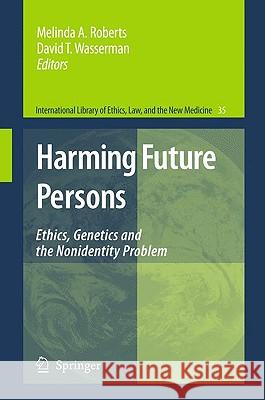
Melinda A. Roberts; David T. Wasserman
Harming Future Persons: Ethics, Genetics and the Nonidentity Problem Roberts, Melinda A. 9781402056963 Not Avail - książkaWidoczna okładka, to zdjęcie poglądowe, a rzeczywista szata graficzna może różnić się od prezentowanej.

Harming Future Persons: Ethics, Genetics and the Nonidentity Problem

ISBN-13: 9781402056963 / Angielski / Twarda / 2009 / 388 str.

Melinda A. Roberts; David T. Wasserman
cena 603,81
(netto: 575,06 VAT:  5%)

Najniższa cena z 30 dni: 578,30
Termin realizacji zamówienia:
ok. 22 dni roboczych.

Darmowa dostawa!
inne wydania

Melinda A. Roberts and David T. Wasserman 1 Purpose of this Collection What are our obligations with respect to persons who have not yet, and may not ever, come into existence? Few of us believe that we can wrong those whom we leave out of existence altogether that is, merely possible persons. We may think as well that the directive to be fruitful, and multiply, and replenish the earth 1 does not hold up to close scrutiny. How can it be wrong to decline to bring ever more people into existence? At the same time, we think we are clearly ob- gated to treat future persons persons who don t yet but will exist in accordance with certain stringent standards. Bringing a person into an existence that is truly awful not worth having can be wrong, and so can bringing a person into an existence that is worth having when we had the alternative of bringing that same person into an existence that is substantially better. We may think as well that our obligations with respect to future persons are triggered well before the point at which those persons commence their existence. We think it would be wrong, for example, to choose today to turn the Earth of the future into a miserable place even if the victims of that choice do not yet exist."


Kategorie:
Nauka, Filozofia
Kategorie BISAC:
Philosophy > Ethics & Moral Philosophy
Science > Life Sciences - Genetics & Genomics
Law > Medical Law & Legislation
Wydawca:
Not Avail
Seria wydawnicza:
International Library of Ethics, Law, and the New Medicine
Język:
Angielski
ISBN-13:
9781402056963
Rok wydania:
2009
Wydanie:
2009
Numer serii:
000175420
Ilość stron:
388
Waga:
0.71 kg
Wymiary:
23.39 x 15.6 x 2.24
Oprawa:
Twarda
Wolumenów:
01
Dodatkowe informacje:
Wydanie ilustrowane

From the reviews:

"This volume is intentionally and wholeheartedly a philosophical book dealing with conceptual analysis (a lot of papers address aspects of 'harm'), the analysis of ethical judgments, meta-ethical questions (the tension between deontology and consequentialism) and the ontology (or semantics) of future and non-existing persons. ... this book is highly recommended for everyone interested in the impact of our actions on future people-not for philosophers only." (Michael Quante, Medicine Health Care & Philosophy, Issue 4, 2010)

Introduction by M. A. Roberts and David T. Wasserman.- I. Can Bringing a Person into Existence Harm That Person? Can an Act That Harms No One Be Wrong?.- 1. The Intractability of the Nonidentity Problem by David Heyd.- II. If Bringing a Worse Off Person into Existence Is Wrong, Is Not Bringing a Better Off Person into Existence Also Wrong?.- 2. Rights and the Asymmetry Between Creating Good and Bad Lives by Ingmar Persson.- 3. Asymmetries in the Morality of Causing People to Exist by Jeff McMahan.- III. Must an Act Worse for People Be Worse for a Particular Person?.- 4. Who Cares About Identity? By Nils Holtug.- 5. Do Future Persons Presently Have Alternative Possible Identities? By Clark Wolf.- 6. Rule Consequentialism and Non-Identity by Tim Mulgan.- IV. Is the Inference to 'No Harm Done' Correct? Must an Act That Harms a Person Make That Person Worse Off?.- 7. Harming As Causing Harm by Elizabeth Harman.- 8. Wrongful Life and Procreative Decisions by Bonnie Steinbock.- 9. Harming and Procreating by Matthew Hanser.- 10. The Nonidentity Problem and the Two Envelope Problem: When Is One Act Better for a Person Than Another? By M. A. Roberts.- V. Is the Morality of Parental Reproductive Choice Special? Can Intentions and Attitudes Make an Act that Harms No One Wrong?.- 11. Reproduction, Partiality, and the Non-Identity Problem by Hallvard Lillehammer.- 12. Two Varieties of 'Better-For' Judgements by Peter Herissone-Kelly.- 13. Harms to Future People and Procreative Intentions by David T. Wasserman.- VI. Is the Person-Affecting Approach Objectionable Independent of the Nonidentity Problem?.- 14. Can the Person-Affecting Restriction Solve the Problems in Population Ethics? By Gustaf Arrhenius.- VII. What Are the Implications of the Nonidentity Problem for Law and Public Policy?.- 15. Implications of the Nonidentity Problem for State Regulation of Reproductive Liberty by Philip G. Peters, Jr..- 16. Reparations for U.S. Slavery and Justice Over Time by Seana Valentine Shiffrin.

This collection of essays investigates the obligations we have in respect of future persons, from our own future offspring to distant future generations. Can we harm them? Can we wrong them? Can the fact that our choice brings a worse off person into existence in place of a better off but "nonidentical" person make that choice wrong?

We intuitively think we are obligated to treat future persons in accordance with certain stringent standards—roughly those we think apply to our treatment of existing persons. We think we ought to create better lives for at least some future persons when we can do so without making things worse for too many existing or other future persons. We think it would be wrong to engage in risky behaviors today that will have clearly adverse effects for the children we intend one day to conceive. And we think it would be wrong to act today in a way that would turn the Earth of the future into a miserable place.

Each of these intuitive points is, however, challenged by the nonidentity problem. That problem arises from the observation that future persons often owe their very existence to choices that appear to make things worse for those same persons. New reproductive technologies, for example, can be both risky and essential to one person’s coming into existence in place of a "nonidentical" other or no one at all. But so can a myriad of other choices, whether made just prior to conception or centuries before—choices that seem to have nothing to do with procreation but in fact help to determine the timing and manner of conception of any particular future person and thus the identity of that person. Where the person’s life is worth living, it is difficult to see how he or she has been harmed, or made worse off, or wronged, by such an identity-determining choice. We then face the full power of the nonidentity problem: if the choice is not bad for the future person it seems most adversely to affect, then on what basis do we say that choice is wrong?

The nonidentity problem has implications for moral theory, population policy, procreative choice, children’s rights, bioethics, environmental ethics, the law and reparations for historical injustices. The contributors to this collection offer new understandings of the nonidentity problem and evaluate an array of proposed solutions to it. Aimed at philosophers, legal scholars, bioethicists and students in all these disciplines, this collection is a thorough exploration of one of the most fascinating and important moral issues of our time.


Roberts, Melinda A. Roberts is Assistant Professor of Philosophy at Tr... więcej >
Wasserman, David T. DAVID T. WASSERMAN is a Research Scholar with the ... więcej >


Udostępnij

Facebook - konto krainaksiazek.pl


Opinie o Krainaksiazek.pl na Opineo.pl

Partner Mybenefit

Krainaksiazek.pl w programie rzetelna firma Krainaksiaze.pl - płatności przez paypal

Czytaj nas na:

Facebook - krainaksiazek.pl
  • książki na zamówienie
  • granty
  • książka na prezent
  • kontakt
  • pomoc
  • opinie
  • regulamin
  • polityka prywatności

Zobacz:

  • Księgarnia czeska

  • Wydawnictwo Książkowe Klimaty

1997-2026 DolnySlask.com Agencja Internetowa

© 1997-2022 krainaksiazek.pl
     
KONTAKT | REGULAMIN | POLITYKA PRYWATNOŚCI | USTAWIENIA PRYWATNOŚCI
Zobacz: Księgarnia Czeska | Wydawnictwo Książkowe Klimaty | Mapa strony | Lista autorów
KrainaKsiazek.PL - Księgarnia Internetowa

Polityka prywatnosci - link
Krainaksiazek.pl - płatnośc Przelewy24
Przechowalnia Przechowalnia





