• Wyszukiwanie zaawansowane
  • Kategorie
  • Kategorie BISAC
  • Książki na zamówienie
  • Promocje
  • Granty
  • Książka na prezent
  • Opinie
  • Pomoc
  • Załóż konto
  • Zaloguj się

Handbook of Natural Antimicrobials for Food Safety and Quality » książka


zaloguj się | załóż konto
Logo Krainaksiazek.pl

koszyk

konto

szukaj
topmenu
Księgarnia internetowa
Szukaj
Książki na zamówienie
Promocje
Granty
Książka na prezent
Moje konto
Pomoc
 
 
Wyszukiwanie zaawansowane
Pusty koszyk
Bezpłatna dostawa dla zamówień powyżej 20 złBezpłatna dostawa dla zamówień powyżej 20 zł

Kategorie główne

• Nauka
 [2948695]
• Literatura piękna
 [1824038]

  więcej...
• Turystyka
 [70868]
• Informatyka
 [151073]
• Komiksy
 [35227]
• Encyklopedie
 [23181]
• Dziecięca
 [621575]
• Hobby
 [138961]
• AudioBooki
 [1642]
• Literatura faktu
 [228651]
• Muzyka CD
 [371]
• Słowniki
 [2933]
• Inne
 [445341]
• Kalendarze
 [1243]
• Podręczniki
 [164416]
• Poradniki
 [479493]
• Religia
 [510449]
• Czasopisma
 [502]
• Sport
 [61384]
• Sztuka
 [243086]
• CD, DVD, Video
 [3417]
• Technologie
 [219673]
• Zdrowie
 [100865]
• Książkowe Klimaty
 [124]
• Zabawki
 [2168]
• Puzzle, gry
 [3372]
• Literatura w języku ukraińskim
 [260]
• Art. papiernicze i szkolne
 [7838]
Kategorie szczegółowe BISAC

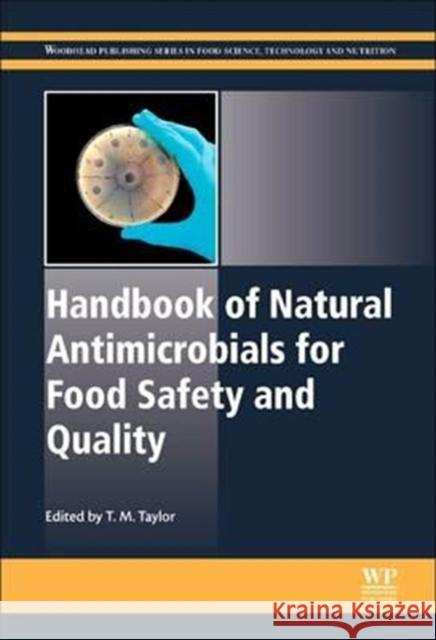
Handbook of Natural Antimicrobials for Food Safety and Quality

ISBN-13: 9780081013991 / Angielski / Miękka / 2016 / 442 str.
M. Taylor
Handbook of Natural Antimicrobials for Food Safety and Quality M. Taylor 9780081013991 Woodhead Publishing - książkaWidoczna okładka, to zdjęcie poglądowe, a rzeczywista szata graficzna może różnić się od prezentowanej.

Handbook of Natural Antimicrobials for Food Safety and Quality

ISBN-13: 9780081013991 / Angielski / Miękka / 2016 / 442 str.

M. Taylor
cena 1073,11
(netto: 1022,01 VAT:  5%)

Najniższa cena z 30 dni: 1062,14
Termin realizacji zamówienia:
ok. 30 dni roboczych.

Darmowa dostawa!

Natural additives are increasingly favoured over synthetic ones as methods of ensuring food safety and long shelf-life. The antimicrobial properties of both plant-based antimicrobials such as essential oils and proteins such as bacteriocins are used in, for example, edible preservative films, in food packaging and in combination with synthetic preservatives for maximum efficacy. New developments in delivery technology such as nanoencapsulation also increase the potential of natural antimicrobials for widespread use in industry. Part one introduces the different types of natural antimicrobials for food applications. Part two covers methods of application, and part three looks at determining the effectiveness of natural antimicrobials in food. Part four focuses on enhancing quality and safety, and includes chapters on specific food products.

  • Reviews different types of antimicrobials used in food safety and quality
  • Covers how antimicrobials are created to be used in different foods
  • Examines how the antimicrobials are used in foods to enhance the safety and quality

Kategorie:
Inne
Kategorie BISAC:
Technology & Engineering > Food Science - General
Medical > Microbiology
Wydawca:
Woodhead Publishing
Język:
Angielski
ISBN-13:
9780081013991
Rok wydania:
2016
Ilość stron:
442
Waga:
0.59 kg
Wymiary:
22.91 x 15.19 x 2.29
Oprawa:
Miękka
Wolumenów:
01

"...focuses on new developments to enhance the quality, safety, applications, and effectiveness of natural antimicrobials in food." --IFIS

  • Related titles
  • List of contributors
  • Woodhead Publishing Series in Food Science, Technology and Nutrition
  • Preface
  • 1. The use of natural antimicrobials in food: an overview
    • 1.1. Introduction
    • 1.2. Types of natural antimicrobials: animal sources
    • 1.3. Types of natural antimicrobials: plant sources
    • 1.4. Types of natural antimicrobials: microbial sources
    • 1.5. Challenges to application of natural antimicrobials to foods
    • 1.6. Application of natural antimicrobials
    • 1.7. Conclusions
  • Part One. Types
    • 2. Plant extracts as antimicrobials in food products: types
      • 2.1. Introduction
      • 2.2. Herbs, spices, and plant extracts as antimicrobials
      • 2.3. Essential oils
      • 2.4. Plant extracts in combination with minerals
      • 2.5. Conclusion
    • 3. Plant extracts as antimicrobials in food products: mechanisms of action, extraction methods, and applications
      • 3.1. Introduction
      • 3.2. Mechanisms of action of plant extracts
      • 3.3. Plant extracts and antibiotic resistance
      • 3.4. Extraction methods to maximize antimicrobial properties
      • 3.5. Response of Gram-positive and Gram-negative bacteria to plant extracts
      • 3.6. Applications of plant extracts in food products
      • 3.7. Conclusion
    • 4. Bacteriophages as antimicrobials in food products: history, biology and application
      • 4.1. Introduction
      • 4.2. Research into bacteriophages
      • 4.3. Biology of bacteriophages
      • 4.4. Bacteriophages as biocontrol agents in food
      • 4.5. The use of phage endolysins as biocontrol agents in food
      • 4.6. Combining bacteriophages with other preservation techniques to enhance food safety
    • 5. Bacteriophages as antimicrobials in food products: applications against particular pathogens
      • 5.1. Introduction
      • 5.2. Bacteriophages to control Gram-negative food-borne pathogens
      • 5.3. Bacteriophages to control Gram-positive food-borne pathogens
      • 5.4. Conclusion and future trends
    • 6. Lactic acid bacteria (LAB) as antimicrobials in food products: types and mechanisms of action
      • 6.1. Introduction
      • 6.2. Characteristics of lactic acid bacteria (LAB)
      • 6.3. Carbohydrate metabolism in LAB
      • 6.4. Effects of culture preparation and storage techniques on LAB
      • 6.5. Antimicrobial compounds produced by LAB: organic acids, diacetyl, and hydrogen peroxide
      • 6.6. Antimicrobial compounds produced by LAB: bacteriocins
      • 6.7. Conclusions
    • 7. Lactic acid bacteria (LAB) as antimicrobials in food products: analytical methods and applications
      • 7.1. Introduction
      • 7.2. Screening lactic acid bacteria (LAB) for antimicrobial activity
      • 7.3. Regulatory framework governing the use of LAB in food
      • 7.4. Methods for using LAB as biopreservatives in food
      • 7.5. Use of LAB in the biopreservation of particular food products and as a biosanitizer
      • 7.6. Conclusions
    • 8. Chitosan as an antimicrobial in food products
      • 8.1. Introduction
      • 8.2. Overview of antimicrobial activity of chitosan
      • 8.3. Mechanism of action
      • 8.4. Effects of molecular structure
      • 8.5. Effects of environmental conditions
      • 8.6. Current applications and future trends
  • Part Two. Processing
    • 9. Evaluating natural antimicrobials for use in food products
      • 9.1. Introduction
      • 9.2. The advantages of using antimicrobials in food preservation
      • 9.3. The use of natural antimicrobials in food preservation
      • 9.4. Combining antimicrobials with other preservation techniques
      • 9.5. Factors affecting the biocidal activity of natural antimicrobials
      • 9.6. The regulation of natural antimicrobials
      • 9.7. Conclusion
    • 10. Physical and chemical methods for food preservation using natural antimicrobials
      • 10.1. Introduction
      • 10.2. Physical application of natural antimicrobials
      • 10.3. Chemical application of natural antimicrobials
      • 10.4. Biological application of natural antimicrobials
      • 10.5. Commercial natural antimicrobials
      • 10.6. Conclusion and future trends
    • 11. Nanostructured and nanoencapsulated natural antimicrobials for use in food products
      • 11.1. Introduction
      • 11.2. Natural food antimicrobials
      • 11.3. Nanostructures for antimicrobial delivery
      • 11.4. Methods for characterization of nanostructures
      • 11.5. Food applications of nanostructured antimicrobial systems
      • 11.6. Conclusions and future trends
    • 12. Modelling the effects of natural antimicrobials as food preservatives
      • 12.1. Introduction
      • 12.2. Antimicrobial susceptibility assessment
      • 12.3. Mathematical modelling in food preservation
      • 12.4. Types of models
      • 12.5. Model development
      • 12.6. Modelling the effects of natural antimicrobial agents
      • 12.7. Conclusion and future trends
  • Part Three. Using natural antimicrobials in particularfoods
    • 13. Using natural antimicrobials to enhance the safety and quality of fresh and processed fruits and vegetables: types of antimicrobials
      • 13.1. Introduction
      • 13.2. Fresh and processed fruits and vegetables: advances and challenges
      • 13.3. Natural antimicrobials used in assuring the safety and quality of fresh and processed fruits and vegetables: antimicrobials from plant essential oils
      • 13.4. Antimicrobials from plants: aldehydes and methyl jasmonate
      • 13.5. Antimicrobials from plants: phenolic compounds and isothiocyanates
      • 13.6. Chitosan is not from plant origin
      • 13.7. Natural antimicrobials of microbial origin: lactic acid bacteria (LAB) and bacteriocins
      • 13.8. Conclusion and future trends
    • 14. Using natural antimicrobials to enhance the safety and quality of fresh and processed fruits and vegetables: application techniques and quality issues
      • 14.1. Introduction
      • 14.2. Techniques for applying natural antimicrobials to fruits and vegetables: key issues
      • 14.3. Encapsulation of natural antimicrobials
      • 14.4. Edible films and coatings enriched with natural antimicrobials
      • 14.5. Antioxidant properties of natural antimicrobials
      • 14.6. Plant antimicrobials as flavoring compounds
      • 14.7. Conclusion and future trends
    • 15. Using natural antimicrobials to enhance the safety and quality of milk
      • 15.1. Introduction
      • 15.2. Enhancing the safety and quality of milk-based beverages using natural antimicrobials: milk
      • 15.3. Enhancing the safety and quality of infant milk formulas using natural antimicrobials
      • 15.4. Enhancing the safety and quality of egg-milk beverages using natural antimicrobials
      • 15.5. Conclusion and future trends
    • 16. Using natural antimicrobials to enhance the safety and quality of fruit- and vegetable-based beverages
      • 16.1. Introduction
      • 16.2. Enhancing the safety and quality of fruit- and vegetable-based beverages using natural antimicrobials
      • 16.3. Melon and watermelon juices
      • 16.4. Orange and orange-based juices
      • 16.5. Grape juices
      • 16.6. Apple and pear juices
      • 16.7. Dark fruit juices
      • 16.8. Tomato juices
      • 16.9. Other vegetable beverages
      • 16.10. Conclusion and future trends
    • 17. Using natural antimicrobials to enhance the safety and quality of alcoholic and other beverages
      • 17.1. Introduction
      • 17.2. Alcoholic beverages
      • 17.3. Wine
      • 17.4. Beer
      • 17.5. Apple cider
      • 17.6. Hot drinks
      • 17.7. Conclusion and future trends
    • 18. Using natural antimicrobials to enhance the safety and quality of poultry
      • 18.1. Introduction
      • 18.2. Food safety and its role in food quality
      • 18.3. Pre-harvest use of natural antimicrobials
      • 18.4. Antimicrobials for use on poultry products
      • 18.5. Conclusion and future trends
  • Index

Dr Matt Taylor, Texas A&M University, USA


Udostępnij

Facebook - konto krainaksiazek.pl


Opinie o Krainaksiazek.pl na Opineo.pl

Partner Mybenefit

Krainaksiazek.pl w programie rzetelna firma Krainaksiaze.pl - płatności przez paypal

Czytaj nas na:

Facebook - krainaksiazek.pl
  • książki na zamówienie
  • granty
  • książka na prezent
  • kontakt
  • pomoc
  • opinie
  • regulamin
  • polityka prywatności

Zobacz:

  • Księgarnia czeska

  • Wydawnictwo Książkowe Klimaty

1997-2026 DolnySlask.com Agencja Internetowa

© 1997-2022 krainaksiazek.pl
     
KONTAKT | REGULAMIN | POLITYKA PRYWATNOŚCI | USTAWIENIA PRYWATNOŚCI
Zobacz: Księgarnia Czeska | Wydawnictwo Książkowe Klimaty | Mapa strony | Lista autorów
KrainaKsiazek.PL - Księgarnia Internetowa

Polityka prywatnosci - link
Krainaksiazek.pl - płatnośc Przelewy24
Przechowalnia Przechowalnia







