• Wyszukiwanie zaawansowane
  • Kategorie
  • Kategorie BISAC
  • Książki na zamówienie
  • Promocje
  • Granty
  • Książka na prezent
  • Opinie
  • Pomoc
  • Załóż konto
  • Zaloguj się

Handbook of Laser-Induced Breakdown Spectroscopy, 2nd Edition » książka


zaloguj się | załóż konto
Logo Krainaksiazek.pl

koszyk

konto

szukaj
topmenu
Księgarnia internetowa
Szukaj
Książki na zamówienie
Promocje
Granty
Książka na prezent
Moje konto
Pomoc
 
 
Wyszukiwanie zaawansowane
Pusty koszyk
Bezpłatna dostawa dla zamówień powyżej 20 złBezpłatna dostawa dla zamówień powyżej 20 zł

Kategorie główne

• Nauka
 [2950560]
• Literatura piękna
 [1849509]

  więcej...
• Turystyka
 [71097]
• Informatyka
 [151150]
• Komiksy
 [35848]
• Encyklopedie
 [23178]
• Dziecięca
 [617388]
• Hobby
 [139064]
• AudioBooki
 [1657]
• Literatura faktu
 [228597]
• Muzyka CD
 [383]
• Słowniki
 [2855]
• Inne
 [445295]
• Kalendarze
 [1464]
• Podręczniki
 [167547]
• Poradniki
 [480102]
• Religia
 [510749]
• Czasopisma
 [516]
• Sport
 [61293]
• Sztuka
 [243352]
• CD, DVD, Video
 [3414]
• Technologie
 [219456]
• Zdrowie
 [101002]
• Książkowe Klimaty
 [124]
• Zabawki
 [2311]
• Puzzle, gry
 [3459]
• Literatura w języku ukraińskim
 [254]
• Art. papiernicze i szkolne
 [8079]
Kategorie szczegółowe BISAC

Handbook of Laser-Induced Breakdown Spectroscopy, 2nd Edition

ISBN-13: 9781119971122 / Angielski / Twarda / 2013 / 432 str.
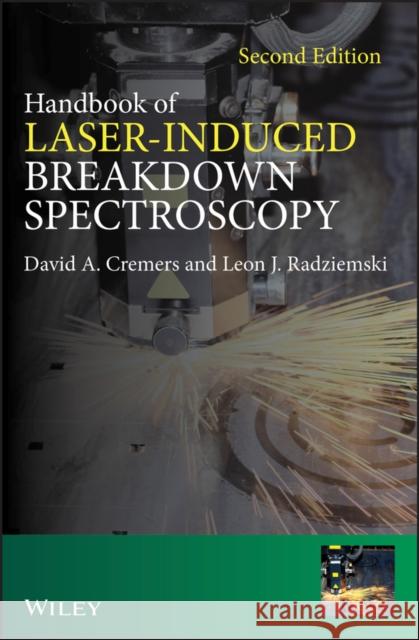
David A. Cremers; Leon J. Radziemski
Handbook of Laser-Induced Breakdown Spectroscopy, 2nd Edition Cremers, David A. 9781119971122 John Wiley & Sons - książkaWidoczna okładka, to zdjęcie poglądowe, a rzeczywista szata graficzna może różnić się od prezentowanej.

Handbook of Laser-Induced Breakdown Spectroscopy, 2nd Edition

ISBN-13: 9781119971122 / Angielski / Twarda / 2013 / 432 str.

David A. Cremers; Leon J. Radziemski
cena 562,23
(netto: 535,46 VAT:  5%)

Najniższa cena z 30 dni: 558,77
Termin realizacji zamówienia:
ok. 30 dni roboczych
Dostawa w 2026 r.

Darmowa dostawa!

Starting from fundamentals and moving through a thorough discussion of equipment, methods, and techniques, the Handbook of Laser-Induced Breakdown Spectroscopy provides a unique reference source that will be of value for many years to come for this important new analysis method. The authors, with a total of over 60 years of experience in the LIBS method, use a combination of tutorial discussions ranging from basic principles up to more advanced descriptions along with extensive figures and photographs to clearly explain topics addressed in the text. In this second edition, chapters on the use of statistical analysis and advances in detection of weapons of mass destruction have been added. Tables of data related to analysis with LIBS have been updated. The Handbook of Laser-Induced Breakdown Spectroscopy, Second Edition

  • provides a thorough but understandable discussion of the basic principles of the method based on atomic emission spectroscopy, including recently available data leading to better characterization of the LIBS plasma;
  • presents a discussion of the many advantages of the method along with limitations, to provide the reader a balanced overview of capabilities of the method;
  • describes LIBS instrumentation ranging from basic set-ups to more advanced configurations;
  • presents a comprehensive discussion of the different types of components (laser, spectrometers, detectors) that can be used for LIBS apparatuses along with suggestions for their use, as well as an up-to-date treatment of the newest advances and capabilities of LIBS instruments;
  • presents the analytical capabilities of the method in terms of detection limits, accuracy, and precision of measurements for a variety of different sample types;
  • discusses methods of sampling different media such as gases, liquids, and solids;
  • presents an overview of some real-world applications of the method, with new emphasis on sampling of biologically and physically dangerous materials;
  • provides an up-to-date list of references to LIBS literature along with the latest detection limits and a unique list of element detection limits using a uniform analysis method;
  • provides annotated examples of LIBS spectra which can serve as references for the general reader and will be especially useful for those starting out in the field.

Starting from fundamentals and moving through a thorough discussion of equipment, methods, and techniques, the Handbook of Laser–Induced Breakdown Spectroscopy provides a unique reference source that will be of value for many years to come for this important new analysis method.


Kategorie:
Nauka, Chemia
Kategorie BISAC:
Science > Spectroscopy & Spectrum Analysis
Wydawca:
John Wiley & Sons
Język:
Angielski
ISBN-13:
9781119971122
Rok wydania:
2013
Ilość stron:
432
Waga:
0.79 kg
Wymiary:
24.64 x 17.02 x 2.54
Oprawa:
Twarda
Wolumenów:
01
Dodatkowe informacje:
Bibliografia

Preface xi

Acronyms, Constants, and Symbols xv

1 Introduction 1

1.1 Atomic Optical Emission Spectrochemistry (OES) 1

1.2 Laser–Induced Breakdown Spectroscopy (LIBS) 2

1.3 LIBS History 1960 1980 7

1.4 LIBS History 1981 1990 9

1.5 LIBS History 1991 2000 11

1.6 LIBS History 2001 2012 14

References 18

2 Basics of the LIBS Plasma 29

2.1 LIBS Plasma Fundamentals 29

2.2 Laser–Induced Breakdown 46

2.3 Laser Ablation from Surfaces and Aerosols 53

2.4 Nanosecond and Femtosecond Double– or Multiple–Pulse LIBS 58

2.5 Summary 63

2.6 Problems 63

References 64

3 LIBS Apparatus Fundamentals 69

3.1 Basic LIBS Apparatus 69

3.2 Lasers 70

3.3 Optical Systems 80

3.4 Methods of Spectral Resolution 86

3.5 Detectors 102

3.6 Detection System Calibrations 109

3.7 Timing Considerations 114

3.8 Methods of LIBS Deployment 115

3.9 Problems 117

References 118

4 LIBS Analytical Figures of Merit and Calibration 123

4.1 Introduction 123

4.2 Basics of a LIBS Measurement 123

4.3 Precision 129

4.4 Calibration 131

4.5 Detection Limit 144

4.6 Accuracy 144

4.7 Problems 146

References 148

References for Detection Limits 150

5 Qualitative LIBS Analysis 151

5.1 Introduction 151

5.2 Identifying Elements 151

5.3 Material Identification 156

5.4 Process Monitoring 159

5.5 Material Sorting/Distinguishing 169

5.6 Site Screening Using LIBS 177

5.7 Semiquantitative Analysis 178

5.8 Problems 180

References 182

6 Quantitative LIBS Analysis 185

6.1 Introduction 185

6.2 Effects of Sampling Geometry 185

6.3 Other Sampling Considerations 189

6.4 Incomplete Vaporization and Ablation Stoichiometry 193

6.5 Use of Internal Standardization 194

6.6 Chemical Matrix Effects 196

6.7 Example of LIBS Measurement: Impurities in Lithium–Containing Solutions 198

6.8 Example of LIBS Measurement: Detection of Materials on Swipes 206

6.9 Reported Figures of Merit for LIBS Measurements and Comparison with Standard Methods 211

6.10 Enhancing Quantitative Analysis via Sophisticated Signal Processing 219

6.11 Conclusions 220

References 221

7 Chemometric Analysis in LIBS 223

7.1 Introduction 223

7.2 Chemometric Terms 227

7.3 Chemometric Analysis/Model Development 232

7.4 Summary 241

References 241

8 Remote LIBS Measurements 257

8.1 Introduction 257

8.2 Conventional Open–Path LIBS 259

8.3 Standoff LIBS Using Femtosecond Pulses 270

8.4 Fiber Optic LIBS 276

References 284

9 Selected LIBS Applications 289

9.1 Introduction 289

9.2 LIBS and the CBRNE Threats 289

9.3 LIBS Analysis of Liquids and Solids in Liquids 297

9.4 Transportable LIBS Instrument for Stand–off Analysis 303

9.5 LIBS for Space Applications 313

References 325

A Safety Considerations in LIBS 333

B Major LIBS References 337

C Detection Limits from the Literature 341

D Examples of LIBS Spectra 377

E Solutions to Problems 387

Index 397

This fully updated new edition of the Handbook of Laser–Induced Breakdown Spectroscopy presents:

  • Comprehensive coverage of the basic principles of LIBS methodology
  • A discussion of the many advantages of the method, along with limitations, providing a balanced overview of its capabilities
  • The different types of components that can be used for LIBS apparatuses
  • The methods of sampling in different media
  • An overview of real–world applications of the method.

The authors have included in this second edition:

  • New chapters on:
  • the rapidly growing area of chemometric–based analysis of LIBS spectra for the identification of complex materials
  • some of the latest LIBS applications including design and capabilities of an open path stand–off instrument
  • End–of–chapter Problems to challenge the reader s understanding
  • Updated data tables related to analysis using LIBS
  • A new Appendix showing annotated LIBS spectra

Radziemski, Leon J. Radziemski is Chairman of the Physics Department, ... więcej >


Udostępnij

Facebook - konto krainaksiazek.pl


Opinie o Krainaksiazek.pl na Opineo.pl

Partner Mybenefit

Krainaksiazek.pl w programie rzetelna firma Krainaksiaze.pl - płatności przez paypal

Czytaj nas na:

Facebook - krainaksiazek.pl
  • książki na zamówienie
  • granty
  • książka na prezent
  • kontakt
  • pomoc
  • opinie
  • regulamin
  • polityka prywatności

Zobacz:

  • Księgarnia czeska

  • Wydawnictwo Książkowe Klimaty

1997-2025 DolnySlask.com Agencja Internetowa

© 1997-2022 krainaksiazek.pl
     
KONTAKT | REGULAMIN | POLITYKA PRYWATNOŚCI | USTAWIENIA PRYWATNOŚCI
Zobacz: Księgarnia Czeska | Wydawnictwo Książkowe Klimaty | Mapa strony | Lista autorów
KrainaKsiazek.PL - Księgarnia Internetowa

Polityka prywatnosci - link
Krainaksiazek.pl - płatnośc Przelewy24
Przechowalnia Przechowalnia






