• Wyszukiwanie zaawansowane
  • Kategorie
  • Kategorie BISAC
  • Książki na zamówienie
  • Promocje
  • Granty
  • Książka na prezent
  • Opinie
  • Pomoc
  • Załóż konto
  • Zaloguj się

Handbook of Hydraulic Fracturing » książka

zaloguj się | załóż konto
Logo Krainaksiazek.pl

koszyk

konto

szukaj
topmenu
Księgarnia internetowa
Szukaj
Książki na zamówienie
Promocje
Granty
Książka na prezent
Moje konto
Pomoc
 
 
Wyszukiwanie zaawansowane
Pusty koszyk
Bezpłatna dostawa dla zamówień powyżej 20 złBezpłatna dostawa dla zamówień powyżej 20 zł

Kategorie główne

• Nauka
 [2950560]
• Literatura piękna
 [1849509]

  więcej...
• Turystyka
 [71097]
• Informatyka
 [151150]
• Komiksy
 [35848]
• Encyklopedie
 [23178]
• Dziecięca
 [617388]
• Hobby
 [139064]
• AudioBooki
 [1657]
• Literatura faktu
 [228597]
• Muzyka CD
 [383]
• Słowniki
 [2855]
• Inne
 [445295]
• Kalendarze
 [1464]
• Podręczniki
 [167547]
• Poradniki
 [480102]
• Religia
 [510749]
• Czasopisma
 [516]
• Sport
 [61293]
• Sztuka
 [243352]
• CD, DVD, Video
 [3414]
• Technologie
 [219456]
• Zdrowie
 [101002]
• Książkowe Klimaty
 [124]
• Zabawki
 [2311]
• Puzzle, gry
 [3459]
• Literatura w języku ukraińskim
 [254]
• Art. papiernicze i szkolne
 [8079]
Kategorie szczegółowe BISAC

Handbook of Hydraulic Fracturing

ISBN-13: 9781118672990 / Angielski / Twarda / 2016 / 304 str.
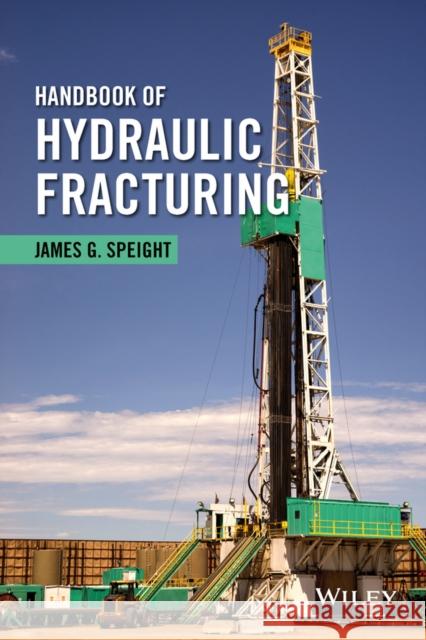
James G. Speight
Handbook of Hydraulic Fracturing Speight, James G. 9781118672990 John Wiley & Sons - książkaWidoczna okładka, to zdjęcie poglądowe, a rzeczywista szata graficzna może różnić się od prezentowanej.

Handbook of Hydraulic Fracturing

ISBN-13: 9781118672990 / Angielski / Twarda / 2016 / 304 str.

James G. Speight
cena 777,00
(netto: 740,00 VAT:  5%)

Najniższa cena z 30 dni: 772,21
Termin realizacji zamówienia:
ok. 30 dni roboczych
Dostawa w 2026 r.

Darmowa dostawa!

Presents an up-to-date description of current and new hydraulic fracturing processes

  • Details Emerging Technologies such as Fracture Treatment Design, Open Hole Fracturing, Screenless Completions, Sand Control, Fracturing Completions and Productivity
  • Covers Environmental Impact issues including Geological Disturbance; Chemicals used in Fracturing; General Chemicals; Toxic Chemicals; and Air, Water, Land, and Health impacts
  • Provides many process diagrams as well as tables of feedstocks and their respective products

Kategorie:
Technologie
Kategorie BISAC:
Science > Energia
Technology & Engineering > Mining
Wydawca:
John Wiley & Sons
Język:
Angielski
ISBN-13:
9781118672990
Rok wydania:
2016
Ilość stron:
304
Waga:
0.57 kg
Wymiary:
16.5 x 24.3 x 2.2
Oprawa:
Twarda
Wolumenów:
01
Dodatkowe informacje:
Bibliografia
Glosariusz/słownik

Preface vii

1 Definitions 1

1.1 Introduction 1

1.2 Definitions 3

1.2.1 Petroleum 5

1.2.2 Oil and Gas from Tight Formations 8

1.2.3 Opportunity Crudes 13

1.2.4 High–Acid Crude Oil 14

1.2.5 Foamy Oil 15

1.2.6 Heavy Oil 15

1.2.7 Extra Heavy Oil 16

1.2.8 Tar Sand Bitumen 16

1.2.9 Natural Gas 17

1.2.10 Shale Gas 19

1.2.11 Coalbed Methane (CBM) 21

1.2.12 Other Sources of Gas 22

1.3 Unconventional Oil 23

References 23

2 Reservoirs and Reservoir Fluids 27

2.1 Introduction 27

2.2 Sedimentary Rocks 30

2.2.1 Types 30

2.2.2 Characteristics 31

2.3 Reservoir Evaluation 32

2.3.1 Structural Types 35

2.3.2 Heterogeneity 36

2.3.3 Porosity and Permeability 37

2.4 Tight Formations 40

2.5 Evaluation of Reservoir Fluids 42

2.5.1 Sampling Methods 46

2.5.2 Data Acquisition and QA/QC 49

References 51

3 Oil and Gas Production 55

3.1 Introduction 55

3.2 Well Completion and Production 57

3.2.1 Well Completion 57

3.2.2 Production Methods 63

3.2.3 Fracturing Methods 73

3.3 Bitumen Recovery From Tar Sand Deposits 77

3.3.1 Mining Methods 78

3.3.2 Nonmining Methods 79

3.4 Sand Control 82

3.4.1 Methods 82

3.4.2 Guidelines for Process Selection 85

References 85

4 Analysis and Properties of Fluids 91

4.1 Introduction 91

4.2 Crude Oil 93

4.2.1 Sampling 94

4.2.2 Physical Properties 96

4.2.3 Thermal Properties 102

4.2.4 Fractionation 108

4.2.5 Molecular Weight 110

4.3 Natural Gas 112

4.3.1 Sampling 114

4.3.2 Test Methods 115

References 118

5 Hydraulic Fracturing 125

5.1 Introduction 125

5.2 Formation Evaluation 133

5.2.1 Geologic Evaluation 137

5.2.2 Geotechnical Evaluation 137

5.2.3 Formation Integrity 140

5.2.4 Permeability 140

5.2.5 Porosity 141

5.2.6 Saturation 141

5.2.7 Capillary Pressure 141

5.2.8 Logging Analysis 142

5.2.9 Mechanical Properties 143

5.3 The Fracturing Process 143

5.3.1 Equipment 144

5.3.2 Fracture Patterns 148

5.3.3 Well Development 150

5.3.4 Pneumatic Fracturing 151

5.4 Fractures 152

5.4.1 Fracture Geometry 155

5.4.2 Fracture Optimization 157

5.5 Fracture Monitoring 157

5.5.1 Monitoring 158

5.5.2 Aids in Production 160

References 160

6 Fracturing Fluids 165

6.1 Introduction 165

6.2 Properties 169

6.3 Types of Fluids 174

6.3.1 Water–Based Fluids 175

6.3.2 Foam–Based Fluids 178

6.3.3 Oil–Based Fluids 178

6.3.4 Acid–Based Fluids 179

6.3.5 Alcohol–Based Fluids 179

6.3.6 Emulsion–Based Fluids 180

6.3.7 Cryogenic Fluids 180

6.4 Additives 181

6.4.1 Fluid–Loss Additives 183

6.4.2 Clay Stabilizers 183

6.4.3 Gel Breakers 184

6.4.4 Bactericides/Biocides 185

6.4.5 pH Control 186

6.4.6 Friction Reducers 186

6.4.7 Acid Corrosion Inhibitors 186

6.4.8 Viscosity Stabilizers 187

6.5 Acidizing 187

6.5.1 Formation Type 188

6.5.2 Formation Permeability 189

6.5.3 Operational Considerations 189

6.5.4 Environmental Management 191

References 191

7 Proppants 195

7.1 Introduction 195

7.2 Types 197

7.2.1 Silica Sand 197

7.2.2 Resin–Coated Proppant 198

7.2.3 Manufactured Ceramic Materials 199

7.2.4 Other Types 200

7.3 Properties 200

7.3.1 Downhole Scaling 201

7.3.2 Embedment 202

7.3.3 Flowback 203

7.3.4 Fracture Conductivity 204

7.3.5 Pack Rearrangement 205

7.3.6 Permeability 205

7.3.7 Production and Migration of Fines 206

7.3.8 Shape, Size, and Concentration 207

7.3.9 Stress 208

7.4 Proppant Selection and Transport 209

7.4.1 Selection 210

7.4.2 Transport 212

References 213

8 Environmental Impact 217

8.1 Introduction 217

8.2 Geological Disturbance 221

8.3 Chemicals Used in Fracturing 224

8.4 Environmental Effects 227

8.4.1 Air 230

8.4.2 Water 230

8.4.3 Surface Effects 234

8.4.4 Health Effects 239

8.4.5 Seismic Effects 239

8.5 The Future 240

8.5.1 The Process 240

8.5.2 The Environment 241

References 244

Glossary 249

Conversion Factors 283

Index 285

James G. Speight PhD, DSc is a senior fuel and environmental consultant. He is recognized internationally as an expert in the characterization, properties, and processing of conventional fuels, synthetic fuels, and biofuels. He has more than 40 years of experience in the process industries, is the author of numerous books and papers, is the senior editor of three journals, and has won numerous awards and distinctions.

Presents an up–to–date description of current and new hydraulic fracturing processes

Hydraulic fracturing has opened access to vast domestic reserves of natural gas that could provide an important stepping stone to a clean energy future. When used in combination with horizontal drilling, hydraulic fracturing has allowed industry to access natural gas reserves previously considered uneconomical, particularly in shale formations. Yet questions about the safety of hydraulic fracturing persist and the technology has been the subject of both enthusiasm and increasing environmental and health concerns in recent years.

The Handbook of Hydraulic Fracturing s main goal is to alleviate much of the confusion that exists in regards to hydraulic fracturing.  It presents the facts as they are currently available and understood.

Handbook of Hydraulic Fracturing presents

  • An up–to–date description of current and new hydraulic fracturing
  • A description of how hydraulic fracturing is performed and consequences of those actions
  • Details environmental impact issues including health impacts
  • Economic consideration of hydraulic fracturing are presented 

The book is written in easy–to–read using language that is understandable by scientists, engineers, and non–technical persons.  It gives the reader a full understanding of the concept and practice of hydraulic fracturing as well as the various environmental aspects of the process.

Speight, James G. JAMES G. SPEIGHT, PHD, is an author, consultant, a... więcej >


Udostępnij

Facebook - konto krainaksiazek.pl


Opinie o Krainaksiazek.pl na Opineo.pl

Partner Mybenefit

Krainaksiazek.pl w programie rzetelna firma Krainaksiaze.pl - płatności przez paypal

Czytaj nas na:

Facebook - krainaksiazek.pl
  • książki na zamówienie
  • granty
  • książka na prezent
  • kontakt
  • pomoc
  • opinie
  • regulamin
  • polityka prywatności

Zobacz:

  • Księgarnia czeska

  • Wydawnictwo Książkowe Klimaty

1997-2025 DolnySlask.com Agencja Internetowa

© 1997-2022 krainaksiazek.pl
     
KONTAKT | REGULAMIN | POLITYKA PRYWATNOŚCI | USTAWIENIA PRYWATNOŚCI
Zobacz: Księgarnia Czeska | Wydawnictwo Książkowe Klimaty | Mapa strony | Lista autorów
KrainaKsiazek.PL - Księgarnia Internetowa

Polityka prywatnosci - link
Krainaksiazek.pl - płatnośc Przelewy24
Przechowalnia Przechowalnia








