• Wyszukiwanie zaawansowane
  • Kategorie
  • Kategorie BISAC
  • Książki na zamówienie
  • Promocje
  • Granty
  • Książka na prezent
  • Opinie
  • Pomoc
  • Załóż konto
  • Zaloguj się

Handbook of Food Analytical Chemistry, Volume 1: Water, Proteins, Enzymes, Lipids, and Carbohydrates » książka

zaloguj się | załóż konto
Logo Krainaksiazek.pl

koszyk

konto

szukaj
topmenu
Księgarnia internetowa
Szukaj
Książki na zamówienie
Promocje
Granty
Książka na prezent
Moje konto
Pomoc
 
 
Wyszukiwanie zaawansowane
Pusty koszyk
Bezpłatna dostawa dla zamówień powyżej 20 złBezpłatna dostawa dla zamówień powyżej 20 zł

Kategorie główne

• Nauka
 [2948695]
• Literatura piękna
 [1824038]

  więcej...
• Turystyka
 [70868]
• Informatyka
 [151073]
• Komiksy
 [35227]
• Encyklopedie
 [23181]
• Dziecięca
 [621575]
• Hobby
 [138961]
• AudioBooki
 [1642]
• Literatura faktu
 [228651]
• Muzyka CD
 [371]
• Słowniki
 [2933]
• Inne
 [445341]
• Kalendarze
 [1243]
• Podręczniki
 [164416]
• Poradniki
 [479493]
• Religia
 [510449]
• Czasopisma
 [502]
• Sport
 [61384]
• Sztuka
 [243086]
• CD, DVD, Video
 [3417]
• Technologie
 [219673]
• Zdrowie
 [100865]
• Książkowe Klimaty
 [124]
• Zabawki
 [2168]
• Puzzle, gry
 [3372]
• Literatura w języku ukraińskim
 [260]
• Art. papiernicze i szkolne
 [7838]
Kategorie szczegółowe BISAC

Handbook of Food Analytical Chemistry, Volume 1: Water, Proteins, Enzymes, Lipids, and Carbohydrates

ISBN-13: 9780471663782 / Angielski / Twarda / 2004 / 784 str.
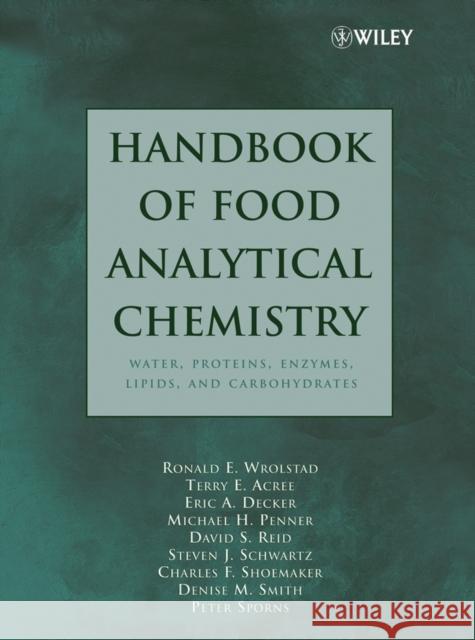
Ronald E. Wrolstad; Eric A. Decker
Handbook of Food Analytical Chemistry, Volume 1: Water, Proteins, Enzymes, Lipids, and Carbohydrates Wrolstad, Ronald E. 9780471663782 JOHN WILEY AND SONS LTD - książkaWidoczna okładka, to zdjęcie poglądowe, a rzeczywista szata graficzna może różnić się od prezentowanej.

Handbook of Food Analytical Chemistry, Volume 1: Water, Proteins, Enzymes, Lipids, and Carbohydrates

ISBN-13: 9780471663782 / Angielski / Twarda / 2004 / 784 str.

Ronald E. Wrolstad; Eric A. Decker
cena 1196,09
(netto: 1139,13 VAT:  5%)

Najniższa cena z 30 dni: 1183,85
Termin realizacji zamówienia:
ok. 30 dni roboczych.

Darmowa dostawa!

Emphasizing effective, state-of-the art methodology and written by recognized experts in the field, the Handbook of Food Analytical Chemistry is an indispensable reference for food scientists and technologists to enable successful analysis.
* Provides detailed reports on experimental procedures
* Includes sections on background theory and troubleshooting
* Emphasizes effective, state-of-the art methodology, written by recognized experts in the field
* Includes detailed instructions with annotated advisory comments, key references with annotation, time considerations and anticipated results


Kategorie:
Nauka, Biologia i przyroda
Kategorie BISAC:
Technology & Engineering > Food Science - General
Science > Chemistry - Industrial & Technical
Wydawca:
JOHN WILEY AND SONS LTD
Język:
Angielski
ISBN-13:
9780471663782
Rok wydania:
2004
Ilość stron:
784
Waga:
1.94 kg
Wymiary:
27.43 x 21.08 x 4.57
Oprawa:
Twarda
Wolumenów:
01
Dodatkowe informacje:
Wydanie ilustrowane

"This volume is a valuable source of detailed analytical methods for food science " ( E–STREAMS, May 2005)

...recommendable to everyone in need of a compendium explaining in detail the how–to for a food–analysis laboratory. (Analytical and Bioanalytical Chemistry, February 2007)

VOLUME 1.

Preface.

Foreword to Current Protocols in Food Analytical Chemistry.

Contributors.

A: WATER.

A1. Gravimetric Measurements of Water.

A1.1 Gravimetric Determination of Water by Drying and Weighing.

A1.2 Karl Fischer Titration.

A1.3 Application of Low–Resolution NMR for Simultaneous Moisture and Oil Determination in Flood (Oilseeds).

A1.4 Traditional Indirect methods for Estimation of Water Content: Measurement of Brix.

A.2 Vapor Pressure Measurements of Water.

A2.1 Factors to Consider When Estimating Water Vapor Pressure.

A2.2 Dew–Point Method for the Determination of Water Activity.

A2.3 Measurement of Water Activity Using Isopiestic Method.

A2.4 Direct Manometric Determination of Vapor Pressure.

A2.5 Measurement of Water Activity by Electronic Sensors.

B: PROTEINS.

B1. Measurement of Protein Content.

B1.1 The Colorimetric Detection and Quantitation of Total Protein.

B1.2 Determination of Total Nitrogen.

B1.3 Spectrophotometric Determination of Protein Concentration.

B.2 Biochemical Compositional Analyses of Proteins.

B2.1 Analyses of Protein Quality.

B2.2 Evaluation of the Progress of Protein Hydrolysis.

B.3 Characterization of Proteins.

B3.1 Electrophoresis Analysis.

B3.2 Electrobloting from Polyacrylamide Gels.

B3.3 Detection of Proteins on Blot Membranes.

B3.4 Immunoblot Detection.

B3.5 Determining the CD Spectrum of a Protein.

B3.6 Determining the Fluorescence Spectrum of a Protein.

B.4 Purification of Proteins.

B4.1 Overview of Protein Purification and Characterization.

B4.2 Overview of Conventional Chromatography.

B.5 Functionality of Proteins.

B5.1 Measurement of Functional Properties: Overview of Protein Functionality Testing.

B5.2 Measurement of Protein Hydrophobicity.

B5.3 Water Retention Properties of Solid Foods.

C: ENZYMES.

C1. Strategies for Enzymes Activity Measurements.

C1.1 Expression and Measurement of Enzyme Activity.

C1.2 Detecting Enzyme Activity: A Case Study of Polygalacturonase.

C.2 Proteolytic Enzymes.

C2.1 Activity Measurements of Proteinases Using Synthetic Substrates.

C2.2 Peptodase Activity Assays Using Protein Substrates.

C.3 Lipolytic Enzymes.

C3.1 Lipase Assays.

C.4 Oxidoreductases.

C4.1 Polarographic and Spectrophotometric Assay of Diphenol Oxidases (Polyphenol Oxidase).

C4.2 Analysis of Lipoxygenase Activity and Products.

D: LIPIDS.

D1. Lipid Composition.

D1.1 Extraction and Measurement of Total Lipids.

D1.2 Analysis of Fatty Acids in Food Lipids.

D1.3 Cholesterol.

D1.4 Oil Quality Indices.

D1.5 Analysis of Tocopherols and Tocotrienols.

D1.6 Quantitation of Lipid Classes by Thin–Layer Chromatography with Flame Ionization Detection.

D1.7 Infrared Spectroscopic Determination of Total Trans Fatty Acids.

D.2 Lipid Oxidation/Stability.

D2.1 Measurement of Primary Lipid Oxidation Products.

D2.2 Chromatographic Analysis of Secondary Lipid Oxidation Products.

D2.3 Assessment of Oxidative Stability for Lipids.

D2.4 Spectrophotometric Measurement of Secondary Lipid Oxidation Products.

D.3 Physical Properties of Lipids.

D3.1 Determination of Solid Fat Content by Nuclear Magnetic Resonance.

D3.2 Lipid Crystal Characterization.

D3.3 Emulsion Droplet Size Determination.

D3.4 Emulsion Stability Determination.

D3.5 Key Concepts of Interfacial Properties in Food Chemistry.

D3.6 Static and Dynamic Interfacial Tension Analysis.

E: CARBOHYDRATES.

E1. Mono– and Oligosaccharides.

E1.1 Colorimetric Quantification of Carbohydrates.

E1.2 HPLC of Mon– and Disaccharides Using Refractive Index Detection.

E.2 Starch and Starch Derivatives.

E2.1 Overview of Laboratory Isolation of Starch from Plant Materials.

E2.2 Enzymatic Quantitation of Total Starch in Plant Products.

E2.3 Determination of Total Amylose Content of Starch.

E.3 Cell Wall Polysaccharides.

E3.1 Isolation of Plant Cell Walls and Fractionation of Cell wall Polysaccharides.

E3.2 Determination of Neutral Sugars by Gas Chromatography of Their Alditol Acetates.

E3.3 Determination of the Uronic Acid Content of Plant Cell Walls Using a Colorimetric Assay.

E3.4 Determining the Degree of Methylation and Acetylation of Pectin.

E3.5 Quantitative Determination of ß–Glucan Content.

Index.

An indispensable reference for food scientists and technologists

Accurate, sensitive, and rapid analytical determinations are essential in food science. Yet how does one select the best method to use for a given analysis? With a wide range of factors to consider and a large number of available methods, choosing one method and using it effectively requires a great deal of expertise.

While each title stands on its own as a valuable reference, together this guide and its companion title, Handbook of Food Analytical Chemistry: Pigments, Colorants, Flavors, Textures, and Bioactive Food Components, encompass all of the material that was previously available in Wiley′s Current Protocols in Food Analytical Chemistry. the Handbook of Food Analytical Chemistry provides detailed descriptions, background information, and troubleshooting sections on a comprehensive array of procedures. Written by recognized experts in the field, this guide is a must–have reference for anyone who deals with food analysis.

This single volume covers procedures and issues related to analyses involving:

  • Water
  • Proteins
  • Enzymes
  • Lipids
  • Carbohydrates

Each section includes detailed instructions with advisory comments, critical troubleshooting tips, key references with annotations, time considerations, and anticipated results. In addition, useful appendices feature common abbreviations; laboratory stock solutions, equipment, and guidelines; and commonly used techniques, including relevant notes on mass spectrometry.

Emphasizing effective, state–of–the–art methodology, the Handbook of Food Analytical Chemistry represents the most comprehensive resource of its kind. It is an indispensable reference for all scientists, technicians, and students in food science.


Udostępnij

Facebook - konto krainaksiazek.pl


Opinie o Krainaksiazek.pl na Opineo.pl

Partner Mybenefit

Krainaksiazek.pl w programie rzetelna firma Krainaksiaze.pl - płatności przez paypal

Czytaj nas na:

Facebook - krainaksiazek.pl
  • książki na zamówienie
  • granty
  • książka na prezent
  • kontakt
  • pomoc
  • opinie
  • regulamin
  • polityka prywatności

Zobacz:

  • Księgarnia czeska

  • Wydawnictwo Książkowe Klimaty

1997-2026 DolnySlask.com Agencja Internetowa

© 1997-2022 krainaksiazek.pl
     
KONTAKT | REGULAMIN | POLITYKA PRYWATNOŚCI | USTAWIENIA PRYWATNOŚCI
Zobacz: Księgarnia Czeska | Wydawnictwo Książkowe Klimaty | Mapa strony | Lista autorów
KrainaKsiazek.PL - Księgarnia Internetowa

Polityka prywatnosci - link
Krainaksiazek.pl - płatnośc Przelewy24
Przechowalnia Przechowalnia







