• Wyszukiwanie zaawansowane
  • Kategorie
  • Kategorie BISAC
  • Książki na zamówienie
  • Promocje
  • Granty
  • Książka na prezent
  • Opinie
  • Pomoc
  • Załóż konto
  • Zaloguj się

Groundwater Modeling Using Geographical Information Systems » książka


zaloguj się | załóż konto
Logo Krainaksiazek.pl

koszyk

konto

szukaj
topmenu
Księgarnia internetowa
Szukaj
Książki na zamówienie
Promocje
Granty
Książka na prezent
Moje konto
Pomoc
 
 
Wyszukiwanie zaawansowane
Pusty koszyk
Bezpłatna dostawa dla zamówień powyżej 20 złBezpłatna dostawa dla zamówień powyżej 20 zł

Kategorie główne

• Nauka
 [2946600]
• Literatura piękna
 [1856966]

  więcej...
• Turystyka
 [72221]
• Informatyka
 [151456]
• Komiksy
 [35826]
• Encyklopedie
 [23190]
• Dziecięca
 [619653]
• Hobby
 [140543]
• AudioBooki
 [1577]
• Literatura faktu
 [228355]
• Muzyka CD
 [410]
• Słowniki
 [2874]
• Inne
 [445822]
• Kalendarze
 [1744]
• Podręczniki
 [167141]
• Poradniki
 [482898]
• Religia
 [510455]
• Czasopisma
 [526]
• Sport
 [61590]
• Sztuka
 [243598]
• CD, DVD, Video
 [3423]
• Technologie
 [219201]
• Zdrowie
 [101638]
• Książkowe Klimaty
 [124]
• Zabawki
 [2473]
• Puzzle, gry
 [3898]
• Literatura w języku ukraińskim
 [254]
• Art. papiernicze i szkolne
 [8170]
Kategorie szczegółowe BISAC

Groundwater Modeling Using Geographical Information Systems

ISBN-13: 9780471084983 / Angielski / Twarda / 2002 / 248 str.
George F. Pinder
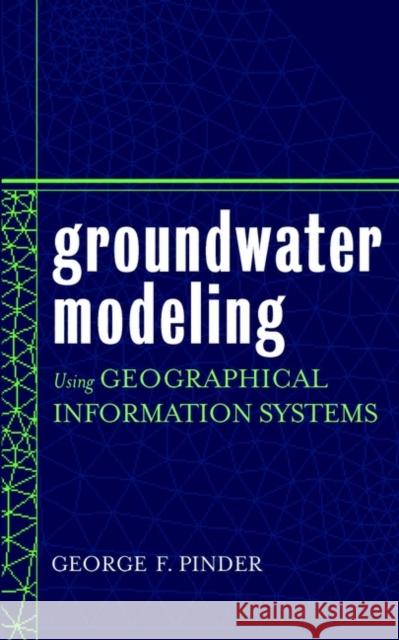
Groundwater Modeling Using Geographical Information Systems George F. Pinder 9780471084983 John Wiley & Sons - książkaWidoczna okładka, to zdjęcie poglądowe, a rzeczywista szata graficzna może różnić się od prezentowanej.

Groundwater Modeling Using Geographical Information Systems

ISBN-13: 9780471084983 / Angielski / Twarda / 2002 / 248 str.

George F. Pinder
cena 619,75 zł
(netto: 590,24 VAT:  5%)

Najniższa cena z 30 dni: 614,67 zł
Termin realizacji zamówienia:
ok. 30 dni roboczych
Bez gwarancji dostawy przed świętami

Darmowa dostawa!

Cutting-edge techniques for groundwater modeling using GIS technology Groundwater Modeling Using Geographical Information Systems covers fundamental information on flow and mass transport modeling and demonstrates how GIS technology makes these models and analyses more accurate than ever before. GIS technology allows for swift organization, quantification, and interpretation of large quantities of geohydrological data with computer accuracy and minimal risk of human error. This book's companion Web site provides the Princeton Transport Code, as well as the plug-in extensions required to interface this code with the Argus ONE numerical environment software enclosed with this book. Plug-in extensions for MODFLOW and MT3D computer codes can be found at the Argus ONE Web site (www.argusint.com). The process for using the Geographic Modeling Approach (GMA) to model groundwater flow and transport is demonstrated step by step with a field example from Tucson, Arizona. The GMA is composed of the Argus ONE Geographic Information Modeling system and the Princeton Transport Code groundwater flow and transport model, interfaced through the plug-in extension available on Argus ONE. Enhanced with more than 150 illustrations and screen captures, Groundwater Modeling Using Geographical Information Systems is a fundamental book for civil engineers, hydrologists, environmental engineers, geologists, and students in these fields, as well as software engineers working on GIS applications and environmental attorneys and regulators. When used in combination with the free modeling software, this book provides an excellent student text.


Kategorie:
Technologie
Kategorie BISAC:
Science > Earth Sciences - Hydrology
Technology & Engineering > Remote Sensing & Geographic Information Systems
Technology & Engineering > Civil - General
Wydawca:
John Wiley & Sons
Język:
Angielski
ISBN-13:
9780471084983
Rok wydania:
2002
Ilość stron:
248
Waga:
0.50 kg
Wymiary:
24.13 x 16.1 x 1.75
Oprawa:
Twarda
Wolumenów:
01
Dodatkowe informacje:
Bibliografia
Wydanie ilustrowane

Preface.

1 Flow Modeling.

1.1 Introduction.

1.2 Areal Extent of a Model.

1.3 Hydrological Boundaries to the Model.

1.4 Compilation of Geological Information.

1.4.1 Unconsolidated Environments.

1.4.2 Consolidated Rocks.

1.4.3 Metamorphic Rocks.

1.4.4 Igneous Rocks.

1.4.5 Representation of Geological Units.

1.5 Compilation of Hydrological Information.

1.5.1 Geohydrological Parameters.

1.5.2 Boundary Conditions.

1.5.3 Stresses.

1.6 Water–Table Condition.

1.6.1 Near–Surface Aquifer Zone.

1.6.2 Sharp–Interface Approximation of the Water Table.

1.6.3 Variably Saturated Water–Table Formulation.

1.6.4 Comparison of the Sharp–Interface and Variably Saturated Formulations.

1.7 Physical Dimensions of the Model.

1.7.1 Vertical Integration of the Flow Equation.

1.7.2 Free–Surface Condition.

1.8 Model Size.

1.9 Model Discretization.

1.9.1 Finite–Difference Approximations.

1.9.2 Finite–Element Approximations.

1.9.3 Two–Space Dimensional Approximations.

1.10 Finite–Difference Approximation to the Flow Equation.

1.10.1 Model Boundary Conditions.

1.10.2 Model Initial Conditions.

1.11 Finite–Element Approximation to the Flow Equation.

1.11.1 Boundary Conditions.

1.11.2 Initial Conditions.

1.12 Parameters.

1.13 Fractured and Cavernous Media.

1.14 Model Stresses.

1.14.1 Well Discharge or Recharge.

1.14.2 Rainfall.

1.14.3 Multiple Stress Periods.

1.15 Finite–Element Mesh.

1.16 Simulation.

1.16.1 Solution Algorithm.

1.16.2 Bandwidth.

1.16.3 Running PTC.

1.17 Output.

1.18 Calibration.

1.18.1 Model Building Guidelines.

1.18.2 Model Evaluation Guidelines.

1.18.3 Additional Data–Collection and Model Development Guidelines.

1.18.4 Uncertainty–Evaluation Guidelines.

1.18.5 Some Rules of Thumb.

1.19 Production Runs.

1.20 Summary.

References.

2 Transport Modeling.

2.1 Compilation of Water–Quality Information.

2.2 Physical Dimensions.

2.3 Model Size.

2.4 Transport Equation.

2.4.1 Equilibrium or Adsorption Isotherms.

2.4.2 Mass Flux.

2.4.3 Example of Retardation.

2.5 Chemical Reactions.

2.6 Model Boundary Conditions.

2.7 Finite–Element Approximation.

2.8 Boundary Conditions

2.8.1 First–Type Boundary Condition.

2.8.2 Second–Type Boundary Condition.

2.8.3 Third–Type Boundary Condition.

2.9 Initial Conditions.

2.10 Model Parameters.

2.11 Model Stresses.

2.12 Running the Model.

2.13 Output.

2.14 Calibration.

2.15 Production Runs.

2.16 Summary.

References.

3 Finite–Element versus Finite–Difference Simulation.

3.1 Elementary Application.

3.1.1 Groundwater Flow.

3.1.2 Groundwater Transport.

3.2 Comparison of Methods.

3.2.1 Graphical User Interfaces.

3.2.2 Model Formulation and Implementation.

3.2.3 Groundwater Flow.

3.2.4 Groundwater Transport.

3.3 Summary.

Index.

GEORGE F. PINDER, PhD, is a professor in the Civil and Environmental Engineering Department and a professor of mathematics and statistics at the University of Vermont in Burlington.

Cutting–edge techniques for groundwater modeling using GIS technology

Groundwater Modeling Using Geographical Information Systems covers fundamental information on flow and mass transport modeling and demonstrates how GIS technology makes these models and analyses more accurate than ever before.

GIS technology allows for swift organization, quantification, and interpretation of large quantities of geohydrological data with computer accuracy and minimal risk of human error. This book′s companion Web site provides the Princeton Transport Code, as well as the plug–in extensions required to interface this code with the Argus ONE numerical environment software enclosed with this book. Plug–in extensions for MODFLOW and MT3D computer codes can be found at the Argus ONE Web site (www.argusint.com). The process for using the Geographic Modeling Approach (GMA) to model groundwater flow and transport is demonstrated step by step with a field example from Tucson, Arizona. The GMA is composed of the Argus ONE Geographic Information Modeling system and the Princeton Transport Code groundwater flow and transport model, interfaced through the plug–in extension available on Argus ONE.

Enhanced with more than 150 illustrations and screen captures, Groundwater Modeling Using Geographical Information Systems is a fundamental book for civil engineers, hydrologists, environmental engineers, geologists, and students in these fields, as well as software engineers working on GIS applications and environmental attorneys and regulators. When used in combination with the free modeling software, this book provides an excellent student text.

Pinder, George F. GEORGE F. PINDER, PhD, is a professor in the Civil... więcej >


Udostępnij

Facebook - konto krainaksiazek.pl


Opinie o Krainaksiazek.pl na Opineo.pl

Partner Mybenefit

Krainaksiazek.pl w programie rzetelna firma Krainaksiaze.pl - płatności przez paypal

Czytaj nas na:

Facebook - krainaksiazek.pl
  • książki na zamówienie
  • granty
  • książka na prezent
  • kontakt
  • pomoc
  • opinie
  • regulamin
  • polityka prywatności

Zobacz:

  • Księgarnia czeska

  • Wydawnictwo Książkowe Klimaty

1997-2025 DolnySlask.com Agencja Internetowa

© 1997-2022 krainaksiazek.pl
     
KONTAKT | REGULAMIN | POLITYKA PRYWATNOŚCI | USTAWIENIA PRYWATNOŚCI
Zobacz: Księgarnia Czeska | Wydawnictwo Książkowe Klimaty | Mapa strony | Lista autorów
KrainaKsiazek.PL - Księgarnia Internetowa

Polityka prywatnosci - link
Krainaksiazek.pl - płatnośc Przelewy24
Przechowalnia Przechowalnia




