• Wyszukiwanie zaawansowane
  • Kategorie
  • Kategorie BISAC
  • Książki na zamówienie
  • Promocje
  • Granty
  • Książka na prezent
  • Opinie
  • Pomoc
  • Załóż konto
  • Zaloguj się

Green Energetic Materials » książka


zaloguj się | załóż konto
Logo Krainaksiazek.pl

koszyk

konto

szukaj
topmenu
Księgarnia internetowa
Szukaj
Książki na zamówienie
Promocje
Granty
Książka na prezent
Moje konto
Pomoc
 
 
Wyszukiwanie zaawansowane
Pusty koszyk
Bezpłatna dostawa dla zamówień powyżej 20 złBezpłatna dostawa dla zamówień powyżej 20 zł

Kategorie główne

• Nauka
 [2946350]
• Literatura piękna
 [1816154]

  więcej...
• Turystyka
 [70666]
• Informatyka
 [151172]
• Komiksy
 [35576]
• Encyklopedie
 [23172]
• Dziecięca
 [611458]
• Hobby
 [135995]
• AudioBooki
 [1726]
• Literatura faktu
 [225763]
• Muzyka CD
 [378]
• Słowniki
 [2917]
• Inne
 [444280]
• Kalendarze
 [1179]
• Podręczniki
 [166508]
• Poradniki
 [469467]
• Religia
 [507199]
• Czasopisma
 [496]
• Sport
 [61352]
• Sztuka
 [242330]
• CD, DVD, Video
 [3348]
• Technologie
 [219391]
• Zdrowie
 [98638]
• Książkowe Klimaty
 [124]
• Zabawki
 [2382]
• Puzzle, gry
 [3525]
• Literatura w języku ukraińskim
 [259]
• Art. papiernicze i szkolne
 [7107]
Kategorie szczegółowe BISAC

Green Energetic Materials

ISBN-13: 9781119941293 / Angielski / Twarda / 2014 / 304 str.
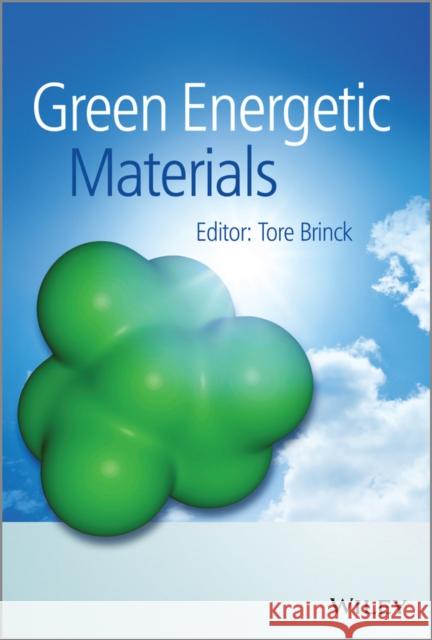
Green Energetic Materials  9781119941293 John Wiley & Sons - książkaWidoczna okładka, to zdjęcie poglądowe, a rzeczywista szata graficzna może różnić się od prezentowanej.

Green Energetic Materials

ISBN-13: 9781119941293 / Angielski / Twarda / 2014 / 304 str.

cena 623,55
(netto: 593,86 VAT:  5%)

Najniższa cena z 30 dni: 615,94
Termin realizacji zamówienia:
ok. 30 dni roboczych.

Darmowa dostawa!

Since the end of the 20th century it has been increasingly realised that the use, or production, of many energetic materials leads to the release of substances which are harmful to both humans and the environment. To address this, the principles of green chemistry can be applied to the design of new products and their manufacturing processes, to create green energetic materials that are virtually free of environmental hazards and toxicity issues during manufacturing, storage, use and disposal. Active research is underway to develop new ingredients and formulations, green synthetic methods and non-polluting manufacturing processes. Green Energetic Materials provides a detailed account of the most recent research and developments in the field, including green pyrotechnics, explosives and propellants. From theoretical modelling and design of new materials, to the development of sustainable manufacturing processes, this book addresses materials already on the production line, as well as considering future developments in this evolving field. Topics covered include:

  • Theoretical design of green energetic materials
  • Development of green pyrotechnics
  • Green primary and secondary explosives
  • Oxidisers and binder materials for green propellants
  • Environmentally sustainable manufacturing technologies for energetic materials
  • Electrochemical methods for synthesis of energetic materials and waste remediation
Green Energetic Materials is a valuable resource for academic, industrial and governmental researchers working on the development of energetic materials, for both military and civilian applications.

Kategorie:
Nauka, Chemia
Kategorie BISAC:
Science > Chemistry - Industrial & Technical
Technology & Engineering > Chemical & Biochemical
Wydawca:
John Wiley & Sons
Język:
Angielski
ISBN-13:
9781119941293
Rok wydania:
2014
Ilość stron:
304
Waga:
0.72 kg
Wymiary:
24.64 x 17.27 x 2.03
Oprawa:
Twarda
Wolumenów:
01
Dodatkowe informacje:
Bibliografia
Wydanie ilustrowane

List of Contributors ix

Preface xi

1 Introduction to Green Energetic Materials 1
Tore Brinck

1.1 Introduction 1

1.2 Green Chemistry and Energetic Materials 2

1.3 Green Propellants in Civil Space Travel 5

1.3.1 Green Oxidizers to Replace Ammonium Perchlorate 6

1.3.2 Green Liquid Propellants to Replace Hydrazine 8

1.3.3 Electric Propulsion 10

1.4 Conclusions 10

References 11

2 Theoretical Design of Green Energetic Materials: Predicting Stability, Detection, and Synthesis and Performance 15
Tore Brinck and Martin Rahm

2.1 Introduction 15

2.2 Computational Methods 17

2.3 Green Propellant Components 20

2.3.1 Trinitramide 20

2.3.2 Energetic Anions Rich in Oxygen and Nitrogen 24

2.3.3 The Pentazolate Anion and its Oxy–Derivatives 27

2.3.4 Tetrahedral N4 33

2.4 Conclusions 38

References 39

3 Some Perspectives on Sensitivity to Initiation of Detonation 45
Peter Politzer and Jane S. Murray

3.1 Energetic Materials and Green Chemistry 45

3.2 Sensitivity: Some Background 46

3.3 Sensitivity Relationships 47

3.4 Sensitivity: Some Relevant Factors 48

3.4.1 Amino Substituents 48

3.4.2 Layered (Graphite–Like) Crystal Lattice 49

3.4.3 Free Space in the Crystal Lattice 50

3.4.4 Weak Trigger Bonds 50

3.4.5 Molecular Electrostatic Potentials 51

3.5 Summary 56

Acknowledgments 56

References 57

4 Advances Toward the Development of Green Pyrotechnics 63
Jesse J. Sabatini

4.1 Introduction 63

4.2 The Foundation of Green Pyrotechnics 65

4.3 Development of Perchlorate–Free Pyrotechnics 67

4.3.1 Perchlorate–Free Illuminating Pyrotechnics 67

4.3.2 Perchlorate–Free Simulators 72

4.4 Removal of Heavy Metals from Pyrotechnic Formulations 75

4.4.1 Barium–Free Green–Light Emitting Illuminants 76

4.4.2 Barium–Free Incendiary Compositions 78

4.4.3 Lead–Free Pyrotechnic Compositions 80

4.4.4 Chromium–Free Pyrotechnic Compositions 82

4.5 Removal of Chlorinated Organic Compounds from Pyrotechnic Formulations 83

4.5.1 Chlorine–Free Illuminating Compositions 83

4.6 Environmentally Friendly Smoke Compositions 84

4.6.1 Environmentally Friendly Colored Smoke Compositions 84

4.6.2 Environmentally Friendly White Smoke Compositions 88

4.7 Conclusions 93

Acknowledgments 94

Abbreviations 95

References 97

5 Green Primary Explosives 103
Karl D. Oyler

5.1 Introduction 103

5.1.1 What is a Primary Explosive? 104

5.1.2 The Case for Green Primary Explosives 107

5.1.3 Legacy Primary Explosives 108

5.2 Green Primary Explosive Candidates 110

5.2.1 Inorganic Compounds 111

5.2.2 Organic–Based Compounds 116

5.3 Conclusions 125

Acknowledgments 126

References 126

6 Energetic Tetrazole N–oxides 133
Thomas M. Klap otke and J org Stierstorfer

6.1 Introduction 133

6.2 Rationale for the Investigation of Tetrazole N–oxides 133

6.3 Synthetic Strategies for the Formation of Tetrazole N–oxides 136

6.3.1 HOF CH3CN 136

6.3.2 Oxone1 137

6.3.3 CF3COOH/H2O2 138

6.3.4 Cyclization of Azido–Oximes 139

6.4 Recent Examples of Energetic Tetrazole N–oxides 139

6.4.1 Tetrazole N–oxides 140

6.4.2 Bis(tetrazole–N–oxides) 150

6.4.3 5,50–Azoxytetrazolates 164

6.4.4 Bis(tetrazole)dihydrotetrazine and bis(tetrazole)tetrazine N–oxides 170

6.5 Conclusion 173

Acknowledgments 174

References 174

7 Green Propellants Based on Dinitramide Salts: Mastering Stability and Chemical Compatibility Issues 179
Martin Rahm and Tore Brinck

7.1 The Promises and Problems of Dinitramide Salts 179

7.2 Understanding Dinitramide Decomposition 181

7.2.1 The Dinitramide Anion 182

7.2.2 Dinitraminic Acid 184

7.2.3 Dinitramide Salts 185

7.3 Vibrational Sum–Frequency Spectroscopy of ADN and KDN 189

7.4 Anomalous Solid–State Decomposition 192

7.5 Dinitramide Chemistry 194

7.5.1 Compatibility and Reactivity of ADN 194

7.5.2 Dinitramides in Synthesis 196

7.6 Dinitramide Stabilization 198

7.7 Conclusions 200

References 201

8 Binder Materials for Green Propellants 205
Carina Elds ater and Eva Malmstr om

8.1 Binder Properties 209

8.2 Inert Polymers for Binders 210

8.2.1 Polybutadiene 210

8.2.2 Polyethers 212

8.2.3 Polyesters and Polycarbonates 213

8.3 Energetic Polymers 215

8.3.1 Nitrocellulose 215

8.3.2 Poly(glycidyl azide) 216

8.3.3 Poly(3–nitratomethyl–3–methyloxetane) 220

8.3.4 Poly(glycidyl nitrate) 221

8.3.5 Poly[3,3–bis(azidomethyl)oxetane] 222

8.4 Energetic Plasticisers 223

8.5 Outlook for Design of New Green Binder Systems 223

8.5.1 Architecture of the Binder Polymer 224

8.5.2 Chemical Composition and Crosslinking Chemistries 225

References 226

9 The Development of Environmentally Sustainable Manufacturing Technologies for Energetic Materials 235
David E. Chavez

9.1 Introduction 235

9.2 Explosives 236

9.2.1 Sustainable Manufacturing of Explosives 236

9.2.2 Environmentally Friendly Materials for Initiation 240

9.2.3 Synthesis of Explosive Precursors 244

9.3 Pyrotechnics 246

9.3.1 Commercial Pyrotechnics Manufacturing 246

9.3.2 Military Pyrotechnics 248

9.4 Propellants 249

9.4.1 The Green Missile Program 249

9.4.2 Other Rocket Propellant Efforts 250

9.4.3 Gun Propellants 251

9.5 Formulation 253

9.6 Conclusions 254

Acknowledgments 254

Abbreviations and Acronyms 255

References 256

10 Electrochemical Methods for Synthesis of Energetic Materials and Remediation of Waste Water 259
Lynne Wallace

10.1 Introduction 259

10.2 Practical Aspects 260

10.3 Electrosynthesis 262

10.3.1 Electrosynthesis of EM and EM Precursors 262

10.3.2 Electrosynthesis of Useful Reagents 265

10.4 Electrochemical Remediation 266

10.4.1 Direct Electrolysis 267

10.4.2 Indirect Electrolytic Methods 269

10.4.3 Electrokinetic Remediation of Soils 272

10.4.4 Electrodialysis 273

10.5 Current Developments and Future Directions 273

References 275

Index 281

Since the end of the 20th century it has been increasingly realised that the use, or production, of many energetic materials leads to the release of substances which are harmful to both humans and the environment. To address this, the principles of green chemistry can be applied to the design of new products and their manufacturing processes, to create green energetic materials that are virtually free of environmental hazards and toxicity issues during manufacturing, storage, use and disposal. Active research is underway to develop new ingredients and formulations, green synthetic methods and non–polluting manufacturing processes.

Green Energetic Materials provides a detailed account of the most recent research and developments in the field, including green pyrotechnics, explosives and propellants. From theoretical modelling and design of new materials, to the development of sustainable manufacturing processes, this book addresses materials already on the production line, as well as considering future developments in this evolving field.

Topics covered include:

  • Theoretical design of green energetic materials
  • Development of green pyrotechnics
  • Green primary and secondary explosives
  • Oxidisers and binder materials for green propellants
  • Environmentally sustainable manufacturing technologies for energetic materials
  • Electrochemical methods for synthesis of energetic materials and waste remediation

Green Energetic Materials is a valuable resource for academic, industrial and governmental researchers working on the development of energetic materials, for both military and civilian applications.


Udostępnij

Facebook - konto krainaksiazek.pl


Opinie o Krainaksiazek.pl na Opineo.pl

Partner Mybenefit

Krainaksiazek.pl w programie rzetelna firma Krainaksiaze.pl - płatności przez paypal

Czytaj nas na:

Facebook - krainaksiazek.pl
  • książki na zamówienie
  • granty
  • książka na prezent
  • kontakt
  • pomoc
  • opinie
  • regulamin
  • polityka prywatności

Zobacz:

  • Księgarnia czeska

  • Wydawnictwo Książkowe Klimaty

1997-2026 DolnySlask.com Agencja Internetowa

© 1997-2022 krainaksiazek.pl
     
KONTAKT | REGULAMIN | POLITYKA PRYWATNOŚCI | USTAWIENIA PRYWATNOŚCI
Zobacz: Księgarnia Czeska | Wydawnictwo Książkowe Klimaty | Mapa strony | Lista autorów
KrainaKsiazek.PL - Księgarnia Internetowa

Polityka prywatnosci - link
Krainaksiazek.pl - płatnośc Przelewy24
Przechowalnia Przechowalnia






