• Wyszukiwanie zaawansowane
  • Kategorie
  • Kategorie BISAC
  • Książki na zamówienie
  • Promocje
  • Granty
  • Książka na prezent
  • Opinie
  • Pomoc
  • Załóż konto
  • Zaloguj się

Graphite Intercalation Compounds I: Structure and Dynamics » książka


zaloguj się | załóż konto
Logo Krainaksiazek.pl

koszyk

konto

szukaj
topmenu
Księgarnia internetowa
Szukaj
Książki na zamówienie
Promocje
Granty
Książka na prezent
Moje konto
Pomoc
 
 
Wyszukiwanie zaawansowane
Pusty koszyk
Bezpłatna dostawa dla zamówień powyżej 20 złBezpłatna dostawa dla zamówień powyżej 20 zł

Kategorie główne

• Nauka
 [2952079]
• Literatura piękna
 [1850969]

  więcej...
• Turystyka
 [71058]
• Informatyka
 [151066]
• Komiksy
 [35579]
• Encyklopedie
 [23181]
• Dziecięca
 [620496]
• Hobby
 [139036]
• AudioBooki
 [1646]
• Literatura faktu
 [228729]
• Muzyka CD
 [379]
• Słowniki
 [2932]
• Inne
 [445708]
• Kalendarze
 [1409]
• Podręczniki
 [164793]
• Poradniki
 [480107]
• Religia
 [510956]
• Czasopisma
 [511]
• Sport
 [61267]
• Sztuka
 [243299]
• CD, DVD, Video
 [3411]
• Technologie
 [219640]
• Zdrowie
 [100984]
• Książkowe Klimaty
 [124]
• Zabawki
 [2281]
• Puzzle, gry
 [3363]
• Literatura w języku ukraińskim
 [258]
• Art. papiernicze i szkolne
 [8020]
Kategorie szczegółowe BISAC

Graphite Intercalation Compounds I: Structure and Dynamics

ISBN-13: 9783642752728 / Angielski / Miękka / 2011 / 356 str.
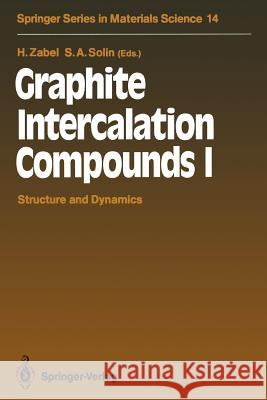
Hartmut Zabel; Stuart A. Solin; D. M. Hwang
Graphite Intercalation Compounds I: Structure and Dynamics Hwang, D. M. 9783642752728 Springer - książkaWidoczna okładka, to zdjęcie poglądowe, a rzeczywista szata graficzna może różnić się od prezentowanej.

Graphite Intercalation Compounds I: Structure and Dynamics

ISBN-13: 9783642752728 / Angielski / Miękka / 2011 / 356 str.

Hartmut Zabel; Stuart A. Solin; D. M. Hwang
cena 402,53
(netto: 383,36 VAT:  5%)

Najniższa cena z 30 dni: 385,52
Termin realizacji zamówienia:
ok. 22 dni roboczych.

Darmowa dostawa!

The progress of materials science depends on the development of novel materials and the development of novel experimental techniques. The research on graphite intercalation compounds combines both aspects: new compounds with strikingly new and anisotropic properties have been synthesized and analyzed during the past couple of years by means of state-of-the-art experimental methods. At the same time, the preparation of the compounds already known has improved con- siderably, giving increased reliability and reproducibility of the experimental results. The high quality experimental data now available have stimulated theo- retical work. Moreover, the theoretical work has had a great impact on further experimental studies, with the effect of a much improved understanding of this class of materials. This volume is dedicated to a thorough description of all relevant experimen- tal and theoretical aspects of the structural and dynamical properties of graphite intercalation compounds. Because of the large number of topics, a second vol- ume, which is now in preparation, will follow and will treat the electronic, transport, magnetic, and optical properties. The second volume will also contain a chapter on applications of graphite intercalation compounds. There have been a number of reviews written on selected aspects of these compounds in various journals and conference proceedings during the last couple of years, but this is the first comprehensive review since the thorough overview provided by M.S. Dresselhaus and G. Dresselhaus appeared ten years ago.


Kategorie:
Nauka, Fizyka
Kategorie BISAC:
Science > Chemia - Nieorganiczna
Science > Physics - Crystallography
Science > Chemia - Fizyczna
Wydawca:
Springer
Seria wydawnicza:
Springer Series in Materials Science
Język:
Angielski
ISBN-13:
9783642752728
Rok wydania:
2011
Wydanie:
Softcover Repri
Numer serii:
000044317
Ilość stron:
356
Waga:
0.57 kg
Wymiary:
23.5 x 15.5
Oprawa:
Miękka
Wolumenów:
01

1. Introduction.- References.- 2. Structural Properties and Phase Transitions.- 2.1 Effects of Intercalation on the Graphite Host.- 2.1.1 Pure Graphite.- 2.1.2 Intercalation Effects.- 2.2 Intercalate Structures: General Features.- 2.2.1 Stage Disorder.- 2.2.2 Interlayer Intercalant Correlations in the Liquid State.- 2.2.3 Two-Dimensional Melting.- 2.3 The Two-Dimensional Liquid State.- 2.3.1 Alkali Liquids — Experimental Results.- 2.3.2 Modulated 2d Liquids — Theory and Application to Alkalis.- 2.3.3 Molecular Dynamics Simulations.- 2.3.4 Acceptor Liquids.- 2.4 Phase Transitions and Ordered States.- 2.4.1 Overview.- 2.4.2 Donors.- 2.4.3 Acceptors — General Remarks.- 2.5 Conclusions.- References.- 3. Staging and Kinetics.- 3.1 The Energetics of Staging.- 3.1.1 Charge Transfer.- 3.1.2 Host Layer Cohesion and Homogeneous Elastic Strains.- 3.1.3 Elasticity, Intercalate Islands and Domains.- 3.1.4 Intralayer and Guest-Host Interactions.- 3.2 Classical Staging Models and Their Implications.- 3.2.1 Safran’s Model of Staging.- 3.2.2 The Need for Modifications.- 3.2.3 Models That Describe Simple Stages.- 3.2.4 Towards an Explanation of the Anomalous Fractional Stages.- 3.3 Experimental Staging Phase Diagrams.- 3.3.1 Typical Graphite Intercalation Compounds.- 3.3.2 Systems Exhibiting a Reentrant Dilute Stage 1 Phase at High Temperatures.- 3.3.3 Staging Under Pressure.- 3.4 Stage Disorder.- 3.4.1 Thermal Theory of Stage Disorder in Daumas-H6rold Domains.- 3.4.2 Experiments: General Trends.- 3.4.3 Experiments: Stage Disorder and Stage Transformations.- 3.5 Staging and the Kinetics of the Intercalation Process.- 3.5.1 Experiments.- 3.5.2 Computer Simulations.- 3.6 The Kinetics of Stage Transformations.- 3.6.1 Kinetic Models and Experiments.- 3.6.2 Computer Simulations and More Experiments.- References.- 4. Lattice Dynamics I: Neutron Studies.- 4.1 Lattice Dynamics and Inelastic Neutron Scattering.- 4.1.1 Lattice Dynamical Models.- 4.1.2 Inelastic Neutron Scattering.- 4.2 [00q]L Phonon Dispersion.- 4.2.1 Lattice Dynamical Models for [00q]L Modes.- 4.2.2 Experimental Results.- 4.2.3 Interlayer Force Constants.- 4.3 [q00]T? Phonon Dispersion.- 4.3.1 Introductory Remarks.- 4.3.2 Experimental Results.- 4.4 Phonon Density of States of Intercalate Modes.- 4.4.1 Introductory Remarks.- 4.4.2 Experimental Results.- 4.4.3 Anisotropy of Intercalate Interaction.- 4.5 Thermal Properties.- 4.5.1 Specific Heat.- 4.5.2 Debye-Waller Factor.- 4.5.3 Thermal Expansion.- 4.6 Conclusion.- References.- 5. Lattice Dynamics II: Optical Studies.- 5.1 Theoretical Considerations.- 5.1.1 First-Order Raman Scattering.- 5.1.2 Second-Order Raman Scattering.- 5.2 Experimental Techniques.- 5.2.1 Traditional Methods.- 5.2.2 Novel Techniques.- 5.3 Pristine Graphite.- 5.3.1 Structure and Symmetry.- 5.3.2 First-Order Optical Spectra.- 5.3.3 Second-Order Raman Scattering.- 5.3.4 Finite-Size Effects.- 5.4 Binary Graphite Intercalation Compounds.- 5.4.1 Lattice Dynamics and First-Order Optical Spectra.- 5.4.2 Lattice Dynamics and Second-Order Raman Scattering.- 5.4.3 Charge Transfer and Phonon Frequencies.- 5.5 Ternary Graphite Intercalation Compounds.- 5.5.1 Homogeneous TGICs.- 5.5.2 Heterogeneous TGICs.- 5.5.3 Trilayer TGICs.- 5.5.4 Localized TGICs.- 5.6 Applications of Optical Phonon Spectroscopy.- 5.7 Concluding Remarks.- References.- 6. Intercalate Diffusion.- 6.1 Quasi-Elastic Neutron Scattering.- 6.1.1 Scattering Cross Sections.- 6.1.2 Scattering Laws and Correlation Functions.- 6.2 Alkali-GICs.- 6.2.1 Stage-1 Compounds.- 6.2.2 Stage-2 Compounds.- 6.3 Molecular Intercalates and Ternary Compounds.- 6.3.1 Stage-2 HN03 GIC (C10HNO3).- 6.3.2 Stage-1 H2SO4 GICs.- 6.3.3 Ternary Cs(THF)x Compounds.- 6.3.4 Stage-1 K(NH3)4.3C24.- 6.4 Conclusions.- References.- 7. Microscopic Properties of Graphite Intercalation Compounds.- 7.1 Layer Structure and Staging.- 7.1.1 High-Resolution Transmission Electron Microscopy Studies.- 7.1.2 High-Resolution Scanning Ion Probe Studies.- 7.2 In-Plane Structure.- 7.2.1 Acceptor GICs.- 7.2.2 Donor GICs.- 7.3 Summary and Concluding Remarks.- References.- 8. New Graphite-Donor Compounds and Synthesis.- 8.1 Preliminary Remarks Concerning the Donor-Graphite Intercalation Compounds.- 8.2 New Binary Phases Obtained at High Pressure and/or High Temperature.- 8.2.1 The Graphite-Lithium System.- 8.2.2 The Graphite-Potassium System.- 8.3 The New Ternary Compounds with Multiple Single Layers.- 8.3.1 Synthesis of Heterostructures with Two Heavy Alkali Metals.- 8.3.2 Structures and Reaction Mechanisms.- 8.4 The New Ternary Compounds with Multiple-Layer Intercalated Sheets.- 8.4.1 Hydrogen Derivatives.- 8.4.2 Compounds of Mercury, Thallium and Bismuth.- 8.5 Conclusion and Vistas.- References.- 9. Ternary Systems.- 9.1 Ternary Compounds Containing Only Alkali Metals or Halogens.- 9.1.1 Solid Solution Ternaries Involving Two Alkali Metals.- 9.1.2 Solid Solution Ternaries Involving Two Halogens Other than Fluorine.- 9.2 Ternary Compounds of Metals with a Nitrogen-Containing Base.- 9.2.1 Ternary Metal-Ammonia-Graphite Intercalation Compounds.- 9.2.2 Other Ternary Compounds of Metals with a Nitrogen Base.- 9.2.3 Physical Properties of the Ternary Metal-Base Compounds.- 9.3 The Metal-Organic-Molecule-Graphite Intercalation Compounds.- 9.3.1 Ternary Donor Compounds Containing Aromatic Hydrocarbons.- 9.3.2 Ternary Metal Compounds of Oxygen Derivatives.- 9.3.3 Synergetic Intercalation.- 9.3.4 Problems Associated with the Stoichiometry of the Ternary Compounds.- 9.4 Ternary Acceptor Intercalation Compounds.- 9.4.1 Ternary Metal-Halide-Ammonia-Graphite Intercalation Compounds.- 9.4.2 Ternary Intercalation Compounds Containing a Solid Solution of Two Metal Halides.- 9.4.3 Ternary Systems Involving the Fluorides of Transition Metals.- 9.4.4 Intercalation of Metal Halides from Solutions.- 9.4.5 Intercalation Compounds Containing Solvated Complex Anions.- 9.4.6 Physical Properties.- 9.5 Multi-Intercalation Compounds.- 9.5.1 Donor Bi-Intercalation Compounds.- 9.5.2 Acceptor Bi-Intercalation Compounds.- 9.5.3 Mixed Bi-Intercalation Compounds.- 9.5.4 Physical Properties.- 9.6 Ternary Systems Involving Fluorinated Graphite.- 9.6.1 Compounds of Fluorinated Graphite with Metal Fluorides.- 9.6.2 Compounds of Fluorinated Graphite with Nonmetal Fluorides.- References.

In this book emphasis is laid on the basic physics and chemistry of graphite intercalation compounds arising from their quasi-two-dimensional structure. The various chapters are designed to guide graduate students and other newcomers into the new and exciting field of two-dimensional physics, and at the same time to pro- vide a comprehensive review of the current status of the field.


Udostępnij

Facebook - konto krainaksiazek.pl


Opinie o Krainaksiazek.pl na Opineo.pl

Partner Mybenefit

Krainaksiazek.pl w programie rzetelna firma Krainaksiaze.pl - płatności przez paypal

Czytaj nas na:

Facebook - krainaksiazek.pl
  • książki na zamówienie
  • granty
  • książka na prezent
  • kontakt
  • pomoc
  • opinie
  • regulamin
  • polityka prywatności

Zobacz:

  • Księgarnia czeska

  • Wydawnictwo Książkowe Klimaty

1997-2026 DolnySlask.com Agencja Internetowa

© 1997-2022 krainaksiazek.pl
     
KONTAKT | REGULAMIN | POLITYKA PRYWATNOŚCI | USTAWIENIA PRYWATNOŚCI
Zobacz: Księgarnia Czeska | Wydawnictwo Książkowe Klimaty | Mapa strony | Lista autorów
KrainaKsiazek.PL - Księgarnia Internetowa

Polityka prywatnosci - link
Krainaksiazek.pl - płatnośc Przelewy24
Przechowalnia Przechowalnia





