• Wyszukiwanie zaawansowane
  • Kategorie
  • Kategorie BISAC
  • Książki na zamówienie
  • Promocje
  • Granty
  • Książka na prezent
  • Opinie
  • Pomoc
  • Załóż konto
  • Zaloguj się

Graphdiyne: Fundamentals and Applications in Renewable Energy and Electronics » książka

zaloguj się | załóż konto
Logo Krainaksiazek.pl

koszyk

konto

szukaj
topmenu
Księgarnia internetowa
Szukaj
Książki na zamówienie
Promocje
Granty
Książka na prezent
Moje konto
Pomoc
 
 
Wyszukiwanie zaawansowane
Pusty koszyk
Bezpłatna dostawa dla zamówień powyżej 20 złBezpłatna dostawa dla zamówień powyżej 20 zł

Kategorie główne

• Nauka
 [2950560]
• Literatura piękna
 [1849509]

  więcej...
• Turystyka
 [71097]
• Informatyka
 [151150]
• Komiksy
 [35848]
• Encyklopedie
 [23178]
• Dziecięca
 [617388]
• Hobby
 [139064]
• AudioBooki
 [1657]
• Literatura faktu
 [228597]
• Muzyka CD
 [383]
• Słowniki
 [2855]
• Inne
 [445295]
• Kalendarze
 [1464]
• Podręczniki
 [167547]
• Poradniki
 [480102]
• Religia
 [510749]
• Czasopisma
 [516]
• Sport
 [61293]
• Sztuka
 [243352]
• CD, DVD, Video
 [3414]
• Technologie
 [219456]
• Zdrowie
 [101002]
• Książkowe Klimaty
 [124]
• Zabawki
 [2311]
• Puzzle, gry
 [3459]
• Literatura w języku ukraińskim
 [254]
• Art. papiernicze i szkolne
 [8079]
Kategorie szczegółowe BISAC

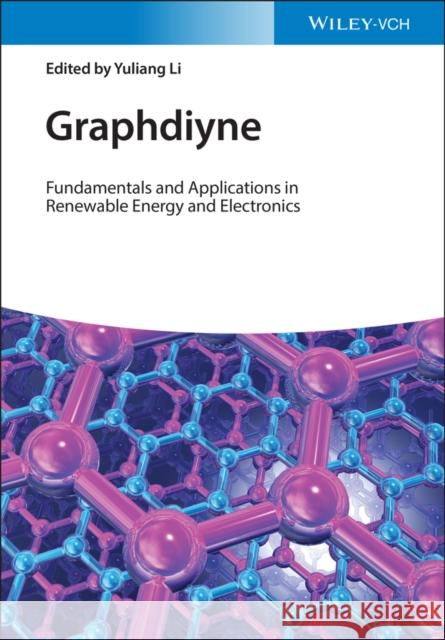
Graphdiyne: Fundamentals and Applications in Renewable Energy and Electronics

ISBN-13: 9783527347872 / Angielski / Twarda / 2021 / 400 str.
Y Li
Graphdiyne: Fundamentals and Applications in Renewable Energy and Electronics Y Li 9783527347872 Wiley-VCH Verlag GmbH - książkaWidoczna okładka, to zdjęcie poglądowe, a rzeczywista szata graficzna może różnić się od prezentowanej.

Graphdiyne: Fundamentals and Applications in Renewable Energy and Electronics

ISBN-13: 9783527347872 / Angielski / Twarda / 2021 / 400 str.

Y Li
cena 694,19
(netto: 661,13 VAT:  5%)

Najniższa cena z 30 dni: 692,56
Termin realizacji zamówienia:
ok. 10-14 dni roboczych
Dostawa w 2026 r.

Darmowa dostawa!
Kategorie:
Nauka, Chemia
Kategorie BISAC:
Technology & Engineering > Materials Science - General
Science > Chemia - Organiczna
Wydawca:
Wiley-VCH Verlag GmbH
Język:
Angielski
ISBN-13:
9783527347872
Rok wydania:
2021
Ilość stron:
400
Waga:
1.57 kg
Wymiary:
27.69 x 21.59 x 2.79
Oprawa:
Twarda
Wolumenów:
01


1. Introduction1.1 The Development of Carbon Materials 1.2 Models and Nomenclature1.3 Brief Introduction of Graphdiyne 2. Basic Structure and Band Gap Engineering: Theoretical Study of GDYs 2.1 Structures 2.1.1 Theoretical Prediction and Classification 2.1.2 Geometric Structures of GDYs 2.2 Electronic Structures 2.2.1 Dirac Cones in a-,ß-, and 6,6,12-Graphynes 2.2.2 Semiconductor Properties of ¿-Graphynes 2.2.3 Electronic Structures Comparison of GDYs 2.2.4 Structure and Size Based Electronic Properties 2.3 Mechanical Properties 2.3.1 Mechanical Properties of GDYs 2.3.2 Mechanical Properties of ¿-Graphyne 2.3.3 Mechanical Properties of ¿-Graphdiyne 2.3.4 Mechanical properties of ¿-graphynes family 2.4 Layers Structure of Bulk GDYs 2.4.1 Stacking Modes for Bilayer a-Graphyne 2.4.2 Stacking modes for bilayer ¿-graphyne 2.4.3 Stacking Modes for Bilayer ¿-Graphdiyne 2.4.4 Identification on the Stacking Structures of GDY 2.5 Band Gap Engineering of GDYs 2.5.1 Influences of Nonmetal Doping 2.5.2 Influences of Chemical Modification and Functionalization 2.5.3 Tunable Band Gap under Strain 2.5.4 Graphyne Nanoribbons under Strain or Electric Field 3. GDY Synthesis and Characterization3.1 Synthesis 3.1.1 Basic Chemistry 3.1.2 Synthesis of GDY Related Molecular Fragments 3.1.3 Cu-Surface-Mediated Synthesis 3.1.4 Template Synthesis 3.1.5 Interfacial Synthesis 3.1.6 Vapour-liquid-solid (VLS) Growth 3.1.7 Chemical Vapor Deposition (CVD) Growth 3.1.8 Explosion Approach 3.2 Characterization 3.2.1 Raman spectroscopy 3.2.2 X-ray photoelectron spectroscopy (XPS) 3.2.3 X-ray absorption spectroscopy (XAS) 3.2.4 Microscope Technology 3.2.5 X-ray Diffraction (XRD) Technique 3.2.6 Others 3.3 Summary 4 Functionalization of GDYs4.1 Heteroatom Doping 4.1.1 Nitrogen and Phosphor Doping 4.1.2 Halogen Doping 4.1.3 Sulphur, Boron, Hydrogen and Other Non-Mental Heteroatoms 4.1.4 Dual Heteroatom Doping 4.2 Metal Decoration 4.2.1 Metal Atomic Decoration 4.2.2 Metallic Compounds 4.3 Absorption of Guest Molecules 5 Graphdiyne-Based Materials in Catalytic Applications 5.1. Graphdiyne-based zero-valent metal atomic catalysts 5.1.1 Synthetic strategy for GDY-based ACs 5.1.2 Adsorption Geometry and Electronic Structures of GDY-based ACs 5.1.3 Morphology and valence states of GDY-based ACs 5.1.4 Application of GDY-based ACs 5.2 GDY-based heterojunction catalysts 5.2.1 Hydrogen evolution reaction on GDY-based heteros 5.2.2 Oxygen evolution reaction on GDY-based heterojunction 5.2.3 Photo-/photoelectrocatalytic oxygen evolution reaction 5.2.4 Applied for overall water splitting 5.2.5 Applied for other catalysis 5.3 Graphdiyne Based Metal-free catalysts 5.3.1 Applied for water splitting 5.3.2 Applied for Oxygen Reduction Reactions 5.3.3 Applied for photocatalysis 6 Graphdiyne-Based Materials in Rechargeable Batteries Applications 6.1 Introduction 6.2 Lithium-Ion Battery Anodes 6.3 Graphdiyne Derivatives for LIB Anodes 6.4 Sodium Ion Battery Anodes 6.5 Electrochemical Interface 6.5.1 Protection for LIBs anodes 6.5.2 Protection for LIB cathodes 6.6 Lithium-Sulfur Battery 6.7 Lithium metal anodes 6.8 Supercapacitor Electrodes 6.9 Fuel cells 7. Graphdiyne-Based Materials in Solar Cells Applications 7.1 Introduction 7.2 Perovskite Solar Cells 7.2.1 Graphdiyne-Based Materials in Interfacial Layers 7.2.2 Graphdiyne-Based Materials in Active Layer 7.3 Organic Solar Cells 7.4 Others 7.4.1 Quantum Dots Solar Cells 7.4.2 Dye-sensitized solar cells 7.5 Future Perspectives 8 Graphdiyne: Electronics, thermoelectrics and magnetism applications 8.1 Electronic Devices 8.2 Optic Devices 8.3 Thermoelectric Materials 8.4 Magnetism 9. Graphdiyne-Based Materials in Sensors and Separation Applications 9.1 Sensors 9.1.1 Biomolecules Sensor 9.1.2 Small Molecule Detection Sensor 9.1.3 Other sensors 9.2 Separation 9.2.1 Gas separation 9.2.2 Oil/Water separation 9.3 Conclusion and Perspective 10. Perspectives 10.1 Chemical Synthesis Methodology and Aggregate Structures of Graphdiyne 10.2 Controllable Preparation of Highly Ordered Graphdiyne 10.3 Basic Physical Properties and Applications of Graphdiyne Index

Yuliang Li is Professor at the Institute of Chemistry, Chinese Academy of Sciences. He is the Academician of the Chinese Academy of Sciences. He worked as a visiting scholar and visiting professor in the Lab of Organic Chemistry at University of Amsterdam in Netherlands, the Radiation Lab at University of Notre Dame and Georgia Institute of Technology in USA, and Department of Chemistry at The University of Hong Kong. He has published more than 600 peer-reviewed scientific articles and invited reviews. He is the recipient of numerous awards including the Second-Class of National Natural Science Award of China (2014, 2002 and 2005), the Second-Class Award of Natural Science of Chinese Academy of Sciences (1999), the First-Class Award of Natural Science of Beijing (2014 and 2004), and The Prize for Scientific and Technological Progress of Ho Leung Ho Lee Foundation (2017).


Udostępnij

Facebook - konto krainaksiazek.pl


Opinie o Krainaksiazek.pl na Opineo.pl

Partner Mybenefit

Krainaksiazek.pl w programie rzetelna firma Krainaksiaze.pl - płatności przez paypal

Czytaj nas na:

Facebook - krainaksiazek.pl
  • książki na zamówienie
  • granty
  • książka na prezent
  • kontakt
  • pomoc
  • opinie
  • regulamin
  • polityka prywatności

Zobacz:

  • Księgarnia czeska

  • Wydawnictwo Książkowe Klimaty

1997-2025 DolnySlask.com Agencja Internetowa

© 1997-2022 krainaksiazek.pl
     
KONTAKT | REGULAMIN | POLITYKA PRYWATNOŚCI | USTAWIENIA PRYWATNOŚCI
Zobacz: Księgarnia Czeska | Wydawnictwo Książkowe Klimaty | Mapa strony | Lista autorów
KrainaKsiazek.PL - Księgarnia Internetowa

Polityka prywatnosci - link
Krainaksiazek.pl - płatnośc Przelewy24
Przechowalnia Przechowalnia






