• Wyszukiwanie zaawansowane
  • Kategorie
  • Kategorie BISAC
  • Książki na zamówienie
  • Promocje
  • Granty
  • Książka na prezent
  • Opinie
  • Pomoc
  • Załóż konto
  • Zaloguj się

Geology of the Cayman Islands: Evolution of Complex Carbonate Successions on Isolated Oceanic Islands » książka


zaloguj się | załóż konto
Logo Krainaksiazek.pl

koszyk

konto

szukaj
topmenu
Księgarnia internetowa
Szukaj
Książki na zamówienie
Promocje
Granty
Książka na prezent
Moje konto
Pomoc
 
 
Wyszukiwanie zaawansowane
Pusty koszyk
Bezpłatna dostawa dla zamówień powyżej 20 złBezpłatna dostawa dla zamówień powyżej 20 zł

Kategorie główne

• Nauka
 [2946600]
• Literatura piękna
 [1856966]

  więcej...
• Turystyka
 [72221]
• Informatyka
 [151456]
• Komiksy
 [35826]
• Encyklopedie
 [23190]
• Dziecięca
 [619653]
• Hobby
 [140543]
• AudioBooki
 [1577]
• Literatura faktu
 [228355]
• Muzyka CD
 [410]
• Słowniki
 [2874]
• Inne
 [445822]
• Kalendarze
 [1744]
• Podręczniki
 [167141]
• Poradniki
 [482898]
• Religia
 [510455]
• Czasopisma
 [526]
• Sport
 [61590]
• Sztuka
 [243598]
• CD, DVD, Video
 [3423]
• Technologie
 [219201]
• Zdrowie
 [101638]
• Książkowe Klimaty
 [124]
• Zabawki
 [2473]
• Puzzle, gry
 [3898]
• Literatura w języku ukraińskim
 [254]
• Art. papiernicze i szkolne
 [8170]
Kategorie szczegółowe BISAC

Geology of the Cayman Islands: Evolution of Complex Carbonate Successions on Isolated Oceanic Islands

ISBN-13: 9783031082290 / Angielski / Twarda / 2022 / 291 str.
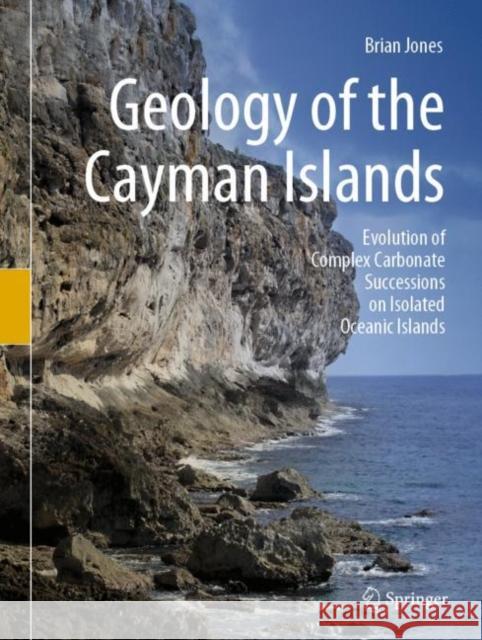
Brian Jones
Geology of the Cayman Islands: Evolution of Complex Carbonate Successions on Isolated Oceanic Islands Brian Jones 9783031082290 Springer - książkaWidoczna okładka, to zdjęcie poglądowe, a rzeczywista szata graficzna może różnić się od prezentowanej.

Geology of the Cayman Islands: Evolution of Complex Carbonate Successions on Isolated Oceanic Islands

ISBN-13: 9783031082290 / Angielski / Twarda / 2022 / 291 str.

Brian Jones
cena 221,90 zł
(netto: 211,33 VAT:  5%)

Najniższa cena z 30 dni: 212,02 zł
Termin realizacji zamówienia:
ok. 22 dni roboczych
Bez gwarancji dostawy przed świętami

Darmowa dostawa!
inne wydania

Grand Cayman, Little Cayman, and Cayman Brac are, in reality, the summits of independent fault blocks that rise from the depths of the Caribbean Sea. This book traces the geological evolution of these islands over the last 30 to 35 million years. The balance between deposition of carbonate sediments and karst development of the exposed land was dictated by the interaction between ever-changing sea levels and vertical tectonic movement of the fault blocks. Today, drinking water needed for the ever-increasing populations of the islands is supplied largely by desalinization plants that are located in accord with a detailed knowledge of the bedrock.This book is based on an extensive data base that has been assembled over the last 40 years of field work and laboratory analyses. Noteworthy aspects of this database include:Approximately 60 visits to the islands over last 40 years – sampling and documentation of virtually every accessible outcrop on the islands (including some that no longer exist). Most samples have been fully documented petrographically and geochemically.Data from 120 wells that have been drilled to depths up to 245 m (most less than 125 m). Wells have been cored and/or chip sampled. Full documentation of drilling histories, XRD analyses of samples, extensive geochemical analyses for major and minor elements, stable isotopes, 87Sr/86Sr ratios, and Rare Earth Elements from numerous samples.Mapping and sampling of modern sediments, including sediment cores, from most of the lagoons around Grand Cayman.Extensive thin section petrography, scanning electron microscope, and electron microprobe analyses of the dolostones and limestones that form the bedrock of the islands.Samples and data collected from numerous caves on Grand Cayman and Cayman Brac have been used to track their developmental history.Detailed analyses of phosphates collected from Little Cayman.Detailed analyses of terra rossa collected from each of the islands.

Grand Cayman, Little Cayman, and Cayman Brac are, in reality, the summits of independent fault blocks that rise from the depths of the Caribbean Sea. This book traces the geological evolution of these islands over the last 30 to 35 million years. The balance between deposition of carbonate sediments and karst development of the exposed land was dictated by the interaction between ever-changing sea levels and vertical tectonic movement of the fault blocks. Today, drinking water needed for the ever-increasing populations of the islands is supplied largely by desalinization plants that are located in accord with a detailed knowledge of the bedrock.

This book is based on an extensive data base that has been assembled over the last 40 years of field work and laboratory analyses. Noteworthy aspects of this database include:

  • Approximately 60 visits to the islands over last 40 years – sampling and documentation of virtually every accessible outcrop on the islands (including some that no longer exist). Most samples have been fully documented petrographically and geochemically.
  • Data from 120 wells that have been drilled to depths up to 245 m (most less than 125 m). Wells have been cored and/or chip sampled. Full documentation of drilling histories, XRD analyses of samples, extensive geochemical analyses for major and minor elements, stable isotopes, 87Sr/86Sr ratios, and Rare Earth Elements from numerous samples.
  • Mapping and sampling of modern sediments, including sediment cores, from most of the lagoons around Grand Cayman.
  • Extensive thin section petrography, scanning electron microscope, and electron microprobe analyses of the dolostones and limestones that form the bedrock of the islands.
  • Samples and data collected from numerous caves on Grand Cayman and Cayman Brac have been used to track their developmental history.
  • Detailed analyses of phosphates collected from Little Cayman.
  • Detailed analyses of terra rossa collected from each of the islands.

Kategorie:
Nauka, Geografia
Kategorie BISAC:
Science > Earth Sciences - Geology
Science > Earth Sciences - Hydrology
Science > Earth Sciences - Sedimentology & Stratigraphy
Wydawca:
Springer
Język:
Angielski
ISBN-13:
9783031082290
Rok wydania:
2022
Dostępne języki:
Ilość stron:
291
Waga:
1.01 kg
Wymiary:
27.41 x 20.4 x 0.41
Oprawa:
Twarda

Introduction.- Tectonic Setting of Cayman Islands.- Stratigraphic framework.- The Bluff Group.- The Ironshore Formation.- Modern marine sediments of the Cayman Islands.- Dolomitization of the Bluff Group.- Karst and caves.- Phosphates, terra rossa and mangrove peat.- Modern Hydrology.- Summary Information Database.

Dr. Brian Jones’ main areas of interest include carbonate sedimentology and diagenesis, stratigraphy, and palaeontology. Presently, these interests are being directed to two main areas of research. One research project is concentrated on all aspects of the Oligocene, Miocene, Pliocene, Pleistocene, and Holocene carbonate successions of the Cayman Islands with the view of determining their geological evolution. The other research project is focused on the precipitates (carbonates and silica) and microbes that are found around hot-springs throughout the world. Dr. Jones’ research routinely employs light, fluorescence, cathodoluminescence and scanning electron microscopy.

Grand Cayman, Little Cayman, and Cayman Brac are, in reality, the summits of independent fault blocks that rise from the depths of the Caribbean Sea. This book traces the geological evolution of these islands over the last 30 to 35 million years. The balance between deposition of carbonate sediments and karst development of the exposed land was dictated by the interaction between ever-changing sea levels and vertical tectonic movement of the fault blocks. Today, drinking water needed for the ever-increasing populations of the islands is supplied largely by desalinization plants that are located in accord with a detailed knowledge of the bedrock.

This book is based on an extensive data base that has been assembled over the last 40 years of field work and laboratory analyses. Noteworthy aspects of this database include:

  • Approximately 60 visits to the islands over last 40 years – sampling and documentation of virtually every accessible outcrop on the islands (including some that no longer exist). Most samples have been fully documented petrographically and geochemically.
  • Data from 120 wells that have been drilled to depths up to 245 m (most less than 125 m). Wells have been cored and/or chip sampled. Full documentation of drilling histories, XRD analyses of samples, extensive geochemical analyses for major and minor elements, stable isotopes, 87Sr/86Sr ratios, and Rare Earth Elements from numerous samples.
  • Mapping and sampling of modern sediments, including sediment cores, from most of the lagoons around Grand Cayman.
  • Extensive thin section petrography, scanning electron microscope, and electron microprobe analyses of the dolostones and limestones that form the bedrock of the islands.
  • Samples and data collected from numerous caves on Grand Cayman and Cayman Brac have been used to track their developmental history.
  • Detailed analyses of phosphates collected from Little Cayman.
  • Detailed analyses of terra rossa collected from each of the islands.



Udostępnij

Facebook - konto krainaksiazek.pl


Opinie o Krainaksiazek.pl na Opineo.pl

Partner Mybenefit

Krainaksiazek.pl w programie rzetelna firma Krainaksiaze.pl - płatności przez paypal

Czytaj nas na:

Facebook - krainaksiazek.pl
  • książki na zamówienie
  • granty
  • książka na prezent
  • kontakt
  • pomoc
  • opinie
  • regulamin
  • polityka prywatności

Zobacz:

  • Księgarnia czeska

  • Wydawnictwo Książkowe Klimaty

1997-2025 DolnySlask.com Agencja Internetowa

© 1997-2022 krainaksiazek.pl
     
KONTAKT | REGULAMIN | POLITYKA PRYWATNOŚCI | USTAWIENIA PRYWATNOŚCI
Zobacz: Księgarnia Czeska | Wydawnictwo Książkowe Klimaty | Mapa strony | Lista autorów
KrainaKsiazek.PL - Księgarnia Internetowa

Polityka prywatnosci - link
Krainaksiazek.pl - płatnośc Przelewy24
Przechowalnia Przechowalnia





