• Wyszukiwanie zaawansowane
  • Kategorie
  • Kategorie BISAC
  • Książki na zamówienie
  • Promocje
  • Granty
  • Książka na prezent
  • Opinie
  • Pomoc
  • Załóż konto
  • Zaloguj się

Gasotransmitters in Plants: The Rise of a New Paradigm in Cell Signaling » książka


zaloguj się | załóż konto
Logo Krainaksiazek.pl

koszyk

konto

szukaj
topmenu
Księgarnia internetowa
Szukaj
Książki na zamówienie
Promocje
Granty
Książka na prezent
Moje konto
Pomoc
 
 
Wyszukiwanie zaawansowane
Pusty koszyk
Bezpłatna dostawa dla zamówień powyżej 20 złBezpłatna dostawa dla zamówień powyżej 20 zł

Kategorie główne

• Nauka
 [2949965]
• Literatura piękna
 [1857847]

  więcej...
• Turystyka
 [70818]
• Informatyka
 [151303]
• Komiksy
 [35733]
• Encyklopedie
 [23180]
• Dziecięca
 [617748]
• Hobby
 [139972]
• AudioBooki
 [1650]
• Literatura faktu
 [228361]
• Muzyka CD
 [398]
• Słowniki
 [2862]
• Inne
 [444732]
• Kalendarze
 [1620]
• Podręczniki
 [167233]
• Poradniki
 [482388]
• Religia
 [509867]
• Czasopisma
 [533]
• Sport
 [61361]
• Sztuka
 [243125]
• CD, DVD, Video
 [3451]
• Technologie
 [219309]
• Zdrowie
 [101347]
• Książkowe Klimaty
 [123]
• Zabawki
 [2362]
• Puzzle, gry
 [3791]
• Literatura w języku ukraińskim
 [253]
• Art. papiernicze i szkolne
 [7933]
Kategorie szczegółowe BISAC

Gasotransmitters in Plants: The Rise of a New Paradigm in Cell Signaling

ISBN-13: 9783319407111 / Angielski / Twarda / 2016 / 335 str.
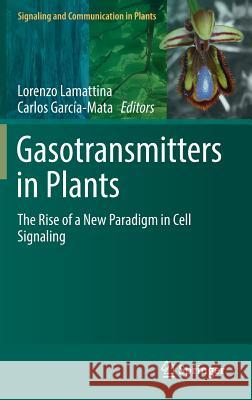
Lorenzo Lamattina; Carlos Garcia-Mata
Gasotransmitters in Plants: The Rise of a New Paradigm in Cell Signaling Lamattina, Lorenzo 9783319407111 Springer - książkaWidoczna okładka, to zdjęcie poglądowe, a rzeczywista szata graficzna może różnić się od prezentowanej.

Gasotransmitters in Plants: The Rise of a New Paradigm in Cell Signaling

ISBN-13: 9783319407111 / Angielski / Twarda / 2016 / 335 str.

Lorenzo Lamattina; Carlos Garcia-Mata
cena 605,23 zł
(netto: 576,41 VAT:  5%)

Najniższa cena z 30 dni: 578,30 zł
Termin realizacji zamówienia:
ok. 22 dni roboczych
Bez gwarancji dostawy przed świętami

Darmowa dostawa!

This book describes the three gasotransmitters nitric oxide (NO), hydrogen sulphide (H2S) and carbon monoxide (CO) and their function as intracellular signalling molecules in plants. Common properties are shared by NO, H2S and CO: they are beneficial at low concentrations but hazardous in higher amounts; they are small molecules of gas; they can freely cross cell membranes; their effects do not rely on receptors; they are generated enzymatically and their production is regulated; their functions can be mimicked by exogenous application; and their cellular effects may or may not be mediated by second messengers, but have specific cellular and molecular targets.In plants, many aspects of the biology of gasotransmitters remain completely unknown and generate intriguing questions, which will be discussed in this book.


Kategorie:
Nauka, Biologia i przyroda
Kategorie BISAC:
Science > Botanika
Science > Biochemia
Science > Cytologia
Wydawca:
Springer
Seria wydawnicza:
Signaling and Communication in Plants
Język:
Angielski
ISBN-13:
9783319407111
Rok wydania:
2016
Wydanie:
2016
Numer serii:
000376382
Ilość stron:
335
Waga:
0.66 kg
Wymiary:
23.39 x 15.6 x 2.06
Oprawa:
Twarda
Wolumenów:
01
Dodatkowe informacje:
Wydanie ilustrowane

Chapter 1: Dr. Wenbiao Shen
Title: ‘Carbon Monoxide: a Ubiquitous Gaseous Signaling Molecule in Plants’

Chapter 2: Dr. Francisco J. Corpas
Title: "Nitric oxide emission and uptake by higher plants"

Chapter 3: Dr. Abir U. Igamberdiev
Title: "Modulation of nitric oxide levels by phytoglobin affects developmental and stress responses in plants "<

Chapter 4: Dr. Christian Lindermayr
Title: “Growth promoting effects of NOx fumigation and phytoglobins”

Chapter 5: Dr. Oscar Lorenzo
Title:‘Nitric oxide (NO), a central gasotransmitter at early plant developmental stages.’


Chapter 6: Dr. Lorenzo Lamattina
Title: ‘Nitric oxide acts at the crossroad between auxin and reactive oxygen species determining the outcome of root growth and development’

Chapter 7: Dr.RanaudBrouquisse
Title:‘Nitric oxide: a multi-task player in plant-microorganism symbioses’

Chapter 8: Dr. David Wendehenne
Title:‘Emerging functions of nitric oxide in plant immunity’

Chapter 9: Dr. Gary Loake
Title: ‘Protein denitrosylation in plant biology’

Chapter 10: Dr. Marek Petrivalsky
Title: ‘Functions and metabolism of S-nitrosothiols and S-nitrosylation of proteins in plants: the role of S-nitrosoglutathione reductase’

Chapter 11: Dr. Hua Zhang
Title: " Hydrogensulfide in plants"

Chapter 12: Dr. Cecilia Gotor
Title: “Regulation of autophagy by hydrogen sulfide"

Chapter 13:Dr. Carlos García-Mata
Title: ‘Deciphering the dialogue between NO and H2S in guard cells’

Chapter 14: Dr. José Olabe
Title: "New features of the NO/H2S crosstalk: a chemical basis".

Dr. Lorenzo Lamattina

Lorenzo Lamattina was born in Argentina, where he studied agronomy and biology and obtained his Ph.D. at Mar del Plata University. He did postdoctoral research at the Institut de Biologie Moleculaire des Plantes (IBMP-CNRS) at Strasbourg, France, where he co-discovered the RNA editing in plant mitochondria. In 1991, he joined the Instituto de Investigaciones Biológicas (IIB), University of Mar del Plata, Argentina, as Professor of Cell and Molecular Biology. He chaired the IIB from 2000 to 2004; he is Director of the Molecular and Integrative Physiology Lab, and Superior researcher at the Argentinian Council of Science and Technology (CONICET).
He teaches cell biology, plant physiology and molecular advancements to undergraduate and graduate students. His research focuses on pathways, targets and the biochemical and molecular mechanisms underpinning nitric oxide (NO)-mediated processes in plants, microalgae, rhizobacteria and lately, honeybee.
His research shed light to the involvement of NO, and the concomitant modulator actions, in many plant physiological aspects like plant nutrition, water deficit, antioxidant capacity, root growth and development, the interaction with plant growth promoting rhizobacteria, cross-talk with phospholipid signaling, etc. More recently, the studies on the interaction with other gasotransmitter, hydrogen sulfide (H2S), opened a new window to understand the complexity of the guard cell physiology and stomatal movement.
Lorenzo Lamattina is a member of several learned societies, and has been honored by the ASPB as Top Author in Central and South America between 2004 and 2013. He won the Konex award 2013 in Biochemistry and Molecular Biology, the award Bunge y Born in Plant Biology 2006 and the John Simon Guggenheim Foundation award 2005 for his work on Nítric Oxide-Mediated Processes in Plants.


Dr. Carlos Garcia-Mata

Carlos García-Mata was born in Argentina. He studied biology and obtained his Ph.D. on the laboratory of Professor Lorenzo Lamattina at Universidad Nacional de Mar del Plata. He did postdoctoral research on the Laboratory of Mike Blatt at Glasgow University, Scotland, where he acquires expertise in the field of plant electrophysiology. He went back to Molecular and Integrative Physiology lab at the Mar del Plata University in 2008. He has an Independent Researcher position at the Argentinian Council of Science and Technology (CONICET).
His research pioneered the studies of the role of Gasotransmitters in guard cell signaling. His publications reporting the Nitric Oxide (NO) and Hydrogen Sulfide (H2S) functions as stomatal closure promoters, as well as the involvement of NO and H2S on the regulation of ion channels in plants have inspired many plant research groups around the world. He also pioneered, in collaboration with Dr. Ana Laxalt, the interplay between NO-dependent and Phosphatidic Acid-dependent signaling in stomatal closure regulation.

This book describes the three gasotransmitters nitric oxide (NO), hydrogen sulphide (H2S) and carbon monoxide (CO) and their function as intracellular signalling molecules in plants.

Common properties are shared by NO, H2S and CO: they are beneficial at low concentrations but hazardous in higher amounts; they are small molecules of gas; they can freely cross cell membranes; their effects do not rely on receptors; they are generated enzymatically and their production is regulated; their functions can be mimicked by exogenous application; and their cellular effects may or may not be mediated by second messengers, but have specific cellular and molecular targets.

In plants, many aspects of the biology of gasotransmitters remain completely unknown and generate intriguing questions, which will be discussed in this book.




Udostępnij

Facebook - konto krainaksiazek.pl


Opinie o Krainaksiazek.pl na Opineo.pl

Partner Mybenefit

Krainaksiazek.pl w programie rzetelna firma Krainaksiaze.pl - płatności przez paypal

Czytaj nas na:

Facebook - krainaksiazek.pl
  • książki na zamówienie
  • granty
  • książka na prezent
  • kontakt
  • pomoc
  • opinie
  • regulamin
  • polityka prywatności

Zobacz:

  • Księgarnia czeska

  • Wydawnictwo Książkowe Klimaty

1997-2025 DolnySlask.com Agencja Internetowa

© 1997-2022 krainaksiazek.pl
     
KONTAKT | REGULAMIN | POLITYKA PRYWATNOŚCI | USTAWIENIA PRYWATNOŚCI
Zobacz: Księgarnia Czeska | Wydawnictwo Książkowe Klimaty | Mapa strony | Lista autorów
KrainaKsiazek.PL - Księgarnia Internetowa

Polityka prywatnosci - link
Krainaksiazek.pl - płatnośc Przelewy24
Przechowalnia Przechowalnia




