• Wyszukiwanie zaawansowane
  • Kategorie
  • Kategorie BISAC
  • Książki na zamówienie
  • Promocje
  • Granty
  • Książka na prezent
  • Opinie
  • Pomoc
  • Załóż konto
  • Zaloguj się

Gas-Phase Combustion Chemistry » książka


zaloguj się | załóż konto
Logo Krainaksiazek.pl

koszyk

konto

szukaj
topmenu
Księgarnia internetowa
Szukaj
Książki na zamówienie
Promocje
Granty
Książka na prezent
Moje konto
Pomoc
 
 
Wyszukiwanie zaawansowane
Pusty koszyk
Bezpłatna dostawa dla zamówień powyżej 20 złBezpłatna dostawa dla zamówień powyżej 20 zł

Kategorie główne

• Nauka
 [2949965]
• Literatura piękna
 [1857847]

  więcej...
• Turystyka
 [70818]
• Informatyka
 [151303]
• Komiksy
 [35733]
• Encyklopedie
 [23180]
• Dziecięca
 [617748]
• Hobby
 [139972]
• AudioBooki
 [1650]
• Literatura faktu
 [228361]
• Muzyka CD
 [398]
• Słowniki
 [2862]
• Inne
 [444732]
• Kalendarze
 [1620]
• Podręczniki
 [167233]
• Poradniki
 [482388]
• Religia
 [509867]
• Czasopisma
 [533]
• Sport
 [61361]
• Sztuka
 [243125]
• CD, DVD, Video
 [3451]
• Technologie
 [219309]
• Zdrowie
 [101347]
• Książkowe Klimaty
 [123]
• Zabawki
 [2362]
• Puzzle, gry
 [3791]
• Literatura w języku ukraińskim
 [253]
• Art. papiernicze i szkolne
 [7933]
Kategorie szczegółowe BISAC

Gas-Phase Combustion Chemistry

ISBN-13: 9780387988610 / Angielski / Twarda / 1999 / 543 str.
William C. Gardiner; W. C. Gardiner
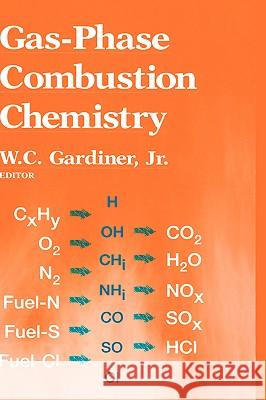
Gas-Phase Combustion Chemistry William C. Gardiner W. C. Gardiner 9780387988610 Springer - książkaWidoczna okładka, to zdjęcie poglądowe, a rzeczywista szata graficzna może różnić się od prezentowanej.

Gas-Phase Combustion Chemistry

ISBN-13: 9780387988610 / Angielski / Twarda / 1999 / 543 str.

William C. Gardiner; W. C. Gardiner
cena 806,99
(netto: 768,56 VAT:  5%)

Najniższa cena z 30 dni: 771,08
Termin realizacji zamówienia:
ok. 22 dni roboczych
Bez gwarancji dostawy przed świętami

Darmowa dostawa!

This book differs from its out of print 1984 predecessorl primarily by lacking theoretical chapters on combustion modeling and elementary reaction rate coeffi cients. While noteworthy advances in these subjects have been made since 1984, it was decided to mention theory in this book only where appropriate in chap ters describing combustion chemistry itself. Otherwise, space limitation would have forced us to discuss only new developments in theoretical areas, thereby abandoning our goal of keeping this book readable by newcomers to the field of combustion modeling. Contemporary modeling and rate coefficient theory as applied to combustion deserve a book of their own. A second omission is a chapter devoted to reviewing the elementary reactions that contribute to the combustion chemistry of hydrogen, carbon monoxide, and hydrocarbon or alternate fuels. Readers looking for guidance to the current knowledge we have in this area will find a broad outline and extensive references to the review and archival literature in Chapter 1, where the essential features of combustion chemistry modeling are surveyed."


Kategorie:
Nauka, Chemia
Kategorie BISAC:
Technology & Engineering > Chemical & Biochemical
Technology & Engineering > Environmental - Pollution Control
Wydawca:
Springer
Język:
Angielski
ISBN-13:
9780387988610
Rok wydania:
1999
Wydanie:
2000
Ilość stron:
543
Waga:
2.13 kg
Wymiary:
23.5 x 15.5
Oprawa:
Twarda
Wolumenów:
01
Dodatkowe informacje:
Bibliografia
Wydanie ilustrowane

1. Combustion Chemistry Modeling.- 1.1. Introduction.- 1.1.1 Terms used in dynamic modeling of chemical reaction.- 1.1.2 Chain reactions.- 1.1.3 Reaction rates, rate laws, and rate coefficients.- 1.1.4 Model constraints.- 1.1.5 Differential equations of chemical reaction without transport.- 1.1.6 Methods of numerical integration.- 1.1.7 Sensitivity and flux analysis of reaction profiles.- 1.2. Oxidation of hydrogen and carbon monoxide.- 1.2.1 Hydrogen oxidation at high temperatures.- 1.2.2 Role of peroxides at low temperatures.- 1.2.3 Carbon monoxide oxidation.- 1.2.4 Rate coefficients of the rate-limiting steps of H2and CO oxidation.- 1.3. Hydrocarbon combustion chemistry.- 1.3.1 General features of hydrocarbon oxidation.- 1.3.2 Low-and intermediate-temperature oxidation.- 1.3.3 High-temperature oxidation.- 1.3.4 Combustion of higher hydrocarbons.- 1.4. Nitrogen, sulfur, and halogens in flames.- 1.4.1 Oxidation of ammonia and hydrogen cyanide.- 1.4.2 Formation and destruction of nitrogen oxides in flames.- 1.4.3 Chemistry of NOxcontrol methods.- 1.4.4 Sulfur.- 1.4.5 Halogens.- 1.5. Combustion of alternative fuels.- 1.5.1 Methanol.- 1.5.2 Ethanol.- 1.5.3 Higher alcohols and MTBE.- 1.6. Combustion inhibitors.- 1.7. Combustion promoters.- 1.8. Reduced chemistry models of combustion.- 1.8.1 One-step chemistry.- 1.8.2 The steady-state approximation and global reaction models.- 1.8.3 Empirically derived global mechanisms.- 1.8.4 Automated mechanism reduction by sensitivity analysis.- 1.8.5 Generalized mechanisms: Combustion chemistry in outline form.- 1.8.6 Local linearization and eigenvalue analysis.- 1.8.7 Algebraic representation of databases generated from detailed models: Repro-models.- 1.8.8 Chemical lumping methods.- 1.9. Resources for combustion chemistry modeling.- 1.9.1 Elementary reaction rate coefficient data.- 1.9.2 Validated reaction mechanisms.- 1.9.3 Combustion modeling software.- 1.9.4 Notes on the mechanism used in this chapter.- 1.10. References.- 2. Combustion Chemistry of Nitrogen.- 2.1. Introduction.- 2.2. Overview of nitrogen chemistry.- 2.2.1 Thermal, or Zeldovich, NO.- 2.2.2 Prompt, or Fenimore, NO.- 2.2.3 The N2O pathway.- 2.2.4 Fuel nitrogen.- 2.2.5 The NNH mechanism.- 2.2.6 Effects of temperature and pressure.- 2.2.7 NO reduction.- 2.3. Unimolecular and chemically activated bimolecular reactions.- 2.3.1 Unimolecular reactions.- 2.3.2 Pressure-dependent bimolecular reactions.- 2.3.3 Quantum Rice—Ramsperger—Kassel theory.- 2.3.4 Implementation of QRRK theory.- 2.4. Analysis of hydrogen atom abstraction reactions.- 2.5. Updated rate coefficients for the H/N/O system.- 2.5.1 O + N2? N + NO.- 2.5.2 NO + Ar ? N + O + Ar.- 2.5.3 N2O + Ar ? N2+ O + Ar.- 2.5.4 O + N2O ? Products.- 2.5.5 NH3+ Ar ? NH2+ H + Ar.- 2.5.6 NH3+ H ? NH2+ H2.- 2.5.7 NH3+ OH ? NH2+ H2O.- 2.5.8 NH3+ O ? NH2+ OH.- 2.6. QRRK treatments.- 2.6.1 H + NH2? NH + H2.- 2.6.2 HO2+ NO ? NO2+ OH.- 2.6.3 H + N2O ? Products.- 2.6.4 H + N2O ? N2+ OH and H + N2O ? HNNO.- 2.6.5 H + N2O ? NH + NO.- 2.6.6 H + N2O ? NNH + O.- 2.6.7 NH + NO ? Products.- 2.6.8 NH + O2? Products.- 2.6.9 NH2+ O2? Products.- 2.6.10 NH2+ HO2? Products.- 2.6.11 NH2+ O ? Products.- 2.6.12 NH2+ OH ? Products.- 2.6.13 NH2+ NH2? Products.- 2.6.14 NH2+ NO ? Products.- 2.6.15 CH3+ NO ? Products.- 2.6.16 CH3+ N ? Products.- 2.6.17 CH3+ NH2? Products.- 2.6.18 CH2+ N2? Products.- 2.6.193CH2+ NO ? Products.- 2.6.20 CH + N2? Products.- 2.6.21 CH + NO ? Products.- 2.7. Other reactions of interest.- 2.7.1 Reactions of N atoms.- 2.7.2 Reactions of NH.- 2.7.3 Reactions of NNH.- 2.7.4 Reactions of N2H2.- 2.7.5 Reactions of H2NN.- 2.7.6 Reactions of N2H3.- 2.7.7 Reactions of N2H4.- 2.7.8 Reactions of NO.- 2.7.9 Reactions of NO2.- 2.7.10 Reactions of N2O.- 2.7.11 Reactions of HNO.- 2.7.12 Reactions of NH2O.- 2.7.13 Reactions of HNOH.- 2.7.14 Reactions of1HNOO.- 2.7.15 Reactions of HONO.- 2.7.16 Reactions of HNO2.- 2.7.17 Reactions of HCN.- 2.7.18 Reactions of HNC.- 2.7.19 Reactions of CN.- 2.7.20 Reactions of H2CN.- 2.7.21 Reactions of HCNH.- 2.7.22 Reactions of HCNN.- 2.7.23 Reactions of H2CNH.- 2.7.24 Reactions of CH3NH.- 2.7.25 Reactions of CH2NH2.- 2.7.26 Reactions of CH3NH2.- 2.7.27 Reactions of NCCN.- 2.7.28 Reactions of NCO.- 2.7.29 Reactions of HCNO.- 2.7.30 Reactions of HOCN.- 2.7.31 Reactions of HNCO.- 2.7.32 Reactions of CH2NO.- 2.7.33 Reactions of CH3NO.- 2.7.34 Reactions of HON.- 2.7.35 Reactions of HCOH.- 2.7.36 Reactions of NH2OH.- 2.7.37 Reactions of NH2NO.- 2.7.38 Reactions of H2NNHO.- 2.7.39 Reactions of CINO.- 2.8. Illustrative modeling results.- 2.8.1 Ammonia oxidation.- 2.8.2 Kinetics of selective noncatalytic reduction of NO.- 2.8.3 Fuel-rich ammonia flames.- 2.8.4 Implications of the O + NNH reaction.- 2.8.5 Nitrogen chemistry in hydrocarbon—air flames.- 2.8.6 General conclusions from modeling tests.- 2.9. Summary.- 2.10. Acknowledgments.- 2.11. References.- 3. Kinetics and Mechanisms of the Oxidation of Gaseous Sulfur Compounds.- 3.1. Introduction.- 3.2. Sulfur emissions.- 3.3. Elementary reactions.- 3.3.1 Reactions of atoms and radicals with sulfur-containing molecules.- 3.3.2 Sulfur radical reactions.- 3.3.3 Sulfuric acid formation.- 3.4. Basic chemistry of sulfur in combustion environments.- 3.4.1 Hydrogen—oxygen flames.- 3.4.2 Hydrocarbon flames.- 3.4.3 Sulfur—nitrogen interactions.- 3.4.4 Sodium—sulfur interactions.- 3.4.5 Sulfur reaction studies in shock tubes.- 3.5. Thermochemistry of sulfur-containing compounds.- 3.6. Observations and conclusions.- 3.6.1 Elementary reactions.- 3.6.2 High-temperature studies.- 3.7. Acknowledgments.- 3.8. References.- 4. Survey of Rate Coefficients in the C-H-Cl-O System.- 4.1. Introduction.- 4.2. Electronic structure and thermochemistry.- 4.3. Characteristic features of elementary reactions of chlorine.- 4.4. Reaction mechanisms.- 4.5. Survey of elementary reactions.- 4.5.1 Reactions of H atoms.- 4.5.2 Reactions of O atoms.- 4.5.3 OH radical reactions.- 4.5.4 Reactions of Cl atoms.- 4.5.5 Reactions of Cl2.- 4.5.6 Unimolecular and pressure-dependent bimolecular reactions.- 4.5.7 Reactions of large molecules and radicals.- 4.6. Data gaps and suggestions for future work.- 4.7. Acknowledgments.- 4.8. References.- 5. Ideal Gas Thermochemical Data for Combustion and Air Pollution Use.- 5.1. Introduction.- 5.2. Thermochemical database.- 5.3. Sources of thermochemical data.- 5.4. Thermochemical polynomials.- 5.5. Calculation procedures.- 5.6. Accuracy of the database.- 5.7. Accuracy of standard enthalpies of formation.- 5.8. Other sources of thermochemical data.- 5.9. Format of the database.- 5.10. Conversion factors.- 5.11. Internet transfer of the database.- 5.12. References.- 5.13. Table of standard enthalpies of formation.


Udostępnij

Facebook - konto krainaksiazek.pl


Opinie o Krainaksiazek.pl na Opineo.pl

Partner Mybenefit

Krainaksiazek.pl w programie rzetelna firma Krainaksiaze.pl - płatności przez paypal

Czytaj nas na:

Facebook - krainaksiazek.pl
  • książki na zamówienie
  • granty
  • książka na prezent
  • kontakt
  • pomoc
  • opinie
  • regulamin
  • polityka prywatności

Zobacz:

  • Księgarnia czeska

  • Wydawnictwo Książkowe Klimaty

1997-2025 DolnySlask.com Agencja Internetowa

© 1997-2022 krainaksiazek.pl
     
KONTAKT | REGULAMIN | POLITYKA PRYWATNOŚCI | USTAWIENIA PRYWATNOŚCI
Zobacz: Księgarnia Czeska | Wydawnictwo Książkowe Klimaty | Mapa strony | Lista autorów
KrainaKsiazek.PL - Księgarnia Internetowa

Polityka prywatnosci - link
Krainaksiazek.pl - płatnośc Przelewy24
Przechowalnia Przechowalnia






