• Wyszukiwanie zaawansowane
  • Kategorie
  • Kategorie BISAC
  • Książki na zamówienie
  • Promocje
  • Granty
  • Książka na prezent
  • Opinie
  • Pomoc
  • Załóż konto
  • Zaloguj się

Food and Beverage Packaging Technology » książka


zaloguj się | załóż konto
Logo Krainaksiazek.pl

koszyk

konto

szukaj
topmenu
Księgarnia internetowa
Szukaj
Książki na zamówienie
Promocje
Granty
Książka na prezent
Moje konto
Pomoc
 
 
Wyszukiwanie zaawansowane
Pusty koszyk
Bezpłatna dostawa dla zamówień powyżej 20 złBezpłatna dostawa dla zamówień powyżej 20 zł

Kategorie główne

• Nauka
 [2950560]
• Literatura piękna
 [1849509]

  więcej...
• Turystyka
 [71097]
• Informatyka
 [151150]
• Komiksy
 [35848]
• Encyklopedie
 [23178]
• Dziecięca
 [617388]
• Hobby
 [139064]
• AudioBooki
 [1657]
• Literatura faktu
 [228597]
• Muzyka CD
 [383]
• Słowniki
 [2855]
• Inne
 [445295]
• Kalendarze
 [1464]
• Podręczniki
 [167547]
• Poradniki
 [480102]
• Religia
 [510749]
• Czasopisma
 [516]
• Sport
 [61293]
• Sztuka
 [243352]
• CD, DVD, Video
 [3414]
• Technologie
 [219456]
• Zdrowie
 [101002]
• Książkowe Klimaty
 [124]
• Zabawki
 [2311]
• Puzzle, gry
 [3459]
• Literatura w języku ukraińskim
 [254]
• Art. papiernicze i szkolne
 [8079]
Kategorie szczegółowe BISAC

Food and Beverage Packaging Technology

ISBN-13: 9781405189101 / Angielski / Twarda / 2011 / 344 str.
Richard Coles;Mark J. Kirwan;¬Abar
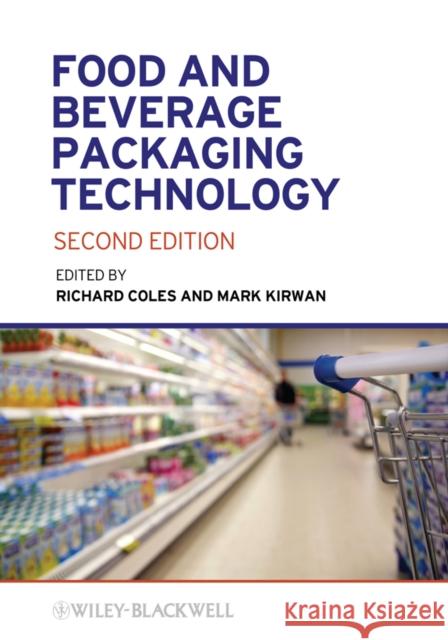
Food and Beverage Packaging Technology Richard Coles Mark J. Kirwan  9781405189101  - książkaWidoczna okładka, to zdjęcie poglądowe, a rzeczywista szata graficzna może różnić się od prezentowanej.

Food and Beverage Packaging Technology

ISBN-13: 9781405189101 / Angielski / Twarda / 2011 / 344 str.

Richard Coles;Mark J. Kirwan;¬Abar
cena 838,36
(netto: 798,44 VAT:  5%)

Najniższa cena z 30 dni: 833,20
Termin realizacji zamówienia:
ok. 30 dni roboczych
Dostawa w 2026 r.

Darmowa dostawa!

Now in a fully revised and updated second edition, this volume provides a contemporary overview of food processing/packaging technologies. It acquaints the reader with food preservation processes, shelf life and logistical considerations, as well as packaging materials, machines and processes necessary for a wide range of packaging presentations. The new edition addresses environmental and sustainability concerns, and also examines applications of emerging technologies such as RFID and nanotechnology.

It is directed at packaging technologists, those involved in the design and development of packaging, users of packaging in food companies and those who specify or purchase packaging.

Key Features: An up-to-date and comprehensive handbook on the most important sector of packaging technology Links methods of food preservation to the packaging requirements of the common types of food and the available food packages Covers all the key packaging materials - glass, plastics and paperboard Fully revised second edition now covers sustainability, nanotechnology and RFID

If all available food packaging systems are listed and related to the materials from which they are made, it becomes clear that the key packaging materials – glass, metal, plastics and paperboard – are competing heavily with each other. There is a battle over which type of container is used for a given application, and it is therefore necessary to consider which materials (or combination of materials) and processes will best serve the market and enhance brand value.

Now in a fully revised and updated second edition, this volume provides a contemporary overview of food processing/packaging technologies. It acquaints the reader with food preservation processes, shelf life and logistical considerations, as well as packaging materials, machines and processes necessary for a wide range of packaging presentations. The new edition addresses environmental and sustainability concerns, and also examines applications of emerging technologies such as RFID and nanotechnology.

It is directed at packaging technologists, those involved in the design and development of packaging, users of packaging in food companies and those who specify or purchase packaging. The book will also be of interest to manufacturers of packaging machinery.


Kategorie:
Nauka, Biologia i przyroda
Kategorie BISAC:
Technology & Engineering > Food Science - General
Język:
Angielski
ISBN-13:
9781405189101
Rok wydania:
2011
Wydanie:
Revised
Ilość stron:
344
Waga:
0.90 kg
Wymiary:
24.64 x 17.53 x 2.29
Oprawa:
Twarda
Wolumenów:
01
Dodatkowe informacje:
Bibliografia
Wydanie ilustrowane

"This book will help those in industry who need to know about the packaging needs of the products and to understand how packaging needs are met in manufacture, storage, distribution and retailing." ( South African Food Science and Technology , 1 November 2013) "On balance however, this is an excellent introductory book covering all the basic principles, and it achieves this goal very well." ( Food Science and Technology , 2012) "To sum up, "Food and Beverage Packaging Technology" makes an excellent companion book for packaging professionals including specifiers and marketers: a reliable guide for anyone needing to find their way around a complex industry." (Packaging Films, 2012)

Preface.Contributors.1 Introduction (Richard Coles).1.1 Introduction.1.2 Packaging developments - an historical and future perspective.1.3 Role of packaging for enhanced sustainability of food supply.1.4 Definitions and functions of packaging.1.5 Packaging strategy.1.6 Packaging design and development.1.7 Conclusion.References.Websites.2 Food Biodeterioration and Methods of Preservation (Gary S. Tucker).2.1 Introduction.2.2 Agents of food biodeterioration.2.3 Food preservation methods.References.3 Packaged Product Quality and Shelf Life (Helen Brown, James Williams and Mark Kirwan).3.1 Introduction.3.2 Factors affecting product quality and shelf life.3.3 Chemical/biochemical processes.3.4 Microbiological processes.3.5 Physical and physico-chemical processes.3.6 Migration from packaging to foods.3.7 Conclusion.References.4 Logistical Packaging for Food Marketing Systems (Diana Twede and Bruce Harte).4.1 Introduction.4.2 Functions of logistical packaging.4.3 Logistics' activity-specific and integration issues.4.4 Distribution performance testing.4.5 Packaging materials and systems.4.6 Conclusion.References.Further reading.5 Metal Packaging (Bev Page, Mike Edwards and Nick May).5.1 Overview of market for metal cans.5.2 Container performance requirements.5.3 Container designs.5.4 Raw materials for can-making.5.5 Can-making processes.5.6 End-making processes.5.7 Coatings, film laminates and inks.5.8 Processing of food and drinks in metal packages.5.9 Shelf life of canned foods.5.10 Internal corrosion.5.11 Stress corrosion cracking.5.12 Environmental stress cracking corrosion of aluminium alloy beverage can ends.5.13 Sulphur staining.5.14 External corrosion.5.15 Conclusion.References.Further reading.6 Packaging of Food in Glass Containers (Peter Grayhurst and Patrick J. Girling).6.1 Introduction.6.2 Attributes of food packaged in glass containers.6.3 Glass and glass container manufacture.6.4 Closure selection.6.5 Thermal processing of glass packaged foods.6.6 Plastic sleeving and decorating possibilities.6.7 Strength in theory and practice.6.8 Glass pack design and specification.6.9 Packing - due diligence in the use of glass containers.6.10 Environmental profile.6.11 Glass as a marketing tool.References.Further reading.7 Plastics in Food Packaging (Mark J. Kirwan, Sarah Plant and John W. Strawbridge).7.1 Introduction.7.2 Manufacture of plastics packaging.7.3 Types of plastic used in packaging.7.4 Coating of plastic films - types and properties.7.5 Secondary conversion techniques.7.6 Printing.7.7 Printing and labelling of rigid plastic containers.7.8 Food contact and barrier properties.7.9 Sealability and closure.7.10 How to choose.7.11 Retort pouch.7.12 Environmental and waste management issues.References.Further reading.Websites.Appendices.8 Paper and Paperboard Packaging (M.J. Kirwan).8.1 Introduction.8.2 Paper and paperboard - fibre sources and fibre separation (pulping).8.3 Paper and paperboard manufacture.8.4 Packaging papers and paperboards.8.5 Properties of paper and paperboard.8.6 Additional functional properties of paper and paperboard.8.7 Design for paper and paperboard packaging.8.8 Package types.8.9 Systems.8.10 Environmental profile.8.11 Carbon footprint.References.Further reading.Websites.9 Active Packaging (B.P.F. Day and L. Potter).9.1 Introduction.9.2 Oxygen scavengers.9.3 Carbon dioxide scavenger and emitters.9.4 Ethylene scavengers.9.5 Ethanol emitters.9.6 Moisture absorbers.9.7 Flavour/odour absorbers.9.8 Lactose and cholesterol removers.9.9 Anti-oxidant release.9.10 Temperature-controlled packaging.9.11 Regulatory issues, consumer acceptability and equipment considerations.9.12 Conclusion.References.10 Modified Atmosphere Packaging (Michael Mullan and Derek McDowel).Section A: Map gases packaging materials and equipment.10.A1 Introduction.10.A1.1 Historical development.10.A2 Gaseous environment.10.A2.1 Gases used in MAP.10.A2.2 Effect of the gaseous environment on the activity of bacteria, yeasts and moulds.10.A2.3 Effect of the gaseous environment on the chemical biochemical and physical properties of foods.10.A2.4 Physical spoilage.10.A3 Packaging materials.10.A3.1 Main plastics used in MAP.10.A3.2 Selection of plastic packaging materials.10.A4 Modified packaging atmosphere machines.10.A4.1 Chamber machines.10.A4.2 Snorkel machines.10.A4.3 Form-fill-seal machines.10.A4.4 Preformed trays.10.A4.5 Modification of the pack atmosphere.10.A4.6 Sealing.10.A4.7 Cutting.10.A4.8 Additional operations.10.A5 Quality assurance of map.10.A5.1 Heat seal integrity.10.A5.2 Measurement of transmission rate and permeability in packaging films.10.A5.3 Determination of headspace gas composition.Section B: Main food types.10.B1 Raw red meat.10.B2 Raw poultry.10.B3 Cooked, cured and processed meat products.10.B4 Fish and fish products.10.B5 Fruits and vegetables.10.B6 Dairy products.References.11 Bioplastics (Jim Song, Martin Kay and Richard Coles).11.1 Introduction.11.2 Definitions.11.3 Bioplastics and carbon.11.4 Bioplastics - overview of material types.11.5 Waste management options for bioplastics.11.6 Bioplastics - challenges for a growing market.11.7 Conclusion.References.Websites.Index.A colour plate section.

Richard Coles is a Consultant in Food Packaging, based in London, UKMark Kirwan is a Consultant and Lecturer in Packaging Technology, based in London, UK


Udostępnij

Facebook - konto krainaksiazek.pl


Opinie o Krainaksiazek.pl na Opineo.pl

Partner Mybenefit

Krainaksiazek.pl w programie rzetelna firma Krainaksiaze.pl - płatności przez paypal

Czytaj nas na:

Facebook - krainaksiazek.pl
  • książki na zamówienie
  • granty
  • książka na prezent
  • kontakt
  • pomoc
  • opinie
  • regulamin
  • polityka prywatności

Zobacz:

  • Księgarnia czeska

  • Wydawnictwo Książkowe Klimaty

1997-2025 DolnySlask.com Agencja Internetowa

© 1997-2022 krainaksiazek.pl
     
KONTAKT | REGULAMIN | POLITYKA PRYWATNOŚCI | USTAWIENIA PRYWATNOŚCI
Zobacz: Księgarnia Czeska | Wydawnictwo Książkowe Klimaty | Mapa strony | Lista autorów
KrainaKsiazek.PL - Księgarnia Internetowa

Polityka prywatnosci - link
Krainaksiazek.pl - płatnośc Przelewy24
Przechowalnia Przechowalnia






