• Wyszukiwanie zaawansowane
  • Kategorie
  • Kategorie BISAC
  • Książki na zamówienie
  • Promocje
  • Granty
  • Książka na prezent
  • Opinie
  • Pomoc
  • Załóż konto
  • Zaloguj się

Food Materials Science and Engineering » książka


zaloguj się | załóż konto
Logo Krainaksiazek.pl

koszyk

konto

szukaj
topmenu
Księgarnia internetowa
Szukaj
Książki na zamówienie
Promocje
Granty
Książka na prezent
Moje konto
Pomoc
 
 
Wyszukiwanie zaawansowane
Pusty koszyk
Bezpłatna dostawa dla zamówień powyżej 20 złBezpłatna dostawa dla zamówień powyżej 20 zł

Kategorie główne

• Nauka
 [2944077]
• Literatura piękna
 [1814251]

  więcej...
• Turystyka
 [70679]
• Informatyka
 [151074]
• Komiksy
 [35590]
• Encyklopedie
 [23169]
• Dziecięca
 [611005]
• Hobby
 [136031]
• AudioBooki
 [1718]
• Literatura faktu
 [225599]
• Muzyka CD
 [379]
• Słowniki
 [2916]
• Inne
 [443741]
• Kalendarze
 [1187]
• Podręczniki
 [166463]
• Poradniki
 [469211]
• Religia
 [506887]
• Czasopisma
 [481]
• Sport
 [61343]
• Sztuka
 [242115]
• CD, DVD, Video
 [3348]
• Technologie
 [219293]
• Zdrowie
 [98602]
• Książkowe Klimaty
 [124]
• Zabawki
 [2385]
• Puzzle, gry
 [3504]
• Literatura w języku ukraińskim
 [260]
• Art. papiernicze i szkolne
 [7151]
Kategorie szczegółowe BISAC

Food Materials Science and Engineering

ISBN-13: 9781405199223 / Angielski / Twarda / 2012 / 414 str.
B Bhandari;¬Abar;¬Abar
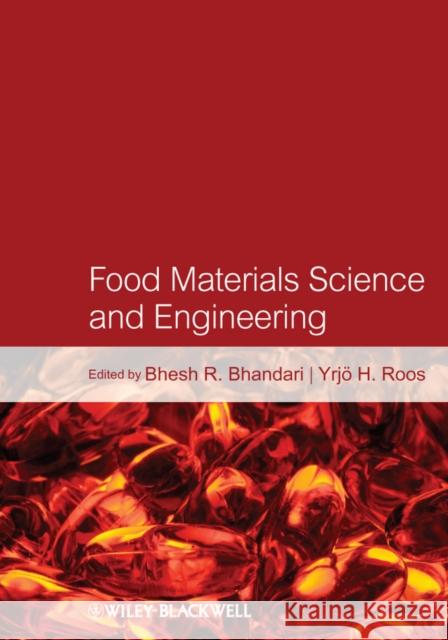
Food Materials Science and Engineering B Bhandari   9781405199223  - książkaWidoczna okładka, to zdjęcie poglądowe, a rzeczywista szata graficzna może różnić się od prezentowanej.

Food Materials Science and Engineering

ISBN-13: 9781405199223 / Angielski / Twarda / 2012 / 414 str.

B Bhandari;¬Abar;¬Abar
cena 798,84
(netto: 760,80 VAT:  5%)

Najniższa cena z 30 dni: 789,09
Termin realizacji zamówienia:
ok. 30 dni roboczych.

Darmowa dostawa!

Food Materials Science and Engineering covers a comprehensive range of topics in relation to food materials, their properties and characterisation techniques, thus offering a new approach to understanding food production and quality control. The opening chapter will define the scope and application of food materials science, explaining the relationship between raw material structure and processing and quality in the final product. Subsequent chapters will examine the structure of food materials and how they relate to quality, sensory perception, processing attributes and nutrient delivery. The authors also address applications of nanotechnology to food and packaging science. Methods of manufacturing food systems with improved shelf-life and quality attributes will be highlighted in the book.


Kategorie:
Nauka, Biologia i przyroda
Kategorie BISAC:
Technology & Engineering > Food Science - General
Technology & Engineering > Agriculture - Animal Husbandry
Język:
Angielski
ISBN-13:
9781405199223
Rok wydania:
2012
Ilość stron:
414
Waga:
0.97 kg
Wymiary:
24.38 x 17.78 x 2.29
Oprawa:
Twarda
Wolumenów:
01
Dodatkowe informacje:
Bibliografia
Wydanie ilustrowane

Preface ix

List of Contributors xi

1 Food Materials Science and Engineering: An Overview 1
Bhesh Bhandari and Yrjö H. Roos

1.1 Introduction 1

1.2 Molecular basis of food materials 4

1.3 Observation of materials at various size ranges and size–property

relationship 5

1.4 Amorphous and crystalline structures of materials 7

1.5 Gel structures of food materials 10

1.6 Interfacial properties of the food materials 14

1.7 Application of materials science in food design and development

of engineered food materials 21

1.8 Conclusion 23

References 23

2 Micro to Macro Level Structures of Food Materials 26
Deepak Bhopatkar, Bruce R. Hamaker and Osvaldo H. Campanella

2.1 Microstructure definitions 26

2.2 Measurement of microstructures/nanostructures 28

2.3 The relationship between structure and quality 31

2.4 Microstructure and emulsions 35

2.5 Structure and sensory perception 37

2.6 Process to control the structure of food materials 39

2.7 Concluding remarks 45

References 45

3 Characterisation Techniques in Food Materials Science 52
Elliot Paul Gilbert, Amparo Lopez–Rubio and Michael J. Gidley

3.1 Introduction 52

3.2 Nuclear Magnetic Resonance (NMR) 53

3.3 Fourier Transform Infra–Red (FT–IR) 59

3.4 X–ray powder diffraction 64

3.5 Small angle neutron & X–ray scattering (SANS and SAXS) 68

3.6 Confocal microscopy 78

3.7 Scanning electron microscopy 81

3.8 Atomic Force Microscopy (AFM) 84

3.9 Summary 87

References 87

4 Interfacial Phenomena in Structured Foods 94
Matt Golding

4.1 Introduction 94

4.2 Visualisation of surface structures 95

4.3 Fundamentals of interfacial assembly 102

4.4 The dynamic interface 108

4.5 Conclusions and future directions 130

References 131

5 Phase and State Transitions and Related Phenomena in Foods 136
Yrjö H. Roos

5.1 Introduction 136

5.2 Phase and state transitions 137

5.3 Food properties and formulation 144

5.4 Conclusions 148

References 149

6 Food Biopolymer Gels, Microgel and Nanogel Structures, Formation and Rheology 151
Jason R. Stokes

6.1 Introduction 151

6.2 Rheology of food gels: yielding and gelling soft matter 152

6.3 Formation and structure of biopolymer network gels 153

6.4 Formation and structure of micro– and nano–gel particles 159

6.5 Structure rheology relationships of food gels and food gel structures 165

6.6 Outlook 171

Acknowledgements 172

References 172

7 Materials Science Approaches Towards Food Design 177
Job Ubbink

7.1 Introduction 177

7.2 Consumer–driven food design 177

7.3 Food design based on the supplemented state diagram 179

7.4 Design of foods and encapsulation systems in the glassy state 191

7.5 Retro–design for the delivery of bioactive ingredients in foods 195

7.6 Concluding remarks 201

References 202

8 Food Structures and Delivery of Nutrients 204
Ranjan Sharma

8.1 Introduction 204

8.2 Nutrient digestion and absorption in the gastrointestinal tract 205

8.3 Nutrients and their delivery challenges 208

8.4 Essential fatty acids 209

8.5 Antioxidants including vitamins and minerals 209

8.6 Probiotic bacteria 211

8.7 Plant sterols 211

8.8 Food structures and technologies for protection and delivery

of nutrients 212

8.9 Protein–based structures for nutrient delivery 212

8.10 Microencapsulation 214

8.11 Fluidised bed coating 214

8.12 Spray drying 215

8.13 Spray chilling 215

8.14 Extrusion 216

8.15 Nanoparticles and emulsions 216

8.16 Food structure and bio–accessibility of nutrients 217

8.17 Conclusions and future directions 218

References 218

9 Effects of Emerging Processing Technologies on Food Material Properties 222
Henry Jaeger, Kai Reineke, Katharina Schoessler and Dietrich Knorr

9.1 Introduction 222

9.2 Pulsed electric fields (PEF) effect on food material properties 223

9.3 Isostatic high pressure (HP) effects on food material properties 237

9.4 Ultrasound (US) effect on food material properties 247

9.5 Conclusion and future trends 253

References 254

10 Food Protein Nanoparticles: Formation, Properties and Applications 263
Simon M. Loveday, M. A. Rao and Harjinder Singh

10.1 Introduction 263

10.2 Characterising the rheological properties of gels and dispersions 264

10.3 Formation and functionality of whey protein nanoparticles 265

10.4 Nanofibrils from food proteins 269

10.5 Protein polysaccharide complexes 285

10.6 Concluding remarks 287

Notation 288

References 289

11 Nanocomposites for Food and Beverage Packaging Materials 295
Maria D. Sanchez Garcia and Jose M. Lagaron

11.1 Introduction 295

11.2 Barrier properties in packaging 298

11.3 Nanofillers for nanocomposite packaging materials 305

11.4 Examples of nanocomposites and their properties 309

11.5 Nanobiocomposites: concepts and barrier properties 311

11.6 Future trends 315

References 315

12 Encapsulation Techniques for Food Ingredient Systems 320
Zhongxiang Fang and Bhesh Bhandari

12.1 Introduction 320

12.2 Microencapsulation techniques 323

12.3 Conclusion 343

References 344

13 Food Texture is Only Partly Rheology 349
Olena Kravchuk, Peter Torley and Jason R. Stokes

13.1 Introduction 349

13.2 Texture is a multi–parameter sensory property 350

13.3 Texture research is driven by consumer food acceptance 351

13.4 Current directions in texture research 352

13.5 Texture receptors 354

13.6 Oral processing 355

13.7 Role of saliva in sensory texture 357

13.8 Instrumental methods for texture quantification 359

13.9 Sensory evaluations of texture 362

13.10 Statistical methods in texture studies 365

13.11 Summary 368

References 369

14 Materials Science of Freezing and Frozen Foods 373
Yrjö H. Roos

14.1 Introduction 373

14.2 Freezing of simple solutions 374

14.3 Nucleation and crystal growth 375

14.4 Materials science aspects of nucleation in food freezing 377

14.5 Time–dependent ice formation 380

14.6 Manipulation of nucleation and crystal size 381

14.7 Recrystallisation in frozen foods 382

14.8 Conclusions 384

References 385

Index 387

Bhesh Bhandari is Professor of Food Processing Technology and Engineering in the School of Agriculture and Food Sciences, at the University of Queensland, Australia.

Yrjö H. Roos is Professor of Food Technology in the School of Food and Nutritional Sciences, at University College Cork, Ireland.

Food materials science combines food physics, food chemistry and food processing and engineering into a single domain. Materials science involves the interdisciplinary study of the properties and behaviours of materials, and is a relatively new approach in the food and agricultural commodities sector. Its importance is increasingly recognised, however, driven by advances in disciplines such as polymer and biomedical sciences. The availability of many advanced material characterisation techniques, and the improved affordability of the required equipment, widens research possibilities in this area.

Food Materials Science and Engineering looks at new techniques which can be used in the food industry to add value to food materials, ingredients and foods. Adding value to food materials is of vital commercial importance to the modern food industry as it seeks to meet consumer satisfaction, food safety and nutrient delivery in a rapidly advancing environment. The materials science approach has the potential to surpass traditional food science techniques in studying the structure and behaviour of food at the macro–, micro– and nano–levels, as well as developing our understanding of how nutrients are released and delivered. It is thought that this new approach will lead to improvements in the quality, shelf life and nutritional value of food products as well as offering the potential to develop new generation of products.

This book will be invaluable in helping students and food scientists to understand the practical applications of materials science to food and biological materials. It introduces the historical background of the materials science and its relevance to food materials science, from the molecular basis upwards. Food materials properties, processing and performance are covered in depth, with reference to microstructures and sensory properties. The book also includes chapters on cutting edge topics, including phase transitions and the application of nanotechnology to food and food packaging.


Udostępnij

Facebook - konto krainaksiazek.pl


Opinie o Krainaksiazek.pl na Opineo.pl

Partner Mybenefit

Krainaksiazek.pl w programie rzetelna firma Krainaksiaze.pl - płatności przez paypal

Czytaj nas na:

Facebook - krainaksiazek.pl
  • książki na zamówienie
  • granty
  • książka na prezent
  • kontakt
  • pomoc
  • opinie
  • regulamin
  • polityka prywatności

Zobacz:

  • Księgarnia czeska

  • Wydawnictwo Książkowe Klimaty

1997-2026 DolnySlask.com Agencja Internetowa

© 1997-2022 krainaksiazek.pl
     
KONTAKT | REGULAMIN | POLITYKA PRYWATNOŚCI | USTAWIENIA PRYWATNOŚCI
Zobacz: Księgarnia Czeska | Wydawnictwo Książkowe Klimaty | Mapa strony | Lista autorów
KrainaKsiazek.PL - Księgarnia Internetowa

Polityka prywatnosci - link
Krainaksiazek.pl - płatnośc Przelewy24
Przechowalnia Przechowalnia






