• Wyszukiwanie zaawansowane
  • Kategorie
  • Kategorie BISAC
  • Książki na zamówienie
  • Promocje
  • Granty
  • Książka na prezent
  • Opinie
  • Pomoc
  • Załóż konto
  • Zaloguj się

Flash Chemistry: Fast Organic Synthesis in Microsystems » książka

zaloguj się | załóż konto
Logo Krainaksiazek.pl

koszyk

konto

szukaj
topmenu
Księgarnia internetowa
Szukaj
Książki na zamówienie
Promocje
Granty
Książka na prezent
Moje konto
Pomoc
 
 
Wyszukiwanie zaawansowane
Pusty koszyk
Bezpłatna dostawa dla zamówień powyżej 20 złBezpłatna dostawa dla zamówień powyżej 20 zł

Kategorie główne

• Nauka
 [2950560]
• Literatura piękna
 [1849509]

  więcej...
• Turystyka
 [71097]
• Informatyka
 [151150]
• Komiksy
 [35848]
• Encyklopedie
 [23178]
• Dziecięca
 [617388]
• Hobby
 [139064]
• AudioBooki
 [1657]
• Literatura faktu
 [228597]
• Muzyka CD
 [383]
• Słowniki
 [2855]
• Inne
 [445295]
• Kalendarze
 [1464]
• Podręczniki
 [167547]
• Poradniki
 [480102]
• Religia
 [510749]
• Czasopisma
 [516]
• Sport
 [61293]
• Sztuka
 [243352]
• CD, DVD, Video
 [3414]
• Technologie
 [219456]
• Zdrowie
 [101002]
• Książkowe Klimaty
 [124]
• Zabawki
 [2311]
• Puzzle, gry
 [3459]
• Literatura w języku ukraińskim
 [254]
• Art. papiernicze i szkolne
 [8079]
Kategorie szczegółowe BISAC

Flash Chemistry: Fast Organic Synthesis in Microsystems

ISBN-13: 9780470035863 / Angielski / Twarda / 2008 / 248 str.
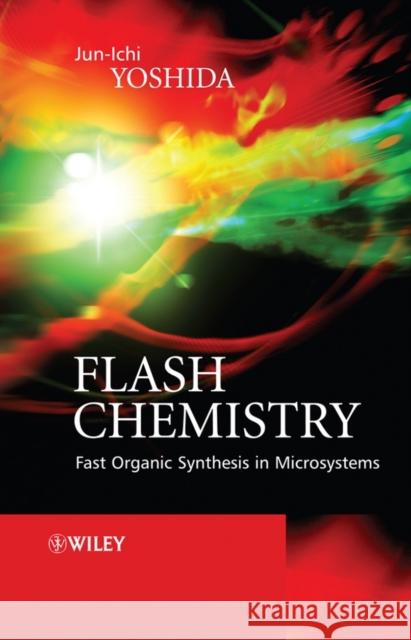
Jun-ichi Yoshida; Junichi Yoshida
Flash Chemistry: Fast Organic Synthesis in Microsystems Yoshida, Jun-Ichi 9780470035863 John Wiley & Sons - książkaWidoczna okładka, to zdjęcie poglądowe, a rzeczywista szata graficzna może różnić się od prezentowanej.

Flash Chemistry: Fast Organic Synthesis in Microsystems

ISBN-13: 9780470035863 / Angielski / Twarda / 2008 / 248 str.

Jun-ichi Yoshida; Junichi Yoshida
cena 663,92
(netto: 632,30 VAT:  5%)

Najniższa cena z 30 dni: 661,19
Termin realizacji zamówienia:
ok. 30 dni roboczych
Dostawa w 2026 r.

Darmowa dostawa!

Have you ever wished you could speed up your organic syntheses without losing control of the reaction? Flash Chemistry is a new concept which offers an integrated scheme for fast, controlled organic synthesis. It brings together the generation of highly reactive species and their reactions in Microsystems to enable highly controlled organic syntheses on a preparative scale in timescales of a few seconds or less. Flash Chemistry: Fast Organic Synthesis in microsystems is the first book to describe this exciting new technique, with chapters covering:

  • an introduction to flash chemistry
  • reaction dynamics: how fast is the act of chemical transformation, what is the rate of reaction, and what determines the selectivity of a reaction?
  • examples of why flash chemistry is needed: the rapid construction of chemical libraries, rapid synthesis of radioactive PET probes, and on-demand rapid synthesis in industry
  • the generation of highly reactive species through thermal, microwave, chemical, photochemical, and electrochemical activation
  • microsystems: What are microsystems and how are they made? Why is size so important? What are the characteristic features of microsystems?
  • conduction and control of extremely fast reactions using microsystems
  • applications of flash chemistry in organic synthesis
  • polymer synthesis based on flash chemistry
  • industrial applications of flash chemistry
Flash Chemistry: Fast Organic Synthesis in Microsystems is an essential introduction to anyone working in organic synthesis, process chemistry, chemical engineering and physical organic chemistry concerned with fundamental aspects of chemical reactions an d synthesis and the production of organic compounds.

Kategorie:
Nauka, Chemia
Kategorie BISAC:
Science > Chemia - Organiczna
Science > Chemia - Fizyczna
Science > Research & Methodology
Wydawca:
John Wiley & Sons
Język:
Angielski
ISBN-13:
9780470035863
Rok wydania:
2008
Ilość stron:
248
Waga:
0.52 kg
Wymiary:
23.37 x 15.75 x 1.78
Oprawa:
Twarda
Wolumenów:
01
Dodatkowe informacje:
Bibliografia
Wydanie ilustrowane

?The book provides a nice, self–consistent overview of the motivation for flow chemistry, the basic principles of chemical reactions and organic synthesis, and an examination of the concepts of fluid flow, heat and mass transfer, and devices.? ( JACS , August 2009)

"I found the book very readable and would recommend it to anyone wishing to learn about the benefits of microreactor technology.... The author has structured the book well; the introductory chapters clearly establish the basic concepts of microreactor technology." (Chemistry World, March 2009)

Preface.

1. Introduction.

1.1 Flask Chemistry.

1.2 Flash Chemistry.

1.3 Flask Chemistry or Flash Chemistry.

2. The Background to Flash Chemistry.

2.1 How do Chemical Reactions Take Place?

3. What is Flash Chemistry?

4. Why is Flash Chemistry Needed?

4.1 Chemical Reaction, an Extremely Fast Process at Molecular Level.

4.2 Rapid Construction of Chemical Libraries.

4.3 Rapid Synthesis of Radioactive Position Emission Tomography Probes.

4.4 On–Demand Rapid Synthesis in Industry.

4.5 Conclusions.

5. Methods of Activating Molecules.

5.1 Thermal Activation of Organic Molecules.

5.2 Photochemical Activation.

5.3 Electrochemical Activation.

5.4 Chemical Activation.

5.5 Accumulation of Reactive Species.

5.6 Continuous Generation of Reactive Species in a Flow System.

5.7 Interconversion Between Reactive Species.

5.8 Conclusions.

6. Control of Extremely Fast Reactions.

6.1 Mixing.

6.2 Temperature Control.

6.3 Residence Time Control.

6.4 Conclusions.

7. Microfluidic Devices and Microflow Systems.

7.1 Brief History.

7.2 Characteristic Features of Microflow Systems.

7.3 Microstructured Fluidic Devices.

7.4 Conclusions.

8. Applications of Flash Chemistry in Organic Synthesis.

8.1 Highly Exothermic Reactions that are Difficult to Control in Macrobatch Reactors.

8.2 Reactions in Which a Reactive Intermediate Easily Decomposes in Macrobatch Reactors.

8.3 Reactions with Products of Which Easily Decompose in Macrobatch Reactors.

8.4 Reactions in Which Undesired By–products are Produced in the Subsequent Reactions In Macrobatch Reactors.

8.5 Reactions That Can Be Accelerated Using Microflow Systems.

8.6 Conclusions.

9. Polymer Synthesis Based on Flash Chemistry.

9.1 Introduction.

9.2 Chain–Growth Polymerization and Step–Growth Polymerization.

9.3 Molecular Weight and Molecular–Weight Distribution.

9.4 Cationic Polymerization.

9.5 Free–Radical Polymerization.

9.6 Conclusions.

10. Industrial Applications of Flash Chemistry.

10.1 Synthesis of Diarylethene as Photochromic Compound (Micrometer–Size Single–Channel Reactor).

10.2 Synthesis of Pharmaceutically Interesting Spiro Lactone Fragment Of Nueropeptide Y (Millimeter–Size Channel–Single Reactor).

10.3 Grignard Exchange Process (Internal numbering–up).

10.4 Radical Polymerization Process (Numbering–up).

10.5 Other examples of Industrial Applications of Flash Chemistry .

10.6 Flash Chemistry as a Powerful Means of Sustainable Chemical Synthesis.

10.7 Conclusions.

11. Outlook of Flash Chemistry.

Index.

Professor Yoshida is head of the synthetic organic chemistry group at Kyoto University Graduate School of Engineering. His research activities concentrate on the development of methods to control and direct organic reactions.

Have you ever wished you could speed up your organic syntheses without losing control of the reaction? Flash Chemistry  is a new concept which offers an integrated scheme for fast, controlled organic synthesis. It brings together the generation of highly reactive species and their reactions in Microsystems to enable highly controlled organic syntheses on  a preparative scale in timescales of a few seconds or less.

Flash Chemistry: Fast Organic Synthesis in microsystems is the first book to describe this exciting new technique, with chapters covering:

  • an introduction to flash chemistry
  • reaction dynamics: how fast is the act of chemical transformation, what is the rate of reaction, and what determines the selectivity of a reaction?
  • examples of why flash chemistry is needed: the rapid construction of chemical libraries, rapid synthesis of radioactive PET probes, and on–demand rapid synthesis in industry
  • the generation of highly reactive species through thermal, microwave, chemical, photochemical, and electrochemical activation
  • microsystems: What are microsystems and how are they made? Why is size so important? What are the characteristic features of microsystems?
  • conduction and control of extremely fast reactions using microsystems
  • applications of flash chemistry in organic synthesis
  • polymer synthesis based on flash chemistry
  • industrial applications of flash chemistry

Flash Chemistry: Fast Organic Synthesis in Microsystems is an essential introduction to anyone working in organic synthesis, process chemistry, chemical engineering and physical organic chemistry concerned with fundamental aspects of chemical reactions an d synthesis and the production of organic compounds.


Udostępnij

Facebook - konto krainaksiazek.pl


Opinie o Krainaksiazek.pl na Opineo.pl

Partner Mybenefit

Krainaksiazek.pl w programie rzetelna firma Krainaksiaze.pl - płatności przez paypal

Czytaj nas na:

Facebook - krainaksiazek.pl
  • książki na zamówienie
  • granty
  • książka na prezent
  • kontakt
  • pomoc
  • opinie
  • regulamin
  • polityka prywatności

Zobacz:

  • Księgarnia czeska

  • Wydawnictwo Książkowe Klimaty

1997-2025 DolnySlask.com Agencja Internetowa

© 1997-2022 krainaksiazek.pl
     
KONTAKT | REGULAMIN | POLITYKA PRYWATNOŚCI | USTAWIENIA PRYWATNOŚCI
Zobacz: Księgarnia Czeska | Wydawnictwo Książkowe Klimaty | Mapa strony | Lista autorów
KrainaKsiazek.PL - Księgarnia Internetowa

Polityka prywatnosci - link
Krainaksiazek.pl - płatnośc Przelewy24
Przechowalnia Przechowalnia






