Exploring Death: Understanding the Life of Neolithic Societies in the Western Mediterranean » książka





Exploring Death: Understanding the Life of Neolithic Societies in the Western Mediterranean
ISBN-13: 9798888571415 / Angielski / Twarda / 2025 / 304 str.
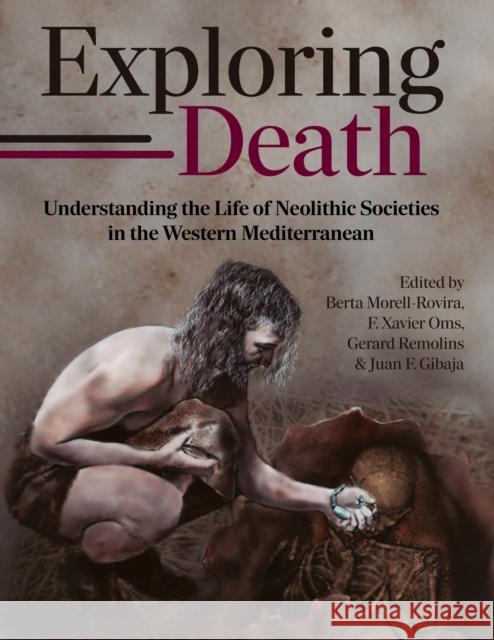
Since the dawn of archaeology, the study of funerary contexts has provided invaluable insights into past societies, a trend that persists in contemporary research. Ongoing discoveries, site reevaluations, and advancements in techniques like DNA analysis continually reshape our understanding of the past. In the specific contexts we are addressing – the emergence of the first farming and herding communities in the Western Mediterranean – few regions in Europe display such systematic funerary practices. A notable example is the “Pit Burial” horizon in the northeastern Iberian Peninsula. Approximately 6,500 years ago in this area, there was a significant increase in the number of found inhumations, with some clustering in cemeteries containing several dozen individuals. Despite sporadic mentions in international publications, the details of the “Pit Burials” horizon funerary practices – such as burial locations, characteristics and performed analysis – are generally not well known, primarily because most of the publications have been presented in Catalan or Spanish. This limits awareness of one of the best-documented archaeological records shedding light on Neolithic communities in the Western Mediterranean. Over a century, the northeastern Iberian Peninsula has yielded numerous Neolithic burials, totaling over 650 graves, predominantly featuring single inhumations. Many of these graves, excavated in ground pits, remain remarkably intact, facilitating interpretations of burial treatments and grave goods, indicative of time and effort invested in acquisition and production. Furthermore, this was also a period of well-established social networks, facilitating the distribution of materials such as flint, obsidian, or jadeite for crafting lithic tools, and variscite for producing ornaments across extensive territories spanning hundreds of kilometers. These networks had an impact on the social, economic, and ideological organization of these communities, as well as their interactions with other European populations. This interconnected world left archaeological traces, evident in the early stages of subsequent megalithic developments.
Since the dawn of archaeology, the study of funerary contexts has provided invaluable insights into past societies, a trend that persists in contemporary research. Ongoing discoveries, site reevaluations, and advancements in techniques like DNA analysis continually reshape our understanding of the past. In the specific contexts we are addressing – the emergence of the first farming and herding communities in the Western Mediterranean – few regions in Europe display such systematic funerary practices. A notable example is the “Pit Burial” horizon in the northeastern Iberian Peninsula. Approximately 6,500 years ago in this area, there was a significant increase in the number of found inhumations, with some clustering in cemeteries containing several dozen individuals. Despite sporadic mentions in international publications, the details of the “Pit Burials” horizon funerary practices – such as burial locations, characteristics and performed analysis – are generally not well known, primarily because most of the publications have been presented in Catalan or Spanish. This limits awareness of one of the best-documented archaeological records shedding light on Neolithic communities in the Western Mediterranean. Over a century, the northeastern Iberian Peninsula has yielded numerous Neolithic burials, totaling over 650 graves, predominantly featuring single inhumations. Many of these graves, excavated in ground pits, remain remarkably intact, facilitating interpretations of burial treatments and grave goods, indicative of time and effort invested in acquisition and production. Furthermore, this was also a period of well-established social networks, facilitating the distribution of materials such as flint, obsidian, or jadeite for crafting lithic tools, and variscite for producing ornaments across extensive territories spanning hundreds of kilometers. These networks had an impact on the social, economic, and ideological organization of these communities, as well as their interactions with other European populations. This interconnected world left archaeological traces, evident in the early stages of subsequent megalithic developments.




Czytaj nas na:
KrainaKsiazek.PL - Księgarnia Internetowa


