Exotic Nation: Maurophilia and the Construction of Early Modern Spain » książka





Exotic Nation: Maurophilia and the Construction of Early Modern Spain
ISBN-13: 9780812221732 / Angielski / Miękka / 2011 / 208 str.
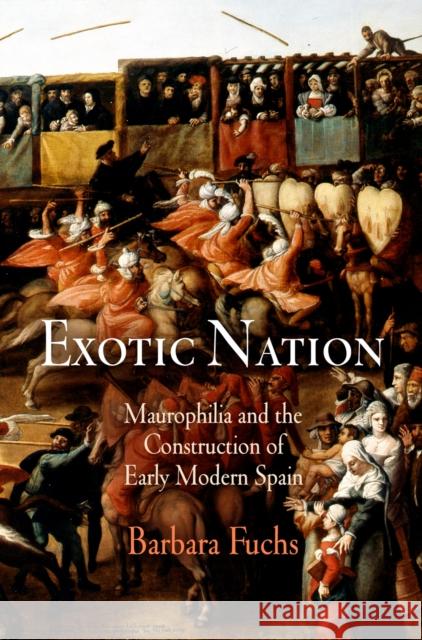
Exotic Nation Maurophilia and the Construction of Early Modern Spain Barbara Fuchs "Barbara Fuchs gives us a lively and illuminating look into the many ways in which Moorishness remained a vivid presence in early modern Spanish culture. Theoretically sophisticated, but rooted in the careful examination of the texts of quotidian life, Exotic Nation takes the reader beyond Orientalism into a profound rethinking of the relationship of early modern Spain to other European nations and of the role of Jewish, African, and Moorish elements in Spain's own self-construction. Essential reading for anyone interested in the ways in which excluded others can become central to a nation's most profound understandings and representations of itself in the everyday domains of architecture, popular literature, dress, and festivity, Exotic Nation is a beautifully written and lucidly argued book on a topic of great importance."--Jean E. Howard, Columbia University "Fuchs admirably achieves her ambitious dual goal: to elucidate the paradoxical uses of Moorishness in the early modern construction of Spanish national identity, both internally, by Spaniards themselves, and externally, by other Europeans. Her thesis that Spain's Moorishness is both quotidian and exotic is quite dazzling. Exotic Nation will have a major impact on studies of early modern Spain."--Barbara Weissberger, author of Isabel Rules: Constructing Queenship, Wielding Power /i> In the Western imagination, Spain often evokes the colorful culture of al-Andalus, the Iberian region once ruled by Muslims. Tourist brochures inviting visitors to sunny and romantic Andalusia, home of the ingenious gardens and intricate arabesques of Granada's Alhambra Palace, are not the first texts to trade on Spain's relationship to its Moorish past. Despite the fall of Granada to the Catholic Monarchs in 1492 and the subsequent repression of Islam in Spain, Moorish civilization continued to influence both the reality and the perception of the Christian nation that emerged in place of al-Andalus. In Exotic Nation, Barbara Fuchs explores the paradoxes in the cultural construction of Spain in relation to its Moorish heritage through an analysis of Spanish literature, costume, language, architecture, and chivalric practices. Between 1492 and the expulsion of the Moriscos (Muslims forcibly converted to Christianity) in 1609, Spain attempted to come to terms with its own Moorishness by simultaneously repressing Muslim subjects and appropriating their rich cultural heritage. Fuchs examines the explicit romanticization of the Moors in Spanish literature--often referred to as "literary maurophilia"--and the complex, often silent presence of Moorish forms in Spanish material culture. The extensive hybridization of Iberian culture suggests that the sympathetic depiction of Moors in the literature of the period does not trade in exoticism but instead reminded Spaniards of the place of Moors and their descendants within Spain. Meanwhile, observers from outside Spain recognized its cultural debt to al-Andalus, often deliberately casting Spain as the exotic racial other of Europe. Barbara Fuchs is Professor of Spanish and English at the University of California, Los Angeles, and the author of Romance and Passing for Spain: Cervantes and the Fictions of Identity. 2008 208 pages 6 x 9 11 illus. ISBN 978-0-8122-4135-8 Cloth $45.00s 29.50 ISBN 978-0-8122-2173-2 Paper $22.50s 15.00 World Rights Literature, Cultural Studies Short copy: Barbara Fuchs examines the paradoxes in the construction of Spain in relation to its Moorish heritage through an analysis of Spanish literature, costume, language, architecture, and chivalric practices from 1492 to 1609.
Exotic NationMaurophilia and the Construction of Early Modern SpainBarbara Fuchs"Barbara Fuchs gives us a lively and illuminating look into the many ways in which Moorishness remained a vivid presence in early modern Spanish culture. Theoretically sophisticated, but rooted in the careful examination of the texts of quotidian life, Exotic Nation takes the reader beyond Orientalism into a profound rethinking of the relationship of early modern Spain to other European nations and of the role of Jewish, African, and Moorish elements in Spains own self-construction. Essential reading for anyone interested in the ways in which excluded others can become central to a nations most profound understandings and representations of itself in the everyday domains of architecture, popular literature, dress, and festivity, Exotic Nation is a beautifully written and lucidly argued book on a topic of great importance."--Jean E. Howard, Columbia University"Fuchs admirably achieves her ambitious dual goal: to elucidate the paradoxical uses of Moorishness in the early modern construction of Spanish national identity, both internally, by Spaniards themselves, and externally, by other Europeans. Her thesis that Spains Moorishness is both quotidian and exotic is quite dazzling. Exotic Nation will have a major impact on studies of early modern Spain."--Barbara Weissberger, author of Isabel Rules: Constructing Queenship, Wielding Power/i>In the Western imagination, Spain often evokes the colorful culture of al-Andalus, the Iberian region once ruled by Muslims. Tourist brochures inviting visitors to sunny and romantic Andalusia, home of the ingenious gardens and intricate arabesques of Granadas Alhambra Palace, are not the first texts to trade on Spains relationship to its Moorish past. Despite the fall of Granada to the Catholic Monarchs in 1492 and the subsequent repression of Islam in Spain, Moorish civilization continued to influence both the reality and the perception of the Christian nation that emerged in place of al-Andalus.In Exotic Nation, Barbara Fuchs explores the paradoxes in the cultural construction of Spain in relation to its Moorish heritage through an analysis of Spanish literature, costume, language, architecture, and chivalric practices. Between 1492 and the expulsion of the Moriscos (Muslims forcibly converted to Christianity) in 1609, Spain attempted to come to terms with its own Moorishness by simultaneously repressing Muslim subjects and appropriating their rich cultural heritage. Fuchs examines the explicit romanticization of the Moors in Spanish literature--often referred to as "literary maurophilia"--and the complex, often silent presence of Moorish forms in Spanish material culture. The extensive hybridization of Iberian culture suggests that the sympathetic depiction of Moors in the literature of the period does not trade in exoticism but instead reminded Spaniards of the place of Moors and their descendants within Spain. Meanwhile, observers from outside Spain recognized its cultural debt to al-Andalus, often deliberately casting Spain as the exotic racial other of Europe.Barbara Fuchs is Professor of Spanish and English at the University of California, Los Angeles, and the author of Romance and Passing for Spain: Cervantes and the Fictions of Identity.2008 | 208 pages | 6 x 9 | 11 illus.ISBN 978-0-8122-4135-8 | Cloth | $45.00s | L29.50 ISBN 978-0-8122-2173-2 | Paper | $22.50s | L15.00 World Rights | Literature, Cultural StudiesShort copy:Barbara Fuchs examines the paradoxes in the construction of Spain in relation to its Moorish heritage through an analysis of Spanish literature, costume, language, architecture, and chivalric practices from 1492 to 1609.




Czytaj nas na:
KrainaKsiazek.PL - Księgarnia Internetowa


