• Wyszukiwanie zaawansowane
  • Kategorie
  • Kategorie BISAC
  • Książki na zamówienie
  • Promocje
  • Granty
  • Książka na prezent
  • Opinie
  • Pomoc
  • Załóż konto
  • Zaloguj się

Engineering, Social Sciences, and the Humanities: Have Their Conversations Come of Age? » książka


zaloguj się | załóż konto
Logo Krainaksiazek.pl

koszyk

konto

szukaj
topmenu
Księgarnia internetowa
Szukaj
Książki na zamówienie
Promocje
Granty
Książka na prezent
Moje konto
Pomoc
 
 
Wyszukiwanie zaawansowane
Pusty koszyk
Bezpłatna dostawa dla zamówień powyżej 20 złBezpłatna dostawa dla zamówień powyżej 20 zł

Kategorie główne

• Nauka
 [2949965]
• Literatura piękna
 [1857847]

  więcej...
• Turystyka
 [70818]
• Informatyka
 [151303]
• Komiksy
 [35733]
• Encyklopedie
 [23180]
• Dziecięca
 [617748]
• Hobby
 [139972]
• AudioBooki
 [1650]
• Literatura faktu
 [228361]
• Muzyka CD
 [398]
• Słowniki
 [2862]
• Inne
 [444732]
• Kalendarze
 [1620]
• Podręczniki
 [167233]
• Poradniki
 [482388]
• Religia
 [509867]
• Czasopisma
 [533]
• Sport
 [61361]
• Sztuka
 [243125]
• CD, DVD, Video
 [3451]
• Technologie
 [219309]
• Zdrowie
 [101347]
• Książkowe Klimaty
 [123]
• Zabawki
 [2362]
• Puzzle, gry
 [3791]
• Literatura w języku ukraińskim
 [253]
• Art. papiernicze i szkolne
 [7933]
Kategorie szczegółowe BISAC

Engineering, Social Sciences, and the Humanities: Have Their Conversations Come of Age?

ISBN-13: 9783031116001 / Angielski / Twarda / 2023 / 427 str.
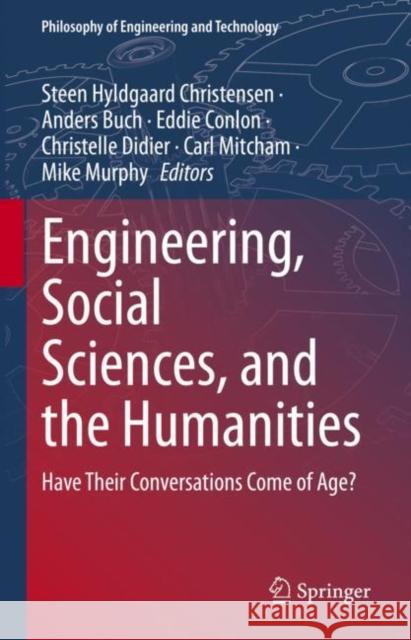
Steen Hyldgaard Christensen; Anders Buch; Eddie Conlon
Engineering, Social Sciences, and the Humanities: Have Their Conversations Come of Age? Steen Hyldgaard Christensen Anders Buch Eddie Conlon 9783031116001 Springer - książkaWidoczna okładka, to zdjęcie poglądowe, a rzeczywista szata graficzna może różnić się od prezentowanej.

Engineering, Social Sciences, and the Humanities: Have Their Conversations Come of Age?

ISBN-13: 9783031116001 / Angielski / Twarda / 2023 / 427 str.

Steen Hyldgaard Christensen; Anders Buch; Eddie Conlon
cena 564,88
(netto: 537,98 VAT:  5%)

Najniższa cena z 30 dni: 501,19
Termin realizacji zamówienia:
ok. 22 dni roboczych
Bez gwarancji dostawy przed świętami

Darmowa dostawa!
inne wydania

This book presents a critical examination of conversations between engineering, social sciences, and the humanities asking whether their conversations have come of age. These conversations are important because ultimately their outcome have real world consequences in engineering education and practice, and for the social and material world we inhabit. Taken together the 21 chapters provide scholarly-argued responses to the following questions.Why are these conversations important for engineering, for social sciences, and for the humanities?Are there key places in practice, in the curriculum, and in institutions where these conversations can develop best?What are the barriers to successful conversations?What proposals can be made for deepening these conversations for the future?How would we know that the conversations have come of age, and who gets to decide?The book appeals to scholarly audiences that come together through their work in engineering education and practice. The chapters of the book probes and access the meetings and conversations, and they explore new avenues for strengthening dialogues that transcend narrow disciplinary confines and divisions.“The volume offers a rich collection of descriptive resources and theoretical tools that will be useful for researchers of engineering practices, and for those aiming to reshape the engineering lifeworld through new policies. The book depicts the current state of the art of the most visible SSH contributions to shaping engineering practices, as well as a map of research gaps and policy problems that still need to be explored.”- Dr. Ir. Lavinia Marin, TU Delft, Electrical Engineering and Philosophy

This book presents a critical examination of conversations between engineering, social sciences, and the humanities asking whether their conversations have come of age. These conversations are important because ultimately their outcome have real world consequences in engineering education and practice, and for the social and material world we inhabit. Taken together the 21 chapters provide scholarly-argued responses to the following questions.

  • Why are these conversations important for engineering, for social sciences, and for the humanities?
  • Are there key places in practice, in the curriculum, and in institutions where these conversations can develop best?
  • What are the barriers to successful conversations?
  • What proposals can be made for deepening these conversations for the future?
  • How would we know that the conversations have come of age, and who gets to decide?

The book appeals to scholarly audiences that come together through their work in engineering education and practice. The chapters of the book probes and access the meetings and conversations, and they explore new avenues for strengthening dialogues that transcend narrow disciplinary confines and divisions.


“The volume offers a rich collection of descriptive resources and theoretical tools that will be useful for researchers of engineering practices, and for those aiming to reshape the engineering lifeworld through new policies. The book depicts the current state of the art of the most visible SSH contributions to shaping engineering practices, as well as a map of research gaps and policy problems that still need to be explored.” 
            
- Dr. Ir. Lavinia Marin, TU Delft, Electrical Engineering and Philosophy


Kategorie:
Nauka, Filozofia
Kategorie BISAC:
Philosophy > Reference
Education > Schools - Levels - Higher
Technology & Engineering > History
Wydawca:
Springer
Seria wydawnicza:
Philosophy of Engineering and Technology
Język:
Angielski
ISBN-13:
9783031116001
Rok wydania:
2023
Dostępne języki:
Numer serii:
000391450
Ilość stron:
427
Oprawa:
Twarda
Dodatkowe informacje:
Wydanie ilustrowane

Chapter 1. General Introduction: Scholarly Motives for Entering into a Conversation between Engineering, Social Science, and the Humanities

Steen Hyldgaard Christensen, Anders Buch, Eddie Conlon, Christelle Didier, Carl Mitcham, and Mike Murphy

Part I.  Achievements resulting from the Conversation between Engineering, Social Science, and the Humanities

Chapter 2. Engineering: A Challenging and Challenged Profession

William Grimson , Jane Grimson, and Mike Murphy

Chapter 3. Institutionalizing Engineering Education Research: Comparing Australia, China, and the United States

Brent Jesiek, Jenni Case, Mike Klassen, and Lina Zheng

Chapter 4. Waste Management as a Post-normal Issue

Fanny Verrax

Chapter 5. When Do Engineers Revolt? Engineering Practice and the Comparative History of Engineers and Social Movements

William T. Lynch

Part II.  Disagreements and Failures in Conversation

Chapter 6. The C.P. Snow Controvercy

Alan Cheville

Chapter 7. Social Sciences and Engineering at a Turning Point?

Cynthia Colmellere 

Chapter 8. The Two Cultures of Engineering Education: Looking back and moving forward

Diana Martin and Madeline Polmear

Chapter 9. Rethinking the Paradigm of Engineering in Social Projects: Contributions from Anthropology and the Gender Perspective

Natalia Zlachevsky

Chapter 10. An Opportunity for Bridging Engineering, Humanities, and Social Science Cultures through Techno-Anthropology: A Case Study Approach

Tom Børsen

Chapter 11. Reflections on the Use of Theory in Engineering Education Research: Interdisciplinary Challenges and Comparisons

Kacey Beddoes

Chapter 12. Social Justice in Engineering: In or out of Place?

Mike Murphy and Steen Hyldgaard Christensen

Chapter 13. Engineering Ethics: The Individualistic Approach and How Social Theory Could Help us to Do Better

Eddie Conlon

Chapter 14. A Critique: Report of the Nasem Committee of Integrating Higher Education in the Arts, Humanities, Sciences, Engineering and Medicine

Louis L. Bucciarelli and David Drew

Part III.  Blind Spots and uncovered Issues

Chapter 15. Transition from Engineering Education to Practice: A Research Agenda

James Trevelyan 

Chapter 16. The Non-Conversations between Engineering, Social Science, and the Humanities

Carl Mitcham

Chapter 17. Using Socio-cultural Theory to Gain a better Understanding of Barriers to Change in Engineering Education

Marie Magnell

Chapter 18. Social Reproduction and Ranking in French high Level Engineering Schools

Marie-Pierre Bès and Luc Lefort

Chapter 19. Engineering Myths in China and the West

Glen Miller, Michael Portal and XU Xin

Chapter 20. Culture and Nature: How Engineering (Philosophy) might Bridge the Gap

Anders Buch

Chapter 21. Engineering in Partnership with Social Sciences and Humanities: Realising more Valuable and Valued Disciplines and Professions in Facing Contemporary (Un)Sustainability Challenges

Edmund Byrne, Connor McGookin, Alexandra Revez, Niall Dunphy, Claire O’Neill, Kieran Keohane, John Barry, Brian Ó Gallachóir, and Gerard Mullally

Chapter 22. Tissue Engineering and the Bioconstruction of artificial Human Organs

Xavier Guchet

Chapter 23. Integrating Insights from Design Science Research into Engineering Education

Lars Bækgaard and Christian Lystbæk

Chapter 24. Conclusions

Steen Hyldgaard Christensen, Anders Buch, Eddie Conlon, Christelle Didier, Carl Mitcham, and Mike Murphy 

Steen Hyldgaard Christensen is an adjunct associate professor at Aalborg University. He holds an MA in Danish Language and Literature and the History of Ideas from Aarhus University, and a PhD in engineering education research from Aalborg University. He is initiator, coordinator, lead editor, and co-author of several edited volumes on engineering, engineering education, and technology. He has published articles on engineering education, engineering epistemology, and higher education.

Anders Buch is a researcher at the Research Centre for Quality of Education, Profession Policy and Practice at VIA University College, Denmark. His empirical research area is focused on technological expert cultures, professions, and professionalism.  His theoretical approach is primarily inspired by science & technology studies, practice theory and pragmatism. He has published articles and books on knowledge, learning, education, professionalism, and the professional development of engineers.

Eddie Conlon is a sociologist and works at TU Dublin. He has been working with engineering students for almost twenty years to help them explore the relationship between technology, engineering and society. His interests are in the sociology of work but recently he has published on engineering ethics and the integration of sustainability into engineering education. 

Christelle Didier holds a BS in Electrochemistry Engineering, an MA in Education, and a PhD in Sociology from Ecole des Hautes Etudes en Sciences Sociales (EHESS) Paris. She has published many articles on ethics and social responsibility in the engineering profession, and on the engineering profession’s values (from interviews and extensive surveys). Research areas: engineering ethics and values, including historical, cultural and gender perspective, sustainable development and corporate social responsibility, and social responsibility.

Carl Mitcham is Professor of Philosophy of Technology at Renmin University of China and of Liberal Arts and International Studies at the Colorado School of Mines. His work focuses on philosophy and policy issues related to science, technology, engineering, and society.

Mike Murphy is professor at TU Dublin. He is an electrical engineer with a PhD and a MEng degree from Stevens Institute of Technology in the United States, and a BSc (Eng) from Trinity College Dublin. He has held the positions of Academic Registrar, and Dean of the College of Engineering & Built Environment at DIT. He was President of the European Society for Engineering Education (SEFI) from 2017 to 2019. He is a Fellow of Engineers Ireland. His research interests are in the structure of engineering education.


This book presents a critical examination of conversations between engineering, social sciences, and the humanities asking whether their conversations have come of age. These conversations are important because ultimately their outcome have real world consequences in engineering education and practice, and for the social and material world we inhabit. Taken together the 21 chapters provide scholarly-argued responses to the following questions.

  • Why are these conversations important for engineering, for social sciences, and for the humanities?
  • Are there key places in practice, in the curriculum, and in institutions where these conversations can develop best?
  • What are the barriers to successful conversations?
  • What proposals can be made for deepening these conversations for the future?
  • How would we know that the conversations have come of age, and who gets to decide?

The book appeals to scholarly audiences that come together through their work in engineering education and practice. The chapters of the book probes and access the meetings and conversations, and they explore new avenues for strengthening dialogues that transcend narrow disciplinary confines and divisions.


“The volume offers a rich collection of descriptive resources and theoretical tools that will be useful for researchers of engineering practices, and for those aiming to reshape the engineering lifeworld through new policies. The book depicts the current state of the art of the most visible SSH contributions to shaping engineering practices, as well as a map of research gaps and policy problems that still need to be explored.” 
            
- Dr. Ir. Lavinia Marin, TU Delft, Electrical Engineering and Philosophy


Udostępnij

Facebook - konto krainaksiazek.pl


Opinie o Krainaksiazek.pl na Opineo.pl

Partner Mybenefit

Krainaksiazek.pl w programie rzetelna firma Krainaksiaze.pl - płatności przez paypal

Czytaj nas na:

Facebook - krainaksiazek.pl
  • książki na zamówienie
  • granty
  • książka na prezent
  • kontakt
  • pomoc
  • opinie
  • regulamin
  • polityka prywatności

Zobacz:

  • Księgarnia czeska

  • Wydawnictwo Książkowe Klimaty

1997-2025 DolnySlask.com Agencja Internetowa

© 1997-2022 krainaksiazek.pl
     
KONTAKT | REGULAMIN | POLITYKA PRYWATNOŚCI | USTAWIENIA PRYWATNOŚCI
Zobacz: Księgarnia Czeska | Wydawnictwo Książkowe Klimaty | Mapa strony | Lista autorów
KrainaKsiazek.PL - Księgarnia Internetowa

Polityka prywatnosci - link
Krainaksiazek.pl - płatnośc Przelewy24
Przechowalnia Przechowalnia





