• Wyszukiwanie zaawansowane
  • Kategorie
  • Kategorie BISAC
  • Książki na zamówienie
  • Promocje
  • Granty
  • Książka na prezent
  • Opinie
  • Pomoc
  • Załóż konto
  • Zaloguj się

Energy Policy Modeling: United States and Canadian Experiences: Volume II Integrative Energy Policy Models » książka


zaloguj się | załóż konto
Logo Krainaksiazek.pl

koszyk

konto

szukaj
topmenu
Księgarnia internetowa
Szukaj
Książki na zamówienie
Promocje
Granty
Książka na prezent
Moje konto
Pomoc
 
 
Wyszukiwanie zaawansowane
Pusty koszyk
Bezpłatna dostawa dla zamówień powyżej 20 złBezpłatna dostawa dla zamówień powyżej 20 zł

Kategorie główne

• Nauka
 [2950560]
• Literatura piękna
 [1849509]

  więcej...
• Turystyka
 [71097]
• Informatyka
 [151150]
• Komiksy
 [35848]
• Encyklopedie
 [23178]
• Dziecięca
 [617388]
• Hobby
 [139064]
• AudioBooki
 [1657]
• Literatura faktu
 [228597]
• Muzyka CD
 [383]
• Słowniki
 [2855]
• Inne
 [445295]
• Kalendarze
 [1464]
• Podręczniki
 [167547]
• Poradniki
 [480102]
• Religia
 [510749]
• Czasopisma
 [516]
• Sport
 [61293]
• Sztuka
 [243352]
• CD, DVD, Video
 [3414]
• Technologie
 [219456]
• Zdrowie
 [101002]
• Książkowe Klimaty
 [124]
• Zabawki
 [2311]
• Puzzle, gry
 [3459]
• Literatura w języku ukraińskim
 [254]
• Art. papiernicze i szkolne
 [8079]
Kategorie szczegółowe BISAC

Energy Policy Modeling: United States and Canadian Experiences: Volume II Integrative Energy Policy Models

ISBN-13: 9789400987531 / Angielski / Miękka / 2011 / 378 str.
W. T. Ziemba; S. L. Schwartz
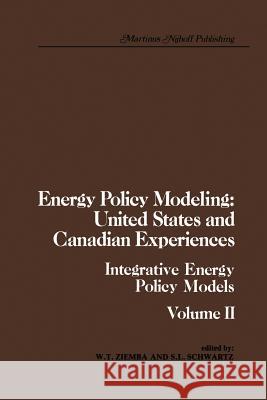
Energy Policy Modeling: United States and Canadian Experiences: Volume II Integrative Energy Policy Models Ziemba, W. T. 9789400987531 Springer - książkaWidoczna okładka, to zdjęcie poglądowe, a rzeczywista szata graficzna może różnić się od prezentowanej.

Energy Policy Modeling: United States and Canadian Experiences: Volume II Integrative Energy Policy Models

ISBN-13: 9789400987531 / Angielski / Miękka / 2011 / 378 str.

W. T. Ziemba; S. L. Schwartz
cena 603,81
(netto: 575,06 VAT:  5%)

Najniższa cena z 30 dni: 578,30
Termin realizacji zamówienia:
ok. 22 dni roboczych
Dostawa w 2026 r.

Darmowa dostawa!

Alex Cowie As the twentieth century draws to a close, one of our greatest problems is the availability of energy. One way to study the energy problem is to resolve it into four areas: energy demand, energy sources, transportation of energy from sources to demand centers, and the optimal allocation of energy forms to demands. Each of these areas is extremely complex by itself. When efforts are made to tie them together, for example, to produce a National Policy, the complexities are compounded. Another way to study the energy problem, because of its political and social consequences, is to resolve it into geographical areas. Individual provinces of Canada or states of the United States will have their concerns about energy within their geographical boundaries. As producer, consumer, or both, each wants to ensure an energy development program which will work to the maximum benefit of its citizens. Similarly, countries endeavor to protect their citizens and undertake energy policies that will assure either a continuation of the existing quality of life or - particularly in the case of "Third World" countries - a marked improvement in quality of life. These competing and conflicting goals call for a study which encompasses the whole world. Again, complexity is piled upon complexity. If the prob lem is not yet sufficiently complex, there is an equally complex question of the effect of energy production and use on the ecology."


Kategorie:
Nauka, Ekonomia i biznes
Kategorie BISAC:
Science > Energia
Business & Economics > Economics - General
Business & Economics > Biznes i środowisko
Wydawca:
Springer
Język:
Angielski
ISBN-13:
9789400987531
Rok wydania:
2011
Wydanie:
Softcover Repri
Ilość stron:
378
Waga:
0.62 kg
Wymiary:
23.5 x 15.5
Oprawa:
Miękka
Wolumenów:
01

I The Process of Energy Policy Modeling References.- 1 Why should Energy Models Form a Significant Policy Input in an Uncertain Political World?.- References.- 2 Crash Mode Modeling: Analyzing the National Energy Plan.- 2.1 The Crash Mode.- 2.2 Positive and Negative Modeling Experiences.- 2.3 Epilogue.- 3 The Evaluation of Sponsored Research in Energy Storage.- 3.1 Introduction.- 3.2 Prioritization.- 3.3 National Techno-Economic Energy Models.- References.- 4 A Dynamic Welfare Equilibrium Framework for Projecting Energy Futures.- 4.1 Introduction and Background.- 4.2 Model Description.- 4.3 Summary.- References.- 5 Panel Discussion on Important Canadian Energy Decisions for the 1980s and Beyond.- Questions.- Prepared Statement.- Questions.- II National and Regional Energy Modeling Concepts and Methods References.- 6 A Survey of Some Energy Policy Models.- 6.1 Introduction.- 6.2 Brief Descriptions of Some Major U.S. Energy Policy Models.- 6.3 Brief Descriptions of Some Major Canadian Energy Policy Models.- References.- 7 The Brookhaven Energy System Optimization Model: Its Variants and Uses.- 7.1 Introduction.- 7.2 The Brookhaven Energy System Optimization Model (BESOM).- 7.3 The Brookhaven Time-Stepped Energy System Optimization Model (TESOM).- 7.4 The Market Allocation Model (MARKAL).- References.- 8 An Integrated Forecasting Model: A Progress Report.- 8.1 Introduction.- 8.2 Design and Definition of the Model.- 8.3 The Integrated Forecasting Model.- 8.4 Thumbnail Sketches of Sub-Models Provided.- 8.5 Results.- 8.6 Summary and Future Directions.- References.- 9 Network Based Regional Energy Planning Models: An Evolutionary Exposé.- 9.1 Introduction.- 9.2 Network Mapping of Supply and Demand.- 9.3 Network Representation of Supply — Distribution System.- 9.4 Investments in New Capacity.- 9.5 Typical Convex Cost Production Function.- 9.6 Summary and Conclusions.- References.- 10 The Alberta Energy Resources Allocation Model.- 10.1 Rationale and Basic Concepts.- 10.2 Model Structure and Data Base.- 10.3 Energy Resource Supply and Prices.- 10.4 Energy Demands.- 10.5 Process Economic Methodology.- 10.6 External Factors.- 10.7 Reference Case Results.- 10.8 Conclusion.- References.- 11 An Alberta Energy Planning Model.- 11.1 Model Overview.- 11.2 A Basic Supply Model.- 11.3 The Basic Model with Variable Demand.- 11.4 An Alternative Approach Using End Use Demand.- 11.5 Interfuel Substitution.- 11.6 An Initial Model.- References.- 12 Time Horizons in Energy Planning Models.- 12.1 Introduction.- 12.2 Procedures for Reducing End Effects.- 12.3 Qualitative Conclusions.- 12.4 Application to Manne’s ETA Model.- 12.5 Summary and Recommendations.- References.- 12a Appendix.- 13 How should We Compare Forecasting Models When They Differ?.- 13.1 Introduction.- 13.2 Ingredients of Comparison.- 13.3 An Example: Three Competing Models for Forecasting National Gas Exploration and Discovery.- 13.4 Evaluation of the Three Models.- 13.5 Concluding Remarks.- References.- 14 Panel Discussion on the Future of National Energy Modeling.- Questions.- III The Canadian-United States Gas Pipeline References.- 15 Canadian Perspectives on the Alaska Highway Pipeline: Modeling the Alternatives.- 15.1 The Alaska Highway Pipeline in Context.- 15.2 Economic Evaluation of Alternative Pipeline Sizes and Pressures.- 15.3 Evaluating the Costs and Benefits.- 15.4 What Next?.- 15.5 Modeling Postscript.- References.- 15a Appendix.- 15.A.1 General Description of the Models Used.- 15.A.2 Equations, Data, and Procedures.- References.- 16 Analyzing Alaskan Gas Distribution Options.- 16.1 Introduction.- 16.2 Overview of PIES.- 16.3 Scenario Specifications.- References.- IV The Problems of Financing Energy Development Projects References.- 17 Financing Canadian Energy to 1990: Some Supply Side Constraints.- 17.1 Introduction.- 17.2 OPEC and the United States.- 17.3 U.S. Energy Policy.- 17.4 The Canadian Energy Scene — A Policy Update.- 17.5 Energy Trade.- 17.6 The Economic Scenario and Energy Finances.- 17.7 The Demand for Energy Finance.- 17.8 The Impact of the Energy Sector on Financial Markets.- 17.9 Funding Practices by Energy Borrowers.- 17.10 Domestic and Foreign Savings Sources.- 17.11 Foreign Financing and the Balance of Payments.- 17.12 Size and Risk Considerations.- 17.13 Project Financing.- 17. 14 Conclusions.- References.- 18 The Demand for Funds for Energy Investment in Canada.- 18.1 Introduction.- 18.2 Capital Investment in Canada Since the Mid-1950s.- 18.3 Investment Forecasts.- 18.4 Some Methodological Considerations.- 18.5 Financing Energy Investment.- 18.6 Summary.- References.- 19 Potential Capital Cost and Financing Required for Canadian Energy Projects.- 19.1 Introduction.- 19.2 Investments of Electrical Utilities.- 19.3 Petroleum Industry Investment.- 19.4 Financing of the Petroleum Industry.- 19.5 Major Project Financing.- 19.6 Pipeline Financing.- References.


Udostępnij

Facebook - konto krainaksiazek.pl


Opinie o Krainaksiazek.pl na Opineo.pl

Partner Mybenefit

Krainaksiazek.pl w programie rzetelna firma Krainaksiaze.pl - płatności przez paypal

Czytaj nas na:

Facebook - krainaksiazek.pl
  • książki na zamówienie
  • granty
  • książka na prezent
  • kontakt
  • pomoc
  • opinie
  • regulamin
  • polityka prywatności

Zobacz:

  • Księgarnia czeska

  • Wydawnictwo Książkowe Klimaty

1997-2025 DolnySlask.com Agencja Internetowa

© 1997-2022 krainaksiazek.pl
     
KONTAKT | REGULAMIN | POLITYKA PRYWATNOŚCI | USTAWIENIA PRYWATNOŚCI
Zobacz: Księgarnia Czeska | Wydawnictwo Książkowe Klimaty | Mapa strony | Lista autorów
KrainaKsiazek.PL - Księgarnia Internetowa

Polityka prywatnosci - link
Krainaksiazek.pl - płatnośc Przelewy24
Przechowalnia Przechowalnia






