• Wyszukiwanie zaawansowane
  • Kategorie
  • Kategorie BISAC
  • Książki na zamówienie
  • Promocje
  • Granty
  • Książka na prezent
  • Opinie
  • Pomoc
  • Załóż konto
  • Zaloguj się

Energy Demand in Industry: What Factors Are Important? » książka


zaloguj się | załóż konto
Logo Krainaksiazek.pl

koszyk

konto

szukaj
topmenu
Księgarnia internetowa
Szukaj
Książki na zamówienie
Promocje
Granty
Książka na prezent
Moje konto
Pomoc
 
 
Wyszukiwanie zaawansowane
Pusty koszyk
Bezpłatna dostawa dla zamówień powyżej 20 złBezpłatna dostawa dla zamówień powyżej 20 zł

Kategorie główne

• Nauka
 [2950560]
• Literatura piękna
 [1849509]

  więcej...
• Turystyka
 [71097]
• Informatyka
 [151150]
• Komiksy
 [35848]
• Encyklopedie
 [23178]
• Dziecięca
 [617388]
• Hobby
 [139064]
• AudioBooki
 [1657]
• Literatura faktu
 [228597]
• Muzyka CD
 [383]
• Słowniki
 [2855]
• Inne
 [445295]
• Kalendarze
 [1464]
• Podręczniki
 [167547]
• Poradniki
 [480102]
• Religia
 [510749]
• Czasopisma
 [516]
• Sport
 [61293]
• Sztuka
 [243352]
• CD, DVD, Video
 [3414]
• Technologie
 [219456]
• Zdrowie
 [101002]
• Książkowe Klimaty
 [124]
• Zabawki
 [2311]
• Puzzle, gry
 [3459]
• Literatura w języku ukraińskim
 [254]
• Art. papiernicze i szkolne
 [8079]
Kategorie szczegółowe BISAC

Energy Demand in Industry: What Factors Are Important?

ISBN-13: 9789401799522 / Angielski / Twarda / 2015 / 196 str.
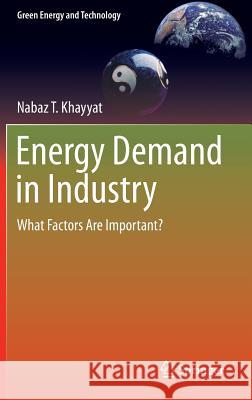
Nabaz T. Khayyat
Energy Demand in Industry: What Factors Are Important? Khayyat, Nabaz T. 9789401799522 Springer - książkaWidoczna okładka, to zdjęcie poglądowe, a rzeczywista szata graficzna może różnić się od prezentowanej.

Energy Demand in Industry: What Factors Are Important?

ISBN-13: 9789401799522 / Angielski / Twarda / 2015 / 196 str.

Nabaz T. Khayyat
cena 402,53
(netto: 383,36 VAT:  5%)

Najniższa cena z 30 dni: 385,52
Termin realizacji zamówienia:
ok. 22 dni roboczych
Dostawa w 2026 r.

Darmowa dostawa!

The book presents a stochastic analysis based on production risk and application of this method in the industrial sector under production risk where energy use is an input factor. Using South Korea as a case study, the book empirically models energy demand at the industrial level and analyzes the results to identify key determinants of energy demand, productions level, productions risk and energy usage efficiency.Particular attention is paid to the factors that enhance production risk or increase variations in energy input during production. A dynamic panel model is specified and applied to 25 Korean industrial sectors over the period 1970-2007. The determinants of energy usage are identified and their effects in the form of elasticities of energy usage are estimated. In addition the structural changes in the energy demand pattern are explored. Stochastic production technology is applied to create two primary models: A production model where the energy usage is a determinant of output and an energy demand model based on an inverted factor demand model where demand is a key determinant of the level of energy usage.The findings reveal that: First, there are large variations in the degree of overuse or inefficiency in energy usage among the individual industries and over time; second, ICT (information and communication technology) capital and labor are substituting energy; third, ICT capital and value added services are two input factors decreasing the variability of energy demand while non-ICT capital, material and labor are increasing the variability of energy demand. Finally, the results suggest that technical progress contributes more to the increase of mean of energy demand than to the reduction of the level of risk. An emerging recommendation is that industries increase the level of ICT capital and digitalization and invest more in R&D activities and value added services to reduce the uncertainty related to their demand for energy. This study forms the structure of the demand for energy under stochastic production risk for the South Korean industrial sector. Public research programs aimed at the industrial sector should be concerned about both mean and risk properties in research on new technologies and in the investigation of possible alternative energy inputs. This book describes the state of the art in energy usage analysis and production risk, applying factor requirement methodology. It will be of use as a main or supplementary text in the teaching of advanced graduate courses but also as a reference for those working on empirically advanced research. The book is an important addition to the existing literature on industrial development, with its focus on energy as a core production input."


Kategorie:
Technologie
Kategorie BISAC:
Technology & Engineering > Power Resources - Electrical
Business & Economics > Industries - Energy
Science > Energia
Wydawca:
Springer
Seria wydawnicza:
Green Energy and Technology
Język:
Angielski
ISBN-13:
9789401799522
Rok wydania:
2015
Wydanie:
2015
Numer serii:
000355820
Ilość stron:
196
Waga:
4.50 kg
Wymiary:
23.5 x 15.5
Oprawa:
Twarda
Wolumenów:
01
Dodatkowe informacje:
Wydanie ilustrowane

1 OVERVIEW.

1.1 Introduction. 1.2 Problem Description. 1.3 Purpose of Research. 1.4 Significance of the Study. 1.5 Research Design. 1.6 Empirical Motivations. 1.7 Assumptions and Limitations. 1.8 Operational Definitions. 1.9 Expected Results. 1.10 The Structure of the Book. 1.11 References.

2 HISTORY OF ECONOMIC DEVELOPMENT IN SOUTH KOREA.

2.1 Introduction. 2.2 Stages of the Industrial and Technological Polices. 2.3 Energy Consumption. 2.4 Energy Conservation and Structural Changes in the South Korean Economy. 2.5 Energy efficiency.       2.6 Summary. 2.7 References.

3 SURVEY OF EXISTING RESEARCHES RELATED TO ENERGY DEMAND.   

3.1 Introduction. 3.2 Inter-Factor Substitutability and Complementarity. 3.3 Energy Efficiency. 3.4 Energy Demand. 3.5 The Elasticity of Demand.      3.6 Critique of Previous Researches. 3.7 Summary. 3.8 References.  

4 SURVEY OF EXISTING RESEARCHES RELATED TO PRODUCTION RISK.

4.1 Introduction. 4.2 Some Concepts in Expected Utility Theory. 4.3 The Argument of the Utility Function. 4.4 Production Risk and the Theory of Firm Behavior. 4.5 The Production Risk. 4.6 Mean Factor Inputs and Output Variance. 4.7 Technical Efficiency. 4.8 Critique of Previous Researches. 4.9 Summary. 4.10 References.         

5 ECONOMETRICS OF PANEL DATA ESTIMATION.    

5.1 Introduction. 5.2 Fixes Effect and Random Effect Models. 5.3 The Characteristics of Panel Data. 5.4 Industry Heterogeneity and Heteroskedasticity. 5.5 Industry Heterogeneity and Panel Data Availability. 5.6 Theoretical Framework. 5.7 Research Questions and Hypothesis. 5.8 The Econometric Model. 5.9 Model Specification. 5.10 Sampling Distribution Properties. 5.11 Summary. 5.12 References.

6 ENERGY DEMAND DATA.         

6.1 Data Source. 6.2 Population and Sampling Strategy. 6.3 Industry Sector Classification. 6.4 The Dependent and the Independent Variables. 6.5 Multicollinearity and Validation of Results. 6.6 Overview of Statistical Analysis.          6.7 Energy Intensity in the Industrial Sector. 6.8 Empirical Test for Heterogeneity. 6.9 Summary. 6.10 References.      

7 ENERGY DEMAND MODELS ESTIMATION.   

7.1 Cobb-Douglas production function. 7.2 The Translog production function. 7.3 Summary. 7.4 References. 7.A Appendix:  Elasticities Estimates for Translog Production Function.

8 ENERGY DEMAND MODEL I.

8.1 Energy Demand not Accounting for Risk. 8.2 The Overall Performance. 8.3 Regularity Conditions Tests. 8.4 Energy Demand Elasticities. 8.5 The Rate of Technical Change. 8.6 Hypotheses Testing. 8.7 Summary. 8.8 References. 8.A Appendix: Elasticities Estimates for Translog Energy Demand.

9 ENERGY DEMAND MODEL II.

9.1 Energy Demand Model Accounting for Risk. 9.2 Empirical Tests for Heteroskedasticity. 9.3 A Three Stage FGLS estimation. 9.4 The Overall Performance. 9.5 The Regularity Conditions Tests. 9.6 Specification Test. 9.7 Energy Demand Elasticities. 9.8 The Marginal Effects. 9.9 Technical efficiency. 9.10 Hypotheses Testing. 9.11 Summary. 9.12 References. 9.A Appendix: Summary Data, Parameter Estimates, and Elasticities for Translog Energy Demand accounting for Risk.

10 SUMMARY AND CONCLUSION.

10.1 Summary of Results. 10.2 Input Elasticities for Production Function. 10.3 Elasticities in Energy Demand Model. 10.4 Return to Scale. 10.5 Marginal Effects. 10.6 Technical Efficiency. 10.7 Conclusion about the Research Questions and Their Hypotheses. 10.8 The Research Questions. 10.9 Overview of Analysis and Hypothesis. 10.10 Implications for Industry and Policy Makers. 10.11 Conclusions and Practical Recommendations.

Nabaz T. Khayyat, a Kurdish citizen, an Engineering Economist, has a PhD in economics, from Swiss Management University, Zurich, Switzerland and a PhD in Engineering and IT Policy from Seoul National University, South Korea. He worked for the United Nations Mine Action Program for many years where he acquired the knowledge and managerial skills in mine action information systems. His research interest are mainly in the areas of energy economics, demand forecasting, productivity analysis and production risk. He has a number of published books and journal articles.

The book presents a stochastic analysis based on production risk and application of this method in the industrial sector under production risk where energy use is an input factor.  Using South Korea as a case study, the book empirically models energy demand at the industrial level and analyzes the results to identify key determinants of energy demand, productions level, productions risk and energy usage efficiency.

Particular attention is paid to the factors that enhance production risk or increase variations in energy input during production. A dynamic panel model is specified and applied to 25 Korean industrial sectors over the period 1970-2007. The determinants of energy usage are identified and their effects in the form of elasticities of energy usage are estimated. In addition the structural changes in the energy demand pattern are explored. Stochastic production technology is applied to create two primary models: A production model where the energy usage is a determinant of output, and an energy demand model based on an inverted factor demand model where demand is a key determinant of the level of energy usage.

The findings reveal that: First, there are large variations in the degree of overuse or inefficiency in energy usage among the individual industries and over time; second, ICT (information and communication technology) capital and labor are substituting energy; third, ICT capital and value added services are two input factors decreasing the variability of energy demand while non-ICT capital, material and labor are increasing the variability of energy demand.  Finally, the results suggest that technical progress contributes more to the increase of mean of energy demand than to the reduction of the level of risk.  An emerging recommendation is that industries increase the level of ICT capital and digitalization and invest more in R&D activities and value added services to reduce the uncertainty related to their demand for energy. This study forms the structure of the demand for energy under stochastic production risk for the South Korean industrial sector. Public research programs aimed at the industrial sector should be concerned about both mean and risk properties in research on new technologies and in the investigation of possible alternative energy inputs.

This book describes the state of the art in energy usage analysis and production risk, applying factor requirement methodology. It will be of use as a main or supplementary text in the teaching of advanced graduate courses but also as a reference for those working on empirically advanced research. The book is an important addition to the existing literature on industrial development, with its focus on energy as a core production input.


Udostępnij

Facebook - konto krainaksiazek.pl


Opinie o Krainaksiazek.pl na Opineo.pl

Partner Mybenefit

Krainaksiazek.pl w programie rzetelna firma Krainaksiaze.pl - płatności przez paypal

Czytaj nas na:

Facebook - krainaksiazek.pl
  • książki na zamówienie
  • granty
  • książka na prezent
  • kontakt
  • pomoc
  • opinie
  • regulamin
  • polityka prywatności

Zobacz:

  • Księgarnia czeska

  • Wydawnictwo Książkowe Klimaty

1997-2025 DolnySlask.com Agencja Internetowa

© 1997-2022 krainaksiazek.pl
     
KONTAKT | REGULAMIN | POLITYKA PRYWATNOŚCI | USTAWIENIA PRYWATNOŚCI
Zobacz: Księgarnia Czeska | Wydawnictwo Książkowe Klimaty | Mapa strony | Lista autorów
KrainaKsiazek.PL - Księgarnia Internetowa

Polityka prywatnosci - link
Krainaksiazek.pl - płatnośc Przelewy24
Przechowalnia Przechowalnia






