• Wyszukiwanie zaawansowane
  • Kategorie
  • Kategorie BISAC
  • Książki na zamówienie
  • Promocje
  • Granty
  • Książka na prezent
  • Opinie
  • Pomoc
  • Załóż konto
  • Zaloguj się

Emerging Technologies and the Indian IT Sector » książka


zaloguj się | załóż konto
Logo Krainaksiazek.pl

koszyk

konto

szukaj
topmenu
Księgarnia internetowa
Szukaj
Książki na zamówienie
Promocje
Granty
Książka na prezent
Moje konto
Pomoc
 
 
Wyszukiwanie zaawansowane
Pusty koszyk
Bezpłatna dostawa dla zamówień powyżej 20 złBezpłatna dostawa dla zamówień powyżej 20 zł

Kategorie główne

• Nauka
 [2946600]
• Literatura piękna
 [1856966]

  więcej...
• Turystyka
 [72221]
• Informatyka
 [151456]
• Komiksy
 [35826]
• Encyklopedie
 [23190]
• Dziecięca
 [619653]
• Hobby
 [140543]
• AudioBooki
 [1577]
• Literatura faktu
 [228355]
• Muzyka CD
 [410]
• Słowniki
 [2874]
• Inne
 [445822]
• Kalendarze
 [1744]
• Podręczniki
 [167141]
• Poradniki
 [482898]
• Religia
 [510455]
• Czasopisma
 [526]
• Sport
 [61590]
• Sztuka
 [243598]
• CD, DVD, Video
 [3423]
• Technologie
 [219201]
• Zdrowie
 [101638]
• Książkowe Klimaty
 [124]
• Zabawki
 [2473]
• Puzzle, gry
 [3898]
• Literatura w języku ukraińskim
 [254]
• Art. papiernicze i szkolne
 [8170]
Kategorie szczegółowe BISAC

Emerging Technologies and the Indian IT Sector

ISBN-13: 9781032349008 / Angielski / Twarda / 2023 / 128 str.
Rajalaxmi Kamath; Vinay Reddy Venumuddala
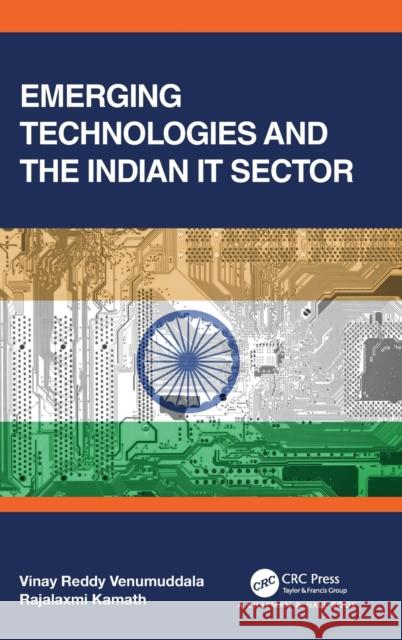
Emerging Technologies and the Indian IT Sector Rajalaxmi Kamath Vinay Reddy Venumuddala 9781032349008 CRC Press - książkaWidoczna okładka, to zdjęcie poglądowe, a rzeczywista szata graficzna może różnić się od prezentowanej.

Emerging Technologies and the Indian IT Sector

ISBN-13: 9781032349008 / Angielski / Twarda / 2023 / 128 str.

Rajalaxmi Kamath; Vinay Reddy Venumuddala
cena 385,30 zł
(netto: 366,95 VAT:  5%)

Najniższa cena z 30 dni: 377,75 zł
Termin realizacji zamówienia:
ok. 22 dni roboczych
Bez gwarancji dostawy przed świętami

Darmowa dostawa!

This book examines the implementation of emerging technology projects in the service-based Indian IT sector. The title shows how emerging technologies impact IT-enabled Services (ITeS) organizations and examines the mobility prospects for engineers and students looking to enter the Indian IT sector. Indian IT, dominated by organizations offering ITeS, provides services to clients across the world. Fueling this sector’s growth are engineering graduates. Emerging technologies, such as AI, Big Data, Cloud, and Blockchain, have brought the IT and engineering education sectors to a crossroads with global implications. The IT sector is facing growing demands for new technology solutions from its clients, and it is engineering students who are expected to upskill in order to build these solutions. The volume provides a rare, bottom-up look at the intersection of technology, education and organizational structure, based on an ethnographic study.Emerging Technologies and the Indian IT Sector will be a helpful and unique resource for managers in ITeS grappling with emerging technologies, researchers looking at how emerging technologies impact organizations and for those developing innovative IT courses in higher education. Readers interested in the global structure of IT education and industry will also find a fresh, ethnographically-informed take on these issues.


This book examines the implementation of emerging technology projects in the service-based Indian IT sector. The title shows how emerging technologies impact IT-enabled Services (ITeS) organizations and examines the mobility prospects for engineers and students looking to enter the Indian IT sector. Indian IT, dominated by organizations offering ITeS, provides services to clients across the world. Fueling this sector’s growth are engineering graduates. Emerging technologies, such as AI, Big Data, Cloud, and Blockchain, have brought the IT and engineering education sectors to a crossroads with global implications. The IT sector is facing growing demands for new technology solutions from its clients, and it is engineering students who are expected to upskill in order to build these solutions. The volume provides a rare, bottom-up look at the intersection of technology, education and organizational structure, based on an ethnographic study.

Emerging Technologies and the Indian IT Sector will be a helpful and unique resource for managers in ITeS grappling with emerging technologies, researchers looking at how emerging technologies impact organizations and for those developing innovative IT courses in higher education. Readers interested in the global structure of IT education and industry will also find a fresh, ethnographically-informed take on these issues.

Kategorie:
Informatyka
Kategorie BISAC:
Business & Economics > Industries - Computers & Information Technology
Computers > Programming - Games
Business & Economics > Research & Development
Wydawca:
CRC Press
Język:
Angielski
ISBN-13:
9781032349008
Rok wydania:
2023
Dostępne języki:
Ilość stron:
128
Waga:
0.39 kg
Wymiary:
23.4 x 15.6
Oprawa:
Twarda
Dodatkowe informacje:
Bibliografia
Wydanie ilustrowane

1. Introduction 1.1 The Indian IT industry and transition to emerging technologies 1.1.1 Transition to emerging technologies 1.1.2 Engineers and the Indian IT services industry 1.2. Research objectives and key findings 1.3. Overview of chapters 2. Research context 2.1 Research context - AI research lab in an IT services organization 2.1.1 ITSO’s AI research lab 2.1.2 Work and workforce in the AI research lab 2.1.3 Work ethnography in the AI research lab 2.1.4 A precursor study – ethnography in an engineering college 3. Emerging technology work in an Indian IT services organization 3.1 Emerging Technology solutions 3.1.1 Importance of a firm’s business context in digital transformation 3.1.2 Developing different emerging technology solutions 3.2.1 Internet of Things (IoT) 3.1.2.2 Blockchain 3.1.2.3 Artificial Intelligence (AI) 2 Delivering software vs emerging technology solutions 3.2.1 Delivering software solutions 3.2.1.1 Principles guiding software development 3.2.1.2 Software development for Cloud 3.2.2 Comparison with emerging technologies 3.2.2.1 Maturity of development workflows 3.2.2.2 Work roles straddling between activities 3.3 Client-centric AI solutions by ITSO’s research lab 3.3.1 The ethnographer’s project in the AI research lab 3.3.2 Workflows negotiated for AI projects 3.3.2.1 Use-case identification 3.3.2.2 Proof of concept 3.3.2.3 Execution and deployment 3.3.2.4 Post deployment 3.3.3 Dominance of software engineering principles 3.4. Challenges in the transition towards emerging technologies 3.4.1 Servicing lower end in the client’s value chain 3.4.2 Difficulty in scaling-up the AI value chain 3.4.3 Unplanned WFH that exacerbated challenges 4. The Indian IT industry and emerging technologies: Mobility of engineers 4.1 Role of engineers in the Indian industry 4.1.1 Engineers and public sector employment 4.1.2 Demand from the IT industry and mushrooming of private engineering colleges 4.1.3 Rising demand for emerging technology workforce 4.2 AI research lab – work roles in an AI project 4.2.1 Business analysts – developing high-level frameworks 4.2.2 AI specific roles – less of use-case-centric productionizing 4.2.3 Software roles - integration and deployment 4.2.4 Data scientists – building compatible workflows 4.3 Mobility prospects of beginner roles 4.3.1 Data engineers and their mobility pathways 4.3.1.1 Data sciences and business understanding 4.3.1.2 Primacy of programming skills 4.3.2 Cloud/software-engineers and their mobility pathways 4.3.2.1 Client-independent standard work requirements 4.3.3 Mobility challenges of non-IT engineers – the IT and non-IT divide 4 IT vs non-IT divide – manifesting in the engineering colleges 4.4.1 Lack of academic autonomy and rigid disciplinary boundaries 4.4.2 A dominant influence of IT industry for student placements 4.4.3 Students from non-IT disciplines and their negotiated flexibility towards IT 4.4.4 Students from non-IT disciplines and emerging technology pursuits 4.5 Scope for substantive engagement of non-IT engineers in the IT industry 5. Discussion 5.1 A summary of our findings 5.2 Relook at client-vendor relationships in the Indian IT sector 5.2.1 Influence of clients on the nature of emerging technology work 5.2.2 Negotiating factors for a newly evolving client-vendor relationship 5.3 Implications of this study to the Indian IT industry and Policy 5.3.1 India’s IT-led innovations and the road ahead 5.3.2 Can the Indian IT services industry unleash its abundant domain expertise? 5.3.3 Implications to industrial and educational policy 5.4 Conclusion and future work  Theoretical appendix A.1 Critical realism: The philosophical basis A1.1 Principles of critical realism embedded in our work ethnography A.1.2 Work ethnography A.2 Critical realism and ethnography findings 2A.1 Separation of structure and agency A.2.2 Retroducing the hierarchical domains of the real, actual and empirical A.2.3 Some reflexions on our work ethnography Further Readings


Udostępnij

Facebook - konto krainaksiazek.pl


Opinie o Krainaksiazek.pl na Opineo.pl

Partner Mybenefit

Krainaksiazek.pl w programie rzetelna firma Krainaksiaze.pl - płatności przez paypal

Czytaj nas na:

Facebook - krainaksiazek.pl
  • książki na zamówienie
  • granty
  • książka na prezent
  • kontakt
  • pomoc
  • opinie
  • regulamin
  • polityka prywatności

Zobacz:

  • Księgarnia czeska

  • Wydawnictwo Książkowe Klimaty

1997-2025 DolnySlask.com Agencja Internetowa

© 1997-2022 krainaksiazek.pl
     
KONTAKT | REGULAMIN | POLITYKA PRYWATNOŚCI | USTAWIENIA PRYWATNOŚCI
Zobacz: Księgarnia Czeska | Wydawnictwo Książkowe Klimaty | Mapa strony | Lista autorów
KrainaKsiazek.PL - Księgarnia Internetowa

Polityka prywatnosci - link
Krainaksiazek.pl - płatnośc Przelewy24
Przechowalnia Przechowalnia




