• Wyszukiwanie zaawansowane
  • Kategorie
  • Kategorie BISAC
  • Książki na zamówienie
  • Promocje
  • Granty
  • Książka na prezent
  • Opinie
  • Pomoc
  • Załóż konto
  • Zaloguj się

Electroorganic Chemistry as a New Tool in Organic Synthesis » książka


zaloguj się | załóż konto
Logo Krainaksiazek.pl

koszyk

konto

szukaj
topmenu
Księgarnia internetowa
Szukaj
Książki na zamówienie
Promocje
Granty
Książka na prezent
Moje konto
Pomoc
 
 
Wyszukiwanie zaawansowane
Pusty koszyk
Bezpłatna dostawa dla zamówień powyżej 20 złBezpłatna dostawa dla zamówień powyżej 20 zł

Kategorie główne

• Nauka
 [2949965]
• Literatura piękna
 [1857847]

  więcej...
• Turystyka
 [70818]
• Informatyka
 [151303]
• Komiksy
 [35733]
• Encyklopedie
 [23180]
• Dziecięca
 [617748]
• Hobby
 [139972]
• AudioBooki
 [1650]
• Literatura faktu
 [228361]
• Muzyka CD
 [398]
• Słowniki
 [2862]
• Inne
 [444732]
• Kalendarze
 [1620]
• Podręczniki
 [167233]
• Poradniki
 [482388]
• Religia
 [509867]
• Czasopisma
 [533]
• Sport
 [61361]
• Sztuka
 [243125]
• CD, DVD, Video
 [3451]
• Technologie
 [219309]
• Zdrowie
 [101347]
• Książkowe Klimaty
 [123]
• Zabawki
 [2362]
• Puzzle, gry
 [3791]
• Literatura w języku ukraińskim
 [253]
• Art. papiernicze i szkolne
 [7933]
Kategorie szczegółowe BISAC

Electroorganic Chemistry as a New Tool in Organic Synthesis

ISBN-13: 9783642694950 / Angielski / Miękka / 2011 / 172 str.
Tatsuya Shono
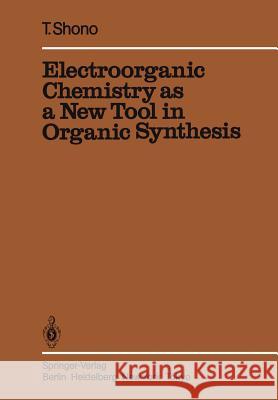
Electroorganic Chemistry as a New Tool in Organic Synthesis Tatsuya Shono 9783642694950 Springer - książkaWidoczna okładka, to zdjęcie poglądowe, a rzeczywista szata graficzna może różnić się od prezentowanej.

Electroorganic Chemistry as a New Tool in Organic Synthesis

ISBN-13: 9783642694950 / Angielski / Miękka / 2011 / 172 str.

Tatsuya Shono
cena 403,47 zł
(netto: 384,26 VAT:  5%)

Najniższa cena z 30 dni: 385,52 zł
Termin realizacji zamówienia:
ok. 22 dni roboczych
Bez gwarancji dostawy przed świętami

Darmowa dostawa!

Although the first electroorganic reaction used in organic synthesis is probably the famous Kolbe electrolysis published in 1849, no other remarkable reactions have been found until the reductive dimerization of acrylonitrile to adipo nitrile was developed by Dr. M. M. Baizer of Monsanto Co. in 1964. Since then, the electro organic chemistry has been studied extensively with the expectation that it is a new useful tool for finding novel reactions in organic synthesis. The purpose of this book is not to give a comprehensive survey of studies on electrochemical reactions of organic compounds but to show that the electro organic chemistry is indeed useful in organic synthesis. Thus, this book has been written under the following policies. (1) Since this monograph is mainly concerned with organic synthesis, only few studies carried out from the view point of electrochemical, theoretical, or analytical chemistry are mentioned. (2) Since electroorganic chemistry covers a great variety of reactions, the types of reactions described in this book are selected mainly with regard to their application in organic synthesis. Simple transformations of functional groups are only described in particular cases, and also some well established processes such as the Kolbe electrolysis, pinacolic coupling, and hydrodimerization are only briefly mentioned. (3) Since many reports have already been published for each type of these reactions, only a limited number of the relevant papers are cited in this book."


Kategorie:
Nauka, Chemia
Kategorie BISAC:
Science > Chemia - Organiczna
Science > Chemia - Fizyczna
Science > Chemistry - Industrial & Technical
Wydawca:
Springer
Seria wydawnicza:
Reactivity and Structure: Concepts in Organic Chemistry
Język:
Angielski
ISBN-13:
9783642694950
Rok wydania:
2011
Wydanie:
Softcover Repri
Numer serii:
000248855
Ilość stron:
172
Waga:
0.34 kg
Wymiary:
24.4 x 17.0
Oprawa:
Miękka
Wolumenów:
01

1 Introduction.- 1.1 Inversion of Polarity of Substrates.- 1.2 Interface Reactions.- 1.2.1 Stereochemistry.- 1.2.2 Distribution of Active Species.- References.- 2 Anodic Oxidations.- 2.1 Anodic Cleavage of Aliphatic Carbon-Hydrogen Bonds and Carbon-Carbon Single Bonds.- 2.1.1 Cleavage of Carbon-Hydrogen Bonds.- 2.1.2 Cleavage of Carbon-Carbon Single Bonds.- References.- 2.2 Oxidation of Carbon-Carbon Double Bonds.- 2.2.1 Introduction.- 2.2.2 Oxidation of Simple Olefins.- 2.2.3 Oxidation of Conjugated and Nonconju- gated Dienes.- 2.2.4 Oxidation of Arylolefms.- 2.2.5 Oxidation of Enolic Olefins.- References.- 2.3 Oxidation of Alcohols, Glycols, Ethers, and Acetals.- 2.3.1 Oxidation of Alcohols.- 2.3.2 Oxidation of Glycols.- References.- 2.4 Oxidation of Compounds Containing Sulfur, Phosphorous, and Boron.- 2.4.1 Sulfur Compounds.- 2.4.2 Compounds Containing Phosphorous and Boron.- References.- 2.5 Oxidation of Organic Halides and Oxidative Halogenation of Organic Compounds.- 2.5.1 Oxidation of Organic Halides.- 2.5.2 Halogenation.- References.- 2.6 Oxidation of Aliphatic and Aromatic Amines.- 2.6.1 Oxidation of Aliphatic Amines.- 2.6.2 Oxidation of Aromatic Amines.- 2.6.3 Oxidation of Amides and Carbamates.- 2.6.4 Application of ?-Methoxy- or ?-Acetoxy- Amides or -Carbamates as Starting Materials in Organic Synthesis.- 2.6.4.1 Formation of Carbon-Carbon Bonds.- 2.6.4.2 Formation of Bonds between Carbon and Heteroatoms.- 2.6.4.3 Reactions Using ?-Methoxylated Amides and Carbamates as Masked Carbonyl Compounds.- 2.6.4.4 Formation of Enecarbamates and their Reactions.- References.- 2.7 Oxidation of Carbanions andCarboxylate Anions.- 2.7.1 Oxidation of Carbanions.- 2.7.2 Oxidation of Carboxylate Anions.- 2.7.2.1 Formation of Radicals Kolbe- Type Reactions.- 2.7.2.2 Formation of Cations.- References.- 2.8 Oxidation of Aromatic Systems.- 2.8.1 Aromatic Substitution.- 2.8.1.1 Acetoxylation.- 2.8.1.2 Methoxylation.- 2.8.1.3 Formation of Quinones.- 2.8.1.4 Miscellaneous Oxidations.- 2.8.1.5 Oxidation of Benzene.- 2.8.1.6 Acetamidation, Nitration, and Reactions with Pyridine.- 2.8.1.7 Halogenation.- 2.8.1.8 Cyanation.- 2.8.2 Coupling.- 2.8.2.1 Intramolecular Coupling.- 2.8.2.2 Intermolecular Coupling.- 2.8.3 Oxidation at the Benzylic Position.- 2.8.4 Oxidation of Furan, Pyrrole, and Thiophene.- 2.8.4.1 Furans.- 2.8.4.2 Pyrrole and Thiophene.- References.- 2.9 Oxidations Using Mediators.- 2.9.1 Principles.- 2.9.2 Homomediatory Systems.- 2.9.3 Heteromediatory Systems.- 2.9.4 Double Mediatory Systems.- References.- 3 Cathodic Reductions.- 3.1 Cathodic Addition, Substitution, and Coupling.- 3.1.1 Addition.- 3.1.2 Substitution.- 3.1.3 Coupling.- References.- 3.2 Cathodic Eliminations.- 3.2.1 1,1-Elimination.- 3.2.2 1,2-Elimination.- 3.2.3 1,3- and 1,4-Elimination.- 3.2.4 Deprotection.- References.- 3.3 Cathodic Generation of Active Bases.- 3.3.1 Reactions of Electrogenerated Bases.- References.- 1. Constant Current Oxidation.- 2. Controlled Potential Reduction.- 3. Indirect Oxidation Using a Mediator.


Udostępnij

Facebook - konto krainaksiazek.pl


Opinie o Krainaksiazek.pl na Opineo.pl

Partner Mybenefit

Krainaksiazek.pl w programie rzetelna firma Krainaksiaze.pl - płatności przez paypal

Czytaj nas na:

Facebook - krainaksiazek.pl
  • książki na zamówienie
  • granty
  • książka na prezent
  • kontakt
  • pomoc
  • opinie
  • regulamin
  • polityka prywatności

Zobacz:

  • Księgarnia czeska

  • Wydawnictwo Książkowe Klimaty

1997-2025 DolnySlask.com Agencja Internetowa

© 1997-2022 krainaksiazek.pl
     
KONTAKT | REGULAMIN | POLITYKA PRYWATNOŚCI | USTAWIENIA PRYWATNOŚCI
Zobacz: Księgarnia Czeska | Wydawnictwo Książkowe Klimaty | Mapa strony | Lista autorów
KrainaKsiazek.PL - Księgarnia Internetowa

Polityka prywatnosci - link
Krainaksiazek.pl - płatnośc Przelewy24
Przechowalnia Przechowalnia






