• Wyszukiwanie zaawansowane
  • Kategorie
  • Kategorie BISAC
  • Książki na zamówienie
  • Promocje
  • Granty
  • Książka na prezent
  • Opinie
  • Pomoc
  • Załóż konto
  • Zaloguj się

Electron Transfer Reactions in Organic Chemistry » książka


zaloguj się | załóż konto
Logo Krainaksiazek.pl

koszyk

konto

szukaj
topmenu
Księgarnia internetowa
Szukaj
Książki na zamówienie
Promocje
Granty
Książka na prezent
Moje konto
Pomoc
 
 
Wyszukiwanie zaawansowane
Pusty koszyk
Bezpłatna dostawa dla zamówień powyżej 20 złBezpłatna dostawa dla zamówień powyżej 20 zł

Kategorie główne

• Nauka
 [2946600]
• Literatura piękna
 [1856966]

  więcej...
• Turystyka
 [72221]
• Informatyka
 [151456]
• Komiksy
 [35826]
• Encyklopedie
 [23190]
• Dziecięca
 [619653]
• Hobby
 [140543]
• AudioBooki
 [1577]
• Literatura faktu
 [228355]
• Muzyka CD
 [410]
• Słowniki
 [2874]
• Inne
 [445822]
• Kalendarze
 [1744]
• Podręczniki
 [167141]
• Poradniki
 [482898]
• Religia
 [510455]
• Czasopisma
 [526]
• Sport
 [61590]
• Sztuka
 [243598]
• CD, DVD, Video
 [3423]
• Technologie
 [219201]
• Zdrowie
 [101638]
• Książkowe Klimaty
 [124]
• Zabawki
 [2473]
• Puzzle, gry
 [3898]
• Literatura w języku ukraińskim
 [254]
• Art. papiernicze i szkolne
 [8170]
Kategorie szczegółowe BISAC

Electron Transfer Reactions in Organic Chemistry

ISBN-13: 9783642725463 / Angielski / Miękka / 2011 / 234 str.
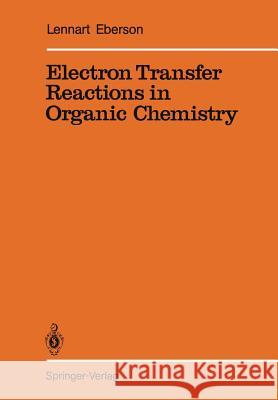
Lennart Eberson
Electron Transfer Reactions in Organic Chemistry Lennart Eberson 9783642725463 Springer - książkaWidoczna okładka, to zdjęcie poglądowe, a rzeczywista szata graficzna może różnić się od prezentowanej.

Electron Transfer Reactions in Organic Chemistry

ISBN-13: 9783642725463 / Angielski / Miękka / 2011 / 234 str.

Lennart Eberson
cena 403,47 zł
(netto: 384,26 VAT:  5%)

Najniższa cena z 30 dni: 385,52 zł
Termin realizacji zamówienia:
ok. 22 dni roboczych
Bez gwarancji dostawy przed świętami

Darmowa dostawa!

The subject of the book is electron transfer reactions in organic chemistry, with the emphasis on mechanistic aspects. The theoretical framework is that of the Marcus theory, well-known from its extensive use in inorganic chemistry. The book deals with definitions of electron transfer, theory of electron transfer reactions (Marcus' and Pross-Shaik's approach) experimental diagnosis of electron transfer reactions, examples from inorganic/organic reactants and purely organic reactants, electro- and photochemical electron transfer, electron transfer catalyzed reactions, connections between electron transfer and polar mechanisms, and applications of electron transfer, such as electrosynthesis of organic chemicals, photochemical energy storage, conducting organic materials and chemiluminescence. The approach is new in so far as no comparable book has been published. The book will be of value to anyone interested in keeping track of developments in physical organic chemistry.


Kategorie:
Nauka, Chemia
Kategorie BISAC:
Science > Chemia - Organiczna
Science > Chemia - Fizyczna
Gardening > General
Wydawca:
Springer
Seria wydawnicza:
Reactivity and Structure: Concepts in Organic Chemistry
Język:
Angielski
ISBN-13:
9783642725463
Rok wydania:
2011
Wydanie:
Softcover Repri
Numer serii:
000248855
Ilość stron:
234
Waga:
0.44 kg
Wymiary:
24.4 x 17.0
Oprawa:
Miękka
Wolumenów:
01

I Electron Transfer, a Neglected Concept in Organic Chemistry.- I.1 Electron Transfer is Fundamental in Many Areas of Organic Chemistry.- I.2 Organic Electron Transfer Theories Come in Cycles.- I.3 References.- II Concepts and Definitions.- II.1 Electron Transfer Can Be Defined in Several Ways.- II.2 Inner-and Outer-sphere Electron Transfer.- II.3 Other Concepts in Electron Transfer Chemistry.- II.4 References.- III Theories of Electron Transfer in Organic Chemistry.- III.1 The Thermodynamic Approach to Electron Transfer Reactivity.- III.2 The Single Electron Shift, a Configuration Mixing Model of Electron Transfer Reactivity.- III.3 The Marcus Theory for Outer-sphere ET.- III.3.a The Physical Model.- 111.3. b The Marcus Equation.- III.3.c Properties of the Marcus Expression.- III. 4 Kinetic Models of Electron Transfer Mechanisms.- III.4.a The Collide-and React Model.- III.4.b The Kinetic Model of Reversible Electron Transfer.- III.5 The Marcus Inverted Region.- III.6 The Rehm-Weiler and Agmon-Levine Equations.- III.7 References.- IV How to Use the Marcus Theory.- IV.1 Standard Potential.- IV.2 Reorganization Energy.- IV.3 Case Studies.- IV.3.a Oxidation of Alkylmetals by Fe(III) Complexes.- IV.3.b Oxidation of NADH by Ferrieinium Ions.- IV.3.c Reduction of N-bromosuccinimide by Ferrocenes and Other Easily Oxidizable Compounds.- IV.4 References.- V Experimental Diagnosis.- V.l Phenomenological Approach.- V.2 Mechanistic Approach.- V 2.a Detection of Radicals by ESR Spectroscopy.- V.2.b Trapping of Radical Intermediates.- V.2.c Stereochemistry.- V.2.d Formation of Radical-derived Products.- V.2.e Kinetic Methods.- V.2.f Isotope Effects.- V.2.g Failures of Simple LFERs.- V.2.h Comparison with Compulsory ET Reactions.- V.2.i Photostimulation.- V.2.j Appearance of Charge-transfer Complexes.- V.2.k Chemiluminescence.- V.3 Summarizing Remarks.- V.4 References.- VI Reactions Between Organic and Inorganic Non-metallic Species.- V.1 Oxygen Derived Species.- VI.2 Sulfur Derived Species.- VI.3 Nitrogen Derived Species.- VI.4 Halogen Derived Species.- VI.5 Miscellaneous.- VI.6 Summarizing Remarks.- IV.7 References.- VII Reaction Between Organic and Metal Ion Species.- VII.1 One-and Two-electron Reagents.- VII.2 Choice of Metal Reagent and Substrate in Mechanistic Studies.- VII.3 Examples of Established Outer-sphere Mechanisms.- VII.4 Specific Systems.- VII.4.a Co(III) Oxidation.- VII.4.b Mn(III) Oxidation.- VII.4.c Ag(II) Oxidation.- VII.4.d Cu(III) Oxidation.- VII.4.e Cu(II) Oxidation.- VII.4.f Ce(IV) Oxidation.- VII.4.g Ir(IV) Oxidation.- VII.4.h Ni(IV) and Ni(III) Oxidation.- VII.4.i Tl(III) Oxidation.- VII.4.j Pb(IV) Oxidation.- VII.4.k Pd(II) Oxidation.- VII.5 Conclusion.- VII.6 References.- VIII Electron Transfer Reactions Between Organic Species.- VIII. 1 Radical Ions and Radicals as ET Reagents.- VIII.1.a Reduction of Halides by Radical Anions.- VIII.l.b Reduction of Halides by Metal Reagents.- VIII.1.c Reduction of Polyhalides by ET Reagents.- VIII.l.d Reaction Between Radical Cations and Carboxylate Ions.- VIII.l.e ET Reactions Between Radicals and Neutral Organic Species.- VIII.2 Organic Ions and Even-electron Molecules as ET Reagents.- VIII.2.a Carbanions as ET Reductants.- VIII.2.b Alkyllithiums and Grignard Reagents as ET Reagents.- VIII.2.c Other Main Group Organometallics as ET Reagents.- VIII.2.d NADH as a Potential ET Reagent.- VIII.2.e Peroxide Derivatives as ET Oxidants.- VIII.3 References.- IX Electricity and Light Promoted ET.- IX.1 Organic Electrode Processes.- IX.1.a An Overview of the Electrochemical Process.- IX.l.b The Nature of the Electrode/Electrolyte Interface.- IX.l.c The Activation Process of an Outer-Sphere Electrochemical Step.- IX.l.d Outer-sphere ET, the Sledgehammer Approach to Redox Chemistry.- IX.l.e Electrocatalysis.- IX.2 Photochemical ET.- IX.2.a A Simple MO Picture of Photochemical ET.- IX.2.b Application of the Marcus and Rehm-Weller Treatments to Photochemical ET.- IX.2.c Chemical Consequences of Photochemical ET or how to Avoid the Back ET Reaction.- IX.2.d Aromatic Photocyanation.- IX.2.e Photosolvolysis and Photo Wagner-Meerwein Rearrangement via Intramolecular ET.- IX.2.f Photoexcitation of Electron Donor-acceptor Complexes.- IX. 3 Photoelectrochemistry.- IX.4 Chemiluminescence.- IX.5 References.- X Electron Transfer Catalyzed Reactions.- X.1 Electron Transfer Catalysis as a General Phenomenon.- X.2 An Overview of the ETC Process.- X.3 Different Types of ETC Reactions.- X.3.a The SRN1 Mechanism.- X.3.b The SRE2 Mechanism.- X.3.c The SOE1 Mechanism.- X.3.d The SON2 Mechanism.- X.3.e ET Catalyzed Decomposition of Diazo Compounds.- X.3.f ET Catalyzed Cycloadditions.- X.3.g ET Catalyzed Addition of Dioxygen.- X.3.h ET Catalyzed Cycloreversions.- X.3.i ET Catalyzed Reactions of Strained Heterocyclic Systems.- X.3.j ET Catalyzed Rotation Around Bonds.- X.3.k ET Catalyzed Reactions of Organometallics.- X.4 References.- XI ET and Polar Mechanisms; How Are They Connected?.- XI.1 Formulation of the Problem.- XI. 2 Electrophilic Aromatic Substitution.- XI.2.a The Single Electron Shift Hypothesis as Governing Electrophilic Reactivity.- XI.2.b Does Outer-sphere ET Take Place in Electrophilic Aromatic Substitution?.- XI.3 The SN2 Mechanism.- XI.4 Conclusions.- IX.5 References.- XII Applications of Outer-sphere Electron Transfer.- XII.1 Introduction.- XII.2 Photochemical Fuel Production.- XII.3 Light from Chemical Reactions (Chemiluminescence).- XII.4 Synthetic Applications of ET Reactions.- XII. 5 Conducting Organic Materials.- XII.5.a Radical Cation Salts, Conductors and Superconductors.- XII.5.b ET Oxidized or Reduced Polymers.- XII.5. c The Marcus Theory in Relation to Conducting Organic Materials.- XII.5.d An Organic Chemist’s Model of a Conducting Polymer.- XII.6 Molecular Electronic Devices of Organic Origin.- XII.7 Oscillating Reactions.- XII.8 Wood Pulping and ET.- XII.9 Toxicity and ET.- XII.10 Degradation Mechanisms of Organic Compounds.- XII.11 References.- Epilogue.


Udostępnij

Facebook - konto krainaksiazek.pl


Opinie o Krainaksiazek.pl na Opineo.pl

Partner Mybenefit

Krainaksiazek.pl w programie rzetelna firma Krainaksiaze.pl - płatności przez paypal

Czytaj nas na:

Facebook - krainaksiazek.pl
  • książki na zamówienie
  • granty
  • książka na prezent
  • kontakt
  • pomoc
  • opinie
  • regulamin
  • polityka prywatności

Zobacz:

  • Księgarnia czeska

  • Wydawnictwo Książkowe Klimaty

1997-2025 DolnySlask.com Agencja Internetowa

© 1997-2022 krainaksiazek.pl
     
KONTAKT | REGULAMIN | POLITYKA PRYWATNOŚCI | USTAWIENIA PRYWATNOŚCI
Zobacz: Księgarnia Czeska | Wydawnictwo Książkowe Klimaty | Mapa strony | Lista autorów
KrainaKsiazek.PL - Księgarnia Internetowa

Polityka prywatnosci - link
Krainaksiazek.pl - płatnośc Przelewy24
Przechowalnia Przechowalnia






