• Wyszukiwanie zaawansowane
  • Kategorie
  • Kategorie BISAC
  • Książki na zamówienie
  • Promocje
  • Granty
  • Książka na prezent
  • Opinie
  • Pomoc
  • Załóż konto
  • Zaloguj się

Electron Paramagnetic Resonance: A Practitioners Toolkit » książka


zaloguj się | załóż konto
Logo Krainaksiazek.pl

koszyk

konto

szukaj
topmenu
Księgarnia internetowa
Szukaj
Książki na zamówienie
Promocje
Granty
Książka na prezent
Moje konto
Pomoc
 
 
Wyszukiwanie zaawansowane
Pusty koszyk
Bezpłatna dostawa dla zamówień powyżej 20 złBezpłatna dostawa dla zamówień powyżej 20 zł

Kategorie główne

• Nauka
 [2946350]
• Literatura piękna
 [1816154]

  więcej...
• Turystyka
 [70666]
• Informatyka
 [151172]
• Komiksy
 [35576]
• Encyklopedie
 [23172]
• Dziecięca
 [611458]
• Hobby
 [135995]
• AudioBooki
 [1726]
• Literatura faktu
 [225763]
• Muzyka CD
 [378]
• Słowniki
 [2917]
• Inne
 [444280]
• Kalendarze
 [1179]
• Podręczniki
 [166508]
• Poradniki
 [469467]
• Religia
 [507199]
• Czasopisma
 [496]
• Sport
 [61352]
• Sztuka
 [242330]
• CD, DVD, Video
 [3348]
• Technologie
 [219391]
• Zdrowie
 [98638]
• Książkowe Klimaty
 [124]
• Zabawki
 [2382]
• Puzzle, gry
 [3525]
• Literatura w języku ukraińskim
 [259]
• Art. papiernicze i szkolne
 [7107]
Kategorie szczegółowe BISAC

Electron Paramagnetic Resonance: A Practitioners Toolkit

ISBN-13: 9780470258828 / Angielski / Twarda / 2009 / 560 str.
Marina Brustolon; M. R. Brustolon
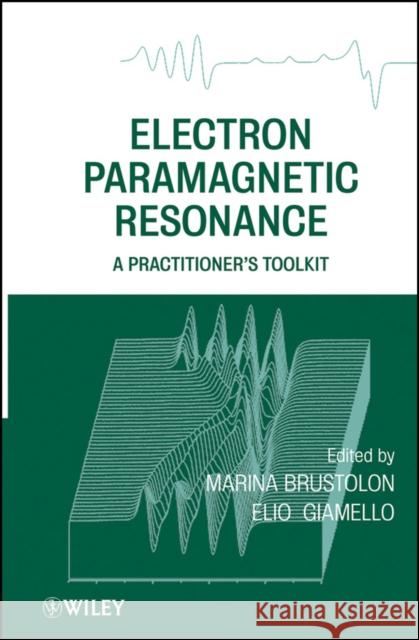
Electron Paramagnetic Resonance: A Practitioners Toolkit Brustolon, Marina 9780470258828 John Wiley & Sons - książkaWidoczna okładka, to zdjęcie poglądowe, a rzeczywista szata graficzna może różnić się od prezentowanej.

Electron Paramagnetic Resonance: A Practitioners Toolkit

ISBN-13: 9780470258828 / Angielski / Twarda / 2009 / 560 str.

Marina Brustolon; M. R. Brustolon
cena 721,51
(netto: 687,15 VAT:  5%)

Najniższa cena z 30 dni: 712,70
Termin realizacji zamówienia:
ok. 30 dni roboczych.

Darmowa dostawa!

This book offers a pragmatic guide to navigating through the complex maze of EPR/ESR spectroscopy fundamentals, techniques, and applications. Written for the scientist who is new to EPR spectroscopy, the editors have prepared a volume that de-mystifies the basic fundamentals without weighting readers down with detailed physics and mathematics, and then presents clear approaches in specific application areas. The first part presents basic fundamentals and advantages of electron paramagnetic resonance spectrscopy. The second part explores severalapplication areas including chemistry, biology, medicine, materials and geology. A frequently-asked-questions sections focuses on practicalquestions, such as the size of sample, etc. It's an ideal, hands-on reference for chemists and researchers in the pharmaceutical and materials (semiconductor) industries who are looking for a basic introduction to EPR spectroscopy.


Kategorie:
Nauka, Chemia
Kategorie BISAC:
Science > Chemia - Analityczna
Wydawca:
John Wiley & Sons
Język:
Angielski
ISBN-13:
9780470258828
Rok wydania:
2009
Ilość stron:
560
Waga:
0.83 kg
Wymiary:
23.62 x 15.75 x 2.79
Oprawa:
Twarda
Wolumenów:
01
Dodatkowe informacje:
Bibliografia
Wydanie ilustrowane
Podręcznik

? Electron Paramagnetic Resonance: A Practitioner?s Toolkit is an excellent reference, especially for newcomers to the field of EPR spectroscopy.? ( JACS , February 2009)

Foreword.

Preface.

Contributors.

PART I: Principles.

Chapter 1: Introduction to Electron Paramagnetic Resonance (Carlo Corvaja).

1.1 Chapter Summary.

1.2 EPR Spectrum: What Is It?

1.3 The Electron Spin.

1.4 Electron Spin in a Magnetic Field (Zeeman Effect).

1.5 Effects of Electromagnetic Fields.

1.6 Macroscopic Collection of Electron Spins.

1.7 Observation of Magnetic Resonance.

1.8 Electron Spin in Atoms or Molecules.

1.9 Macroscopic Magnetization.

1.10 Spin Relaxation and Bloch Equations.

1.11 Nuclear Spins.

1.12 Anisotropy of the Hyperfine Interaction.

1.13 ENDOR.

1.14 Two Interacting Electron Spins.

1.15 Quantum Machinery.

1.16 Electron Spin in a Static Magnetic Field.

1.17 Electron Spin Coupled to a Nuclear Spin.

1.18 Electron Spin in a Zeeman Magnetic Field in the Presence of a Microwave Field.

Chapter 2: Basic Experimental Methods in Continuous Wave Electron Paramagnetic Resonance (Peter Höfer).

2.1 Instrumental Components of a Continuous Electron Paramagnetic Resonance (CW–EPR) Spectrometer.

2.2 Experimental Techniques.

Chapter 3: What can be studied with Electron Paramagnetic Resonance? (Marina Brustolon).

3.1 Introduction.

3.2 Organic Radicals.

3.3 Organic Molecules with More than One Unpaired Electron.

3.4 Inorganic Radicals, Small Paramagnetic Molecules, and Isolated Atoms.

3.5 Transition Metal Ions.

3.6 Natural Systems and Processes.

3.7 Tailoring and assembling Paramagnetic Species for Magnetic Materials.

3.8 Industrial Applications of EPR.

Chapter 4: Electron Paramagnetic Resonance Spectroscopy in the Liquid Phase (Georg Gescheidt).

4.1 General Considerations.

4.2 Generation of Radicals and Radical Ions.

4.3 Basic Interactions and Principles.

4.4 Patterns and Line Shapes of Fluid–Solution EPR Spectra.

4.5 Transition Metal Ions.

4.6 Biradicals.

4.7 Simulation Software.

4.8 How Fluid Solution Spectra are Analyzed.

4.9 Calculation of EPR Parameters.

4.10 Molecular Properties Mirrored by EPR Spectra in Fluid Solution.

4.11 Chemically Induced Dynamic Electron Polarization (CIDEP) and CID Nuclear Polarization (CIDNP): Methods to Study Short–Lived Radicals.

4.12 References.

Chapter 5: Pulsed Electron Paramagnetic Resonance (Michael K. Bowman).

5.1 Introduction.

5.2 Vector Model for Pulsed EPR.

5.3 Pulse Sequences.

5.4. Data Analysis.

5.5. Spectrometer.

Chapter 6: Electron Paramagnetic Resonance Spectra in the Solid State (Marina Bennati and Damien M. Murphy).

6.1 Introduction.

6.2 Anisotropy of the Zeeman interaction: the g tensor.

6.3 The Hyperfine Interaction in the Solid Sstate.

6.4 TMIs.

6.5 EPR Spectra for S > ½: the ZFS.

Chapter 7: The Virtual Electron Paramagnetic Resonance Laboratory: A User Guide to ab initio Modeling (Vincenzo Barone and Antonino Polimeno).

7.1. Introduction.

7.2. Modeling tools.

7.3. Tutorial and Case–Studies.

7.4. Conclusions.

PART II: APPLICATIONS.

Chapter 8: Spin Trapping (Angelo Alberti and Dante Macciantelli).

8.1 What Is Spin Trapping and Why Use It.

8.2 Spin Traps.

8.3 Experimental Methods.

8.4 Applications.

8.5 Spin Trapping in the Gas Phase or in Solid State.

8.6 Availability of Spin Traps.

8.7 FAQs.

Chapter 9: Radiation Produced Radicals (Einar Sagstuen and Eli Olaug Hole).

9.1 Introduction.

9.2 Interaction of Radiation with Matter.

9.3 Qualitative Detection of DNA Radicals.

9.4 Tools and Procedures for Radical Structure eterminations.

9.5 Quantitative Detection of Radicals.

9.6 Highlighted Reading.

Chapter 10: Electron Paramagnetic Resonance in Biochemistry and Biophysics (Michael K. Bowman and Donatella Carbonera).

10.1 Introduction.

10.2 Experimental Considerations.

10.3 Dynamics.

10.4 Saturation Transfer.

10.5 Two–Dimensional Pulsed EPR.

10.6 Protein Topology and SDSL.

10.7 Surface Potentials/Accessibility and SDSL.

10.8 Oximetry.

10.9 Nanoscale Distance Measurements.

10.10 Introduction.

10.11 Oxygenic Photosynthesis.

Chapter 11: Electron Paramagnetic Resonance Detection of Radicals in Biology and Medicine (Michael J. Davies).

11.1 Free Radicals in Disease Processes.

11.2 Nature of Free Radicals Involved in Disease Processes and Potential Catalysts for Radical Formation.

11.3 Direct EPR Detection of Reactive Radicals In Vivo and Ex Vivo.

11.4 Spin Trapping of Reactive Radicals In Vivo and Ex Vivo.

11.5 Spin Scavenging of Reactive Radicals In Vivo and Ex Vivo.

11.6 Spin Trapping of Nitric Oxide.

11.7 Verification of the occurrence of radical–mediated processes.

11.8 Conclusions.

Chapter 12: Electron Paramagnetic Resonance Applications to Catalytic and Porous Materials (Daniella Goldfarb).

12.1 Introduction.

12.2 Paramagnetic TMIs.

12.3 Spin Probes.

12.4 Reaction Intermediates and Trapped Radicals.

12.5 Summary and Outlook.

12.6 References.

Chapter 13: Electron Paramagentic Resonance of Charge Carriers in Solids (Mario Chiesa and Elio Giamello).

13.1 Introduction.

13.2 Point Defects, Charge Carriers, and EPR.

13.3 Localized Electrons: Colour Centres in Ionic Solids.

13.4 Aggregate Color Centres.

13.5 Localized Holes in Ionic Solids.

13.6 Charge Carriers in Semiconductors.

13.7 CESR in Metals.

Appendix.

Subject Index.

Chemical Index.

Marina Brustolon is a full professor in physical chemistry at the Università degli Studi di Padova in Italy.

Elio Giamello is a full professor in inorganic chemistry at the Università degli Studi di Torino in Italy.

Easy–to–follow guide helps you take full advantage of EPR spectroscopy′s capabilities

Electron Paramagnetic Resonance: A Practitioner′s Toolkit serves as a practical guide that enables you to navigate through and make sense of the complex maze of electron paramagnetic resonance (EPR) spectroscopy fundamentals, techniques, and applications. The first half of this book is dedicated to explaining the core principles of EPR spectroscopy, using clear, easy–to–follow explanations and examples while avoiding complex physics and mathematics. The second half of the book focuses on applications, including problem–solving strategies for such fields as biology, medicine, material science, chemistry, physics, and radiation effects on matter.

Carefully edited by two experienced EPR scientists, this book features a team of eighteen expert authors. Their contributions are based not only on a thorough examination and analysis of the primary literature, but also on their own firsthand experience in research and applications. As a result, the book is filled with practical advice, tips, and cautions addressing such issues as:

  • Choosing the right experiment

  • Selecting experimental parameters and sample size

  • Avoiding setbacks and pitfalls

  • Simulating the spectra

With its straightforward explanations and clear examples, this book is just what researchers need to take full advantage of EPR spectroscopy′s tremendous capabilities. It is particularly recommended for those interested in applications to chemistry, biology, medicine, and material science.


Udostępnij

Facebook - konto krainaksiazek.pl


Opinie o Krainaksiazek.pl na Opineo.pl

Partner Mybenefit

Krainaksiazek.pl w programie rzetelna firma Krainaksiaze.pl - płatności przez paypal

Czytaj nas na:

Facebook - krainaksiazek.pl
  • książki na zamówienie
  • granty
  • książka na prezent
  • kontakt
  • pomoc
  • opinie
  • regulamin
  • polityka prywatności

Zobacz:

  • Księgarnia czeska

  • Wydawnictwo Książkowe Klimaty

1997-2026 DolnySlask.com Agencja Internetowa

© 1997-2022 krainaksiazek.pl
     
KONTAKT | REGULAMIN | POLITYKA PRYWATNOŚCI | USTAWIENIA PRYWATNOŚCI
Zobacz: Księgarnia Czeska | Wydawnictwo Książkowe Klimaty | Mapa strony | Lista autorów
KrainaKsiazek.PL - Księgarnia Internetowa

Polityka prywatnosci - link
Krainaksiazek.pl - płatnośc Przelewy24
Przechowalnia Przechowalnia






