• Wyszukiwanie zaawansowane
  • Kategorie
  • Kategorie BISAC
  • Książki na zamówienie
  • Promocje
  • Granty
  • Książka na prezent
  • Opinie
  • Pomoc
  • Załóż konto
  • Zaloguj się

Electrokinetic Chromatography: Theory, Instrumentation and Applications » książka

zaloguj się | załóż konto
Logo Krainaksiazek.pl

koszyk

konto

szukaj
topmenu
Księgarnia internetowa
Szukaj
Książki na zamówienie
Promocje
Granty
Książka na prezent
Moje konto
Pomoc
 
 
Wyszukiwanie zaawansowane
Pusty koszyk
Bezpłatna dostawa dla zamówień powyżej 20 złBezpłatna dostawa dla zamówień powyżej 20 zł

Kategorie główne

• Nauka
 [2946350]
• Literatura piękna
 [1816154]

  więcej...
• Turystyka
 [70666]
• Informatyka
 [151172]
• Komiksy
 [35576]
• Encyklopedie
 [23172]
• Dziecięca
 [611458]
• Hobby
 [135995]
• AudioBooki
 [1726]
• Literatura faktu
 [225763]
• Muzyka CD
 [378]
• Słowniki
 [2917]
• Inne
 [444280]
• Kalendarze
 [1179]
• Podręczniki
 [166508]
• Poradniki
 [469467]
• Religia
 [507199]
• Czasopisma
 [496]
• Sport
 [61352]
• Sztuka
 [242330]
• CD, DVD, Video
 [3348]
• Technologie
 [219391]
• Zdrowie
 [98638]
• Książkowe Klimaty
 [124]
• Zabawki
 [2382]
• Puzzle, gry
 [3525]
• Literatura w języku ukraińskim
 [259]
• Art. papiernicze i szkolne
 [7107]
Kategorie szczegółowe BISAC

Electrokinetic Chromatography: Theory, Instrumentation and Applications

ISBN-13: 9780470871027 / Angielski / Twarda / 2006 / 552 str.
U Pyell
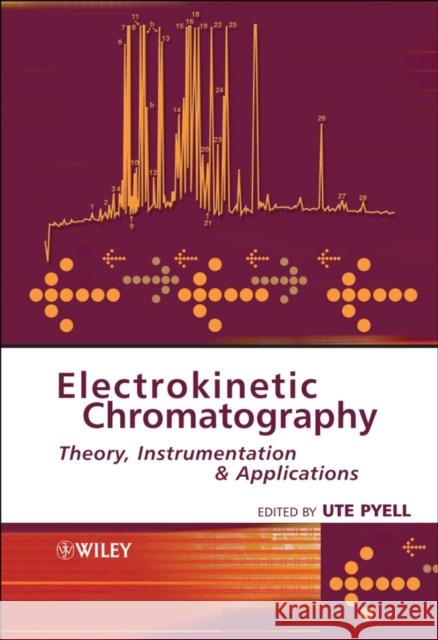
Electrokinetic Chromatography: Theory, Instrumentation and Applications Pyell, Ute 9780470871027 JOHN WILEY AND SONS LTD - książkaWidoczna okładka, to zdjęcie poglądowe, a rzeczywista szata graficzna może różnić się od prezentowanej.

Electrokinetic Chromatography: Theory, Instrumentation and Applications

ISBN-13: 9780470871027 / Angielski / Twarda / 2006 / 552 str.

U Pyell
cena 1293,77
(netto: 1232,16 VAT:  5%)

Najniższa cena z 30 dni: 1277,97
Termin realizacji zamówienia:
ok. 30 dni roboczych.

Darmowa dostawa!

This book offers a thorough theoretical description of the method, an overview on the current status of the various forms of electrokinetic capillary chromatography, plus a look forward into future developments.

  • Focuses on the technique of electrokinetic capillary chromatography and its applications in various areas, including pharmaceutical, industrial, environmental, and biological chemistry
  • Features invaluable information put together from experienced researchers in the area
  • First book to discuss this technique in detail
  • Covers a topic that is part of the exploding field of hyphenated techniques
  • Selected international contributors working in research in this area

Kategorie:
Nauka, Chemia
Kategorie BISAC:
Science > Chemia - Analityczna
Wydawca:
JOHN WILEY AND SONS LTD
Język:
Angielski
ISBN-13:
9780470871027
Rok wydania:
2006
Ilość stron:
552
Waga:
1.16 kg
Wymiary:
24.9 x 17.2 x 3.6
Oprawa:
Twarda
Wolumenów:
01
Dodatkowe informacje:
Bibliografia
Wydanie ilustrowane

" an excellent reference for those chemists who follow developments in the area of small molecule separations or separations in EKC." ( Journal of the American Chemical Society, January 31, 2007)

List of Contributors.

Preface.

PART I: SEPARATION PRINCIPLES.

1. Theory of Electrokinetic Chromatography (Ute Pyell).

2. Determination of Critical Micelle Concentrations by Capillary Electrokinetic Techiques (Thomas Le Saux, Anne Varenne and Pierre Gareil).

3. Selectivity Characterization of Pseudostationary Phases Using the Solvation Parameter Model (Colin F. Poole).

4. General Aspects of Resolution Optimization with Micellar Pseudostationary Phases (Li Jia and Shigeru Terabe).

5. Optimization of the Separation Conditions in Electrokinetic Chromatography: Experimental Designs, Modelling and Validation (Olga Jiménez and Maria Luisa Marina).

6. Microemulsion Electrokinetic Chromatography (Alex Marsh, Kevin Altria and Brian Clark).

7. Polymeric Pseudostationary Phases and Dendrimers (Christopher P. Palmer).

8. Pseudostationary Ion–exchange Phases (Philip J. Zakaria and Paul R. Haddad).

9. Principles of Enantiomer Separations in Electrokinetic Chromatography (Bezhan Chankvetadze).

10. On–line Sample Enrichment in Electrokinetic Chromatography (Joselito P. Quirino).

PART II: INSTRUMENTATION.

11. General Aspects of Instrumentation (Jan Fischer and Pavel Jandera).

12. Laser–induced Fluorescence Detection: A Summary (Christophe Bayle, Véréna Poinsot, Clara Fournier–Noël and François Couderc).

13. Amperometric Detection (Frank–Michael Matysik).

14. Photothermal Detection (Werner Faubel, Stefan Heissler and Ute Pyell).

15. Coupling of Electrokinetic Chromatography to Mass Spectrometry (Roelof Mol, Gerhardus J. de Jong and Govert W. Somsen).

16. Electrokinetic Chromatography on Microfluidic Devices (Ómar Gústafsson and Jörg P. Kutter).

PART III: APPLICATIONS.

17. Electromigration Separation Techniques in Pharmaceutical Analysis (Jean–Luc Veuthey, Laurent Geiser and Serge Rudaz).

18. Analysis of Body Fluids by Electrokinetic Chromatographic Techniques (Ll. Puignou, R. Busquets and M.T. Galceran).

19. Application of Electrokinetic Chromatography to Food and Beverages (Mary Boyce).

20. Application of Enantioselective Electrokinetic Chromatography (Bezhan Chankvetadze).

21. Environmental Analysis Ana Carolina O. Costa, Gustavo (A. Micke, Elisabete A. Pereira, Clóvis L. Silva and Marina F.M. Tavares).

Index.

Dr Ute Pyell received his PhD in Analytical Chemistry in 1991. He is an active member in the Analytical Division of the German Chemical Society (GDCh), the Separation Sciences Group of the Analytical Division of the GDCh and an active member in the Working Group Education and Training of the EURACHEM/D.

In the last two decades electrokinetic chromatography (EKC) which can be regarded as an interface between electrophoresis and chromatography has matured into a powerful analytical separation technique with a very large spectrum of applications. This book is designed to be a guide to the large, rapidly growing and diverse field of EKC for a broad audience; those new to EKC, those more experienced, those interested in method development including instrumental developments and those involved with applications research in various fields.

The book aims to bring together a thorough theoretical description of methodological aspects, an overview on the current status of the various forms of EKC, and current and emerging applications, as well as looking forward to future developments. This book should be of interest for all those who need a high–efficiency separation technique with easily adaptable selectivity having the additional features of low sample volume requirements, short run times and high versatility.

The volume is composed of twenty–one chapters organized into three major sections.

(i) Separation Principles including an introduction to the terminology, a review  of electrokinetic methods to investigate the micelle–formation process, an introduction into the fundamentals of the solvation parameter model for the (selectivity) characterisation of separation carriers, a general guide to  method development and resolution optimisation with micellar pseudostationary phases, an introduction to concepts for computer–based rapid method optimization, and reviews on various forms of EKC including microemulsion electrokinetic chromatography (MEEKC), EKC with polymeric pseudostationary phases and dendrimers, EKC with pseudostationary ion–exchange phases and enantioselective EKC. The section closes with a discussion on techniques employed for on–line sample enrichment in combination with EKC

(ii) Instrumentation including the use of coated capillaries, reviews of different detection methods (laser–induced fluorescence detection, amperometric detection, photothermal detection and mass spectrometric detection) having high potential as sensitive and/or selective detection techniques for EKC and concluding with a review of the implementation of EKC on microfluidic devices

(iii) Applications of EKC in the fields of pharmaceutical analysis, the analysis of body fluids, food analysis, enantioselective analysis and environmental analysis.

With this structure the book intends to illuminate many facets of this relatively young member in the family of separation methods, bringing together expert knowledge from various directions which will not only help the novice to estimate how EKC might help in solving analytical tasks, but also assist the more experienced user in broadening and deepening their knowledge of this technique which has already found its way into routine laboratories


Udostępnij

Facebook - konto krainaksiazek.pl


Opinie o Krainaksiazek.pl na Opineo.pl

Partner Mybenefit

Krainaksiazek.pl w programie rzetelna firma Krainaksiaze.pl - płatności przez paypal

Czytaj nas na:

Facebook - krainaksiazek.pl
  • książki na zamówienie
  • granty
  • książka na prezent
  • kontakt
  • pomoc
  • opinie
  • regulamin
  • polityka prywatności

Zobacz:

  • Księgarnia czeska

  • Wydawnictwo Książkowe Klimaty

1997-2026 DolnySlask.com Agencja Internetowa

© 1997-2022 krainaksiazek.pl
     
KONTAKT | REGULAMIN | POLITYKA PRYWATNOŚCI | USTAWIENIA PRYWATNOŚCI
Zobacz: Księgarnia Czeska | Wydawnictwo Książkowe Klimaty | Mapa strony | Lista autorów
KrainaKsiazek.PL - Księgarnia Internetowa

Polityka prywatnosci - link
Krainaksiazek.pl - płatnośc Przelewy24
Przechowalnia Przechowalnia








