• Wyszukiwanie zaawansowane
  • Kategorie
  • Kategorie BISAC
  • Książki na zamówienie
  • Promocje
  • Granty
  • Książka na prezent
  • Opinie
  • Pomoc
  • Załóż konto
  • Zaloguj się

Drinking Water Treatment: Focusing on Appropriate Technology and Sustainability » książka


zaloguj się | załóż konto
Logo Krainaksiazek.pl

koszyk

konto

szukaj
topmenu
Księgarnia internetowa
Szukaj
Książki na zamówienie
Promocje
Granty
Książka na prezent
Moje konto
Pomoc
 
 
Wyszukiwanie zaawansowane
Pusty koszyk
Bezpłatna dostawa dla zamówień powyżej 20 złBezpłatna dostawa dla zamówień powyżej 20 zł

Kategorie główne

• Nauka
 [2946600]
• Literatura piękna
 [1856966]

  więcej...
• Turystyka
 [72221]
• Informatyka
 [151456]
• Komiksy
 [35826]
• Encyklopedie
 [23190]
• Dziecięca
 [619653]
• Hobby
 [140543]
• AudioBooki
 [1577]
• Literatura faktu
 [228355]
• Muzyka CD
 [410]
• Słowniki
 [2874]
• Inne
 [445822]
• Kalendarze
 [1744]
• Podręczniki
 [167141]
• Poradniki
 [482898]
• Religia
 [510455]
• Czasopisma
 [526]
• Sport
 [61590]
• Sztuka
 [243598]
• CD, DVD, Video
 [3423]
• Technologie
 [219201]
• Zdrowie
 [101638]
• Książkowe Klimaty
 [124]
• Zabawki
 [2473]
• Puzzle, gry
 [3898]
• Literatura w języku ukraińskim
 [254]
• Art. papiernicze i szkolne
 [8170]
Kategorie szczegółowe BISAC

Drinking Water Treatment: Focusing on Appropriate Technology and Sustainability

ISBN-13: 9789400711037 / Angielski / Twarda / 2011 / 280 str.
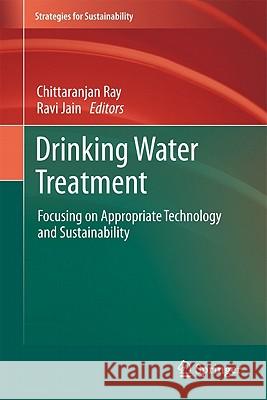
Chittaranjan Ray; Ravi Jain
Drinking Water Treatment: Focusing on Appropriate Technology and Sustainability Ray, Chittaranjan 9789400711037 Not Avail - książkaWidoczna okładka, to zdjęcie poglądowe, a rzeczywista szata graficzna może różnić się od prezentowanej.

Drinking Water Treatment: Focusing on Appropriate Technology and Sustainability

ISBN-13: 9789400711037 / Angielski / Twarda / 2011 / 280 str.

Chittaranjan Ray; Ravi Jain
cena 403,47 zł
(netto: 384,26 VAT:  5%)

Najniższa cena z 30 dni: 385,52 zł
Termin realizacji zamówienia:
ok. 22 dni roboczych
Bez gwarancji dostawy przed świętami

Darmowa dostawa!

Sustainable technologies for water supply are urgently needed if water has to be supplied to billions of less fortunate people with inadequate access to water. These technologies must be simple, less expensive, less energy intensive, and easy to maintain for their adaptation among the poor masses. Four appropriate technologies are discussed here: solar pasteurization, membrane desalination, natural filtration (riverbank filtration), and solar distillation. Solar pasteurization can be a useful means of producing water at remote, but sunny locations where fuel may not be easily available for boiling water. Membrane desalination will remain as a viable means of drinking water production for individual households to large communities. Various membrane filtration techniques as well as the means to "democratize" membrane filtration have been presented. Riverbank filtration is a "natural" filtration technique where drinking water is produced by placing wells on the banks of rivers. The riverbed/bank material and the underlying aquifer act as natural filters to remove pollutants from river water. Solar distillation can be a viable method of drinking water production for individual households to small communities without the input of external energy. Sustainability framework and technology transfer are discussed through transdisciplinary analysis.


Kategorie:
Nauka, Biologia i przyroda
Kategorie BISAC:
Science > Earth Sciences - Hydrology
Science > Biotechnology
Science > Earth Sciences - Geology
Wydawca:
Not Avail
Seria wydawnicza:
Strategies for Sustainability
Język:
Angielski
ISBN-13:
9789400711037
Rok wydania:
2011
Numer serii:
000418479
Ilość stron:
280
Waga:
0.54 kg
Wymiary:
23.37 x 16.0 x 2.03
Oprawa:
Twarda
Wolumenów:
01
Dodatkowe informacje:
Bibliografia

1. INTRODUCTION - Chittaranjan Ray and Ravi Jain

1.1 Nature and Extent of the Problem

1.2 Water Contaminants

1.3 Topics Covered


2. DRINKING WATER TREATMENT TECHNOLOGY—COMPARATIVE ANALYSIS - Chittaranjan Ray and Ravi Jain

2.1 Introduction

2.2 Natural Filtration

2.3 Riverbank Filtration

2.4 Slow Sand Filtration

2.5 Membrane Filtration

2.6 Solar Distillation

2.7 Solar Pasteurization

2.8 Technology Development Challenges

2.9 Technological Implementation—Case Studies


3. SOLAR PASTEURIZATION - Ed Pejack

3.1 Microbiology of Water Pasteurization

3.2 Use of Solar Cookers for Drinking Water Production

3.3 Devices Designed Specifically for Water

3.4 Simple devices from common materials

3.5 Commercial Devices in Production

3.6 Devices with Recovery Heat Exchange

3.7 Water Pasteurization Indicators

3.8 Multi-Use Systems

3.9 Summary


4. MEMBRANE DESALINATION - Kishore Rajagopalan

4.1 Desalination Technologies

4.2 Thermal Desalination Technologies

4.3 Membrane Processes

4.4 Emerging Membrane Technologies

4.5 Global Growth of Membrane Desalination

4.6 Desalination Environment Interactions

4.7 Mitigation of Environmental Impacts

4.8 Membrane-Based Desalination at the Small and Medium Scale

4.9 Integrated Approaches

4.10 Conclusions

4.11 References


5. BANK FILTRATION AS NATURAL FILTRATION - Chittaranjan Ray, Jay Jasperse, and Thomas Grischek

5.1 Introduction

5.2 Natural Filtration’s Implications for Sustainability

5.3 How Does It Work?

5.4 Regulatory Perspective

5.5 Key Planning Considerations

5.6 Site Characterization

5.7 Design Considerations

5.8 Operational Considerations

5.9 How Well Does It Work?

5.10 Performance Assessment of RBF Systems

5.11 Areas of Future Study and Technology Development

5.12 Implementation, Challenges, Strategies


6. SOLAR DISTILLATION - Rahul Dev and G.N. Tiwari

6.1 Introduction

6.2 Water characterization

6.3 Solar Distillation: Basic Principle

6.4 Historical Background: Evaluation Process of Solar Stills

6.5 Broad Classification of Solar Still

6.6 Various Methods of Fixing the Glass Cover onto the Solar Still Walls

6.7 Heat Transfer and Thermal Modeling

6.8 Thermal Analysis: Development of Energy Balance Equations

6.10 Comparison of distillate yield for different active solar stills

6.11 Effect of Various Parameters

6.12 Cost, Energy and Exergy Issues Related to Water Production Through Solar Stills

6.13 CO2 Emission, CO2 Mitigation and Carbon Credit Earned

6.14 Technology Transfer

6.15 Challenges in Adoption


7. TRANSDISCIPLINARY ANALYSIS - Ravi Jain

7.1 Sustainability Concepts and Differing Views

7.2 Industrial Practices: Suggested Options

7.3 Sustainability of Technology in Developing Countries

7.4 Sustainability Framework

7.5 Technology Transfer and Implementation

1.1 Nature and Extent of the Problem

1.2 Water Contaminants

1.3 Topics Covered


2. DRINKING WATER TREATMENT TECHNOLOGY—COMPARATIVE ANALYSIS - Chittaranjan Ray and Ravi Jain

2.1 Introduction

2.2 Natural Filtration

2.3 Riverbank Filtration

2.4 Slow Sand Filtration

2.5 Membrane Filtration

2.6 Solar Distillation

2.7 Solar Pasteurization

2.8 Technology Development Challenges

2.9 Technological Implementation—Case Studies


3. SOLAR PASTEURIZATION - Ed Pejack

3.1 Microbiology of Water Pasteurization

3.2 Use of Solar Cookers for Drinking Water Production

3.3 Devices Designed Specifically for Water

3.4 Simple devices from common materials

3.5 Commercial Devices in Production

3.6 Devices with Recovery Heat Exchange

3.7 Water Pasteurization Indicators

3.8 Multi-Use Systems

3.9 Summary


4. MEMBRANE DESALINATION - Kishore Rajagopalan

4.1 Desalination Technologies

4.2 Thermal Desalination Technologies

4.3 Membrane Processes

4.4 Emerging Membrane Technologies

4.5 Global Growth of Membrane Desalination

4.6 Desalination Environment Interactions

4.7 Mitigation of Environmental Impacts

4.8 Membrane-Based Desalination at the Small and Medium Scale

4.9 Integrated Approaches

4.10 Conclusions

4.11 References


5. BANK FILTRATION AS NATURAL FILTRATION - Chittaranjan Ray, Jay Jasperse, and Thomas Grischek

5.1 Introduction

5.2 Natural Filtration’s Implications for Sustainability

5.3 How Does It Work?

5.4 Regulatory Perspective

5.5 Key Planning Considerations

5.6 Site Characterization

5.7 Design Considerations

5.8 Operational Considerations

5.9 How Well Does It Work?

5.10 Performance Assessment of RBF Systems

5.11 Areas of Future Study and Technology Development

5.12 Implementation, Challenges, Strategies


6. SOLAR DISTILLATION - Rahul Dev and G.N. Tiwari

6.1 Introduction

6.2 Water characterization

6.3 Solar Distillation: Basic Principle

6.4 Historical Background: Evaluation Process of Solar Stills

6.5 Broad Classification of Solar Still

6.6 Various Methods of Fixing the Glass Cover onto the Solar Still Walls

6.7 Heat Transfer and Thermal Modeling

6.8 Thermal Analysis: Development of Energy Balance Equations

6.10 Comparison of distillate yield for different active solar stills

6.11 Effect of Various Parameters

6.12 Cost, Energy and Exergy Issues Related to Water Production Through Solar Stills

6.13 CO2 Emission, CO2 Mitigation and Carbon Credit Earned

6.14 Technology Transfer

6.15 Challenges in Adoption


7. TRANSDISCIPLINARY ANALYSIS - Ravi Jain

7.1 Sustainability Concepts and Differing Views

7.2 Industrial Practices: Suggested Options

7.3 Sustainability of Technology in Developing Countries

7.4 Sustainability Framework

7.5 Technology Transfer and Implementation

Chittaranjan Ray is Professor of Civil & Environmental Engineering and Interim Director of the Water Resources Research Center, University of Hawaii, Honolulu, Hawaii. Prior to joining the University of Hawaii, he worked as a research scientist at the Illinois State Water Survey at the University of Illinois. He received his Ph.D. in Civil Engineering from the University of Illinois at Urbana-Champaign and an M.S. degree in Civil Engineering from Texas Tech University. He was also employed as a staff engineer in the firm of Geraghty & Miller, Inc. in Hackensack, New Jersey (USA) conducting hazardous waste site investigation and water supply development for communities. He is a fellow of the American Society of Civil Engineers. He has published 5 books, over 100 scholarly papers, and many technical papers. His research work has been funded by the US National Science Foundation, US Environmental Protection Agency, US Department of Agriculture, US Department of Defense, and other agencies.


Ravi K. Jain is Dean, School of Engineering and Computer Science, University of the Pacific. Prior to this appointment, he has held research, faculty, and administrative positions at the University of Illinois (Urbana-Champaign), Massachusetts Institute of Technology (MIT), and the University of Cincinnati. He received degrees in civil engineering (BS, MSCE) from California State University. He holds a Ph.D. from Texas Tech University and a Masters in Public Administration from Harvard University. He has directed major research programs for the US department of Defense and has served as chairman of the Environmental Engineering Research Council, ASCE. He is a member of the American Academy of Environmental Engineers, a fellow of ASCE, and a fellow of AAAS. He has been a Littauer fellow at Harvard University and a fellow of Churchill College, Cambridge University. He has published 14 books, over 150 scholarly papers and technical reports, and has received many awards and honors including the US Army’s highest research award and was a recipient of the NSPE Founders Gold Medal and named Federal Engineering of the Year for 1989.


Sustainable technologies for water supply are urgently needed if water has to be supplied to billions of less fortunate people with inadequate access to water. These technologies must be simple, less expensive, less energy intensive, and easy to maintain for their adaptation among the poor masses.


Four appropriate technologies are discussed here: solar pasteurization, membrane desalination, natural filtration (riverbank filtration), and solar distillation. Solar pasteurization can be a useful means of producing water at remote, but sunny locations where fuel may not be easily available for boiling water. Membrane desalination will remain as a viable means of drinking water production for individual households to large communities. Various membrane filtration techniques as well as the means to “democratize” membrane filtration have been presented. Riverbank filtration is a “natural” filtration technique where drinking water is produced by placing wells on the banks of rivers. The riverbed/bank material and the underlying aquifer act as natural filters to remove pollutants from river water. Solar distillation can be a viable method of drinking water production for individual households to small communities without the input of external energy. Sustainability framework and technology transfer are discussed through transdisciplinary analysis.

Jain, Ravi RAVI JAIN, Ph.D., is Dean of the School of Enginee... więcej >


Udostępnij

Facebook - konto krainaksiazek.pl


Opinie o Krainaksiazek.pl na Opineo.pl

Partner Mybenefit

Krainaksiazek.pl w programie rzetelna firma Krainaksiaze.pl - płatności przez paypal

Czytaj nas na:

Facebook - krainaksiazek.pl
  • książki na zamówienie
  • granty
  • książka na prezent
  • kontakt
  • pomoc
  • opinie
  • regulamin
  • polityka prywatności

Zobacz:

  • Księgarnia czeska

  • Wydawnictwo Książkowe Klimaty

1997-2025 DolnySlask.com Agencja Internetowa

© 1997-2022 krainaksiazek.pl
     
KONTAKT | REGULAMIN | POLITYKA PRYWATNOŚCI | USTAWIENIA PRYWATNOŚCI
Zobacz: Księgarnia Czeska | Wydawnictwo Książkowe Klimaty | Mapa strony | Lista autorów
KrainaKsiazek.PL - Księgarnia Internetowa

Polityka prywatnosci - link
Krainaksiazek.pl - płatnośc Przelewy24
Przechowalnia Przechowalnia




