• Wyszukiwanie zaawansowane
  • Kategorie
  • Kategorie BISAC
  • Książki na zamówienie
  • Promocje
  • Granty
  • Książka na prezent
  • Opinie
  • Pomoc
  • Załóż konto
  • Zaloguj się

Default Nudges: From People's Experiences to Policymaking Implications » książka


zaloguj się | załóż konto
Logo Krainaksiazek.pl

koszyk

konto

szukaj
topmenu
Księgarnia internetowa
Szukaj
Książki na zamówienie
Promocje
Granty
Książka na prezent
Moje konto
Pomoc
 
 
Wyszukiwanie zaawansowane
Pusty koszyk
Bezpłatna dostawa dla zamówień powyżej 20 złBezpłatna dostawa dla zamówień powyżej 20 zł

Kategorie główne

• Nauka
 [2948695]
• Literatura piękna
 [1824038]

  więcej...
• Turystyka
 [70868]
• Informatyka
 [151073]
• Komiksy
 [35227]
• Encyklopedie
 [23181]
• Dziecięca
 [621575]
• Hobby
 [138961]
• AudioBooki
 [1642]
• Literatura faktu
 [228651]
• Muzyka CD
 [371]
• Słowniki
 [2933]
• Inne
 [445341]
• Kalendarze
 [1243]
• Podręczniki
 [164416]
• Poradniki
 [479493]
• Religia
 [510449]
• Czasopisma
 [502]
• Sport
 [61384]
• Sztuka
 [243086]
• CD, DVD, Video
 [3417]
• Technologie
 [219673]
• Zdrowie
 [100865]
• Książkowe Klimaty
 [124]
• Zabawki
 [2168]
• Puzzle, gry
 [3372]
• Literatura w języku ukraińskim
 [260]
• Art. papiernicze i szkolne
 [7838]
Kategorie szczegółowe BISAC

Default Nudges: From People's Experiences to Policymaking Implications

ISBN-13: 9783031215575 / Angielski / Twarda / 2023 / 84 str.
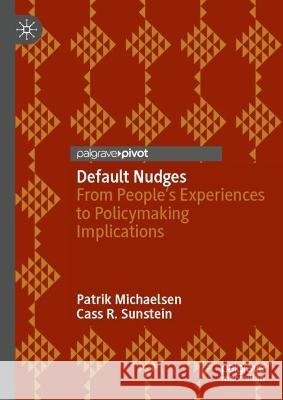
Patrik Michaelsen; Cass R. Sunstein
Default Nudges: From People's Experiences to Policymaking Implications Patrik Michaelsen Cass R. Sunstein 9783031215575 Palgrave MacMillan - książkaWidoczna okładka, to zdjęcie poglądowe, a rzeczywista szata graficzna może różnić się od prezentowanej.

Default Nudges: From People's Experiences to Policymaking Implications

ISBN-13: 9783031215575 / Angielski / Twarda / 2023 / 84 str.

Patrik Michaelsen; Cass R. Sunstein
cena 200,77
(netto: 191,21 VAT:  5%)

Najniższa cena z 30 dni: 173,46
Termin realizacji zamówienia:
ok. 22 dni roboczych.

Darmowa dostawa!

All over the world, private and public institutions have been attracted to “nudges,” understood as interventions that preserve freedom of choice, but that steer people in particular directions. The most effective nudges are often “defaults,” which establish what happens if people do nothing. For example, automatic enrollment in savings plans is a default nudge, as is automatic enrollment in green energy.Default rules are in widespread use, but we have very little information about how people experience them, whether they see themselves as manipulated by them, and whether they approve of them in practice. In this book, Patrik Michaelsen and Cass R. Sunstein offer a wealth of new evidence about people’s experiences and perceptions with respect to default rules. They argue that this evidence can help us to answer important questions about the effectiveness and ethics of nudging.The evidence offers a generally positive picture of how default nudges are perceived and experienced. The central conclusion is simple: empirical findings strongly support the conclusion that, taken as such, default nudges are both ethical and effective. These findings, and the accompanying discussion, have significant implications for policymakers in many nations, and also for the private sector.


All over the world, private and public institutions have been attracted to “nudges,” understood as interventions that preserve freedom of choice, but that steer people in particular directions. The most effective nudges are often “defaults,” which establish what happens if people do nothing. For example, automatic enrollment in savings plans is a default nudge, as is automatic enrollment in green energy.Default rules are in widespread use, but we have very little information about how people experience them, whether they see themselves as manipulated by them, and whether they approve of them in practice. In this book, Patrik Michaelsen and Cass R. Sunstein offer a wealth of new evidence about people’s experiences and perceptions with respect to default rules. They argue that this evidence can help us to answer important questions about the effectiveness and ethics of nudging.The evidence offers a generally positive picture of how default nudges are perceived and experienced. The central conclusion is simple: empirical findings strongly support the conclusion that, taken as such, default nudges are both ethical and effective. These findings, and the accompanying discussion, have significant implications for policymakers in many nations, and also for the private sector.

Kategorie:
Nauka, Ekonomia i biznes
Kategorie BISAC:
Business & Economics > Organizational Behavior
Psychology > General
Social Science > Criminology
Wydawca:
Palgrave MacMillan
Język:
Angielski
ISBN-13:
9783031215575
Rok wydania:
2023
Dostępne języki:
Ilość stron:
84
Oprawa:
Twarda
Dodatkowe informacje:
Wydanie ilustrowane

1. Chapter 1: The Problem

1.1. Default Nudges


2. Chapter 2: Challenges for Nudging and a Framework for Assessing Them

2.1. Effectiveness

2.2. Ethical Issues

              2.2.1. What Is the Problem?

              2.2.2. Unacceptable Paternalism

              2.2.3. Manipulation

              2.2.4. Responses to Criticisms

2.3. People’s Perceptions and Experiences of Nudges: A Framework

2.3.1. Proposition 1: People’s Perceptions and Experiences Are Part of the Net (Welfare) Effect of the Nudge

2.3.2. Proposition 2: People’s Perceptions and Experiences Are Relevant to the Ethical Assessment of Nudges

2.3.3. Proposition 3: People’s Perceptions and Experiences Can Moderate Behavior Change

2.3.4 The Relevance of Transparency


3. Chapter 3: How Do People Evaluate Default Nudges?

3.1. Survey-Based Research

3.2. Transparency and Defaults

              3.2.1. Transparency and Choice

              3.2.2. Transparency and Perceptions of Default Nudges

3.3. Firsthand Evaluations

3.3.1. Choice Experiences: Do Defaults Affect Experienced Autonomy and Choice Satisfaction?

3.3.2. Perceptions of Defaults and Choice Architects Using Them

3.4. What We Know


4. Chapter 4: Evaluation

4.1. Distribution

4.2. Measuring Welfare

4.3. Lessons


5. References


Patrik Michaelsen is a Researcher at the University of Gothenburg, Sweden. He holds a Ph. D. in Psychology from the Department of Psychology, University of Gothenburg.

Cass R. Sunstein is the Robert Walmsley University Professor at Harvard University, USA. From 2009 to 2012, he was Administrator of the White House Office of Information and Regulatory Affairs, and since that time, he has held several positions in the U.S Government. From 2020 to 2022, he was the Chair of the Technical Advisory Group on Behavioral Insights and Sciences for Health at the World Health Organization. He is the founder and director of the Program on Behavioral Economics and Public Policy at Harvard Law School. Sunstein has written numerous books, including Human Agency and Behavioral Economics: Nudging Fast and Slow (Palgrave, 2017); Why Nudge?: The Politics of Libertarian Paternalism (2014); and Nudge: Improving Decisions About Health, Wealth, and Happiness (with Richard H. Thaler, 2008).


All over the world, private and public institutions have been attracted to “nudges,” understood as interventions that preserve freedom of choice, but that steer people in particular directions. The most effective nudges are often “defaults,” which establish what happens if people do nothing. For example, automatic enrollment in savings plans is a default nudge, as is automatic enrollment in green energy.

Default rules are in widespread use, but we have very little information about how people experience them, whether they see themselves as manipulated by them, and whether they approve of them in practice. In this book, Patrik Michaelsen and Cass R. Sunstein offer a wealth of new evidence about people’s experiences and perceptions with respect to default rules. They argue that this evidence can help us to answer important questions about the effectiveness and ethics of nudging.

The evidence offers a generally positive picture of how default nudges are perceived and experienced. The central conclusion is simple: empirical findings strongly support the conclusion that, taken as such, default nudges are both ethical and effective. These findings, and the accompanying discussion, have significant implications for policymakers in many nations, and also for the private sector.



Patrik Michaelsen is a Researcher at the University of Gothenburg, Sweden. He holds a Ph. D. in Psychology from the Department of Psychology, University of Gothenburg.

Cass R. Sunstein is the Robert Walmsley University Professor at Harvard University, USA. From 2009 to 2012, he was Administrator of the White House Office of Information and Regulatory Affairs, and since that time, he has held several positions in the U.S Government. From 2020 to 2022, he was the Chair of the Technical Advisory Group on Behavioral Insights and Sciences for Health at the World Health Organization. He is the founder and director of the Program on Behavioral Economics and Public Policy at Harvard Law School. Sunstein has written numerous books, including Human Agency and Behavioral Economics: Nudging Fast and Slow (Palgrave, 2017); Why Nudge?: The Politics of Libertarian Paternalism (2014); and Nudge: Improving Decisions About Health, Wealth, and Happiness (with Richard H. Thaler, 2008).


Udostępnij

Facebook - konto krainaksiazek.pl


Opinie o Krainaksiazek.pl na Opineo.pl

Partner Mybenefit

Krainaksiazek.pl w programie rzetelna firma Krainaksiaze.pl - płatności przez paypal

Czytaj nas na:

Facebook - krainaksiazek.pl
  • książki na zamówienie
  • granty
  • książka na prezent
  • kontakt
  • pomoc
  • opinie
  • regulamin
  • polityka prywatności

Zobacz:

  • Księgarnia czeska

  • Wydawnictwo Książkowe Klimaty

1997-2026 DolnySlask.com Agencja Internetowa

© 1997-2022 krainaksiazek.pl
     
KONTAKT | REGULAMIN | POLITYKA PRYWATNOŚCI | USTAWIENIA PRYWATNOŚCI
Zobacz: Księgarnia Czeska | Wydawnictwo Książkowe Klimaty | Mapa strony | Lista autorów
KrainaKsiazek.PL - Księgarnia Internetowa

Polityka prywatnosci - link
Krainaksiazek.pl - płatnośc Przelewy24
Przechowalnia Przechowalnia





