• Wyszukiwanie zaawansowane
  • Kategorie
  • Kategorie BISAC
  • Książki na zamówienie
  • Promocje
  • Granty
  • Książka na prezent
  • Opinie
  • Pomoc
  • Załóż konto
  • Zaloguj się

Coping with Water Scarcity: Addressing the Challenges » książka


zaloguj się | załóż konto
Logo Krainaksiazek.pl

koszyk

konto

szukaj
topmenu
Księgarnia internetowa
Szukaj
Książki na zamówienie
Promocje
Granty
Książka na prezent
Moje konto
Pomoc
 
 
Wyszukiwanie zaawansowane
Pusty koszyk
Bezpłatna dostawa dla zamówień powyżej 20 złBezpłatna dostawa dla zamówień powyżej 20 zł

Kategorie główne

• Nauka
 [2946600]
• Literatura piękna
 [1856966]

  więcej...
• Turystyka
 [72221]
• Informatyka
 [151456]
• Komiksy
 [35826]
• Encyklopedie
 [23190]
• Dziecięca
 [619653]
• Hobby
 [140543]
• AudioBooki
 [1577]
• Literatura faktu
 [228355]
• Muzyka CD
 [410]
• Słowniki
 [2874]
• Inne
 [445822]
• Kalendarze
 [1744]
• Podręczniki
 [167141]
• Poradniki
 [482898]
• Religia
 [510455]
• Czasopisma
 [526]
• Sport
 [61590]
• Sztuka
 [243598]
• CD, DVD, Video
 [3423]
• Technologie
 [219201]
• Zdrowie
 [101638]
• Książkowe Klimaty
 [124]
• Zabawki
 [2473]
• Puzzle, gry
 [3898]
• Literatura w języku ukraińskim
 [254]
• Art. papiernicze i szkolne
 [8170]
Kategorie szczegółowe BISAC

Coping with Water Scarcity: Addressing the Challenges

ISBN-13: 9789048181612 / Angielski / Miękka / 2010 / 382 str.
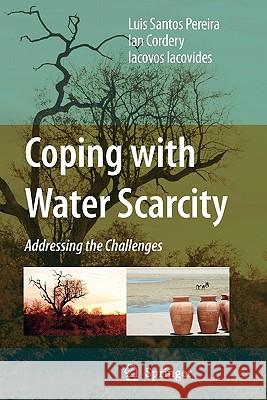
Luis Santos Pereira; Ian Cordery; Iacovos Iacovides
Coping with Water Scarcity: Addressing the Challenges Santos Pereira, Luis 9789048181612 Springer - książkaWidoczna okładka, to zdjęcie poglądowe, a rzeczywista szata graficzna może różnić się od prezentowanej.

Coping with Water Scarcity: Addressing the Challenges

ISBN-13: 9789048181612 / Angielski / Miękka / 2010 / 382 str.

Luis Santos Pereira; Ian Cordery; Iacovos Iacovides
cena 806,99 zł
(netto: 768,56 VAT:  5%)

Najniższa cena z 30 dni: 771,08 zł
Termin realizacji zamówienia:
ok. 22 dni roboczych
Bez gwarancji dostawy przed świętami

Darmowa dostawa!

One of the main problems confronting the world of the 21st Century is a shortage of water. There is already severe scarcity in many regions of the world, causing tremendous problems for local populations and indeed entire societies. There is insufficient water available for the production of food to alleviate poverty and starvation; the lack of water hampers industrial, urban and tourism development, forcing restrictions on other sectors, especially agriculture; health problems arise as the deterioration of ground and surface waters favours water-borne diseases, which flourish in the absence of decent water distribution and sewerage systems. Water conflicts still arise in areas under stress, while water for nature has become a vanishing priority in such zones. This book is a guide to the establishment of regional and/or local guidelines for developing and implementing new ideas for coping with water scarcity. The basic premise underlying the book is that water scarcity will persist, so personal, human and society-wide skills will be needed to cope with it while living in harmony with the necessary environmental constraints. The book provides basic information to assist decision makers, water managers, engineers, agronomists, social scientists and other professions (and their students) in formulating coherent, hopefully harmonious and consolidated views on the issue. Guidelines are also given for introducing the general public to the concept of water scarcity and how to deal with it.


Kategorie:
Nauka, Biologia i przyroda
Kategorie BISAC:
Technology & Engineering > Environmental - Water Supply
Science > Environmental Science (see also Chemistry - Environmental)
Science > Earth Sciences - Hydrology
Wydawca:
Springer
Język:
Angielski
ISBN-13:
9789048181612
Rok wydania:
2010
Ilość stron:
382
Waga:
0.55 kg
Wymiary:
15.6 x 23.39 x 2.08
Oprawa:
Miękka
Wolumenów:
01
Dodatkowe informacje:
Bibliografia
Wydanie ilustrowane

From the reviews: "This 2002 revision of the UNESCO publication consists of 12 chapters in 357 pages covering a problem that is widespread and growing. ... The book also examines alternative water resources ... conserving water in various situations, constraints ('social, economic, cultural, legal and institutional'), and educational needs. This work covers the area comprehensively and in sufficient detail to meet its stated goals and to illuminate the discussion and planning needed to meet the challenge of water scarcity. Summing Up: Recommended. Upper-division undergraduate through professional collections." (D. A. Vaccari, Choice, Vol. 47 (3), November, 2009)

Foreword iii 1 Introduction 2. Water scarcity concepts 2.1. Concepts 2.2. Coping with water scarcity 3. Physical characteristics and processes leading to water scarcity 3.1. Introduction 3.2. Climatic conditions 3.3. Hydrologic characteristics 3.4. Climate change and its impacts on water scarcity 3.5. Meteorological and hydrological data collection and handling 4. Droughts and desertification 4.1. Droughts 4.2. Desertification 5. Conceptual thinking in coping with water scarcity 5.1. Introduction 5.2. Social value of water 5.3. Environmental value of water 5.4. Landscape and cultural value of water 5.5. Economic value of water 5.6. Priorities for water allocation 5.7. International issues - treaties between sovereign states 5.8. Conclusion 6. Surface water use and harvesting 6.1. Large and small scale projects 6.2. Reservoir management 6.3. Control of water losses and non beneficial uses of water 6.4. Water harvesting 6.5. Environmental and health issues 6.6. Conclusion 7. Groundwater use and recharge 7.1. Introduction 7.2. Major aquifers and well fields 7.3. Minor aquifers of local importance 7.4. Environmental, economic and social impacts of aquifer overexploitation 7.5. Artificial recharge 7.6. Conjunctive use of surface and groundwater 7.7. The use of groundwater in coping with water scarcity 8. Using non-conventional water resources 8.1. Introduction 8.2. Wastewater use 8.3. Use of brackish, saline and drainage waters 8.4. Desalinated water 8.5. Fog-capturing, water harvesting, cloud seeding, and water transfers 9. Water conservation and saving. Concepts and performance 9.1. Concepts 9.2. Water use, consumptive use, water losses, and performance 9.3. Water use performance indicators 9.4. Water conservation and saving to cope with the various water scarcity regimes 9.5. Implementing efficient water use for water conservation and saving 10. Water conservation and saving measures and practices 10.1. Water conservation and saving in urban systems 10.2. Water saving in domestic applications 10.3. Water conservation and saving in landscape and recreational uses 10.4. Water conservation and saving in industrial and energy uses 10.5 Water conservation in dryland agriculture 10.6. Water saving and conservation in irrigated agriculture 10.7. Supply management 10.8. Concluding remarks 11. Social, economic, cultural, legal and institutional constraints and issues 11.1. Local communities 11.2. Urban centres 11.3. Rural areas 11.4. User groups 11.5. Administration of water use - public and private organizations 12. Education 12.1. Need to change attitudes to water 12.2. Education and training 12.3. Need for new developments and research 12.4. Development of public awareness of water scarcity issues 12.5. Conclusion Bibliography Index

One of the main problems confronting the world of the 21st Century is a shortage of water. There is already severe scarcity in many regions of the world, causing tremendous problems for local populations and indeed entire societies. There is insufficient water available for the production of food to alleviate poverty and starvation; the lack of water hampers industrial, urban and tourism development, forcing restrictions on other sectors, especially agriculture; health problems arise as the deterioration of ground and surface waters favours water-borne diseases, which flourish in the absence of decent water distribution and sewerage systems. Water conflicts still arise in areas under stress, while water for nature has become a vanishing priority in such zones.

This book is a guide to the establishment of regional and/or local guidelines for developing and implementing new ideas for coping with water scarcity. The basic premise underlying the book is that water scarcity will persist, so personal, human and society-wide skills will be needed to cope with it while living in harmony with the necessary environmental constraints. The book provides basic information to assist decision makers, water managers, engineers, agronomists, social scientists and other professions (and their students) in formulating coherent, hopefully harmonious and consolidated views on the issue. Guidelines are also given for introducing the general public to the concept of water scarcity and how to deal with it.

Audience:
This book will be of interest to policy-makers, decision-makers, water managers, land use planners, engineers (mainly agricultural, civil and environmental engineers), agronomists, economists, social scientists; other professionals related with water; students (engineering and planning)


Udostępnij

Facebook - konto krainaksiazek.pl


Opinie o Krainaksiazek.pl na Opineo.pl

Partner Mybenefit

Krainaksiazek.pl w programie rzetelna firma Krainaksiaze.pl - płatności przez paypal

Czytaj nas na:

Facebook - krainaksiazek.pl
  • książki na zamówienie
  • granty
  • książka na prezent
  • kontakt
  • pomoc
  • opinie
  • regulamin
  • polityka prywatności

Zobacz:

  • Księgarnia czeska

  • Wydawnictwo Książkowe Klimaty

1997-2025 DolnySlask.com Agencja Internetowa

© 1997-2022 krainaksiazek.pl
     
KONTAKT | REGULAMIN | POLITYKA PRYWATNOŚCI | USTAWIENIA PRYWATNOŚCI
Zobacz: Księgarnia Czeska | Wydawnictwo Książkowe Klimaty | Mapa strony | Lista autorów
KrainaKsiazek.PL - Księgarnia Internetowa

Polityka prywatnosci - link
Krainaksiazek.pl - płatnośc Przelewy24
Przechowalnia Przechowalnia




