• Wyszukiwanie zaawansowane
  • Kategorie
  • Kategorie BISAC
  • Książki na zamówienie
  • Promocje
  • Granty
  • Książka na prezent
  • Opinie
  • Pomoc
  • Załóż konto
  • Zaloguj się

Continuum Solvation Models in Chemical Physics: From Theory to Applications » książka

zaloguj się | załóż konto
Logo Krainaksiazek.pl

koszyk

konto

szukaj
topmenu
Księgarnia internetowa
Szukaj
Książki na zamówienie
Promocje
Granty
Książka na prezent
Moje konto
Pomoc
 
 
Wyszukiwanie zaawansowane
Pusty koszyk
Bezpłatna dostawa dla zamówień powyżej 20 złBezpłatna dostawa dla zamówień powyżej 20 zł

Kategorie główne

• Nauka
 [2950560]
• Literatura piękna
 [1849509]

  więcej...
• Turystyka
 [71097]
• Informatyka
 [151150]
• Komiksy
 [35848]
• Encyklopedie
 [23178]
• Dziecięca
 [617388]
• Hobby
 [139064]
• AudioBooki
 [1657]
• Literatura faktu
 [228597]
• Muzyka CD
 [383]
• Słowniki
 [2855]
• Inne
 [445295]
• Kalendarze
 [1464]
• Podręczniki
 [167547]
• Poradniki
 [480102]
• Religia
 [510749]
• Czasopisma
 [516]
• Sport
 [61293]
• Sztuka
 [243352]
• CD, DVD, Video
 [3414]
• Technologie
 [219456]
• Zdrowie
 [101002]
• Książkowe Klimaty
 [124]
• Zabawki
 [2311]
• Puzzle, gry
 [3459]
• Literatura w języku ukraińskim
 [254]
• Art. papiernicze i szkolne
 [8079]
Kategorie szczegółowe BISAC

Continuum Solvation Models in Chemical Physics: From Theory to Applications

ISBN-13: 9780470029381 / Angielski / Twarda / 2008 / 636 str.
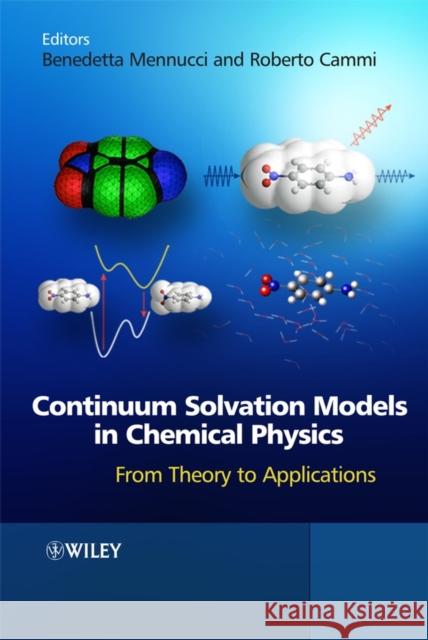
Benedetta Mennucci; Roberto Cammi
Continuum Solvation Models in Chemical Physics: From Theory to Applications Mennucci, Benedetta 9780470029381 John Wiley & Sons - książkaWidoczna okładka, to zdjęcie poglądowe, a rzeczywista szata graficzna może różnić się od prezentowanej.

Continuum Solvation Models in Chemical Physics: From Theory to Applications

ISBN-13: 9780470029381 / Angielski / Twarda / 2008 / 636 str.

Benedetta Mennucci; Roberto Cammi
cena 1141,35
(netto: 1087,00 VAT:  5%)

Najniższa cena z 30 dni: 1134,32
Termin realizacji zamówienia:
ok. 30 dni roboczych
Dostawa w 2026 r.

Darmowa dostawa!

This book covers the theory and applications of continuum solvation models. The main focus is on the quantum-mechanical version of these models, but classical approaches and combined or hybrid techniques are also discussed.

  • Devoted to solvation models in which reviews of the theory, the computational implementation
  • Solvation continuum models are treated using the different points of view from experts belonging to different research fields
  • Can be read at two levels: one, more introductive, and the other, more detailed (and more technical), on specific physical and numerical aspects involved in each issue and/or application
  • Possible limitations or incompleteness of models is pointed out with, if possible, indications of future developments
  • Four-colour representation of the computational modeling throughout.

Kategorie:
Nauka, Chemia
Kategorie BISAC:
Science > Chemia - Fizyczna
Wydawca:
John Wiley & Sons
Język:
Angielski
ISBN-13:
9780470029381
Rok wydania:
2008
Ilość stron:
636
Waga:
1.26 kg
Wymiary:
24.49 x 17.4 x 4.06
Oprawa:
Twarda
Wolumenów:
01
Dodatkowe informacje:
Bibliografia
Wydanie ilustrowane

Preface.

1. Modern theories of continuum models.

1.1 The physical model (J. Tomasi).

1.2 Integral equation approaches for continuum models (E. Cances).

1.3 Cavity surfaces and their discretization (C. Pomelli).

1.4 A Lagrangian formulation for continuum models (M. Caricato, G. Scalmani, M. Frisch).

1.5 The quantum mechanical formulation of continuum models (R. Cammi).

1.6 Nonlocal solvation theories (V. Basilevsky & G.N. Chuev).

1.7 Continuum models for excited states (B. Mennucci).

2. Properties and spectroscopies.

2.1 Computational modeling of the solvent effect on NMR molecular parameters by a Polarizable Continuum Model (J. Sadlej & M. Pecul).

2.2 EPR spectra of organic free radicals in solution from an integrated computational approach (V. Barone, P. Cimino & M. Pavone).

2.3 Continuum Solvation Approaches to Vibrational Properties (C. Cappelli).

2.4 Vibrational Circular Dichroism (P. Stephens & F.J. Devlin).

2.5 Solvent effects on natural optical activity (M. Pecul & K. Ruud).

2.6 Raman Optical Activity (W. Hug).

2.7 Macroscopic non linear optical properties from cavity models (R. Cammi & B. Mennucci).

2.8 Birefringences in liquids (A. Rizzo).

2.9 Anisotropic fluids (A. Ferrarini).

2.10 Homogeneous and heterogeneous solvent model for non–linear optical properties (H. Agren & K. Mikkelsen).

2.11 Molecules at surfaces and interfaces (S. Corni & L. Frediani).

3. Chemical Reactivity in the ground and the excited state.

3.1 First and second derivatives of the free energy in solution (M. Cossi & N. Rega).

3.2 Solvent effects in chemical equilibria (I. Soteras, D. Blanco, O. Huertas, A. Bidon–Chanal, & F. J. Luque).

3.3 Transition State Theory and Chemical Reaction Dynamics in Solution (D.J. Truhlar & J. R. Pliego Jr.).

3.4 Solvation Dynamics (B. Ladanyi).

3.5 The role of solvation in electron transfer: theoretical and computational aspects (M.D. Newton).

3.6 Electron–driven proton transfer processes in the solvation of excited states (W. Domcke & A. L. Sobolewski).

3.7 Nonequilibrium solvation and conical intersections (D. Laage, I. Burghardt & J.T. Hynes).

3.8 Photochemistry in condensed phase (M. Persico & G. Granucci).

3.9 Excitation Energy Transfer and the Role of the Refractive Index (V.M. Huxter & G. Scholes).

3.10 Modelling solvent effects in photoinduced energy and electron transfers: the electronic coupling (C. Curutchet).

4. Beyond the Continuum approach.

4.1 Conformational Sampling in solution. (M. Orozco, I. Marchán & I. Soteras).

4.2 The ONIOM Method for Layered Calculations (T. Vreven & K. Morokuma).

4.3 Hybrid methods for molecular properties (K. Mikkelsen).

4.4 Intermolecular interactions in condensed phases: experimental evidences from vibrational spectra and modelling (A. Milani, M. Tommasini, M. Del Zoppo & C. Castiglioni).

4.5 An Effective Hamiltonian method from simulations: ASEP/MD (M.A. Aguilar, M.L. Sánchez, M.E. Martín, I. Fdez. Galván).

4.6 A combination of electronic structure and liquid state theory: RISM–SCF/MCSCF method (H. Sato).

The modeling of liquids and solutions with computational tools is a very complex problem and many alternative theoretical models and computational algorithms have been proposed to–date. This text picks up on one specific of methods, namely continuum solvation models, which are widely used c computational techniques applied to the study of solvent effects on energy/geometry/reactivity and properties of very different molecular systems, i.e. from small molecules to very large biochemical systems such as proteins and enzymes. For the first time, salvation continuum models are treated in an up–to–date and coherent way using very different points of view coming from experts belonging to very different research fields including mathematicians, theoretical chemists, computational chemists, spectroscopists, etc.

To this end, the presentation of the various contributions follows a step–by–step scheme in which the physical bases of the models come first followed by an analysis of both mathematical and computational aspects and finally by a review on their applications to different physical–chemical problems.

The book is divided into four parts.

  • The first focuses on a specific formulation of continuum solvation models using as a descriptor for the solvent polarization an apparent surface charge (ASC) spreading on the molecular cavity which contains the solute. The class of methods is central in the whole book as in recent years it has become the preferential approach to account of solvent effects in quantum mechanical calculations.
  • The second presents extensions and generalizations of continuum solvation models to the calculation of molecular properties (both dynamic and static) an spectroscopic features of molecular solutes in different environments of increasing complexity.
  • The third focuses on the modelization of static and dynamic solvent effects on ground state chemical reactivity and excited state reactive and non–reactive processes (electron and proton transfers as well energy transfers).
  • The fourth presents extensions and generalizations of continuum models to classical molecular dynamics simulations, to layered and to hybrid methods as well as alternative methods starting from completely different theoretical bases but still having some elements in common with continuum solvation models.

Each part of the book presents two levels of reading – One, more introductory, on the given theoretical issue or on the given application, and the second more detailed, and hence more technical, on specific physical numerical aspects involved in each issue and/or application. Thus this book presents the main aspects and applications of conti8nuum solvation models in a clear and concise format, which will be useful to the expert researcher as well as to Ph.D. students and postdoctoral workers in theoretical chemistry, computational chemistry, physical chemistry and chemical engineering.


Udostępnij

Facebook - konto krainaksiazek.pl


Opinie o Krainaksiazek.pl na Opineo.pl

Partner Mybenefit

Krainaksiazek.pl w programie rzetelna firma Krainaksiaze.pl - płatności przez paypal

Czytaj nas na:

Facebook - krainaksiazek.pl
  • książki na zamówienie
  • granty
  • książka na prezent
  • kontakt
  • pomoc
  • opinie
  • regulamin
  • polityka prywatności

Zobacz:

  • Księgarnia czeska

  • Wydawnictwo Książkowe Klimaty

1997-2025 DolnySlask.com Agencja Internetowa

© 1997-2022 krainaksiazek.pl
     
KONTAKT | REGULAMIN | POLITYKA PRYWATNOŚCI | USTAWIENIA PRYWATNOŚCI
Zobacz: Księgarnia Czeska | Wydawnictwo Książkowe Klimaty | Mapa strony | Lista autorów
KrainaKsiazek.PL - Księgarnia Internetowa

Polityka prywatnosci - link
Krainaksiazek.pl - płatnośc Przelewy24
Przechowalnia Przechowalnia








