• Wyszukiwanie zaawansowane
  • Kategorie
  • Kategorie BISAC
  • Książki na zamówienie
  • Promocje
  • Granty
  • Książka na prezent
  • Opinie
  • Pomoc
  • Załóż konto
  • Zaloguj się

Compendium of Hydrogen Energy: Hydrogen Storage, Distribution and Infrastructure » książka

zaloguj się | załóż konto
Logo Krainaksiazek.pl

koszyk

konto

szukaj
topmenu
Księgarnia internetowa
Szukaj
Książki na zamówienie
Promocje
Granty
Książka na prezent
Moje konto
Pomoc
 
 
Wyszukiwanie zaawansowane
Pusty koszyk
Bezpłatna dostawa dla zamówień powyżej 20 złBezpłatna dostawa dla zamówień powyżej 20 zł

Kategorie główne

• Nauka
 [2946912]
• Literatura piękna
 [1852311]

  więcej...
• Turystyka
 [71421]
• Informatyka
 [150889]
• Komiksy
 [35717]
• Encyklopedie
 [23177]
• Dziecięca
 [617324]
• Hobby
 [138808]
• AudioBooki
 [1671]
• Literatura faktu
 [228371]
• Muzyka CD
 [400]
• Słowniki
 [2841]
• Inne
 [445428]
• Kalendarze
 [1545]
• Podręczniki
 [166819]
• Poradniki
 [480180]
• Religia
 [510412]
• Czasopisma
 [525]
• Sport
 [61271]
• Sztuka
 [242929]
• CD, DVD, Video
 [3371]
• Technologie
 [219258]
• Zdrowie
 [100961]
• Książkowe Klimaty
 [124]
• Zabawki
 [2341]
• Puzzle, gry
 [3766]
• Literatura w języku ukraińskim
 [255]
• Art. papiernicze i szkolne
 [7810]
Kategorie szczegółowe BISAC

Compendium of Hydrogen Energy: Hydrogen Storage, Distribution and Infrastructure

ISBN-13: 9781782423621 / Angielski / Twarda / 2015 / 438 str.
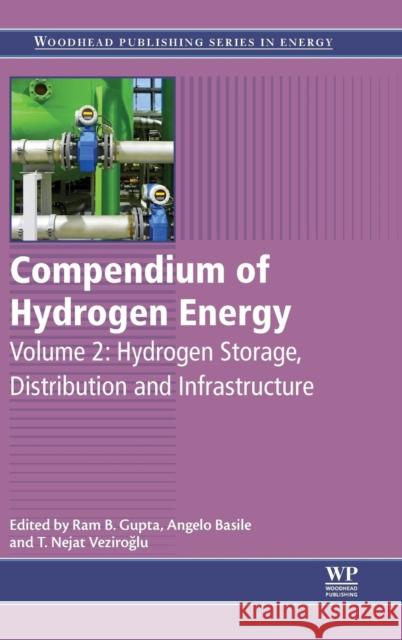
Gupta, Ram Basile, Angelo Veziroglu, T. Nejat
Compendium of Hydrogen Energy: Hydrogen Storage, Distribution and Infrastructure Gupta, Ram Basile, Angelo Veziroglu, T. Nejat 9781782423621 Elsevier Science - książkaWidoczna okładka, to zdjęcie poglądowe, a rzeczywista szata graficzna może różnić się od prezentowanej.

Compendium of Hydrogen Energy: Hydrogen Storage, Distribution and Infrastructure

ISBN-13: 9781782423621 / Angielski / Twarda / 2015 / 438 str.

Gupta, Ram Basile, Angelo Veziroglu, T. Nejat
cena 835,22
(netto: 795,45 VAT:  5%)

Najniższa cena z 30 dni: 835,22
Termin realizacji zamówienia:
ok. 30 dni roboczych
Dostawa w 2026 r.

Darmowa dostawa!

Compendium of Hydrogen Energy, Volume 2: Hydrogen Storage, Distribution and Infrastructure focuses on the storage and transmission of hydrogen. As many experts believe the hydrogen economy will, at some point, replace the fossil fuel economy as the primary source of the world's energy, this book details hydrogen storage in pure form, including chapters on hydrogen liquefaction, slush production, as well as underground and pipeline storage. Other sections in the book explore physical and chemical storage, including environmentally sustainable methods of hydrogen production from water, with final chapters dedicated to hydrogen distribution and infrastructure.

  • Covers a wide array of methods for storing hydrogen, detailing hydrogen transport and the infrastructure required for transition to the hydrogen economy
  • Written by leading academics in the fields of sustainable energy and experts from the world of industry
  • Part of a very comprehensive compendium which looks at the entirety of the hydrogen energy economy


Kategorie:
Inne
Kategorie BISAC:
Science > Energia
Technology & Engineering > Power Resources - Alternative & Renewable
Wydawca:
Elsevier Science
Język:
Angielski
ISBN-13:
9781782423621
Rok wydania:
2015
Ilość stron:
438
Waga:
0.81 kg
Wymiary:
23.11 x 15.49 x 2.54
Oprawa:
Twarda
Wolumenów:
01

  • List of contributors
  • Part One: Hydrogen storage in pure form
    • 1: Introduction to hydrogen storage
      • Abstract
      • 1.1 Introduction
      • 1.2 Physical storage
      • 1.3 Material-based hydrogen storage
    • 2: Hydrogen liquefaction and liquid hydrogen storage
      • Abstract
      • Acknowledgments
      • 2.1 Introduction: Why liquefying hydrogen?
      • 2.2 Basics of cryogenic liquefaction
      • 2.3 Hydrogen thermodynamic properties at ambient and low temperatures
      • 2.4 Large-scale hydrogen liquefaction and storage
      • 2.5 Advantages and disadvantages
      • 2.6 Current uses of liquid hydrogen
      • 2.7 Sources of further information and advice
    • 3: Slush hydrogen production, storage, and transportation
      • Abstract
      • 3.1 Introduction: What is slush hydrogen?
      • 3.2 Hydrogen energy system using slush hydrogen
      • 3.3 Thermophysical properties of slush hydrogen
      • 3.4 Process of producing and storing slush hydrogen
      • 3.5 Density and mass flow meters for slush hydrogen
      • 3.6 Advantages and disadvantages of transporting slush hydrogen via pipeline
      • 3.7 Uses of stored slush and liquid hydrogen
      • 3.8 Conclusions
      • 3.9 Future trends
      • 3.10 Sources of future information and advice
      • Appendix A Production
      • Appendix B Flow and heat transfer
      • Appendix C Measurement instrumentation
    • 4: Underground and pipeline hydrogen storage
      • Abstract
      • Acknowledgments
      • 4.1 Underground hydrogen storage as an element of energy cycle
      • 4.2 Scientific problems related to UHS
      • 4.3 Biochemical transformations of underground hydrogen
      • 4.4 Hydrodynamic losses of H2 in UHS
      • 4.5 Other problems
      • 4.6 Pipeline storage of hydrogen
  • Part Two: Physical and chemical storage of hydrogen
    • 5: Cryo-compressed hydrogen storage
      • Abstract
      • Acknowledgments
      • 5.1 Introduction
      • 5.2 Thermodynamics and kinetics of cryo-compressed hydrogen storage
      • 5.3 Performance of onboard storage system
      • 5.4 Well-to-tank efficiency
      • 5.5 Assessment of cryo-compressed hydrogen storage and outlook
    • 6: Adsorption of hydrogen on carbon nanostructure
      • Abstract
      • 6.1 Introduction
      • 6.2 General considerations for physisorption of hydrogen on carbon nanostructures
      • 6.3 Carbon nanotubes and fullerenes
      • 6.4 Activated carbons
      • 6.5 Layered graphene nanostructures
      • 6.6 Zeolite-templated carbons
      • 6.7 Conclusion
    • 7: Metal-organic frameworks for hydrogen storage
      • Abstract
      • 7.1 Introduction
      • 7.2 Synthetic considerations
      • 7.3 Cryo-temperature hydrogen storage at low and high pressures
      • 7.4 Room temperature hydrogen storage at high pressure
      • 7.5 Nanoconfinement of chemical hydrides in MOFs
      • 7.6 Conclusions and future trends
    • 8: Other methods for the physical storage of hydrogen
      • Abstract
      • 8.1 Introduction
      • 8.2 Storage of compressed hydrogen in glass microcontainers
      • 8.3 Hydrogen physisorption in porous materials
      • 8.4 Hydrogen hydrate clathrates
      • 8.5 Conclusions and outlook
    • 9: Use of carbohydrates for hydrogen storage
      • Abstract
      • 9.1 Introduction
      • 9.2 Converting carbohydrates to hydrogen by SyPaB
      • 9.3 Challenges of carbohydrates as hydrogen storage and respective solutions
      • 9.4 Future carbohydrate-to-hydrogen systems
      • 9.5 Conclusions
      • 9.6 Sources of future information and advice
    • 10: Conceptual density functional theory (DFT) approach to all-metal aromaticity and hydrogen storage
      • Abstract
      • Acknowledgments
      • 10.1 Introduction
      • 10.2 Background of conceptual DFT
      • 10.3 All-metal aromaticity
      • 10.4 Role of aromaticity in hydrogen storage
      • 10.5 Case studies of possible hydrogen-storage materials with the aid of CDFT
      • 10.6 Future trends
  • Part Three: Hydrogen distribution and infrastructure
    • 11: Introduction to hydrogen transportation
      • Abstract
      • 11.1 Introduction
      • 11.2 Overview of methods for hydrogen transportation
      • 11.3 Difficulties involved with the transportation of hydrogen
      • 11.4 Future trends
      • 11.5 Sources of further information and advice
    • 12: Hydrogen transportation by pipelines
      • Abstract
      • 12.1 Introduction
      • 12.2 Current hydrogen pipelines
      • 12.3 Principles of transportation of hydrogen
      • 12.4 Gas transportation principles
      • 12.5 Pipeline transportation of hydrogen gas
      • 12.6 Conclusion
      • 12.7 Future trends
      • 12.8 Further reading
    • 13: Progress in hydrogen energy infrastructure development-addressing technical and institutional barriers
      • Abstract
      • Acknowledgments
      • 13.1 Introduction
      • 13.2 Recent progress in hydrogen infrastructure in the United States
      • 13.3 Recent progress in hydrogen infrastructure and fuel cell vehicle and fuel cell bus demonstrations in China
      • 13.4 Conclusions
    • 14: Designing optimal infrastructures for delivering hydrogen to consumers
      • Abstract
      • Acknowledgments
      • 14.1 Introduction
      • 14.2 Building blocks of hydrogen infrastructure
      • 14.3 Review of hydrogen infrastructure models
      • 14.4 Case study: Decarbonizing UK transport demand with hydrogen vehicles
      • 14.5 Results
      • 14.6 Conclusions
      • Appendix
    • 15: Investment in the infrastructure for hydrogen passenger cars-New hype or reality?
      • Abstract
      • 15.1 Introduction
      • 15.2 Uncertainties surrounding the investment in hydrogen infrastructure
      • 15.3 Implementation of the early infrastructure: case studies
      • 15.4 Future trends
      • 15.5 Conclusions
      • 15.6 Sources of further information and advice
  • Index

Dr. Ram Gupta is an Associate Professor of Chemistry at Pittsburg State University. He is the Director of Research at the National Institute for Materials Advancement (NIMA). Dr. Gupta has been recently named by Stanford University as being among the top 2% of research scientists worldwide. Before joining Pittsburg State University, he worked as an Assistant Research Professor at Missouri State University, Springfield, MO then as a Senior Research Scientist at North Carolina A&T State University, Greensboro, NC. Dr. Gupta's research spans a range of subjects critical to current and future societal needs including: semiconducting materials & devices, biopolymers, flame-retardant polymers, green energy production & storage using nanostructured materials & conducting polymers, electrocatalysts, optoelectronics & photovoltaics devices, organic-inorganic heterojunctions for sensors, nanomagnetism, biocompatible nanofibers for tissue regeneration, scaffold & antibacterial applications, and bio-degradable metallic implants. Angelo Basile, a chemical engineer, is the author of hundreds of papers, books, chapter books, and special issues, with also various Italian, European, and worldwide patents. Basile is an associate editor of various international journals (IJHE, APCEJ, etc.), editor-in-chief of the International Journal of Membrane Science and Technology, and a member of the editorial board of more than 25 international journals. Today Basile is an R&D manager at both ECO2Energy (Rome) and Hydrogenia (Genoa) and is collaborating with the Department of Engineering at the University Campus Bio-medical of Rome (Italy).

Dr. Veziroglu, a native of Turkey, graduated from the City and Guilds College, the Imperial College of Science and Technology, University of London, with degrees in Mechanical Engineering (A.C.G.I., B.Sc.), Advanced Studies in Engineering (D.I.C.) and Heat Transfer (Ph.D.).

In 1962 - after doing his military service in the Ordnance Section, serving in some Turkish government agencies and heading a private company - Dr. Veziroglu joined the University of Miami Engineering Faculty. In 1965, he became the Director of Graduate Studies and initiated the first Ph.D. Program in the School of Engineering and Architecture. He served as Chairman of the Department of Mechanical Engineering 1971 through 1975, in 1973 established the Clean Energy Research Institute, and was the Associate Dean for Research 1975 through 1979. He took a three years Leave of Absence (2004 through 2007) and founded UNIDO-ICHET (United Nations Industrial Development Organization - International Centre for Hydrogen Energy Technologies) in Istanbul, Turkey. On 15 May 2009, he attained the status of Professor Emeritus at the University of Miami.

Dr. Veziroglu organized the first major conference on Hydrogen Energy: The Hydrogen Economy Miami Energy (THEME) Conference, Miami Beach, 18-20 March 1974. At the opening of this conference, Dr. Veziroglu proposed the Hydrogen Energy System as a permanent solution for the depletion of the fossil fuels and the environmental problems caused by their utilization. Soon after, the International Association for Hydrogen Energy (IAHE) was established, and Dr. Veziroglu was elected president. As President of IAHE, in 1976 he initiated the biennial World Hydrogen Energy Conferences (WHECs), and in 2005 the biennial World Hydrogen Technologies Conventions (WHTCs).

In 1976, Dr. Veziroglu started publication of the International Journal of Hydrogen Energy (IJHE) as its Founding Editor-in-Chief, in order to publish and disseminate Hydrogen Energy related research and development results from around the world. IJHE has continuously grew; now it publishes twenty-four issues a year. He has published some 350 papers and scientific reports, edited 160 volumes of books and proceedings, and has co-authored the book "Solar Hydrogen Energy: The Power to Save the Earth”.

Dr. Veziroglu has memberships in eighteen scientific organizations, has been elected to the Grade of Fellow in the British Institution of Mechanical Engineers, American Society of Mechanical Engineers and the American Association for the Advancement of Science, and is the Founding President of the International Association for Hydrogen Energy.

Dr. Veziroglu has been the recipient of several international awards. He was presented the Turkish Presidential Science Award in 1974, made an Honorary Professor in Xian Jiaotong University of China in 1981, awarded the I. V. Kurchatov Medal by the Kurchatov Institute of Atomic Energy of U.S.S.R. in 1982, the Energy for Mankind Award by the Global Energy Society in 1986, and elected to the Argentinean Academy of Sciences in 1988. In 2000, he was nominated for Nobel Prize in Economics, for conceiving the Hydrogen Economy and striving towards its establishment.


Udostępnij

Facebook - konto krainaksiazek.pl


Opinie o Krainaksiazek.pl na Opineo.pl

Partner Mybenefit

Krainaksiazek.pl w programie rzetelna firma Krainaksiaze.pl - płatności przez paypal

Czytaj nas na:

Facebook - krainaksiazek.pl
  • książki na zamówienie
  • granty
  • książka na prezent
  • kontakt
  • pomoc
  • opinie
  • regulamin
  • polityka prywatności

Zobacz:

  • Księgarnia czeska

  • Wydawnictwo Książkowe Klimaty

1997-2025 DolnySlask.com Agencja Internetowa

© 1997-2022 krainaksiazek.pl
     
KONTAKT | REGULAMIN | POLITYKA PRYWATNOŚCI | USTAWIENIA PRYWATNOŚCI
Zobacz: Księgarnia Czeska | Wydawnictwo Książkowe Klimaty | Mapa strony | Lista autorów
KrainaKsiazek.PL - Księgarnia Internetowa

Polityka prywatnosci - link
Krainaksiazek.pl - płatnośc Przelewy24
Przechowalnia Przechowalnia






