• Wyszukiwanie zaawansowane
  • Kategorie
  • Kategorie BISAC
  • Książki na zamówienie
  • Promocje
  • Granty
  • Książka na prezent
  • Opinie
  • Pomoc
  • Załóż konto
  • Zaloguj się

Click Chemistry for Biotechnology and Materials Science » książka


zaloguj się | załóż konto
Logo Krainaksiazek.pl

koszyk

konto

szukaj
topmenu
Księgarnia internetowa
Szukaj
Książki na zamówienie
Promocje
Granty
Książka na prezent
Moje konto
Pomoc
 
 
Wyszukiwanie zaawansowane
Pusty koszyk
Bezpłatna dostawa dla zamówień powyżej 20 złBezpłatna dostawa dla zamówień powyżej 20 zł

Kategorie główne

• Nauka
 [2950560]
• Literatura piękna
 [1849509]

  więcej...
• Turystyka
 [71097]
• Informatyka
 [151150]
• Komiksy
 [35848]
• Encyklopedie
 [23178]
• Dziecięca
 [617388]
• Hobby
 [139064]
• AudioBooki
 [1657]
• Literatura faktu
 [228597]
• Muzyka CD
 [383]
• Słowniki
 [2855]
• Inne
 [445295]
• Kalendarze
 [1464]
• Podręczniki
 [167547]
• Poradniki
 [480102]
• Religia
 [510749]
• Czasopisma
 [516]
• Sport
 [61293]
• Sztuka
 [243352]
• CD, DVD, Video
 [3414]
• Technologie
 [219456]
• Zdrowie
 [101002]
• Książkowe Klimaty
 [124]
• Zabawki
 [2311]
• Puzzle, gry
 [3459]
• Literatura w języku ukraińskim
 [254]
• Art. papiernicze i szkolne
 [8079]
Kategorie szczegółowe BISAC

Click Chemistry for Biotechnology and Materials Science

ISBN-13: 9780470699706 / Angielski / Twarda / 2009 / 432 str.
Joerg Lahann
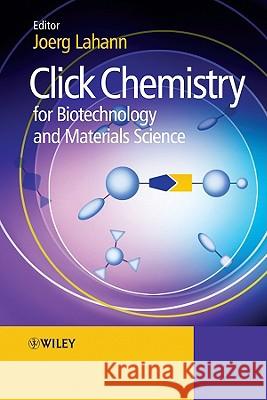
Click Chemistry for Biotechnology and Materials Science Joerg Lahann 9780470699706 John Wiley & Sons - książkaWidoczna okładka, to zdjęcie poglądowe, a rzeczywista szata graficzna może różnić się od prezentowanej.

Click Chemistry for Biotechnology and Materials Science

ISBN-13: 9780470699706 / Angielski / Twarda / 2009 / 432 str.

Joerg Lahann
cena 649,37
(netto: 618,45 VAT:  5%)

Najniższa cena z 30 dni: 646,70
Termin realizacji zamówienia:
ok. 30 dni roboczych
Dostawa w 2026 r.

Darmowa dostawa!

Mimicking natural biochemical processes, click chemistry is a modular approach to organic synthesis, joining together small chemical units quickly, efficiently and predictably. In contrast to complex traditional synthesis, click reactions offer high selectivity and yields, near-perfect reliability and exceptional tolerance towards a wide range of functional groups and reaction conditions. These 'spring loaded' reactions are achieved by using a high thermodynamic driving force, and are attracting tremendous attention throughout the chemical community. Originally introduced with the focus on drug discovery, the concept has been successfully applied to materials science, polymer chemistry and biotechnology. The first book to consider this topic, Click Chemistry for Biotechnology and Materials Science examines the fundamentals of click chemistry, its application to the precise design and synthesis of macromolecules, and its numerous applications in materials science and biotechnology. The book surveys the current research, discusses emerging trends and future applications, and provides an important nucleation point for research. Edited by one of the top 100 young innovators with the greatest potential to have an impact on technology in the 21st century according to Technology Review and with contributions from pioneers in the field, Click Chemistry for Biotechnology and Materials Science provides an ideal reference for anyone wanting to learn more about click reactions.


Kategorie:
Nauka, Chemia
Kategorie BISAC:
Science > Biotechnology
Technology & Engineering > Materials Science - General
Wydawca:
John Wiley & Sons
Język:
Angielski
ISBN-13:
9780470699706
Rok wydania:
2009
Ilość stron:
432
Waga:
1.06 kg
Wymiary:
24.89 x 17.27 x 2.54
Oprawa:
Twarda
Wolumenów:
01

"This book is a high–quality reference for people working in the field or for people interested in using click chemistry in biotechnology and/or materials science." ( Angewandte Chemie, 2010)


"This book should remain an essential reference source for many years." ( Chemistry World, April 2010)

Preface .

List of Contributors.

Acknowledgments.

1 Click Chemistry: A Universal Ligation Strategy for Biotechnology and Materials Science (Joerg Lahann).

1.1 Introduction.

1.2 Selected Examples of Click Reactions in Materials Science and Biotechnology.

1.3 Potential Limitations of Click Chemistry.

1.4 Conclusions.

References.

2 Common Synthons for Click Chemistry in Biotechnology (Christine Schilling, Nicole Jung and Stefan Bräse).

2.1 Introduction Click Chemistry.

2.2 Peptides and Derivatives.

2.3 Peptoids.

2.4 Peptidic Dendrimers.

2.5 Oligonucleotides.

2.6 Carbohydrates.

2.7 Conclusion.

References.

3 Copper–free Click Chemistry (Jeremy M. Baskin and Carolyn R. Bertozzi).

3.1 Introduction.

3.2 Bio–orthogonal Ligations.

3.3 Applications of Copper–free Click Chemistries.

3.4 Summary and Outlook.

References.

4 Protein and Peptide Conjugation to Polymers and Surfaces Using Oxime Chemistry (Heather D. Maynard, Rebecca M. Broyer and Christopher M. Kolodziej).

4.1 Introduction.

4.2 Protein/Peptide Polymer Conjugates.

4.3 Immobilization of Proteins and Peptides on Surfaces.

4.4 Conclusions.

References.

5 The Role of Click Chemistry in Polymer Synthesis (Jean–Francois Lutz and Brent S. Sumerlin).

5.1 Introduction.

5.2 Polymerization via CuAAC.

5.3 Post–polymerization Modification via Click Chemistry.

5.4 Polymer Biomacromolecule Conjugation.

5.5 Functional Nanomaterials.

5.6 Summary and Outlook.

References.

6 Blocks, Stars and Combs: Complex Macromolecular Architecture Polymers via Click Chemistry (Sebastian Sinnwell, Andrew J. Inglis, Martina H. Stenzel and Christopher Barner–Kowollik).

6.1 Introduction.

6.2 Block Copolymers.

6.3 Star Polymers.

6.4 Graft Copolymers.

6.5 Concluding Remarks.

References.

7 Click Chemistry on Supramolecular Materials (Wolfgang H. Binder and Robert Sachsenhofer).

7.1 Introduction.

7.2 Click Reactions on Rotaxanes, Cyclodextrines and Macrocycles.

7.3 Click Reactions on DNA.

7.4 Click Reactions on Supramolecular Polymers.

7.5 Click Reactions on Membranes.

7.6 Click Reactions on Dendrimers.

7.7 Click Reactions on Gels and Networks.

7.8 Click Reactions on Self–assembled Monolayers.

References.

8 Dendrimer Synthesis and Functionalization by Click Chemistry for Biomedical Applications (Daniel Q. McNerny, Douglas G. Mullen, Istvan J. Majoros, Mark M. Banaszak Holl and James R. Baker Jr).

8.1 Introduction.

8.2 Dendrimer Synthesis.

8.3 Dendrimer Functionalization.

8.4 Conclusions and Future Directions.

References.

9 Reversible Diels Alder Cycloaddition for the Design of Multifunctional Network Polymers (Amy M. Peterson and Giuseppe R. Palmese).

9.1 Introduction.

9.2 Design of Polymer Networks.

9.3 Application of Diels Alder Linkages to Polymer Systems.

9.4 Conclusions.

References.

10 Click Chemistry in the Preparation of Biohybrid Materials (Heather J. Kitto, Jan Lauko, Floris P. J. T. Rutjes and Alan E. Rowan).

10.1 Introduction.

10.2 Polymer–containing Biohybrid Materials.

10.3 Biohybrid Structures based on Protein Conjugates.

10.4 Biohybrid Amphiphiles.

10.5 Glycoconjugates.

10.6 Conclusions.

References.

11 Functional Nanomaterials using the Cu–catalyzed Huisgen Cycloaddition Reaction (Sander S. van Berkel, Arnold W.G. Nijhuis, Dennis W.P.M. Löwik and Jan C.M. van Hest).

11.1 Introduction.

11.2 Inorganic Nanoparticles.

11.3 Carbon–based Nanomaterials.

11.4 Self–assembled Organic Structures.

11.5 Virus Particles.

11.6 Conclusions.

References.

12 Copper–catalyzed Click Chemistry for Surface Engineering (Himabindu Nandivada and Joerg Lahann).

12.1 Introduction.

12.2 Synthesis of Alkyne or Azide–functionalized Surfaces.

12.3 Spatially Controlled Click Chemistry.

12.4 Copper–catalyzed Click Chemistry for Bioimmobilization.

12.5 Summary.

References.

13 Click Chemistry in Protein Engineering, Design, Detection and Profiling (Daniela C. Dieterich and A. James Link).

13.1 Introduction.

13.2 Posttranslational Functionalization of Proteins with Azides and Alkynes.

13.3 Cotranslational Functionalization of Proteins with Azides and Alkynes.

13.4 BONCAT: Identification of Newly Synthesized Proteins via Noncanonical Amino Acid Tagging.

13.5 Conclusions and Future Prospects.

References.

14 Fluorogenic Copper(I)–catalyzed Azide Alkyne Cycloaddition Reactions Reactions and their Applications in Bioconjugation (Céline Le Droumaguet and Qian Wang).

14.1 Click Reaction for Bioconjugation Applications.

14.2 Significance of Fluorogenic Reactions in Bioconjugation.

14.3 CuAAC–based Fluorogenic Reaction.

14.4 Applications of CuAAC in Bioconjugation.

14.5 Conclusions.

References.

15 Synthesis and Functionalization of Biomolecules via Click Chemistry (Christine Schilling, Nicole Jung and Stefan Bräse).

15.1 Introduction.

15.2 Labeling of Macromolecular Biomolecules.

15.3 Syntheses of Natural Products and Derivatives.

15.4 Enzymes and Click Chemistry.

15.5 Synthesis of Glycosylated Molecular Architectures.

15.6 Synthesis of Nitrogen–rich Compounds: Polyazides and Triazoles.

15.7 Conclusions.

References.

16 Unprecedented Electro–optic Properties in Polymers and Dendrimers Enabled by Click Chemistry Based on the Diels Alder Reactions (Jingdong Luo, Tae–Dong Kim and Alex K.–Y. Jen).

16.1 Introduction.

16.2 Diels Alder Click Chemistry for Highly Efficient Side–chain E–O Polymers.

16.3 Diels Alder Click Chemistry for Crosslinkable E–O Polymers Containing Binary NLO Chromophores.

16.4 Diels Alder Click Chemistry for NLO Dendrimers.

16.5 Conclusions.

References.

Index.

Mimicking natural biochemical processes, click chemistry is a modular approach to organic synthesis, joining together small chemical units quickly, efficiently and predictably. In contrast to complex traditional synthesis, click reactions offer high selectivity and yields, near–perfect reliability and exceptional tolerance towards a wide range of functional groups and reaction conditions. These spring loaded reactions are achieved by using a high thermodynamic driving force, and are attracting tremendous attention throughout the chemical community. Originally introduced with the focus on drug discovery, the concept has been successfully applied to materials science, polymer chemistry and biotechnology.

The first book to consider this topic, Click Chemistry for Biotechnology and Materials Science examines the fundamentals of click chemistry, its application to the precise design and synthesis of macromolecules, and its numerous applications in materials science and biotechnology.  The book surveys the current research, discusses emerging trends and future applications, and provides an important nucleation point for research.

Edited by one of the top 100 young innovators with the greatest potential to have an impact on technology in the 21st century according to Technology Review and with contributions from pioneers in the field, Click Chemistry for Biotechnology and Materials Science provides an ideal reference for anyone wanting to learn more about click reactions.




Udostępnij

Facebook - konto krainaksiazek.pl


Opinie o Krainaksiazek.pl na Opineo.pl

Partner Mybenefit

Krainaksiazek.pl w programie rzetelna firma Krainaksiaze.pl - płatności przez paypal

Czytaj nas na:

Facebook - krainaksiazek.pl
  • książki na zamówienie
  • granty
  • książka na prezent
  • kontakt
  • pomoc
  • opinie
  • regulamin
  • polityka prywatności

Zobacz:

  • Księgarnia czeska

  • Wydawnictwo Książkowe Klimaty

1997-2025 DolnySlask.com Agencja Internetowa

© 1997-2022 krainaksiazek.pl
     
KONTAKT | REGULAMIN | POLITYKA PRYWATNOŚCI | USTAWIENIA PRYWATNOŚCI
Zobacz: Księgarnia Czeska | Wydawnictwo Książkowe Klimaty | Mapa strony | Lista autorów
KrainaKsiazek.PL - Księgarnia Internetowa

Polityka prywatnosci - link
Krainaksiazek.pl - płatnośc Przelewy24
Przechowalnia Przechowalnia



