• Wyszukiwanie zaawansowane
  • Kategorie
  • Kategorie BISAC
  • Książki na zamówienie
  • Promocje
  • Granty
  • Książka na prezent
  • Opinie
  • Pomoc
  • Załóż konto
  • Zaloguj się

Chemical Pesticides Mode of Action and Toxicology » książka


zaloguj się | załóż konto
Logo Krainaksiazek.pl

koszyk

konto

szukaj
topmenu
Księgarnia internetowa
Szukaj
Książki na zamówienie
Promocje
Granty
Książka na prezent
Moje konto
Pomoc
 
 
Wyszukiwanie zaawansowane
Pusty koszyk
Bezpłatna dostawa dla zamówień powyżej 20 złBezpłatna dostawa dla zamówień powyżej 20 zł

Kategorie główne

• Nauka
 [2949965]
• Literatura piękna
 [1857847]

  więcej...
• Turystyka
 [70818]
• Informatyka
 [151303]
• Komiksy
 [35733]
• Encyklopedie
 [23180]
• Dziecięca
 [617748]
• Hobby
 [139972]
• AudioBooki
 [1650]
• Literatura faktu
 [228361]
• Muzyka CD
 [398]
• Słowniki
 [2862]
• Inne
 [444732]
• Kalendarze
 [1620]
• Podręczniki
 [167233]
• Poradniki
 [482388]
• Religia
 [509867]
• Czasopisma
 [533]
• Sport
 [61361]
• Sztuka
 [243125]
• CD, DVD, Video
 [3451]
• Technologie
 [219309]
• Zdrowie
 [101347]
• Książkowe Klimaty
 [123]
• Zabawki
 [2362]
• Puzzle, gry
 [3791]
• Literatura w języku ukraińskim
 [253]
• Art. papiernicze i szkolne
 [7933]
Kategorie szczegółowe BISAC

Chemical Pesticides Mode of Action and Toxicology

ISBN-13: 9780748409105 / Angielski / Twarda / 2004 / 296 str.
Jorgen Stenersen; Jrgen Stenersen
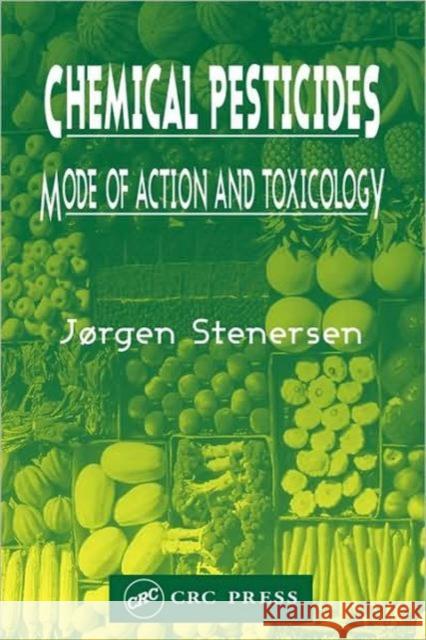
Chemical Pesticides  Mode of Action and Toxicology Jorgen Stenersen Jrgen Stenersen 9780748409105 CRC Press - książkaWidoczna okładka, to zdjęcie poglądowe, a rzeczywista szata graficzna może różnić się od prezentowanej.

Chemical Pesticides Mode of Action and Toxicology

ISBN-13: 9780748409105 / Angielski / Twarda / 2004 / 296 str.

Jorgen Stenersen; Jrgen Stenersen
cena 782,04 zł
(netto: 744,80 VAT:  5%)

Najniższa cena z 30 dni: 755,61 zł
Termin realizacji zamówienia:
ok. 22 dni roboczych
Bez gwarancji dostawy przed świętami

Darmowa dostawa!

Environmental-friendliness, issues of public health, and the pros and cons of genetically-modified crops all receive regular coverage in the world's media. This, in turn, has led to increased questioning and investigation of chemical pesticides. Stenersen's concise introduction to chemical pesticides describes these compounds according to their biochemical mode of action, such as whether they are enzyme inhibitors, receptor ligands, or free radical generators. Chemical Pesticides provides answers to why pesticides are toxic to the target organism, how resistance develops, why pesticides are toxic to some organisms and not others. The book also discusses legal matters and concerns as well as potential environmental problems.


Kategorie:
Nauka, Chemia
Kategorie BISAC:
Technology & Engineering > Agriculture - Agronomy - General
Technology & Engineering > Agriculture - Agronomy - Crop Science
Science > Environmental Science (see also Chemistry - Environmental)
Wydawca:
CRC Press
Język:
Angielski
ISBN-13:
9780748409105
Rok wydania:
2004
Ilość stron:
296
Waga:
0.55 kg
Wymiary:
24.43 x 15.44 x 2.16
Oprawa:
Twarda
Wolumenów:
01
Dodatkowe informacje:
Bibliografia
Wydanie ilustrowane

"The book extending over 276 pages, is structured in 10 chapters which all are reviewing the up-to-date researchers and findings that concern the mode of actions and toxicology of chemical pesticides. ... is the unitary manner of treating the approached topics in every chapter aimed to five both general information as well as the up-to-date researchers and findings based on the recent literature. The book is useful to academicians, scientists, students, as well as industrials working in the field of pesticides."
- Lecturer Adina Dunitrascu, Technical University 'Gh. Asachi' of Iasi, Faculty of Chemical Engineering, in IPM - Iasi Polytechnic Magazine, Vol. 17, No. 1 / 4, March/December 2005
"Here is a very different and welcome text bringing a fresh and thoughtful approach to an increasingly urgent research topic. ... Both translation and editing are good and retain the author's lively, engaging style, together with the quirky humor which gifted teachers use so effectively to imprint student memory with essential facts ... [T]he content makes the book easy to understand and assimilate. ... [B]oth an essential fact-packed primer for ambitious biological discipline-oriented students and a copious reference source for progressive professionals."
- Occupational Safety and Health Journal, March 2005
"By providing an integrated, yet simple description of modern chemical pesticides, the author provides a relevant text for professionals and students in biological disciplines such as biochemistry, medicine, agriculture, and veterinary science."
- International Pest Control, Vol. 47, No. 2, March/April 2005
"This book provides answers to questions such as why pesticides are toxic to the target organism and why they are toxic to some organisms and not to others. This concise and timely introduction describes these compounds according to their mode of action at the cellular and biochemical level. It describes how various poisons interfere with biochemical processes in organisms ... The book also explores how resistance to pesticides develops ... . By providing an integrated, yet simple and easy-to-read, description of modern chemical pesticides, the author provides a relevant text for professionals and students in biological disciplines such as biochemistry, medicine, agriculture and veterinary science."
- International Journal of Environmental Analytical Chemistry, Vol. 84, Nos. 14 & 15, Dec. 2004
"... useful as a starting point for queries regarding the mode of action and toxicology of pesticides."
- Joanne Kilgour, BTS Newsletter, Winter 2004, Issue 25
"The author has provided a very useful text with a list of additional references that will enable further reading. The book is very reasonably priced and will be of interest to postgraduate students and professionals in a number of disciplines."
- Peter Batten, BTS Newsletter, Winter 2004, Issue 25
"The informative book provides a review of toxicological and environmental problems of pesticides, without overemphasizing the benefits or problems of pesticide usage."
-Journal of Phytopathology, Vol. 153, 2005

INTRODUCTION
Motivation
Pesticides and Opinion
A Great Market
Nomenclature, Definitions and Terminology
Helpful Reading
Biochemistry and Cell Biology
General Toxicology
Insect Biochemistry, Plant Physiology, Neurophysiology
Pesticides
Side Effects of Pesticides
WHY IS A TOXICANT POISONOUS
Seven Routes to Death
How to Measure Toxicity
Endpoints
Dose and Effect
Dose and Response
LD50 and Related Parameters
Acute and Chronic Toxicity
Interactions
Mechanisms of Interactions
Examples
PESTICIDES INTERFERING WITH PROCESSES IMPORTANT TO ALL ORGANISMS
Pesticides that Disturb Energy Production
Anabolic and Catabolic Processes
Synthesis of Acetyl Coenzyme A and the Toxic Mechanism of Arsenic
The Citric Acid Cycle and Its Inhibitors
The Electron Transport Chain and Production of ATP
Inhibition of ATP Production
Herbicides that Inhibit Photosynthesis
Weak Organic Acids
Free Radical Generators
D1 – Blockers
Inhibitors of Carotene Synthesis
Protoporphyrinogen Oxidase inhibitors
General SH-Reagents and Free Radical Generators
Mercury
Other Multisite Fungicides
Pesticides Interfering with Cell Division
Fungicides
Herbicides
Pesticides Inhibiting Enzymes in Nucleic Acid Synthesis
BACILLUS THURINGIENSIS AND ITS TOXINS
The Mechanism of Action d-endotoxins
Biotechnology
Engineered Plants
Biology
Commercial Products
SPECIFIC ENZYME INHIBITORS
Inhibitors of Ergosterol Synthesis
Conclusions
Herbicides that Inhibit Synthesis of Amino Acids
Inhibitors of Chitin Synthesis
Insecticides
Fungicides
Inhibitors of Cholinesterase
Acetylcholinesterase
Organophosphates
Carbamates
Development of Organophosphorus and Carbamate Insecticides
Other Enzymes Inhibited by Organophosphates and Carbamates
The Butyrylcholinesterases
The Neurotoxic Target Enzyme (NTE)
Carboxylesterases
INTERFERENCE WITH SIGNAL TRANSDUCTION IN THE NERVES
Potency of Nerve Poisons
Selectivity
The Nerve and the Nerve Cell
Pesticides that Act on the Axon
Impulse Transmission along the Axon
Pyrethroids
DDT and its Analogues
Pesticides Acting on Synaptic Transmission
Inhibitory Synapses
The Cholinergic Synapses
Calcium Channels as Possible Targets for Insecticides
Summary
PESTICIDES THAT ACT AS SIGNAL MOLECULES
Insect Hormones
Insect Endocrinology
Juvenile Hormone
Ecdysone
Behaviour-Modifying Pesticides
Pheromones
Structure – Activity Relationships
Pheromones used as Pesticides and Lures
Plant Hormones
TRANSLOCATION AND DEGRADATION OF PESTICIDES
The Compartment Model
The Bioconcentration Factor
The Half-life
The Area under the Curve
Example
Degradation of Pesticides by Micro-organisms
Degradation by Adaption
Degradation by Co-metabolism
Kinetics of Degradation
Importance of Chemical Structure for Degradation
Examples
The Degraders
Soil Adsorption
Why are Chemicals Adsorbed?
Examples
Desorption
Evaporation
Example
Biotransformation in Animals
Oxidation
Epoxide Hydrolase
Glutathione Transferase
Hydrolases
Glucoronosyltransferase and Sulfotransferase
Stereospecific Biotransformation
Designing Pesticides that have Low Mammalian Toxicity
RESISTANCE TO PESTICIDES
Resistance is an Inevitable Result of Evolution
Questions about Resistance
Biochemical Mechanisms
Increased Detoxication
Insensitive Target Enzyme or Target Receptor Site
Resistance in Fungi
Atrazine Resistance and Plants made Resistant by Genetic Engineering
Resistance to Glyphosate
Resistance to older Biocides used as Pesticides
Resistance to the Third and Fourth Generation Pesticides
How to Delay Development of Resistance
Refuge Strategy
Mixing Pesticides with Different Modes of Action and Different Detoxication Patterns
Switching Life-stage Target
Increased Sensitivity in Resistant Pests
Inhibition of Detoxication Enzymes
Conclusions
PESTICIDES AS ENVIRONMENTAL HAZARDS
Pesticides are Poisons
Pesticides are Xenobiotics
Various Types of Bias
Benchmark Values
Required Toxicological Tests for Official Approval of a Pesticide
Residue Analysis of Residues in Food and the Environment
Sampling
Sample preparation
Analysis
Pesticide Residues in Food
Toxicity Classification of Pesticides
Definition of ADI and NOEL and Tolerance Limits
Comparing Health Hazard of Pesticides with Other Toxicants Present in the Market Basket
Elixirs of Death
Nomenclature and Structure of Dioxins
Dioxins in Pesticides
Toxicology
The Target
Analysis
Angry Birdwatchers, Youth Criminals, and Impotent Rats
Clear Lake
Peregrine Falcons and Other Birds of Prey
Conclusions

Jørgen Stenersen


Udostępnij

Facebook - konto krainaksiazek.pl


Opinie o Krainaksiazek.pl na Opineo.pl

Partner Mybenefit

Krainaksiazek.pl w programie rzetelna firma Krainaksiaze.pl - płatności przez paypal

Czytaj nas na:

Facebook - krainaksiazek.pl
  • książki na zamówienie
  • granty
  • książka na prezent
  • kontakt
  • pomoc
  • opinie
  • regulamin
  • polityka prywatności

Zobacz:

  • Księgarnia czeska

  • Wydawnictwo Książkowe Klimaty

1997-2025 DolnySlask.com Agencja Internetowa

© 1997-2022 krainaksiazek.pl
     
KONTAKT | REGULAMIN | POLITYKA PRYWATNOŚCI | USTAWIENIA PRYWATNOŚCI
Zobacz: Księgarnia Czeska | Wydawnictwo Książkowe Klimaty | Mapa strony | Lista autorów
KrainaKsiazek.PL - Księgarnia Internetowa

Polityka prywatnosci - link
Krainaksiazek.pl - płatnośc Przelewy24
Przechowalnia Przechowalnia





