• Wyszukiwanie zaawansowane
  • Kategorie
  • Kategorie BISAC
  • Książki na zamówienie
  • Promocje
  • Granty
  • Książka na prezent
  • Opinie
  • Pomoc
  • Załóż konto
  • Zaloguj się

Chemical Biology: Learning Through Case Studies » książka

zaloguj się | załóż konto
Logo Krainaksiazek.pl

koszyk

konto

szukaj
topmenu
Księgarnia internetowa
Szukaj
Książki na zamówienie
Promocje
Granty
Książka na prezent
Moje konto
Pomoc
 
 
Wyszukiwanie zaawansowane
Pusty koszyk
Bezpłatna dostawa dla zamówień powyżej 20 złBezpłatna dostawa dla zamówień powyżej 20 zł

Kategorie główne

• Nauka
 [2946912]
• Literatura piękna
 [1852311]

  więcej...
• Turystyka
 [71421]
• Informatyka
 [150889]
• Komiksy
 [35717]
• Encyklopedie
 [23177]
• Dziecięca
 [617324]
• Hobby
 [138808]
• AudioBooki
 [1671]
• Literatura faktu
 [228371]
• Muzyka CD
 [400]
• Słowniki
 [2841]
• Inne
 [445428]
• Kalendarze
 [1545]
• Podręczniki
 [166819]
• Poradniki
 [480180]
• Religia
 [510412]
• Czasopisma
 [525]
• Sport
 [61271]
• Sztuka
 [242929]
• CD, DVD, Video
 [3371]
• Technologie
 [219258]
• Zdrowie
 [100961]
• Książkowe Klimaty
 [124]
• Zabawki
 [2341]
• Puzzle, gry
 [3766]
• Literatura w języku ukraińskim
 [255]
• Art. papiernicze i szkolne
 [7810]
Kategorie szczegółowe BISAC

Chemical Biology: Learning Through Case Studies

ISBN-13: 9783527323302 / Angielski / Miękka / 2009 / 304 str.
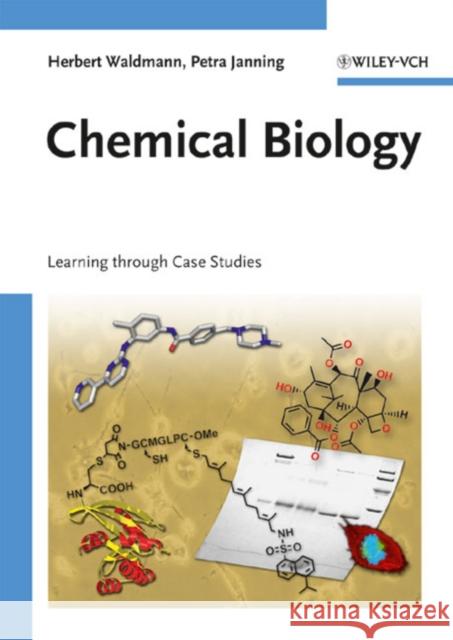
Herbert Waldmann; Petra Janning
Chemical Biology: Learning Through Case Studies Waldmann, Herbert 9783527323302 Wiley-VCH Verlag GmbH - książkaWidoczna okładka, to zdjęcie poglądowe, a rzeczywista szata graficzna może różnić się od prezentowanej.

Chemical Biology: Learning Through Case Studies

ISBN-13: 9783527323302 / Angielski / Miękka / 2009 / 304 str.

Herbert Waldmann; Petra Janning
cena 275,98
(netto: 262,84 VAT:  5%)

Najniższa cena z 30 dni: 253,39
Termin realizacji zamówienia:
ok. 10-14 dni roboczych
Bez gwarancji dostawy przed świętami

Darmowa dostawa!

This first book to adopt a problem-based approach teaches the true basics of the subject through illustrated everyday case studies. The editor's extensive experience in writing textbooks and his close relationship to the authors ensure that the contributions are presented in a pedagogically uniform and highly motivating fashion. Each chapter introduces a different biological problem taken from everyday lab work, such that students learn how to think in order to solve problems in biology by using techniques and tools taken from chemistry.
A must-have for students in chemistry, biology and biochemistry.


Kategorie:
Nauka, Chemia
Kategorie BISAC:
Science > Chemia - Organiczna
Science > Biologia i przyroda
Wydawca:
Wiley-VCH Verlag GmbH
Język:
Angielski
ISBN-13:
9783527323302
Rok wydania:
2009
Ilość stron:
304
Waga:
0.61 kg
Wymiary:
23.88 x 17.02 x 1.52
Oprawa:
Miękka
Wolumenów:
01
Dodatkowe informacje:
Bibliografia
Wydanie ilustrowane

"This first book to adopt a problem–based approach teaches the true basics of the subject through illustrated everyday case studies. Each chapter introduces a different biological problem taken from everyday lab work, such that students learn how to solve problems in biology by using techniques and tools taken from chemistry."
METALL (1/2 2010)

YEAST–BASED CHEMICAL GENOMIC APPROACHES
Introduction
The Biological Problem
The Chemical Approach
Chemical Biological Research/Evaluation –
Chemogenomic Profiling: Elucidating the Mode of Action of Small Molecules
MIRCOARRAY–BASED STRATEGIES TO IDENTIFY UNKNOWN PROTEIN INTERACTIONS
Introduction
The Biological Problem
The Chemical Approach
Chemical Biological Research/Evaluation
COMPOUND COLLECTION SYNTHESIS FOR CHEMICAL BIOLOGY
Introduction
Chemical Probes –
A Chemical Question with Biological Consequences
Diversity Oriented Synthesis (DOS)
Biology Oriented Synthesis (BIOS)
TARGET IDENTIFICATION AND VALIDATION OF A WNT/BETA–CATENIN PATHWAY MODULATOR
Introduction
Introduction
The Biological Problem
The Chemical Approach
Chemical Biological Research/Evaluation
ACTIVITY–BASED PROTEIN PROFILING OF CYS PROTEASES
Introduction
The Biological Problem
The Chemical Approach
Chemical Biological Research/Evaluation
THE USE OF PHOTOAFFINITY LABELING FOR THE IDENTIFICATION OF THE BINDING SITE OF THE ANTIBIOTIC LINEZOLID
Introduction
The Biological Problem
The Chemical Approach
Chemical Biological Research/Evaluation
SURGICAL STRIKES: USES OF ANALOG SENSITIVE TECHNOLOGIES TO TARGET KINASES OF INTEREST
Introduction
The Biological Problem
The Chemical Approach
Chemical Biological Research/Evaluation: ASKA Technology –
Applications in Molecular Biology
MODULATION OF PROTEIN–PROTEIN INTERACTIONS BY SMALL MOLECULES
Introduction
The Biological Problem
The Chemical Approach
Chemical Biological Research/Evaluation
TARGETED PROTEIN DEGRADATION IN LIVE CELLS
Introduction
The Biological Problem
The Chemical Approach
TRAPOXIN B: FROM TOTAL SYNTHESIS TO EPIGENETICS
Introduction
The Biological Problem
The Chemical Approach
Chemical Biological Research/Evaluation
NATIVE CHEMIAL LIGATION –
A TOOL FOR CHEMICAL PROTEIN SYNTHESIS
Introduction
The Synthetic Challenge
The Chemical Approach –
Native Chemical Ligation
Chemical Biological Research/Evaluation –
The Ras–RBD Systems
USING SPLIT INTEINS TO PREPARE SEMI–SYNTHETIC PROTEINS AND TO STUDY THE MECHANISMS OF PROTEIN TRANS–SPLICING
Introduction
The Biological Problem
The Chemical Approach
Chemical Biological Research/Evaluation
ELUCIDATION OF THE RAS CYCLE WITH SEMI–SYNTHETIC PROTEINS
Introduction
The Biological Problem
The Chemical Approach
Chemical Biological Research/Evaluation
THE STUDY OF RAB GTPASE RECYCLING USING SEMI–SYNTHETIC PRENYLATED PROTEINS
Introduction
The Biological Problem
The Chemical Approach
Chemical Biological Research/Evaluation
DEVELOPMENT OF A MODEL CANCER VACCINE CANDIDATE BASED ON THE MUCl CELLULAR SURFACE GLYCOPEPTIDE EPITOPE
Introduction
The Biological Problem
The Chemical Approach
Chemical Biological Research/Evaluation
THE INTRODUCTION OF CHEMICAL REPORTER GROUPS BY BIOORTHOGONAL LIGATION REACTIONS FOR THE IMAGING OF CELL–SURFACE GLYCANS
Introduction
The Biological Problem
The Chemical Approach
Chemical Biological Research/Evaluation
SEQUENCE SPECIFIC DNA–BINDING SMALL MOLECULES FOR PROTEIN RECRUITMENT AND MODULATION OF TRANSCRIPTION
Introduction
The Biological Problem –
Targeting DNA with Small Molecules
The Chemical Approach: The Polyamide Rationale
Chemical Biological Research/Evaluation –
Polyamides in Biological Applications
G–QUADRUPLEX LIGANDS AS TOOLS FOR ELUCIDATING C–MYC TRANSCRIPTIONAL REGULATION
Introduction
The Biological Problem
The Chemical Approach
Chemical Biological Research/Evaluation

Herbert Waldmann obtained his PhD in organic chemistry from the University of Mainz in 1985 working with Professor Horst Kunz, after which he completed a postdoctoral appointment with Professor G. Whitesides at Harvard University. He was appointed as Professor of Organic Chemistry at the University of Bonn (1991), full Professor of Organic Chemistry at the University of Karlsruhe (1993), and Director at the MPI of Molecular Physiology Dortmund and Professor of Organic Chemistry at the University of Dortmund (1999). His research interests lie in the synthesis and use of small molecules in chemical biology research, the chemical biology of protein lipidation and protein microarrays.

Petra Janning studied chemistry at the University of Münster, Germany, and did her PhD thesis at the Institute for Analytical Sciences in Dortmund (1995). After different positions where she worked in the area of analytical chemistry and on the borderline between chemistry and biology she joined the Max Planck Institute of Molecular Physiology, Dortmund, in the department of Professor H. Waldmann, where she is currently working. She is responsible for the bioorganic Practical Course and the analytics in the department. Her work is focused on the development of chromatographic and mass spectrometric methods used in the institute.

Chemical biology is a rapidly growing and exciting interdisciplinary science, combining chemical tools for the study of biological problems and the development of innovative solutions that would not be possible by applying methodology from one field only.
This first book to adopt a problem–based approach teaches the true basics of the subject by way of illustrated case studies. The editor′s extensive experience in chemical biology education and their close relationship to the authors ensure that the contributions here are presented in a pedagogically uniform and highly motivating fashion.

From the contents:
∗ Ras Proteins, Synthesis, Ras Cycle, Biochemistry
∗ Proteases, Proteasome
∗ Activity–Based Proteomics
∗ FK506
∗ Regulation of Gene Expression, Transcription
∗ Protein Synthesis, Native Chemical Ligation
∗ Expressed Protein Ligation
∗ Microarray Technologies
∗ APT1, Ras Palmitoylation
∗ Carbohydrates
∗ Yeast Based Chemical Genomics
∗ Target Identification
∗ BIOS, PSSC, Natural Products
∗ Alzheimer
∗ Diversity Oriented Synthesis
∗ Kinases, Orthogonal Chemical Genetics

Each chapter introduces a different biological problem, so that students learn how to think in order to solve problems in biology by using powerful techniques and tools taken from chemistry.

Waldmann, Herbert Herbert Waldmann (b 1957) received his PhD in 1985... więcej >


Udostępnij

Facebook - konto krainaksiazek.pl


Opinie o Krainaksiazek.pl na Opineo.pl

Partner Mybenefit

Krainaksiazek.pl w programie rzetelna firma Krainaksiaze.pl - płatności przez paypal

Czytaj nas na:

Facebook - krainaksiazek.pl
  • książki na zamówienie
  • granty
  • książka na prezent
  • kontakt
  • pomoc
  • opinie
  • regulamin
  • polityka prywatności

Zobacz:

  • Księgarnia czeska

  • Wydawnictwo Książkowe Klimaty

1997-2025 DolnySlask.com Agencja Internetowa

© 1997-2022 krainaksiazek.pl
     
KONTAKT | REGULAMIN | POLITYKA PRYWATNOŚCI | USTAWIENIA PRYWATNOŚCI
Zobacz: Księgarnia Czeska | Wydawnictwo Książkowe Klimaty | Mapa strony | Lista autorów
KrainaKsiazek.PL - Księgarnia Internetowa

Polityka prywatnosci - link
Krainaksiazek.pl - płatnośc Przelewy24
Przechowalnia Przechowalnia






